CAS 70411-27-7
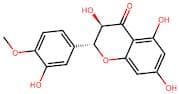
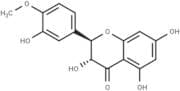
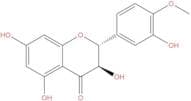
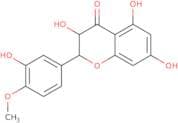
:4H-1-Benzopyran-4-one,2,3-dihydro-3,5,7-trihydroxy-2-(3-hydroxy-4-methoxyphenyl)-, (2R,3R)-
Description:
The chemical substance known as "4H-1-Benzopyran-4-one, 2,3-dihydro-3,5,7-trihydroxy-2-(3-hydroxy-4-methoxyphenyl)-, (2R,3R)-" with CAS number 70411-27-7 is a flavonoid derivative characterized by its complex polyphenolic structure. This compound features a benzopyran core, which is typical of flavonoids, and is substituted with multiple hydroxyl groups that contribute to its potential antioxidant properties. The presence of a methoxy group enhances its solubility and may influence its biological activity. The stereochemistry indicated by the (2R,3R) configuration suggests specific spatial arrangements of the substituents, which can affect the compound's reactivity and interaction with biological targets. Such compounds are often studied for their pharmacological properties, including anti-inflammatory, antimicrobial, and anticancer activities. Additionally, the presence of multiple hydroxyl groups typically enhances the compound's ability to scavenge free radicals, making it of interest in the field of natural product chemistry and medicinal research.
Formula:C16H14O7
Sort by
Purity (%)
0
100
|
0
|
50
|
90
|
95
|
100
Found 5 products.
Dihydrotamarixetin
CAS:Dihydrotamarixetin is a natural product for research related to life sciences. The catalog number is TN3867 and the CAS number is 70411-27-7.Formula:C16H14O7Purity:98%Color and Shape:SolidMolecular weight:318.284'-O-Methyltaxifolin
CAS:Formula:C16H14O7Purity:95%~99%Color and Shape:PowderMolecular weight:318.2814'-o-Methyltaxifolin
CAS:4'-o-Methyltaxifolin is a flavonoid compound, which is derived from natural plant sources, particularly from species within the Pinaceae family. This compound is often found as a constituent of various plant-based extracts and is known for its diverse biochemical activities. Its mode of action involves acting as an antioxidant, where it helps in scavenging free radicals, thereby reducing oxidative stress and potential cellular damage. Additionally, it can modulate various cellular pathways, contributing to its anti-inflammatory and possible anticancer activities.Formula:C16H14O7Purity:Min. 98%Molecular weight:318.28 g/mol