CAS 80663-92-9
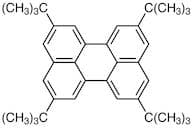
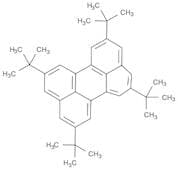
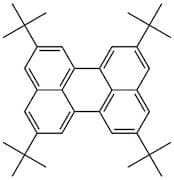
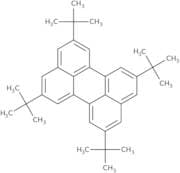
:Perylene, 2,5,8,11-tetrakis(1,1-dimethylethyl)-
Description:
Perylene, 2,5,8,11-tetrakis(1,1-dimethylethyl)-, with the CAS number 80663-92-9, is a polycyclic aromatic hydrocarbon characterized by its four tert-butyl substituents at the 2, 5, 8, and 11 positions of the perylene core structure. This compound exhibits a high degree of stability due to the steric hindrance provided by the bulky tert-butyl groups, which also enhance its solubility in organic solvents. Perylene derivatives are known for their strong fluorescence properties, making them useful in applications such as organic light-emitting diodes (OLEDs) and as fluorescent probes in various chemical and biological studies. The presence of the tert-butyl groups can also influence the electronic properties of the molecule, potentially enhancing its electron-donating capabilities. Additionally, this compound is typically non-polar and hydrophobic, which affects its interactions in biological systems and its environmental behavior. Overall, the unique structure and properties of this perylene derivative make it of interest in materials science and organic chemistry.
Formula:C36H44
Sort by
Purity (%)
0
100
|
0
|
50
|
90
|
95
|
100
Found 4 products.
2,5,8,11-Tetra-tert-butylperylene
CAS:Formula:C36H44Purity:>97.0%(HPLC)Color and Shape:Light yellow to Yellow to Green powder to crystalMolecular weight:476.75Perylene, 2,5,8,11-tetrakis(1,1-dimethylethyl)-
CAS:Formula:C36H44Purity:97%Color and Shape:SolidMolecular weight:476.73462,5,8,11-Tetra-Tert-Butylperylene
CAS:2,5,8,11-Tetra-Tert-ButylperylenePurity:≥97%Molecular weight:476.73g/mol2,5,8,11-Tetra-tert-butylperylene
CAS:2,5,8,11-Tetra-tert-butylperylene (2,5,8,11-TBTP) is a small molecule that acts as an inhibitor of the Toll-like receptor (TLR) signaling pathway. TLRs are found on the surface of cells and are responsible for recognizing pathogen-associated molecular patterns. 2,5,8,11-TBTP has been shown to inhibit the production of cytokines such as TNFα and IL1β in vitro by blocking TLR signaling pathways. It also inhibits transcriptional regulation by preventing activation of NFκB. 2,5,8,11-TBTP has been shown to be an effective inhibitor of skin cancer in vivo and may be used as a therapeutic agent for autoimmune diseases or skin cancer. It has also been shown to inhibit toll-like receptor 4 (TLR4), which is responsible for recognition of bacterial lipopolysaccharide.Formula:C36H44Purity:Min. 95%Molecular weight:476.73 g/mol