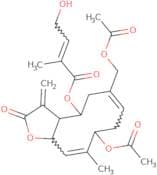
CAS 877822-40-7
:Eupalinolide B
Description:
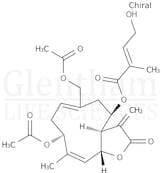
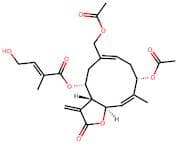
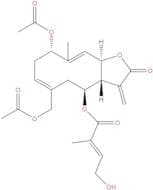
Eupalinolide B is a natural compound classified as a sesquiterpene lactone, which is known for its diverse biological activities. It is derived from certain plant species, particularly those in the Asteraceae family. The molecular structure of Eupalinolide B features a characteristic lactone ring, contributing to its reactivity and potential pharmacological properties. This compound has garnered interest in the field of medicinal chemistry due to its reported anti-inflammatory, antimicrobial, and cytotoxic effects against various cancer cell lines. Eupalinolide B's mechanism of action may involve the modulation of signaling pathways related to inflammation and cell proliferation. Additionally, its unique structural features may allow for further derivatization, enhancing its therapeutic potential. As with many natural products, the extraction and purification processes are critical for obtaining Eupalinolide B in sufficient quantities for research and potential applications. Overall, Eupalinolide B represents a promising candidate for further investigation in drug development and natural product chemistry.
Formula:C24H30O9
Synonyms:- 2-Butenoic acid, 4-hydroxy-2-methyl-, (3aR,4R,6Z,9S,10Z,11aR)-9-(acetyloxy)-6-[(acetyloxy)methyl]-2,3,3a,4,5,8,9,11a-octahydro-10-methyl-3-methylene-2-oxocyclodeca[b]furan-4-yl ester, (2E)-
- EupalinolideB
Sort by
Purity (%)
0
100
|
0
|
50
|
90
|
95
|
100
Found 5 products.
Eupalinolide A
CAS:Eupalinolide B is a natural product ,and demonstrates potent cytotoxicity against A-549, BGC-823, SMMC-7721, and HL-60 tumour cell lines.Formula:C24H30O9Purity:98.82% - 99.22%Color and Shape:SolidMolecular weight:462.49Eupalinolide A
CAS:Eupalinolide A is a sesquiterpene lactone that is extracted from Eupatorium. It has been shown to have anti-inflammatory and antioxidant properties, as well as the ability to activate caspase-9 in cells. This drug also inhibits the production of reactive oxygen species (ROS) by inhibiting mitochondrial membrane potential, which leads to cell death. Eupalinolide A also has the ability to inhibit collagen synthesis and can be used for the treatment of chronic bronchitis, hepatitis, and liver cirrhosis.
Formula:C24H30O9Purity:Min. 95%Molecular weight:462.49 g/molRef: 3D-FE73986
Discontinued product