CAS 89690-11-9
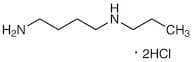
:1,4-Butanediamine, N-propyl-, dihydrochloride
Description:
1,4-Butanediamine, N-propyl-, dihydrochloride is an organic compound characterized by its structure, which includes a butanediamine backbone with a propyl group attached to one of the amine nitrogen atoms. This compound is a dihydrochloride salt, indicating that it has two hydrochloride groups associated with it, which enhances its solubility in water. It typically appears as a white crystalline solid and is hygroscopic, meaning it can absorb moisture from the air. The presence of amine groups suggests that it can participate in hydrogen bonding, influencing its physical properties and reactivity. This compound is often used in various chemical syntheses and may serve as a building block in the production of polymers, pharmaceuticals, or agrochemicals. Safety data indicates that it should be handled with care, as it may cause irritation to the skin, eyes, and respiratory system. Proper safety measures, including the use of personal protective equipment, are recommended when working with this substance.
Formula:C7H18N2・2ClH
Sort by
Purity (%)
0
100
|
0
|
50
|
90
|
95
|
100
Found 5 products.
Xylemin Dihydrochloride
CAS:Formula:C7H18N2·2HClPurity:>98.0%(T)Color and Shape:White to Almost white powder to crystalMolecular weight:203.15Xylemin dihydrochloride
CAS:Xylemin dihydrochloride is a synthetic dye, which is derived from a complex organic chemical synthesis process. It operates by selectively binding to specific cellular components, often through ionic or hydrogen bonding interactions, which enables it to serve as a contrast agent in microscopy.Formula:C7H19ClN2Purity:Min. 95%Molecular weight:166.69 g/mol