CAS 921-60-8
:L-Glucose
Description:
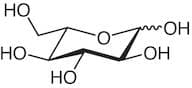
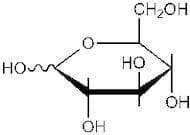
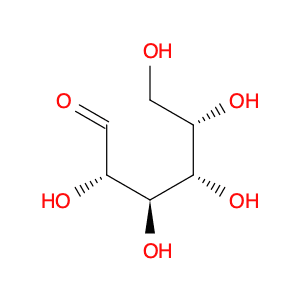
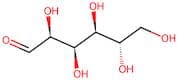
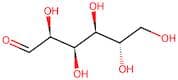
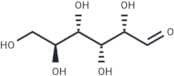
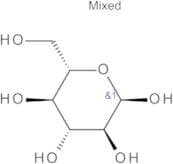
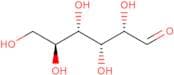
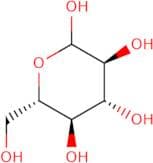
L-Glucose, with the CAS number 921-60-8, is an isomer of glucose, specifically the L-enantiomer, which is a type of sugar. It is a monosaccharide and a simple carbohydrate, characterized by its six-carbon structure (C6H12O6) and the presence of hydroxyl (-OH) groups. L-Glucose is less commonly found in nature compared to its D-glucose counterpart, which is the form utilized by living organisms for energy. This compound is typically a white crystalline solid that is soluble in water, exhibiting sweet taste properties, although it is less sweet than D-glucose. L-Glucose does not participate in the same metabolic pathways as D-glucose, making it of interest in research related to diabetes and metabolic disorders. Its optical activity is notable, as it rotates plane-polarized light to the left (levorotatory). Due to its unique properties, L-Glucose is studied for potential applications in pharmaceuticals and as a non-caloric sweetener.
Formula:C6H12O6
InChI:InChI=1/C6H12O6/c7-1-2-3(8)4(9)5(10)6(11)12-2/h2-11H,1H2/t2-,3-,4+,5-,6-/m0/s1
InChI key:InChIKey=GZCGUPFRVQAUEE-VANKVMQKSA-N
SMILES:[C@@H]([C@H]([C@@H](C=O)O)O)([C@H](CO)O)O
Synonyms:- <span class="text-smallcaps">L</span>(-)-Glucose
- Brn 1724626
- Fm 602
- Glucose, (L)-isomer
- Levoglucose
- alpha-L-glucopyranose
- beta-L-glucopyranose
- L-Glucose
- L(-)-Glucose
- 4-01-00-04327 (Beilstein Handbook Reference)
- L(-)-Glucose
- L-(-)-Glucoseanhydrous,98%
- L-Glucose anhydrous, 98%
- L-GLUCOSE, 98%, MIXTURE OF ANOMERS
- Hexopyranose
- L-GLUCOPYRANOSE
- GLUCOSE, L-
- L-Glucosemonohydrate
- L-Glucose (6CI, 7CI, 8CI, 9CI)
- See more synonyms
Sort by
Purity (%)
0
100
|
0
|
50
|
90
|
95
|
100
Found 12 products.
L-(-)-Glucose
CAS:Formula:C6H12O6Purity:>98.0%(GC)Color and Shape:White to Almost white powder to crystalMolecular weight:180.16L-(-)-Glucose, anhydrous, 98%
CAS:L-(-)-Glucose is an enantiomer of the more common D-glucose a naturally occurring carbohydrate used in an abundance of cellular processes. L-Glucose is a synthetic sugar used in the formation of L-Glucose Pen taacetate, a potential therapeutic agent regarding type II diabetes. In addition, L-glucoseFormula:C6H12O6Purity:98%Color and Shape:Crystals or powder or crystalline powder, WhiteMolecular weight:180.16Ref: IN-DA0036X6
1g60.00€5g183.00€10g261.00€25g538.00€50gTo inquire250gTo inquire500gTo inquire100mg30.00€250mg31.00€L-Glucose
CAS:L-GlucoseFormula:C6H12O6Purity:98%Color and Shape: white crystalline powderMolecular weight:180.16g/molL-Glucose
CAS:Formula:C6H12O6Purity:≥ 99.0%Color and Shape:White to almost white crystalline powderMolecular weight:180.16L-GLUCOSE
CAS:L-Glucose (L-(-)-Glucose) is not bioavailable to cells as an energy source because it cannot be phosphorylated by hexokinase.Formula:C6H12O6Purity:99.78%Color and Shape:SolidMolecular weight:180.16L-Glucose
CAS:Controlled ProductApplications L-Glucose is the enantiomer of D-Glucose (G595000), a naturally occurring carbohydrate used in an abundance of cellular processes. L-Glucose is a synthetic sugar used in the formation of L-Glucose Pentaacetate (G596510), a potential therapeutic agent regarding type II diabetes. In addition, L-glucose can be used as a colon cleansing agent for before a colonoscopy procedure.
References Malaisse, W. et al.: Int. J. Mol. Med., 2, 383 (1998); Raymer, G. et al.: Gastrointest. Endosc., 58, 30 (2003); Wang, R., et al.: J. Mol. Catal. B. Enz., 56, 131 (2009),Formula:C6H12O6Color and Shape:WhiteMolecular weight:180.156L-Glucose
CAS:L-glucose is a monosaccharide that is an important source of energy for the human body. The glucose molecule consists of 6 carbon atoms, 12 hydrogen atoms and 6 oxygen atoms. Glucose enters cells with the help of insulin and ATP-sensitive potassium channels. It has been shown that L-glucose can inhibit viral replication in vitro, such as HIV and herpes simplex virus type 1 (HSV-1). L-Glucose may be used to treat squamous carcinoma by reducing the redox potential in cancer cells. L-Glucose inhibits the growth of c. glabrata by inhibiting transcription activators and enzymes involved in glycolysis. L-Glucose also has hypoglycemic effects on humans by reducing cortisol concentrations in human serum.Formula:C6H12O6Purity:Min. 98 Area-%Color and Shape:White Clear LiquidMolecular weight:180.16 g/molL-Glucose
CAS:L-Glucose is a monosaccharide that belongs to the group of carbohydrates. L-Glucose is an important energy source for living organisms and plays a role in many metabolic pathways, including glycolysis and gluconeogenesis, as well as cell signaling. It is also an essential component of DNA and RNA. L-Glucose has been shown to have effects on brain functions such as memory and learning ability, which may be due to its ability to signal neurons. L-Glucose can be used in model systems to study the effects of diabetes on cells and has been shown to have pluripotent effects on cells. In addition, this molecule has been shown to inhibit the growth of bacteria by binding to the enzyme polysaccharide kinase and reducing its activity. This inhibition leads to decreased synthesis of polysaccharides (e.g., glycogen) that are necessary for cell division.Formula:C6H12O6Purity:Min. 99.5 Area-%Molecular weight:180.16 g/molL-(-)-Glucose
CAS:Formula:C6H12O6Purity:97%Color and Shape:Solid, White powderMolecular weight:180.156