


CAS 95333-14-5
:7-Benzofurancarboxaldehyde
Description:
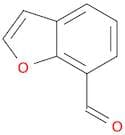
7-Benzofurancarboxaldehyde, with the CAS number 95333-14-5, is an organic compound characterized by its benzofuran structure, which consists of a fused benzene and furan ring, along with an aldehyde functional group. This compound typically appears as a colorless to pale yellow liquid or solid, depending on its purity and temperature. It is known for its aromatic properties and can exhibit a distinctive odor. The presence of the aldehyde group makes it reactive, particularly in nucleophilic addition reactions, and it can participate in various chemical transformations, including oxidation and condensation reactions. 7-Benzofurancarboxaldehyde is often utilized in organic synthesis, particularly in the development of pharmaceuticals and agrochemicals, due to its potential as a building block for more complex molecules. Additionally, it may possess biological activity, making it of interest in medicinal chemistry. Safety data should be consulted for handling and storage, as with any chemical substance, to ensure proper precautions are taken.
Formula:C9H6O2
InChI:InChI=1S/C9H6O2/c10-6-8-3-1-2-7-4-5-11-9(7)8/h1-6H
InChI key:InChIKey=RGPUSZZTRKTMNA-UHFFFAOYSA-N
SMILES:C(=O)C1=C2C(C=CO2)=CC=C1
Synonyms:- 7-Benzofurancarboxaldehyde
- 7-Formylbenzofuran
- 1-Benzofuran-7-carbaldehyde
Sort by
Purity (%)
0
100
|
0
|
50
|
90
|
95
|
100
Found 4 products.
benzofuran-7-carbaldehyde
CAS:Formula:C9H6O2Purity:96%Color and Shape:LiquidMolecular weight:146.1427Benzo[b]furan-7-carboxaldehyde
CAS:Benzo[b]furan-7-carboxaldehydeFormula:C9H6O2Purity:≥95%Color and Shape: clear. colourless liquidMolecular weight:146.14g/molBenzo[b]furan-7-carboxaldehyde
CAS:Benzo[b]furan-7-carboxaldehyde (BBA) is a mitochondrial uncoupler that can be used as an alternative to the toxic and expensive compound dinitrophenol. BBA induces mitochondrial dysfunction and cytosolic Ca2+ levels by inhibiting ATP synthesis and mitochondrial membrane potential. This leads to oxidative injury, which can be reversed with pharmacological treatments. BBA has been shown to have in vitro antifungal activity against Candida albicans and Saccharomyces cerevisiae, but it has not been tested on other fungi. It also has cardioprotective effects in vivo. In rats, intravenous administration of BBA raised the concentration of creatine kinase, indicating myocardial damage. Magnetic resonance spectroscopy revealed the induction of electrophysiological changes in rat cardiomyocytes after treatment with BBA. These changes were accompanied by actin filament depolymerization and disruption of sarcomere structure. MolecularFormula:C9H6O2Purity:Min. 95%Molecular weight:146.14 g/mol

![Benzo[b]furan-7-carboxaldehyde](/_next/image/?url=https%3A%2Fstatic.cymitquimica.com%2Fproducts%2F54%2Fthumb%2FOR307183.jpg&w=3840&q=75)


![Benzo[b]furan-7-carboxaldehyde](/_next/image/?url=https%3A%2Fstatic.cymitquimica.com%2Fproducts%2F3D%2Fthumb%2FVDA33314.jpg&w=3840&q=75)
