CAS 957-56-2
:Fluindione
Description:
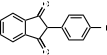
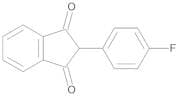
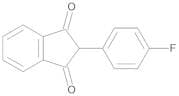
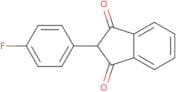
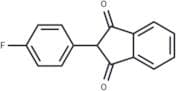
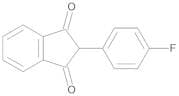
Fluindione, with the CAS number 957-56-2, is an anticoagulant medication that belongs to the class of vitamin K antagonists. It is primarily used in the prevention and treatment of thromboembolic disorders, such as deep vein thrombosis and pulmonary embolism. The chemical structure of fluindione features a 1,3-indandione core, which is essential for its pharmacological activity. As a synthetic compound, it exhibits a high degree of lipophilicity, allowing for effective absorption and distribution within the body. Fluindione functions by inhibiting the synthesis of vitamin K-dependent clotting factors in the liver, thereby reducing the blood's ability to clot. Its pharmacokinetics include a relatively long half-life, which necessitates careful monitoring of coagulation parameters to avoid complications such as bleeding. Additionally, fluindione may interact with various medications and dietary factors, making patient management crucial during therapy. Overall, fluindione is a significant agent in anticoagulation therapy, although its use has declined in favor of newer alternatives with more predictable dosing and fewer interactions.
Formula:C15H9FO2
InChI:InChI=1/C15H9FO2/c16-10-7-5-9(6-8-10)13-14(17)11-3-1-2-4-12(11)15(13)18/h1-8,13H
InChI key:InChIKey=NASXCEITKQITLD-UHFFFAOYSA-N
SMILES:O=C1C(C(=O)C=2C1=CC=CC2)C3=CC=C(F)C=C3
Synonyms:- 1,3-Indandione, 2-(p-fluorophenyl)-
- 1H-Indene-1,3(2H)-dione, 2-(4-fluorophenyl)-
- 2-(4-fluorophenyl)-1H-indene-1,3(2H)-dione
- 2-(p-Fluorophenyl)-1,3-indandione
- Brn 2052411
- Fluindiona
- Fluindiona [INN-Spanish]
- Fluindione [INN]
- Fluindionum
- Fluindionum [INN-Latin]
- Lm 123
- Previscan
- Unii-Eq35Yms20Q
- Fluindione
- fluorindione
- 2-(4-fluorophenyl)indene-1,3-dione
- See more synonyms
Sort by
Purity (%)
0
100
|
0
|
50
|
90
|
95
|
100
Found 7 products.
Fluindione
CAS:Controlled ProductApplications A vitamin K antagonist with anticoagulant applications
References Streiff, M., et al.: Am. J. Hematol., 81, 684 (2006), Vilar, S., et al.: J. Med. Chem., 49, 1118 (2006), Tavassoli, N., et al.: Eur. J. Clin. Pharmacol., 63, 221 (2007), Bodin, L., et al.: J. Thromb. Haemost., 6, 1436 (2008),Formula:C15H9FO2Color and Shape:NeatMolecular weight:240.23Fluindione
CAS:Fluindione is an oral hypolipidemic drug that belongs to the coumarin derivatives. The drug has been shown to reduce serum cholesterol and triglyceride levels, as well as body mass index (BMI). Fluindione is a prodrug that is converted in vivo to its active form, 7-hydroxycoumarin. The metabolism of fluindione may be affected by other drugs such as ketoconazole, erythromycin, and cimetidine. Fluindione has been shown to have a beneficial effect on patients who suffer from bowel disease or cardiac diseases such as atrial fibrillation. Patients who are elderly or hypersensitive are advised to avoid this medication due to its side effects, which include symptoms such as rash, fever, hypotension, tachycardia and high values of liver enzymes.Formula:C15H9FO2Purity:Min. 95%Color and Shape:PowderMolecular weight:240.23 g/molFluindione
CAS:Fluindione is a hematologic drug.Formula:C15H9FO2Color and Shape:SolidMolecular weight:240.23Fluindione 100 µg/mL in Acetonitrile
CAS:Formula:C15H9FO2Color and Shape:Single SolutionMolecular weight:240.23