CAS 97925-43-4
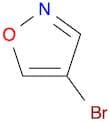
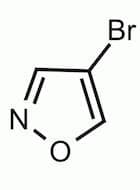
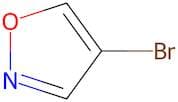
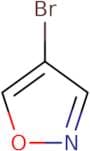
:4-bromoisoxazole
Description:
4-Bromoisoxazole is a heterocyclic organic compound characterized by the presence of both a bromine atom and an isoxazole ring structure. The isoxazole ring consists of a five-membered ring containing three carbon atoms, one nitrogen atom, and one oxygen atom, with the bromine substituent located at the 4-position of the ring. This compound typically exhibits a pale yellow to light brown appearance and is known for its moderate solubility in organic solvents. 4-Bromoisoxazole is of interest in medicinal chemistry and material science due to its potential biological activity and utility as a building block in the synthesis of various pharmaceuticals and agrochemicals. Its reactivity can be attributed to the electron-withdrawing nature of the bromine atom, which can influence the compound's electrophilic and nucleophilic properties. Additionally, the presence of the isoxazole moiety can impart unique chemical behavior, making it a valuable compound for further research and application in various chemical contexts.
Formula:C3H2BrNO
InChI:InChI=1/C3H2BrNO/c4-3-1-5-6-2-3/h1-2H
SMILES:c1c(con1)Br
Sort by
Purity (%)
0
100
|
0
|
50
|
90
|
95
|
100
Found 5 products.
4-Bromoisoxazole
CAS:4-BromoisoxazoleFormula:C3H2BrNOPurity:98%Color and Shape: white to light yellow solidMolecular weight:147.96g/mol4-Bromoisoxazole
CAS:4-Bromoisoxazole is a reactive isoxazole that can be prepared by the reaction of an azide and a boronic ester. This compound has been shown to be effective for the treatment of cancer, but it also has an inhibitory effect on the synthesis of proteins and enzymes. The 4-bromoisoxazole can be synthesized from phenyl substituted isoxazoles and palladium-catalyzed cross-coupling reactions. Preparative methods for this compound include the use of acetonitrile as solvent with a dipolarity of 0.5D or greater, and argon as inert gas at atmospheric pressure. Hydrochloric acid should not be used in these preparations as it will react with 4-bromoisoxazole to produce toxic hydrochloric acid fumes.
Formula:C3H2BrNOPurity:Min. 95%Color and Shape:PowderMolecular weight:147.96 g/mol