Amino Acid Derivatives
Amino acid derivatives are compounds that are structurally related to amino acids but have been chemically modified to introduce new functional groups or alter their properties. These derivatives are widely used in peptide synthesis, drug development, and biochemical research. At CymitQuimica, we offer a broad range of high-quality amino acid derivatives to support your research and industrial applications, ensuring precise and effective results in your experiments and synthesis projects.
Found 3955 products of "Amino Acid Derivatives"
Sort by
Purity (%)
0
100
|
0
|
50
|
90
|
95
|
100
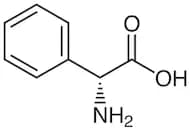
D-2-Phenylglycine
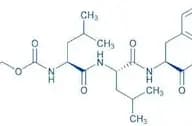
CAS:Formula:C8H9NO2Purity:>99.0%(T)Color and Shape:White to Almost white powder to crystalMolecular weight:151.17Z-Leu-Leu-Tyr-α-keto aldehyde
CAS:<p>Z-LLY-α-keto aldehyde (peptidyl glyoxal), previously shown to be an excellent inhibitor of the serine and cysteine proteases, was found to be an excellent inhibitor of the chymotryptic-like activity of proteasome exhibiting a Ki value of approximately 3.0 nM. Such inhibitor might be valuable in the characterization of the role of proteasome in normal and aberrant pathways of protein catabolism in the cell.</p>Formula:C30H39N3O7Color and Shape:WhiteMolecular weight:553.66Procathepsin B (26-50) (rat)
CAS:<p>This 25 residue peptide was completely resistant to proteolysis by cathepsin B even after incubation overnight. It inhibited human cathepsin B with Ki = 2.8 µM and rat cathepsin B with Ki = 2 µM.</p>Formula:C123H198N34O33SPurity:94.0%Molecular weight:2713.2(Leu¹³)-Motilin (human, porcine)
CAS:<p>(Leu¹³)-Motilin (human, porcine) has been shown to produce an excitory response in the chicken gastrointestinal tract with a different sensitivity from region to region. The mechanisms of action were different between the proventriculus and the intestinal segments. The motilin analog contracted the intestinal segments by direct action on the smooth muscle cells whereas in the proventriculus it caused contraction and enhancement of electrical field stimulation-induced response through an action on the intramural cholinergic neurons.</p>Formula:C121H190N34O35Molecular weight:2681.05(Lys(Ac)⁵·⁸·¹²·¹⁶)-Histone H4 (1-25)-Gly-Ser-Gly-Ser-Lys(biotinyl)
CAS:<p>Bachem ID: 4097460.</p>Formula:C141H243N53O43SColor and Shape:White PowderMolecular weight:3400.88(D-Asn²⁸)-Exenatide
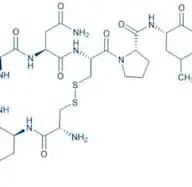
CAS:<p>Potential impurity of exenatide.</p>Formula:C184H282N50O60SPurity:95.4%Color and Shape:White PowderMolecular weight:4186.63Oxytocin (free acid)
CAS:<p>Degradation product of oxytocin.</p>Formula:C43H65N11O13S2Purity:95.1%Molecular weight:1008.19(Ser(Ac)³)-Ghrelin (mouse, rat)
CAS:<p>Bachem ID: 4095528.</p>Formula:C141H233N45O42Purity:98.0%Color and Shape:White LyophilisateMolecular weight:3230.64(Lys(Me)₂²⁷)-Histone H3 (21-44)-Gly-Lys(biotinyl)
CAS:<p>Bachem ID: 4099858.</p>Formula:C129H218N44O33SPurity:97.2%Molecular weight:2945.49Suc-Ala-Glu-Pro-Phe-AMC
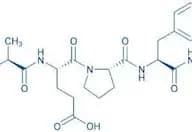
CAS:<p>Suc-AEPF-AMC, fluorogenic substrate for the peptidylprolyl isomerase Pin1.</p>Formula:C36H41N5O11Purity:99.1%Molecular weight:719.75FSL-1-DYKDDDDK
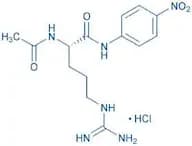
CAS:<p>The lipopeptide FSL-1, synthesized on the basis of the N-terminal structure of a M. salivarium lipoprotein, is capable of inducing the cell surface expression of ICAM-1 in human gingival fibroblasts. It furthermore revealed an activity to induce production of monocyte chemoattractant protein 1, interleukin-6 (IL-6), and IL-8. FSL-1 also activated macrophages to produce tumor necrosis factor alpha. Overall, results by Okusawa and coworkers suggest that the diacylglyceryl and the peptide portions of FSL-1 are indispensable for the expression of biological activities and for the recognition by Toll-like receptors 2 and 6. Furthermore, the same authors conclude that the recognition of FSL-1 by Toll-like receptors 2 and 6 apparently is hydrophobic.</p>Formula:C125H198N24O37SPurity:97.0%Color and Shape:White PowderMolecular weight:2661.15Ac-Arg-pNA · HCl
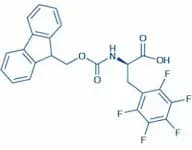
CAS:<p>Chromogenic substrate for trypsin and papain.</p>Formula:C14H20N6O4·HClPurity:>99%Color and Shape:Light YellowMolecular weight:372.81Fmoc-pentafluoro-D-Phe-OH
CAS:Formula:C24H16F5NO4Purity: 96.2%Color and Shape:WhiteMolecular weight:477.38(Lys(Me)₃⁹)-Histone H3 (1-21)-Gly-Gly-Lys(biotinyl) amide
CAS:<p>Bachem ID: 4097932.</p>Formula:C117H212N43O32SPurity:97.1%Color and Shape:White PowderMolecular weight:2765.31H-Arg-Val-Leu-psi(CH₂NH)Phe-Glu-Ala-Nle-NH₂
CAS:<p>The peptide RVL-psi[CH2NH]FEA-Nle-amide containing a reduced peptide bond was found to be a competitive inhibitor of the HIV-1 protease (Ki = 50 nM).</p>Formula:C40H69N11O8Purity:> 96%Color and Shape:WhiteMolecular weight:832.06Enterostatin (human, mouse, rat)
CAS:<p>Bachem ID: 4011240.</p>Formula:C21H36N8O6Purity:97.7%Color and Shape:Light YellowMolecular weight:496.57H-Trp-Phe-Tyr-Ser(PO₃H₂)-Pro-Arg-pNA
CAS:<p>WFYpSPR-pNA, chromogenic substrate for Pin1, an essential and conserved mitotic peptidyl-prolyl isomerase (PPIase), that specifically recognizes the phosphoserine-proline bonds present in mitotic phosphoproteins (kcat/Km = 20160 mM⁻¹s⁻¹).</p>Formula:C49H59N12O13PPurity:96.7%Color and Shape:Light Yellow PowderMolecular weight:1055.05Pancreatic Polypeptide (bovine)
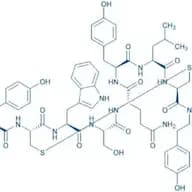
CAS:<p>Bachem ID: 4012218.</p>Formula:C186H287N53O56S2Purity:99.2%Color and Shape:White PowderMolecular weight:4225.78H-Tyr-Cys-Trp-Ser-Gln-Tyr-Leu-Cys-Tyr-OH
CAS:<p>The TNF-α antagonist WP9QY inhibited TNF-α mediated apoptosis and exhibited an IC₅₀ of 5 µM in the binding assay. YCWSQYLCY is the smallest peptidomimetic developed to date that might be used as a lead compound for the next generation of non-peptidic inhibitors. The name WP9QY arises from the binding to the site observed in the TNF-β/TNF-receptor(I) complex designated WP9 and the introduction of the amino acids Gln and Tyr.</p>Formula:C58H71N11O15S2Purity:97.9%Molecular weight:1226.4Neuropeptide Y (3-36) (human, rat)
CAS:<p>Main degradation product of NPY in serum and Y2/Y5 receptor agonist.</p>Formula:C175H269N53O54SPurity:> 99%Color and Shape:White PowderMolecular weight:4011.45