Ferroptosis
Ferroptosis is a form of regulated cell death characterized by the accumulation of lipid peroxides and iron-dependent oxidative stress. Unlike apoptosis, ferroptosis is not driven by caspases but rather by the failure of cellular antioxidant defenses, leading to cell death. Ferroptosis inhibitors and inducers are critical for studying this unique cell death pathway, which is implicated in various diseases, including cancer, neurodegeneration, and ischemia-reperfusion injury. At CymitQuimica, we offer a wide range of high-quality ferroptosis modulators to support your research in cell death mechanisms, oxidative stress, and disease pathology.
Found 215 products of "Ferroptosis"
Sort by
Purity (%)
0
100
|
0
|
50
|
90
|
95
|
100
GPX4-IN-5
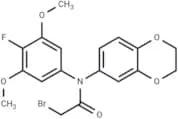
CAS:GPX4-IN-5 is a GPX4 inhibitor with antitumor activity.GPX4-IN-5 induces iron death and may be used for the treatment of triple negative breast cancer.Formula:C18H17ClFNO5Purity:99.58%Color and Shape:SoildMolecular weight:381.78Ferroptosis-IN-14
Ferroptosis-IN-14 (compund 36) exhibits the most potent anti-ferroptotic activity with an EC50 value of 0.58 ± 0.02 μM, demonstrating excellent anti-ferroptotic efficacy, as well as stability in microsomes and plasma.Color and Shape:Odour SolidNYY-6a
<p>NYY-6a is a ferroptosis (Ferroptosis) inhibitor, demonstrating significant suppression of RSL3-induced ferroptosis in 786-O and HT-1080 cells, with EC50 values of 52 nM and 50 nM, respectively. As a radical-trapping antioxidant (RTA), NYY-6a effectively reduces lipid peroxidation, comparable to ferrostatin-1 and liproxstatin-1, making it useful for research into ferroptosis-related pathologies.</p>Formula:C23H22N2O3Color and Shape:SolidMolecular weight:374.43GPX4-IN-6
CAS:GPX4-IN-6 is a GPX4 inhibitor with antitumor activity.GPX4-IN-6 induces iron death and is used for the treatment and prevention of triple-negative breast cancerFormula:C18H17BrFNO5Purity:99.54%Color and Shape:SoildMolecular weight:426.23GPX4-IN-14
GPX4-IN-14 (compound 2c) acts as a GPX4 inhibitor, exhibiting both free radical scavenging activity (with a maximum scavenging rate of 72.52%) and anti-tumor proliferation activity in vitro. This compound targets GPX4 protein, elevating lipid peroxide and intracellular Reactive Oxygen Species (ROS) levels, which induces ferroptosis and contributes to its anti-tumor proliferation effects.Formula:C26H39NO8SeColor and Shape:SolidMolecular weight:572.55UAMC-4821
<p>UAMC-4821 is a ferroptosis inhibitor with an IC50 of 5.2 nM. It effectively scavenges free radicals, inhibits lipid peroxidation, and prevents ML162-induced ferroptosis, providing protective effects on HT-1080 cells. With favorable pharmacokinetic properties in mice, UAMC-4821 presents an oral bioavailability of 63% and demonstrates blood-brain barrier permeability.</p>Formula:C15H19N3OColor and Shape:SolidMolecular weight:257.33PROTAC GPX4 degrader-2
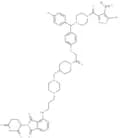
<p>PROTACGPX4 degrader-2 (compound 18a) is a proteolysis-targeting chimera (PROTAC) that targets the degradation of glutathione peroxidase 4 (GPX4), with a DC50, 48h value of 1.68 μM. It induces the accumulation of lipid peroxides and mitochondrial depolarization, subsequently triggering ferroptosis. Additionally, PROTACGPX4 degrader-2 exhibits antiproliferative activity.</p>Formula:C50H61ClN8O9Molecular weight:952.425PROTAC NCOA4 degrader-1
<p>PROTACNCOA4 degrader-1 (Compound V3) is a PROTAC-based degrader of NCOA4, exhibiting a DC50 of 3 nM in HeLa cells. Besides acting as a ferroptosis inhibitor, this compound effectively reduces the levels of NCOA4 and decreases intracellular ferrous (Fe2+) levels. Moreover, PROTACNCOA4 degrader-1 ameliorates liver damage in a CCl4-induced acute liver injury model.</p>Color and Shape:Odour SolidVK-28
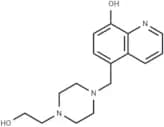
CAS:<p>VK-28 is a brain permeable iron chelator with neuroprotection. VK-28 inhibits basal as well as iron-induced mitochondrial lipid peroxidation.</p>Formula:C16H21N3O2Purity:99.87%Color and Shape:SolidMolecular weight:287.36PROTAC GPX4 degrader-1
CAS:PROTAC GPX4 Degrader-1 (DC-2) is a PROTAC-based compound that efficiently degrades GPX4, demonstrating a degradation concentration (DC 50) of 0.03 μM in HT1080Formula:C50H57ClN10O10Color and Shape:SolidMolecular weight:993.5Photosensitizer-5
Photosensitizer-5, a photodynamic agent, exhibits cytotoxicity towards HeLa and HepG2 cells, with IC50 values of 10.4 nM and 6.9 nM, respectively. It induces cell death through lipid peroxidation via an iron-independent ferroptosis pathway. Additionally, Photosensitizer-5 displays antitumor activity in HeLa-tumor-bearing mice.Formula:C35H26BF2IN4O2Color and Shape:SolidMolecular weight:710.32Ru-Poma
<p>Ru-Poma is an Ru(II)-based photosensitizer designed to enhance the efficacy of photodynamic therapy (PDT) against tumors resistant to Cisplatin. It targets Pomalidomide to partially degrade CRBN, inducing ferroptosis by increasing lipid peroxides and downregulating GPX4 and GAPDH expression. In A549 cells, Ru-Poma exhibits cytotoxicity with IC50 values of 18.46 μM in the dark and 0.37 μM under illumination.</p>Formula:C89H75Cl2N11O11Ru·7H2OAnticancer agent 178
<p>Anticanceragent 178 (compound C2) is a potent anticancer compound. It effectively inhibits the proliferation and metabolic activity of MDA-MB 231 cells, with IC50 values of 1.1 and 4.2 μM, respectively. Additionally, Anticanceragent 178 induces ferroptosis and necroptosis in cells.</p>Formula:C32H30ClFeN2O6Molecular weight:629.11418Ferroptosis-IN-17
<p>Ferroptosis-IN-17 (Compound 18) is an inhibitor of ferroptosis with an EC50 value of 0.57 μM. It effectively reduces the accumulation of intracellular ferrous ions and lipid peroxidation while restoring levels of glutathione (GSH) and glutathione peroxidase 4 (GPX4). In rat plasma, Ferroptosis-IN-17 demonstrates good solubility and notable metabolic stability. This compound holds potential for research in tumor suppression, neurodegenerative diseases, and cardiovascular disorders.</p>Formula:C21H26N4O5SColor and Shape:SolidMolecular weight:446.52VEGFR-2-IN-68
<p>VEGFR-2-IN-68 (13b) is an inhibitor of VEGFR-2 with an IC50 value of 41.51 nM. It can induce apoptosis and cause G2/M cell cycle arrest, as well as exhibit anti-cancer metastasis properties.</p>Formula:C27H25N5O2SColor and Shape:SolidMolecular weight:483.1729Ferroptosis inducer-4
Ferroptosisinducer-4 (Compound 5) is a phospholipid-based ferroptosis inducer featuring a terminal double bond at the sn-2 position. It exhibits significant cytotoxicity towards HT-1080 cells with an IC50 value of 18 μM. The toxicity mechanism involves the generation of lipid peroxides and oxidative damage to the cell membrane induced by the terminal double bond. Ferroptosisinducer-4 can be utilized in studies pertaining to the regulation of ferroptosis.Formula:C33H64NO7PColor and Shape:SolidMolecular weight:617.84W1131 TFA
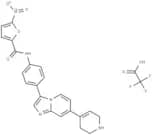
<p>W1131 TFA is a STAT3 inhibitor and ferroptosis inducer that regulates the IL6-JAK-STAT3 and ferroptosis pathways,gastric cancer.</p>Formula:C25H20F3N5O6Purity:98.1%Color and Shape:SolidMolecular weight:543.45NA-Ir
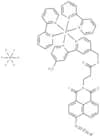
CAS:<p>NA-Ir is a ferroptosis (Ferroptosis) inducer that targets mitochondrial DNA (mtDNA) and activates the cGAS-STING pathway to stimulate ferritin autophagy (). It also induces the production of reactive oxygen species (ROS) through photodynamic therapy (PDT), depletes glutathione (GSH), and downregulates glutathione peroxidase 4 (GPX4), thereby triggering lipid peroxidation and ferroptosis. NA-Ir exhibits enhanced anticancer activity under light exposure and selectively inhibits cancer cells with high H2S content.</p>Formula:C49H36F6IrN8O4PColor and Shape:SolidMolecular weight:1138.04Ferroptosis-IN-16
<p>Ferroptosis-IN-16 (Compound 13l) acts as a specific inhibitor of ferroptosis, demonstrating EC50 values of 0.7 nM in ES-2 cells and 0.9 nM in LX-2 cells. It effectively alleviates acute liver injury induced by Acetaminophen in mouse models and shows excellent metabolic stability in mouse liver microsomes.</p>Formula:C26H23N5OColor and Shape:SolidMolecular weight:421.49Ferroptosis-IN-12
<p>Ferroptosis-IN-12 (Cpd-A1) is an inhibitor of ferroptosis. It effectively suppresses ferroptosis in mouse renal tubular epithelial cells (mTECs) treated with Erastin and improves renal function in dose-dependent manners in mouse models of acute kidney injury (AKI) induced by ischemia/reperfusion (I/R) or cecal ligation and puncture (CLP). This compound also reduces renal tubular damage and eliminates inflammation. Exhibiting good plasma stability and high distribution in renal tissues during pharmacokinetic studies in mice, Ferroptosis-IN-12 shows promising potential for research in the field of AKI.</p>Color and Shape:Odour Solid