Microtubule Associated
Microtubule-associated protein inhibitors target proteins that interact with microtubules, the structural components of the cell's cytoskeleton that are essential for cell division. These proteins regulate the stability and dynamics of microtubules during mitosis. Inhibiting microtubule-associated proteins can disrupt microtubule function, leading to cell cycle arrest and apoptosis, particularly in rapidly dividing cancer cells. These inhibitors are widely used in cancer research and drug development. At CymitQuimica, we offer a comprehensive range of high-quality microtubule-associated protein inhibitors to support your research in cell division, cytoskeletal dynamics, and cancer therapy.
Found 285 products of "Microtubule Associated"
Sort by
Purity (%)
0
100
|
0
|
50
|
90
|
95
|
100
AADvac 1 TFA
AADvac 1 TFA is an active tau peptide vaccine utilized in Alzheimer's disease research. It is formed by conjugating the regulatory peptide 294KDNIKHVPGGGS305, which drives tau oligomerization, with keyhole limpet hemocyanin (KLH), and is formulated with aluminum hydroxide.Tubulin/PARP-IN-1
<p>Tubulin/PARP-IN-1 (compound 14) is a dual PARP-tubulin inhibitor with anti-endometrial cancer activity. It exhibits inhibitory concentration (IC50) values of 74 nM for PARP1, 109 nM for PARP2, and 1.4 μM for microtubules/tubulin. Tubulin/PARP-IN-1 induces apoptosis and autophagy, causing cell cycle arrest at the G2/M phase.</p>Formula:C19H13FO3Molecular weight:308.08487Vinflunine Tartrate
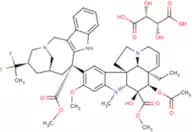
CAS:Vinflunine Tartrate, a uniquely fluorinated vinca alkaloid, exhibits mitotic-arresting and tubulin-interacting properties.Formula:C45H54F2N4O8·xC4H6O6Purity:98%Color and Shape:SolidMolecular weight:967.02Anti-α-Tubulin Antibody, AF555 conjugate
Anti-α-Tubulin Antibody, AF555 conjugate, is a mouse-derived monoclonal antibody conjugated with the red fluorescent dye Alexa Fluor 555, designed for theColor and Shape:SolidTubulin inhibitor 38
<p>Tubulin Inhibitor 38 (Compound 14), a tetrazole-based agent, demonstrates significant antiproliferative effects by inducing mitotic arrest and blocking the cell</p>Formula:C17H13ClN6OSColor and Shape:SolidMolecular weight:384.8410-Oxo Docetaxel
CAS:10-Oxo Docetaxel is a Docetaxel intermediate having remarkable antitumor properties.Formula:C43H51NO14Purity:98%Color and Shape:SolidMolecular weight:805.874ALB-109564 dihydrochloride
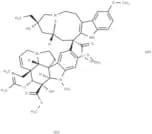
CAS:<p>ALB-109564 dihydrochloride: Semi-synthetic, vinblastine-derived, microtubule inhibitor, arrests tumor cells in G2/M phase.</p>Formula:C47H62Cl2N4O9SPurity:98%Color and Shape:SolidMolecular weight:929.99Tubulin polymerization-IN-50
Tubulin Polymerization-IN-50 (compound 7n) serves as an inhibitor of tubulin polymerization, exhibiting an IC50 of 5.05 μM in SK-Mel-28 cells and inducing cellFormula:C24H20FN3O3Color and Shape:SolidMolecular weight:417.43T-808
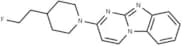
CAS:T-808 is a tau tracer which may be used in radiographic labeling of Tau aggregates during Alzheimer's disease.Formula:C17H19FN4Color and Shape:SolidMolecular weight:298.36KGP591
KGP591, a tubulin polymerization inhibitor with an IC50 of 0.57 µM, effectively induces G2/M arrest, inhibits cell migration, and disrupts microtubule structureFormula:C24H21NO5Color and Shape:SolidMolecular weight:403.43Anticancer agent 270
Anticanceragent 270 (Compound 8e) is a microtubule protein inhibitor with an IC50 of 1.02 μM against MCF-7 breast cancer cells. It exerts significant antiproliferative activity on breast cancer cells through a dual mechanism of inducing apoptosis and destabilizing microtubules. Anticanceragent 270 is useful for cancer research.Color and Shape:Odour SolidAlestramustine
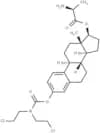
CAS:Alestramustine: a cancer drug that targets microtubules in estrogen receptor-positive cells, impeding cell division.Formula:C26H36Cl2N2O4Color and Shape:SolidMolecular weight:511.48Tubulin inhibitor 36
Tubulin Inhibitor 36 (Compound 10) serves as a potent novel inhibitor of tubulin polymerization, which consequently induces apoptosis in glioblastoma cells,Formula:C16H13ClN6SColor and Shape:SolidMolecular weight:356.83Tubulin inhibitor 21
Compound 6f, a chalcone-melatonin hybrid, is a potent tubulin inhibitor with IC50=0.26μM in SW480 cells, less toxic to non-cancer cells.Formula:C28H25N3O4SColor and Shape:SolidMolecular weight:499.58PM050489
CAS:PM050489, a polyketone inhibitor from Lithoplocamia lithistoides, halts mitosis at 26.4 nM IC50 and aids cancer research.Formula:C31H44ClN3O7Color and Shape:SolidMolecular weight:606.15Tubulin polymerization-IN-78
Tubulin polymerization-IN-78 (compound 10a) is an inhibitor of tubulin polymerization, with an IC50 value of 2.69 μM. It exhibits antiproliferative activity.Color and Shape:Odour SolidTubulin polymerization-IN-46
Tubulin polymerization-IN-46 (compound 9q) is a microtubule/tubulin inhibitor that impedes tubulin polymerization, induces apoptosis, and arrests MCF-7 breastFormula:C22H25NO6Color and Shape:SolidMolecular weight:399.4420-O-Demethyl-AP3
CAS:<p>20-O-Demethyl-AP3, a derivative of the microtubule-inhibiting antitumor agent Ansamitocin P-3, is a secondary metabolite.</p>Formula:C31H41ClN2O9Color and Shape:SolidMolecular weight:621.12Cy5-Paclitaxel
Cy5-Paclitaxel is a Cy5-labeled paclitaxel conjugate. Cy5 is a cyanine dye (with an approximate wavelength of 662 nm) utilized in molecular labeling and microscopy imaging. Paclitaxel stabilizes tubulin polymerization, causing mitotic arrest and apoptotic death. It also induces autophagy.Formula:C93H104N4O16Molecular weight:1533.84Breast cancer targeting peptide 18-4
CAS:Breastcancertargeting peptide 18–4 is a keratin 1 (KRT1) receptor-targeting peptide with a dissociation constant (Kd) of 0.98 μM. Its amino acid sequence is WxEAAYQrFL, and it is an analogue of the P160 peptide. When covalently bonded with the anticancer peptide MccJ25, it significantly enhances MccJ25 uptake in breast cancer cells and boosts its anticancer efficacy. The IC50 values for this covalent compound are 14.2, 20, and 25 μM against MCF-7, MDA-MB-435, and MDA-MB-435-MDR, respectively.Formula:C63H89N15O15Molecular weight:1296.47