Enzyme
Enzyme inhibitors are molecules that bind to enzymes and decrease their activity. These inhibitors are widely used in research to study enzyme kinetics, regulation, and the role of specific enzymes in metabolic pathways. Enzyme inhibitors are also crucial in drug development, as many therapeutic agents function by inhibiting enzymes involved in disease processes. By targeting enzymes, these inhibitors can modulate biochemical pathways and offer potential treatments for various diseases. At CymitQuimica, we provide a comprehensive selection of high-quality enzyme inhibitors to support your research in biochemistry, pharmacology, and drug discovery.
Subcategories of "Enzyme"
- Carbonic Anhydrase(178 products)
- Hydroxylase(30 products)
- MPO(2 products)
- Reductase(52 products)
- Tyrosinase(67 products)
Found 3587 products of "Enzyme"
Sort by
Purity (%)
0
100
|
0
|
50
|
90
|
95
|
100
LP-533401
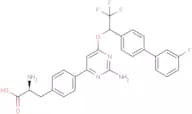
CAS:<p>LP-533401 is an inhibitor of Tryptophan hydroxylase 1. It is used for regulates serotonin production in the gut.</p>Formula:C27H22F4N4O3Purity:98%Color and Shape:SolidMolecular weight:526.48Disulfamide
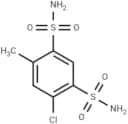
CAS:<p>Disulfamide: Oral carbonic anhydrase inhibitor, IC50 0.07 μM, diuretic by blocking Na+/HCO3- reabsorption.</p>Formula:C7H9ClN2O4S2Purity:98.1%Color and Shape:SolidMolecular weight:284.74hCAIX-IN-5
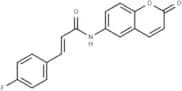
CAS:<p>hCAIX-IN-5 was a selective hCAIX inhibitor, inhibiting hCAI, hCAII, hCAIV, and hCAIX with Ki values of >10000, >10000, 130.7, and 829.1 nM, respectively.</p>Formula:C18H12FNO3Purity:99.26%Color and Shape:SolidMolecular weight:309.29hCA I-IN-2
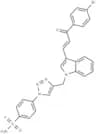
CAS:<p>hCA I-IN-2 (6d) inhibits hCA I (Ki: 18.8 nM) more selectively over II, IX, XII (Ki: 375.1, 1721, 283.9 nM).</p>Formula:C26H20BrN5O3SColor and Shape:SolidMolecular weight:562.44SU 10603
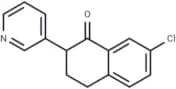
CAS:<p>SU 10603 is a specific inhibitor of 17α-hydroxylase (also known as CYP17A1 and P450c17) used to study steroid hormone synthesis.</p>Formula:C15H12ClNOPurity:99.93% - 99.96%Color and Shape:SolidMolecular weight:257.72FC11409B
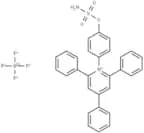
CAS:<p>FC11409B is a CAIX inhibitor, inhibiting breast cancer invasion and metastasis.</p>Formula:C29H23BF4N2O3SColor and Shape:SolidMolecular weight:566.38Protease - from bacillus licheniformis
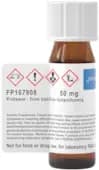
CAS:<p>Protease enzymes break down proteins and are essential for many biological processes, including digestion, cellular regulation and blood clotting. They are also used in many industrial and biotechnological applications for example in food processing and in detergents.</p>Color and Shape:PowderDNase I
CAS:<p>DNase I (Deoxyribonuclease I, EC 3.1.21.1) is an endonuclease that cleaves DNA, yielding 5'-phosphate-terminated polynucleotides with a free hydroxyl group on position 3'. On average it produces tetranucleotides. One unit of the DNase I will increase the absorbance of 260nm light at a rate of 0.001/minute in 1 ml reaction volume at 25°C.</p>Carbonic anhydrase inhibitor 6
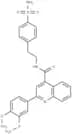
CAS:<p>Carbonic anhydrase inhibitor 6 is an hCA inhibitor that inhibits hCA IX, hCA II, hCA XII, and hCA I. It is used in the study of lupus erythematosus.</p>Formula:C26H25N3O5SPurity:98.81%Color and Shape:SolidMolecular weight:491.56Butyrylcholinesterase human
CAS:<p>Butyrylcholinesterase is an enzyme made in the liver and found mainly in blood plasma. Butyrylcholinesterase (EC 3.1.1.8), also known as BChE or BuChE, is a nonspecific cholinesterase enzyme that hydrolyses choline-based esters. One unit of Butyrylcholinesterase will hydrolyze 1.0 μmole of butyrylcholine to choline and butyrate per minute at pH 8.0 and 37 °C.</p>Color and Shape:Powderendo-β-1,4-Mannanase
CAS:<p>Endo-β-1,4-Mannanase (other names Mannan endo-1,4-β-mannosidase, endo-β-1,4-mannase, β-mannanase B, β-1, 4-mannan 4-mannanohydrolase, endo-β-mannanase, β-D-mannanase, 1,4-β-D-mannan mannanohydrolase; EC 3.2.1.78) is an enzyme, catalyzing the hydrolysis of -1, 4-mannosidic linkages in mannans, glucomannans and galactomannans. One unit of Endo-β-1,4-Mannanase will release 1.0 µmole of mannose reducing-sugar per minute from a 3mg/ml mannan solution at pH 5.5 and 37degC. Expressed in U/g.</p>Urokinase
CAS:<p>Urokinase (urokinase-type plasminogen activator, uPA; EC 3.4.21.73) is as serine protease. Its physiological substrate is plasminogen. Urokinase converts plasminogen into an active enzyme, plasmin, which is also a serine protease. In its active form plasmin plays an important role in dissolving blood clots. Despite its name, Urokinase is not a kinase.</p>Formula:C21H25BrN2O3Purity:(%) Min. 85%Bupicomide
CAS:<p>Bupicomide is a dopamine β-hydroxylase inhibitor with antihypertensive and vasodilatory activity and may be used in the study of hypertension.</p>Formula:C10H14N2OPurity:99.84% - >99.99%Color and Shape:SolidMolecular weight:178.23Carboxypeptidase Y from baker's yeast
CAS:<p>Carboxypeptidase Y (EC 3.4.16.1) is an exopeptidase enzyme. It hydrolyzes peptide bonds of C-terminal residues and it remains active in the presence of urea at low to moderate concentrations. One unit of the Carboxypeptidase Y will hydrolyze 1.0 μmole of a chromogenic peptide substrate, releasing C-terminal alanine and generating a light-absorbing product.</p>Purity:Min. 95%Lyticase
CAS:<p>Lyticase is a lysing enzyme that is designed to lyse cells in a biological sample. It contains an optimized wild-type guanine nucleotide-binding protein and has been shown to have high enzyme activities. Lyticase has also been shown to be active against opportunistic fungal strains, such as Candida glabrata, by disrupting their cell membranes. Lyticase is classified as a signal peptide with nuclear DNA, which allows it to be used in wastewater treatment applications. The enzyme can also be used for the analysis of the Toll-like receptor (TLR) response of microbes due to its electrochemical impedance spectroscopy properties.</p>Purity:Min. 95%Superoxide dismutase - >3000 units/mg
CAS:<p>Superoxide dismutase is an enzyme that catalyzes the conversion of harmful superoxide into hydrogen peroxide and oxygen.</p>Color and Shape:PowderMolecular weight:203.16 g/molD-Alanine Aminotransferase, Bacilus subtilis, Recombinant
<p>D-Alanine aminotransferase (L-glutamic-pyruvic transaminase; EC 2.6.1.21) is an enzyme that catalyzes the following reaction: D-alanine + α-ketoglutarate ⇌ pyruvate + D-glutamate Please enquire for more information about D-Alanine Aminotransferase, Bacilus subtilis, Recombinant including the price, delivery time and more detailed product information at the technical inquiry form on this page</p>Purity:>90% By Sds-Page.Sultiame
CAS:<p>Sultiame is an inhibitor of carbonic anhydrase. Sultiame can be used in antiepileptic research.</p>Formula:C10H14N2O4S2Purity:99.91%Color and Shape:SolidMolecular weight:290.36Endoproteinase Glu-C
CAS:<p>Endoproteinase Glu-C (Glutamyl endopeptidase, V8 protease, GluV8, EC 3.4.21.19) is a protease that hydrolyzes peptide bonds at the carboxylic side of either exclusively Glu, or Glu and Asp residues, depending on the buffer conditions. One unit of endoproteinase Glu-C will generate 1.0 μmole of p-nitroaniline from Z-Phe-Leu-Glu-pNA peptide mimic substrate per minute at pH 7.8 and 25 °C. Z-Phe-Leu-Glu-pNA substrate is available here.molecular weight ~ 27000.</p>Formula:C65H98N16O19Molecular weight:1,407.56 g/molProteinase K - from Tritirachium album
CAS:<p>Proteinase K is used for the general digestion of proteins and removal of protein contamination in nucleic acids. Addition of Protease K also stabilizes nucleic acids by degrading any nucleases present. Proteinase K is active in wide range of pH range, in the presence of SDS, urea and Guanidinium chloride at low to moderate concentrations. Proteinase K is also known under names of protease K and endopeptidase K.</p>