Enzyme
Enzyme inhibitors are molecules that bind to enzymes and decrease their activity. These inhibitors are widely used in research to study enzyme kinetics, regulation, and the role of specific enzymes in metabolic pathways. Enzyme inhibitors are also crucial in drug development, as many therapeutic agents function by inhibiting enzymes involved in disease processes. By targeting enzymes, these inhibitors can modulate biochemical pathways and offer potential treatments for various diseases. At CymitQuimica, we provide a comprehensive selection of high-quality enzyme inhibitors to support your research in biochemistry, pharmacology, and drug discovery.
Subcategories of "Enzyme"
- Carbonic Anhydrase(178 products)
- Hydroxylase(30 products)
- MPO(2 products)
- Reductase(52 products)
- Tyrosinase(67 products)
Found 3587 products of "Enzyme"
Sort by
Purity (%)
0
100
|
0
|
50
|
90
|
95
|
100
Tyrosinase-IN-35
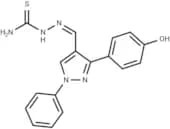
CAS:<p>Tyrosinase-IN-35 (compound 6g), exhibiting a IC 50 value of 2.09 μM, serves as a more effective inhibitor of human tyrosinase compared to Kojic Acid (IC 50: 16.38 μM). At concentrations of 4 μM and 8 μM, this compound effectively lowers melanin levels in melanoma B16F10 cells in vitro.</p>Formula:C17H15N5OSColor and Shape:SolidMolecular weight:337.40Plodicitinib
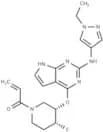
CAS:<p>Plodicitinib is an inhibitor of Janus tyrosine kinase 3/TEC family kinase, exhibiting anti-inflammatory properties.</p>Formula:C19H22FN7O2Color and Shape:SolidMolecular weight:399.422Carbonic anhydrase inhibitor 4
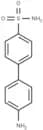
<p>CA inhibitor 4, photoprobe; targets hCA I-XIV; Ki: 640-1166 nM.</p>Formula:C21H18N2O4SColor and Shape:SolidMolecular weight:394.44Carbonic anhydrase inhibitor 3
<p>Carbonic anhydrase inhibitor 3 (compound 11g) is an inhibitor of carbonic anhydrase II that reduces the intraocular pressure in glaucomatous rabbits [1].</p>Formula:C15H17N3O3SColor and Shape:SolidMolecular weight:319.38O-Desmethyl Brinzolamide hydrochloride
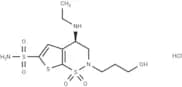
CAS:<p>O-Desmethyl Brinzolamide hydrochloride (compound 6a), a potent metabolite derived from Brinzolamide, serves as a carbonic anhydrase (CA) inhibitor. It exhibits a dissociation constant (Kd) of 0.136 nM for CA II and an inhibitory concentration (IC50) of 165 nM for CA IV [1].</p>Formula:C11H20ClN3O5S3Color and Shape:SolidMolecular weight:405.94Carbonic anhydrase inhibitor 8
<p>R-13, a carbonic anhydrase inhibitor, has Ki of 60.7 nM (hCA I), 320.7 nM (hCA II), and 2298 nM (hCA IV).</p>Formula:C20H25N3O4SColor and Shape:SolidMolecular weight:403.5hCAI/II/XII-IN-1
CAS:<p>hCAI/II/XII-IN-1 (compound 7) is an inhibitor of human carbonic anhydrases hCAI, hCAII, and hCAXII, with Ki values of 78.5 nM, 9.1 nM, 605 nM, 7.7 nM, and 3.7 nM.</p>Formula:C12H12N2O2SColor and Shape:SolidMolecular weight:248.301Valerate sodium
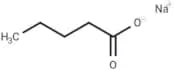
CAS:<p>Valerate sodium is a potential Carbonic anhydrase 1/2 inhibitor for biochemical experiments.</p>Formula:C5H9NaO2Purity:99.84%Color and Shape:SolidMolecular weight:124.11CAII-IN-2
<p>CAII-IN-2 (3g): potent, selective CA-II inhibitor; IC50-12.1 μM for bovine CA-II; valuable in CA-related disorder research.</p>Formula:C18H19BrN4SColor and Shape:SolidMolecular weight:403.34β-Glucuronidase/hCAII-IN-1
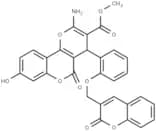
CAS:<p>β-Glucuronidase/hCAII-IN-2 (Compound 12e) is a compound that effectively inhibits both β-glucuronidase and human Carbonic Anhydrase II (hCA II), exhibiting IC50</p>Formula:C30H21NO9Color and Shape:SolidMolecular weight:539.49Carboxypeptidase Q Protein, Human, Recombinant (His)
<p>Expression system: HEK297 Cells<br>Length: 21-472, Full Length of Mature Protein<br>Activity: Not Tested</p>Color and Shape:Lyophilized PowderMolecular weight:49.72 kDa (Predicted)KRAS Protein, Human, Recombinant (G12S, GST)
<p>Expression system: E. coli<br>Length: 1-169, Partial<br>Activity: BLI</p>Color and Shape:Odour Lyophilized PowderPFKFB3 Protein, Human, Recombinant (His & GST)
<p>Fructose-2,6-biphosphatase 3, also known as 6-phosphofructo-2-kinase or PFK2 or PFKFB3, is a potent activator of phosphofructokinase, which is a rate-limiting</p>Color and Shape:Lyophilized PowderMolecular weight:87.4 kDa (predicted); 75 kDa (reducing conditions)Ref: TM-TMPY-04474
Discontinued productGUCY2C Protein, Cynomolgus, Recombinant (His)
<p>GUCY2C Protein, Cynomolgus, Recombinant (His) is expressed in HEK293 mammalian cells with His tag.</p>Color and Shape:Lyophilized PowderMolecular weight:47.59 kDa (predicted); 81.26 kDa (reducing conditions)Carboxypeptidase B2 Protein, Human, Recombinant (His)
<p>Carboxypeptidase B2 Protein, Human, Recombinant (His) is expressed in HEK293 mammalian cells with His tag.</p>Color and Shape:Lyophilized PowderMolecular weight:47.4 kDa (predicted); 45-50 kDa (reducing condition, due to glycosylation)VEGFR3/FLT4 Protein, Human, Recombinant (His & Avi), Biotinylated
<p>VEGFR3/FLT4 Protein, Human, Recombinant (His & Avi), Biotinylated is expressed in HEK293 mammalian cells with His and Avi tag.</p>Color and Shape:Lyophilized PowderMolecular weight:87.80 kDa (predicted); 126.18, 81.32 and 69.37 kDa (reducing conditions)Ref: TM-TMPY-06620
Discontinued productCarbonic Anhydrase 9 Protein, Human, Recombinant (His & Avi), Biotinylated
<p>Carbonic Anhydrase 9 Protein, Human, Recombinant (His & Avi), Biotinylated is expressed in HEK293 mammalian cells with His and Avi tag.</p>Color and Shape:Lyophilized PowderMolecular weight:44.23 kDa (predicted); 52.2 kDa (reducing conditions)Ref: TM-TMPY-06936
Discontinued productPARP1 Protein, Human, Recombinant (His)
<p>PARP Protein, Human, Recombinant (His) is expressed in Baculovirus insect cells with His tag.</p>Purity:94.1%Color and Shape:Lyophilized PowderMolecular weight:114.5 kDa (predicted); 100-110 kDa (reducing conditions)GST Protein, Schistosoma japonicum, Recombinant
<p>Genetic engineers have used glutathione S-transferase to create the GST gene fusion system.</p>Purity:97.9%Color and Shape:Lyophilized PowderMolecular weight:26.9 kDa (predicted); 28 kDa (reducing conditions)GUCY2C Protein, Canine, Recombinant (His)
<p>GUCY2C Protein, Canine, Recombinant (His) is expressed in HEK293 mammalian cells with His tag.</p>Color and Shape:Lyophilized PowderMolecular weight:47.9 kDa (predicted); 84.32 kDa (reducing conditions)Ref: TM-TMPY-06518
Discontinued productPPM1G Protein, Human, Recombinant (aa 317-546, His)
<p>Protein phosphatase 1G, also known as Protein phosphatase 1C, Protein phosphatase 2C isoform gamma, Protein phosphatase magnesium-dependent 1 gamma, PP2C-gamma</p>Color and Shape:Lyophilized PowderMolecular weight:26.6 kDa (predicted); 30 kDa (reducing conditions)Ref: TM-TMPY-02197
Discontinued productCyclophilin A Protein, Human, Recombinant (His)
<p>Cyclophilin A Protein, Human, Recombinant (His) is expressed in E.</p>Color and Shape:Lyophilized PowderMolecular weight:19.4 kDa (predicted); 19.4 kDa (reducing conditions)Ref: TM-TMPY-02177
Discontinued productPKC iota Protein, Human, Recombinant (GST)
<p>Protein kinase C iota type, also known as Atypical protein kinase C-lambda/iota, aPKC-lambda/iota and PRKCI, is a cytoplasm, membrane and nucleus protein which</p>Color and Shape:Lyophilized PowderMolecular weight:93.5 kDa (predicted); 100 kDa (reducing conditions)ACE2/ACEH Protein, Human, Recombinant (hFc), Biotinylated
<p>ACE2/ACEH Protein, Human, Recombinant (hFc), Biotinylated is expressed in HEK293 mammalian cells with hFc tag.</p>Color and Shape:Lyophilized PowderMolecular weight:110.3 kDa (predicted); 127.74 kDa (reducing condition, due to glycosylation)Ref: TM-TMPY-06334
Discontinued productCKMT2 Protein, Rat, Recombinant (His)
<p>CKMT2 Protein, Rat, Recombinant (His) is expressed in E.</p>Color and Shape:Lyophilized PowderMolecular weight:45.6 kDa (predicted)Ref: TM-TMPY-04763
Discontinued productPhospholipase D 040, concentrated (100 U/mg), spray-dried, recombinant, of prokaryotic origin
CAS:<p>Phospholipase D 040, concentrated (100 U/mg), spray-dried, recombinant, of prokaryotic origin, is an enzyme preparation designed for advanced biochemical applications. This enzyme is derived from a prokaryotic source through recombinant DNA technology, allowing for high purity and activity. Phospholipase D functions by catalyzing the hydrolysis of phospholipids to produce phosphatidic acid and free head groups, which is a crucial reaction in both lipid signaling and membrane dynamics.</p>Purity:Min. 95%Catalase 01
CAS:<p>A catalase product which neutralizes hydrogen peroxide at much higher concentrations (>10 %) compared to pyruvate, which is only capable of completely neutralizing hydrogen peroxide at the lowest concentration tested (2 %). Catalase (EC 1.11.1.6) catalyzes the following reaction:2H2O2 → 2H2O + O21 unit of catalase will decompose 1.0 μmole of H2O2 per min at pH 7.0 and 25 °C.</p>Phospholipase D
CAS:<p>Phospholipases D belong to the family of esterases and act on phosphatidylcholine in the plasma membrane to release phosphatidic acid (PA) and choline. Phospholipases D can be used as versatile tools in hydrolysis and transphosphatidylation reactions for industrial, chemical and food applications.</p>Penase, 3300 IU, β-lactamase I, lyophilized - EBL051.2
<p>Freeze-dried powder with 3300 IU beta-lactamase I activity per vial against all relevant penicillins. Our penase (penicillinase) posesses a specific substrate range solely against all relevant penicillins.</p>Color and Shape:PowderGlucosyltransferase201-freeze dried
CAS:<p>Glucosyltransferase201-freeze dried is an enzymatic preparation that is primarily sourced from bacterial or plant organisms. It functions by catalyzing the transfer of glucose moieties from donor molecules, such as UDP-glucose, to specific acceptor molecules, thus forming glycosidic bonds. This mode of action is crucial in the biosynthesis and modification of polysaccharides and glycoconjugates.</p>Catalase ECAT01™, EUCODIS® Patent: US 9951306 and EP2861715
CAS:<p>A proprietary potent and stable alternative to chemical neutralizers such as pyruvate - for the utilization in environmental monitoring applications. Use of catalase as a supplement in media plates offers a more effective and reliable solution for safe and secure environmental monitoring of sterilization in clean rooms, isolators or production facilities by also removing remaining traces and spots of high concentration of H2O2. Currently, agar plates for monitoring disinfection or sterilization are supplemented with pyruvate, which is consumed during the neutralization of hydrogen peroxide. One of the main benefits of this catalase is its high stability in agar media at 50°C, which allows easy preparation of media and processing into plates. Due to the high stability no special storage conditions are needed and a shelf-life of > 6 months at 4-25°C can be guaranteed.<br>Key features are:</p>EUCODIS® Peroxidase 12, from bacterial, fungal and plant origin, recombinant - EP012
CAS:<p>Peroxidase 12 recombinantly expressed in P. pastoria comes in a freeze-dried formulation. It has its pH optimum at 5-8 and temp. optimum at 20-40°C. Peroxidases can be utilized as enzymes catalyzing e.g. aromatic ring hydroxylation, epoxidation, halogenation, N- or S-oxidation, ether cleavage and alcohol/aldehyde oxidation reactions. Peroxidase 12 was shown to act on styrene, veratryl alcohol, vanillyl alcohol, n-methyl anthranilate and thioanisole.</p>Color and Shape:PowderALPK1 Protein, Human, Recombinant (His & Myc)
<p>ALPK1 Protein, Human, Recombinant (His & Myc) is expressed in Baculovirus.</p>Color and Shape:Lyophilized PowderMolecular weight:29.9 kDa (predicted)Glucosyltransferase Kit
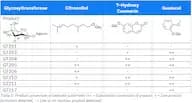
CAS:<p>The kit contains 8 different Glucosyltransferases (GTases), which are enzymes that transfer glucose to another organic molecule (aglycon), establishing glycosidic linkage. UDP-glucose dependent GTases are part of the enzyme family of glucosyltransferases, they are versatile tools in glucosylation reactions. Different GTases have different substrate specificities, as shown on Table 1. The kit is especially designed for screening and finding the most well-suited GTase for your specific process. All GTases in the kit are also available individually for bulk purchase.</p>EUCODIS® Nitrilhydratase 21, recombinant enzyme - ENH021
<p>Nitrile hydratase 21 recombinantly expressed in E. coli comes in a freeze-dried formulation. Nitrile hydratases can be utilized to convert nitriles into their corresponding amides, e.g. to produce acrylamide from acrylonitrile. Additional applications include the removal of nitriles from industrial wastewater. Our nitrile hydratases have been tested for hydrolysis of the following substrates:cyclohexanecarbonitrile, cinnamonitrile, benzonitrile, methacrylonitrile, pivalonitrile.</p>L-Methionine γ-lyase
CAS:<p>A pyridoxal phosphate-containing enzyme that converts L-methionine to α-ketobutyrate, ammonia and methyl mercaptan. Recombinant from e.coli source. <br>EC 4.4.1.11</p>Purity:Min. 95%Protease
CAS:<p>A protease enzyme from bacillus subtilis which catalyzed proteolysis, a process that breaks down proteins and peptides to small polypeptides or amino acids</p>Ref: 3D-EP183488
Discontinued product