CXCR
CXCRs are a subset of GPCRs that bind to chemokines, small signaling proteins that guide the movement of immune cells towards sites of inflammation, infection, or injury. CXCRs play crucial roles in immune responses, cancer metastasis, and inflammatory diseases. Modulators of CXCRs are being investigated for their potential in treating autoimmune diseases, cancer, and chronic inflammatory conditions. At CymitQuimica, we offer a range of high-quality CXCR modulators to support your research in immunology, oncology, and inflammation.
Found 148 products of "CXCR"
Sort by
Purity (%)
0
100
|
0
|
50
|
90
|
95
|
100
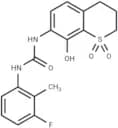
CXCR2 antagonist 3
CAS:<p>Compound 11h, a CXCR2 antagonist, inhibits neutrophil/MDSCs and boosts CD3+ T cells in Pan02 tumors.</p>Formula:C17H15FN2O4SColor and Shape:SolidMolecular weight:362.38CXCR4 antagonist 6
CAS:<p>CXCR4 antagonist 6 blocks CXCR4 (IC50: 79 nM), hinders calcium flux (IC50: 0.25 nM), reduces cell migration, and is effective in cancer metastasis mice.</p>Formula:C21H30N6Color and Shape:SolidMolecular weight:366.5Ladarixin Sodium
CAS:<p>Ladarixin Sodium, an Chemokine CXCR antagonist, is used potentially for the treatment of type I diabetes.</p>Formula:C11H12F3NNaO6S2Color and Shape:SolidMolecular weight:398.32E6130
CAS:<p>E6130 may be effective in the treatment of inflammatory bowel disease and is a highly selective CX3CR1 regulator for oral administration.</p>Formula:C28H37ClF3N3O3Color and Shape:SolidMolecular weight:556.06Pentixafor
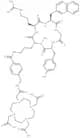
CAS:<p>Pentixafor is a peptide that selectively targets the CXCR4 receptor and can be labeled with Gallium-68 (68Ga) for visualization using positron emission</p>Formula:C60H80N14O14Purity:98%Color and Shape:SolidMolecular weight:1221.36NUCC-390 dihydrochloride (1060524-97-1 free base)
<p>NUCC-390 dihydrochloride is selective agonist of small-molecule CXCR4 receptor.</p>Formula:C23H35Cl2N5OPurity:98%Color and Shape:SolidMolecular weight:468.46(±)-AMG 487
<p>AMG 487 is an effective and selective antagonist of chemokine receptor 3.</p>Formula:C32H28F3N5O4Purity:98%Color and Shape:SolidMolecular weight:603.59CXCR2 antagonist 2
CAS:<p>CXCR2 antagonist 2 is a potent CXCR2 antagonist for cancer immunotherapy with an IC 50 value of 95 nM.</p>Formula:C17H17FN2O4SColor and Shape:SolidMolecular weight:364.39CXCR2-IN-1
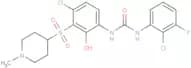
CAS:<p>CXCR2-IN-1 has a pIC50 of 9.3 and is a CXCR2 antagonist of the central nervous system penetration agent.</p>Formula:C19H20Cl2FN3O4SPurity:99.89%Color and Shape:SolidMolecular weight:476.35CXCR4 antagonist 10
CAS:<p>CXCR4 antagonist10 (compound 21) is an effective CXCR4 inhibitor with an IC50 value of 7.8 nM. It plays a significant role in cancer research.</p>Formula:C18H18N4O4Color and Shape:SolidMolecular weight:354.36(R)-SCH 546738
CAS:<p>(R)-SCH 546738, the R-isomer of SCH 546738, is a non-competitive, orally active antagonist targeting the CXCR3 receptor, exhibiting a K_i of 0.4 nM for the human CXCR3 receptor.</p>Formula:C23H31Cl2N7OColor and Shape:SolidMolecular weight:492.45EMU-116
CAS:<p>EMU-116 is an orally active antagonist of CXCR4, utilized in cancer research.</p>Formula:C25H35N5Color and Shape:SolidMolecular weight:405.58Paeoniflorin-6′-O-benzene sulfonate
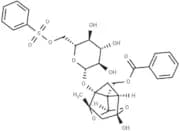
CAS:<p>Paeoniflorin-6′-O-benzene sulfonate (CP-25) acts as an inhibitor of G protein-coupled receptor kinase 2 (GRK2), preventing its translocation to the cell membrane and inhibiting the JAK1/STAT3 signaling pathway. It suppresses HaCaT cell proliferation induced by IL-17A/CXCL2. In mouse models, CP-25 reduces the levels of inflammatory cytokines and chemokines such as IL-17A, IL-17F, IFN-γ, TNF-α, IL-22, IL-23, CXCL2, CXCL3, and CXCL9, thereby alleviating psoriasis induced by Imiquimod.</p>Formula:C29H32O13SColor and Shape:SolidMolecular weight:620.622CCX662
CAS:<p>CCX662 is a CXCR7 antagonist. It inhibits the binding of 125I-CXCL12 to CXCR7 with an IC50 of 9 nM. This compound is suitable for use in cancer research.</p>Formula:C28H37N5O4SColor and Shape:SolidMolecular weight:539.69CXCR2 antagonist 5
<p>CXCR2 antagonist 5 (compound 25) binds strongly (IC50=0.013μM) and mobilizes calcium (IC50=0.1μM).</p>Formula:C15H14F2N4O2SColor and Shape:SolidMolecular weight:352.36SCH 563705
CAS:<p>SCH 563705 is a CXCR2 and CXCR1 antagonist used in the study of acute respiratory syndrome, chronic obstructive pulmonary disease, and inflammation.</p>Formula:C23H27N3O5Purity:98.03%Color and Shape:SolidMolecular weight:425.48SLW131
CAS:<p>SLW131 (Compound 10) is a CCR7 antagonist with strong affinity, showing a Ki of 9.85 nM. It inhibits CCL19-induced Go protein activation with an IC50 of 29.4 μM and β-arrestin2 recruitment with an IC50 of 6.0 μM. SLW131 also suppresses CCL19-induced morphological changes in primary BMDC cells and CCR7-mediated migration of mouse CD4+ T cells.</p>Formula:C21H27N5O5SColor and Shape:SolidMolecular weight:461.535CXCR2 antagonist 4
<p>CXCR2 antagonist 4 inhibits CXCR2 (IC50: 0.13 μM) and CXCL8-induced calcium rise (IC50: 27 μM), promising for cancer research.</p>Formula:C15H14F2N4OS2Color and Shape:SolidMolecular weight:368.42CXCR2 antagonist 6
<p>CXCR2 antagonist 6: strong CXCR2 affinity (IC50=0.044 μM), hinders calcium mobilization (IC50=0.66 μM).</p>Formula:C17H16F2N4OSColor and Shape:SolidMolecular weight:362.4CXCR7 antagonist-1 hydrochloride
CAS:<p>CXCR7 antagonist-1 hydrochloride blocks SDF-1 and I-TAC from CXCR7; may prevent cancer and inflammation.</p>Formula:C21H20ClFN6OColor and Shape:SolidMolecular weight:426.87