Sodium Channel
Found 397 products for "Sodium Channel".
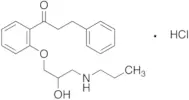
Propafenone Hydrochloride
CAS:Controlled ProductApplications Sodium channel blocker. Antiarrhythmic (class IC).
References Hollmann, M., et al.: Arzneim.-Forsch., 33, 763 (1983), Bryson, H. M., et al.:Drugs, 45, 85 (1993), Rae, A. P., et al.: Am. J. Cardiol., 82, 59N (1998),Formula:C21H27NO3·ClHColor and Shape:NeatMolecular weight:377.9Prilocaine-D7 Hydrochloride
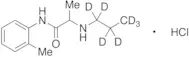
CAS:Controlled ProductApplications Labelled Prilocaine (P725000). Prilocaine is a local anesthetic of the amino amide type. Prilocaine is often used in dentistry. Prilocaine is also often combined with lidocaine as a preparation for dermal anesthesia (lidocaine/prilocaine or EMLA), for treatment of conditions like paresthesia.
References Caliaro, G., et al.: J. Pharm. Biomed. Anal., 26, 427 (2001), Ulmeanu, S., et al.: Pharm. Res., 20, 1317 (2003),Formula:C13H14D7ClN2OColor and Shape:NeatMolecular weight:263.81Procaine-d4 Hydrochloride
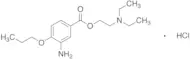
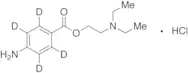
CAS:Controlled ProductApplications Labelled analogue of Procaine, a local anesthetic of the amino ester group that is primarily used as a topical anesthetic. Procaine is also used to control the pain of intramuscular injection of penicillin as well as in dentistry.
Not a dangerous good if item is equal to or less than 1g/ml and there is less than 100g/ml in the package
References Kania, B.H. et al.: Pol. J. Vet. Sci., 6, 279 (2003); Jussi, L. et al.: Cont. Derm., 60, 150 (2009); Gangarosa, L.P. Sr.: J. Dent. Res., 60, 1471 (1981);Formula:C13D4H16N2O2·HClColor and Shape:NeatMolecular weight:276.796Nor Lidocaine-d6 Hydrochloride
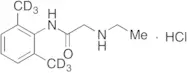
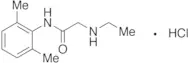
CAS:Controlled ProductApplications Nor Lidocaine-d6 Hydrochloride is the labeled analogue of Nor Lidocaine Hydrochloride (N713500), a hydrochloride salt metabolite of Lidocaine (L397800), a local anesthetic; antiarrhythmic (class IB). Long-acting, membrane stabilizing agent against ventricular arrhythmia. Originally developed as a local anesthetic.
Not a dangerous good if item is equal to or less than 1g/ml and there is less than 100g/ml in the package
References Fukuda, S., et al.: Anesthesiology, 53, 106 (1980); Duce, R., et al.: J. Pharmacol. Exp. Ther., 179, 580 (1971); Kronberg, G.H., et al.: J. Med. Chem., 16, 739 (1973); Groningsson, K., et al.: Anal. Profiles Drug Subs., 14, 207 (1985); Davies, P.S., et al.: Drugs, 64, 937 (2004)Formula:C12H13D6ClN2OColor and Shape:NeatMolecular weight:248.78Lidocaine hydrochloride
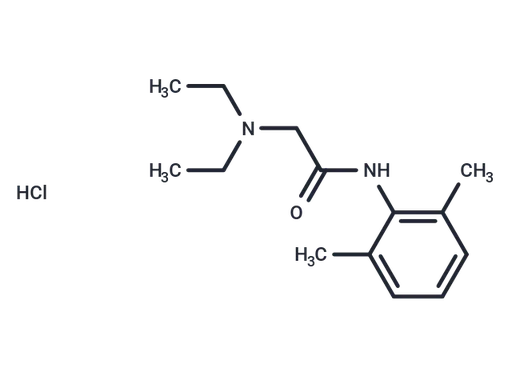
CAS:Lidocaine HCl: local anesthetic, antiarrhythmic, stronger & longer-lasting than procaine but shorter than bupivacaine/prilocaine.Formula:C14H23ClN2OPurity:99.83% - 99.92%Color and Shape:SolidMolecular weight:270.798Tributyl O-Acetylcitrate-d3
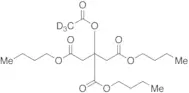
CAS:Controlled ProductApplications Labelled Tributyl O-Acetylcitrate (T772950). Topical pharmaceutical formulation anesthetic surfactant ester.
References Cherian., et al.: Br. J. Anaesthesia, 87, 502 (2001),Formula:C20D3H31O8Color and Shape:NeatMolecular weight:405.5Nor Lidocaine Hydrochloride
CAS:Controlled ProductImpurity Lidocaine EP Impurity D (HCl)
Applications Nor Lidocaine Hydrochloride is a hydrochloride salt metabolite of Lidocaine (L397800), an Anesthetic (local); antiarrhythmic (class IB). Long-acting, membrane stabilizing agent against ventricular arrhythmia. Originally developed as a local anesthetic
Not a dangerous good if item is equal to or less than 1g/ml and there is less than 100g/ml in the package
References Fukuda, S., et al.: Anesthesiology, 53, 106 (1980), Duce, R., et al.: J. Pharmacol. Exp. Ther., 179, 580 (1971); Kronberg, G.H., et al.: J. Med. Chem., 16, 739 (1973); Groningsson, K., et al.: Anal. Profiles Drug Subs., 14, 207 (1985); Davies, P.S., et al.: Drugs, 64, 937 (2004);Formula:C12H18N2O·ClHColor and Shape:NeatMolecular weight:242.75Zonisamide-d4
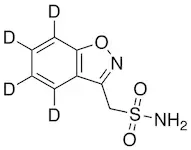
CAS:Controlled ProductApplications Labelled sulfonamide antiseizure agent; blocks repetitive firing of voltagesensitive sodium channels and reduces voltage-sensitive T-type calcium currents. Heterocyclic methanesulfonide with anticonvulsant properties. The compound is under investigation for potential therapeutic use as an antiepileptic drug. Anticonvulsant.
References Masuda, Y., et al.: Arzneim.-Forsch., 30, 477 (1980), Hammond, E.J., et al.: Gen. Pharmacol., 18, 303 (1987), Schmidt, D., et al.: Epilepsy Res., 15, 67 (1993), Sorkin, E.M., et al.: Drugs, 45, 760 (1993),Formula:C82H4H4N2O3SColor and Shape:NeatMolecular weight:216.254-Methyl-3-[[1-oxo-2-(propylamino)propyl]amino]-2-thiophenecarboxylic Acid
CAS:Controlled ProductApplications 4-Methyl-3-[[1-oxo-2-(propylamino)propyl]amino]-2-thiophenecarboxylic Acid is an impurity of Articaine (A777900), an amide based short-acting local anesthetic use for regional anaesthesia in day-case settings such arthroscopy, hand , food surgery and in dentistry.
References Grossman, M., et al.: J. Clin. Pharmacol., 44, 1282 (2004); Oertel, R., et al.: Pharmazie., 53, 646 (1998); Vree, T.B., et al.: Brit. J. Clin. Pharmacol., 44, 29 (1997);Formula:C12H18N2O3S·ClHColor and Shape:NeatMolecular weight:306.81Metaflumizone
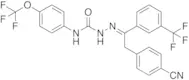
CAS:Applications Metaflumizone is a semicarbazone insecticide that works by blocking sodium channel in target insects resulting in paralyzation associated with blocking nerve activity. Metaflumizone is useful as a heartworm control treatment.
Not a dangerous good if item is equal to or less than 1g/ml and there is less than 100g/ml in the package
References Zhang, Zhe,, et al.: J. Integrat. Agri. 11, 1145 (2012); Kuhn, D., et al.: Modern. Crop. Protect. Compound., 3, 1273 (2012);Formula:C24H16F6N4O2Color and Shape:NeatMolecular weight:506.410,11-Dihydro-10-hydroxy Carbamazepine-D4
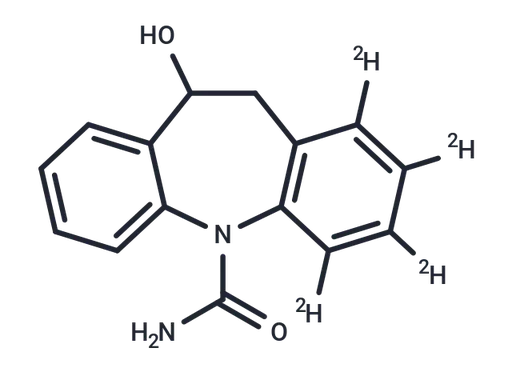
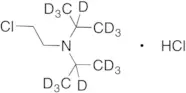
CAS:10,11-Dihydro-10-hydroxy Carbamazepine-D4 is a deuterated compound of 10,11-Dihydro-10-hydroxy Carbamazepine. 10,11-Dihydro-10-hydroxy Carbamazepine (T7806) has a CAS number of 29331-92-8. Licarbazepine is the pharmacologically active metabolite of oxcarbazepine, a drug indicated for the treatment of partial seizures and bipolar disorders.Formula:C15H10D4N2O2Color and Shape:SolidMolecular weight:258.312-Diisopropylaminoethyl Chloride Hydrochloride-d14
CAS:Controlled ProductApplications 2-Diisopropylaminoethyl Chloride Hydrochloride-d14 is an intermediate in synthesizing Disopyramide-d14 Tosylate Salt (D493452). Antiarrhythmic (class IA). Sodium channel blocker.
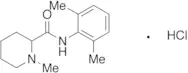
References Adelstein, et al.: J. Med. Chem., 16, 309 (1973); Czeisler, J.L., et al.: J. Pharm. Sci., 74, 750 (1985); Taylor, E.H., et al.: Ann. Clin. Lab. Sci., 16, 289 (1986);Formula:C8H4D14ClN·HClColor and Shape:NeatMolecular weight:214.23Mepivacaine Hydrochloride
CAS:Controlled ProductApplications An anti-inflammatory and analgesic agent. Anesthetic (local).
Not a dangerous good if item is equal to or less than 1g/ml and there is less than 100g/ml in the package
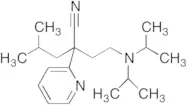
References Reynolds, et al.: Br. J. Anaesth., 43, 33 (1971), Tullar, et al.: J. Med. Chem., 14, 891 (1971), Aberg, G., et al.: Acta Pharmacol. Toxicol., 31, 273 (1972),Formula:C15H22N2O·ClHColor and Shape:NeatMolecular weight:282.81Deacetamide Acetonitrile-pentisomide
CAS:Controlled ProductApplications Deacetamide Acetonitrile-pentisomide is an intermediate in the synthesis of Pentisomide (P275600). Pentisomide is a sodium channel blocker; derivative of disopyramide. Antiarrhythmic (class I).
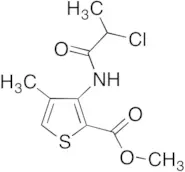
References Kuhlkamp, V., et al.: Int. J. Cardiol., 36, 69 (1992); Yuan, S., et al.: Cardiovasc. Drug Rev., 11, 74 (1993)Formula:C19H31N3Color and Shape:NeatMolecular weight:301.473-(2-Chloropropionyl)amino-4-methyl-2-methoxycarbonylthiophene
CAS:Controlled ProductApplications 3-(2-Chloropropionyl)amino-4-methyl-2-methoxycarbonylthiophene is an intermediate in the synthesis of Articaine-d7 Hydrochloride which is the labelled form of Articaine Hydrochloride (A777905). Articaine Hydrochloride is the Hydrochloride Salt of Articaine (A777900). Articaine is an amide based short-acting local anesthetic use for regional anaesthesia in day-case settings such arthroscopy, hand, food surgery and in dentistry.
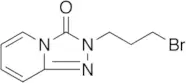
References Malamed, S.F., et al.: J. Am. Dent. Assoc., 132, 177 (2001); Luan, F., et al.: Bioorg. Med. Chem., 21, 1870 (2013)Formula:C10H12ClNO3SColor and Shape:NeatMolecular weight:261.732-(3-Bromopropyl)-1,2,4-triazolo-pyridin-3-one
CAS:Controlled ProductApplications Used in the preparation of bicycloamine derivatives as sodium channel inhibitors for treatment of pain, epilepsy and insomnia.
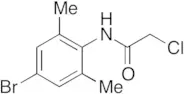
Formula:C9H10BrN3OColor and Shape:NeatMolecular weight:256.1N-(4-Bromo-2,6-dimethylphenyl)-2-chloroacetamide
CAS:Controlled ProductApplications N-(4-Bromo-2,6-dimethylphenyl)-2-chloroacetamide is a useful synthetic intermediate in the synthesis of 4-Hydroxylidocaine (H943825); a metabolite of Lidocaine (L397800) which is a common local anesthetic and antiarrhythmic drug.
References Duce, R., et al.: J. Pharmacol. Exp. Ther., 179, 580 (1971); Kronberg, G.H., et al.: J. Med. Chem., 16, 739 (1973); Groningsson, K., et al.: Anal. Profiles Drug Subs., 14, 207 (1985); Davies, P.S., et al.: Drugs, 64, 937 (2004)Formula:C10H11BrClNOColor and Shape:NeatMolecular weight:276.56N-(Methoxymethyl)-N-[(trimethylsilyl)methyl]benzenemethanamine (>90%)
CAS:Controlled ProductApplications N-(Methoxymethyl)-N-[(trimethylsilyl)methyl]benzenemethanamine is used in the synthesis of pyrrolidine derivatives as novel sodium channel blockers used to treat ischemic related ailments.
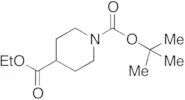
References Seki, M. et al.: Bioorg. Med. Chem. Lett., 23, 4230 (2013);Formula:C13H23NOSiPurity:>90%Color and Shape:NeatMolecular weight:237.41Ethyl N-Boc-piperidine-4-carboxylate
CAS:Controlled ProductApplications Ethyl N-Boc-piperidine-4-carboxylate is used as a reagent to synthesize 3-amino-1-(5-indanyloxy)-2-propanol derivatives as sodium channel blockers to treat stroke patients. Ethyl N-Boc-piperidine-4-carboxylate is also used as a reagent to prepare inhibitors of tumour necrosis factor alpha-converting enzyme.
References Levin. J.: Heterocycles, 70, 691 (2006); Seki, M., et al.: Chem. Pharm. Bull., 60, 488 (2012)Formula:C13H23NO4Color and Shape:NeatMolecular weight:257.33


![4-Methyl-3-[[1-oxo-2-(propylamino)propyl]amino]-2-thiophenecarboxylic Acid](https://static.cymitquimica.com/products/TR/thumb-webp/M326815.webp)
![N-(Methoxymethyl)-N-[(trimethylsilyl)methyl]benzenemethanamine (>90%)](https://static.cymitquimica.com/products/TR/thumb-webp/M264620.webp)