Lipase
Found 78 products for "Lipase".
- Lower prices
- Higher prices
- Lower purities
- Higher purities
- Faster estimated delivery
EUCODIS® Lipase 020, screening grade, recombinant, from microbial sources - EL020
Lipase 20 recombinantly expressed in P. pastoris comes in a spray-dried formulation. It has its pH optimum at 7-8. Lipases belong to the family of esterases and naturally act on triglycerides at lipid-water interfaces catalyzing hydrolytic reactions, esterifications and transesterification reactions in industrial and food applications. Lipase 20 was shown to hydrolyze p-Nitrophenyl esters of butyrate (3 % activity compared to octanoate), octanoate (100 %), laurate (85 %), palmitate (52 %), stearate (29 %), arachidate (22 %) and behenate (8 %).
Lipase 070
CAS:Lipases belong to the family of esterases and naturally act on triglycerides at lipid-water interfaces. Lipases/esterases can be used as versatile tools in hydrolytic reactions, esterifications and transesterification reactions in industrial and food applications.EUCODIS® Lipase 006, screening grade, recombinant, from microbial sources - EL006
Lipase 06 recombinantly expressed in E. coli comes in a freeze-dried formulation. It has its pH optimum at 7 and temp. optimum at 30-45°C. Lipases belong to the family of esterases and naturally act on triglycerides at lipid-water interfaces catalyzing hydrolytic reactions, esterifications and transesterification reactions in industrial and food applications. Lipase 06 was shown to hydrolyze p-Nitrophenyl esters of butyrate (91 % activity compared to octanoate), octanoate (100 %), laurate (13 %), palmitate (1 %), stearate (2 %), arachidate (0.3 %) and behenate (1 %).EUCODIS® Lipase 014, screening grade, recombinant, from microbial sources - EL014
Lipase 14 recombinantly expressed in E. coli comes in a spray-dried formulation. It has its pH optimum at 6-8 and temp. optimum at 30-40°C. Lipases belong to the family of esterases and naturally act on triglycerides at lipid-water interfaces catalyzing hydrolytic reactions, esterifications and transesterification reactions in industrial and food applications. Lipase 14 was shown to hydrolyze p-Nitrophenyl esters of butyrate (74 % activity compared to octanoate), octanoate (100 %), laurate (8 %), palmitate (5 %), stearate (4 %), arachidate (1 %) and behenate (0.6 %).
EUCODIS® Lipase 038, screening grade, recombinant, from microbial sources - EL038
Lipase 38 recombinantly expressed in E. coli comes in a spray-dried formulation. It has its pH optimum at 6-8 and temp. optimum at >50°C. Lipases belong to the family of esterases and naturally act on triglycerides at lipid-water interfaces catalyzing hydrolytic reactions, esterifications and transesterification reactions in industrial and food applications. Lipase 38 was shown to hydrolyze p-Nitrophenyl esters of acetate (27 % activity compared to butyrate), butyrate (100 %), octanoate (9 %) and caprate (5 %).EUCODIS® Lipase 015, screening grade, recombinant, from microbial sources - EL015
Lipase 15 recombinantly expressed in E. coli comes in a spray-dried formulation. It has its pH optimum at 6-8 and temp. optimum at 25°C. Lipases belong to the family of esterases and naturally act on triglycerides at lipid-water interfaces catalyzing hydrolytic reactions, esterifications and transesterification reactions in industrial and food applications. Lipase 15 was shown to hydrolyze p-Nitrophenyl esters of butyrate (100 % activity), octanoate (13 %), laurate (1 %), palmitate (1 %), stearate (<1 %), arachidate (<1 %) and behenate (<1 %).
EUCODIS® Lipase 068, screening grade, recombinant, from microbial sources - EL068
Lipase 68 recombinantly expressed in E. coli comes in a spray-dried formulation. It has its pH optimum at 7-9 and temp. optimum at 30°C. Lipases belong to the family of esterases and naturally act on triglycerides at lipid-water interfaces catalyzing hydrolytic reactions, esterifications and transesterification reactions in industrial and food applications. Lipase 68 was shown to hydrolyze p-Nitrophenyl esters of butyrate (100 % activity), octanoate (75 %), laurate (8 %), palmitate (1 %) and stearate (0.1 %).
EUCODIS® Lipase 064, screening grade, recombinant, from microbial sources - EL064
Lipase 64 recombinantly expressed in E. coli comes in a spray-dried formulation. It has its pH optimum at 7 and temp. optimum at 40-50°C. Lipases belong to the family of esterases and naturally act on triglycerides at lipid-water interfaces catalyzing hydrolytic reactions, esterifications and transesterification reactions in industrial and food applications. Lipase 64 was shown to hydrolyze p-Nitrophenyl esters of butyrate (100 % activity), octanoate (0.5 %) and laurate (0.1 %).EUCODIS® Lipase 017, screening grade, recombinant, from microbial sources - EL017
Lipase 17 recombinantly expressed in E. coli comes in a spray-dried formulation. It has its pH optimum at 7-8. Lipases belong to the family of esterases and naturally act on triglycerides at lipid-water interfaces catalyzing hydrolytic reactions, esterifications and transesterification reactions in industrial and food applications. Lipase 17 was shown to hydrolyze p-Nitrophenyl esters of butyrate (2 % activity compared to octanoate), octanoate (100 %), laurate (20 %), palmitate (3 %), stearate (1 %), arachidate (1 %) and behenate (1 %).
Phospholipase D 040 food grade
CAS:Test sample of Cymit Quimica's Phospholipase D 040 Halal and Kosher Food grade bulk enzyme (EPLD840.6). With one of the most competitive activity rates on the global market and manufactured in Europe, this enzyme is perfect for use in food, diagnostic, therapeutic and nutraceutical industries worldwide. Phospholipase D is an enzyme that is expressed in almost all types of organisms and whose activity can be harnessed to synthesize critical raw materials, for example phosphatidylserine. Phosphatidylserine has shown itself to be an important functional ingredient in reducing cognitive dysfunction and dementia in the field of nutraceuticals. As a Halal and Kosher food grade enzyme, Cymit Quimica's Phospholipase D is an excellent candidate for a diverse variety of food industry applications. Furthermore our enzyme can be used in diagnostic assays, creating first-class drug delivery systems and APIs. Product is a lyopholised solidPhospholipase D 40, from Streptomyces antibioticus, recombinant - EPLD040
CAS:Phospholipases D belong to the family of esterases and act on phosphatidylcholine in the plasma membrane to release phosphatidic acid (PA) and choline. Phospholipases D can be used as versatile tools in hydrolysis and transphosphatidylation reactions for industrial, chemical and food applications.Spray dried version of EPLD840.6_R
Color and Shape:PowderEUCODIS® Lipase 003, screening grade, recombinant, from microbial sources - EL003
Lipase 03 recombinantly expressed in E. coli comes in a spray-dried formulation. It has its pH optimum at 6-7 and temp. optimum at 20-50°C. Lipases belong to the family of esterases and naturally act on triglycerides at lipid-water interfaces catalyzing hydrolytic reactions, esterifications and transesterification reactions in industrial and food applications. Lipase 03 was shown to hydrolyze p-Nitrophenyl esters of butyrate (100 % activity), octanoate (90 %), laurate (28 %), palmitate (14 %), stearate (9 %), arachidate (2 %) and behenate (3 %).EUCODIS® Lipase 044, screening grade, recombinant, from microbial sources - EL044
Lipase 44 recombinantly expressed in E. coli comes in a spray-dried formulation. It has its pH optimum at 7-10 and temp. optimum at 50°C. Lipases belong to the family of esterases and naturally act on triglycerides at lipid-water interfaces catalyzing hydrolytic reactions, esterifications and transesterification reactions in industrial and food applications. Lipase 44 was shown to hydrolyze p-Nitrophenyl esters of butyrate (70 % activity compared to octanoate), octanoate (100 %), laurate (88 %), palmitate (6 %) and stearate (2 %).
EUCODIS® Lipase 009, screening grade, recombinant, from microbial sources - EL009
Lipase 09 recombinantly expressed in E. coli comes in a spray-dried formulation. It has its pH optimum at 7 and temp. optimum at 35-55°C. Lipases belong to the family of esterases and naturally act on triglycerides at lipid-water interfaces catalyzing hydrolytic reactions, esterifications and transesterification reactions in industrial and food applications. Lipase 09 was shown to hydrolyze p-Nitrophenyl esters of acetate (18 % activity compared to octanoate), butyrate (80 %), octanoate (100 %) and capate (40 %).EUCODIS® Lipase 037, screening grade, recombinant, from microbial sources - EL037
Lipase 37 recombinantly expressed in E. coli comes in a spray-dried formulation. It has its pH optimum at 8-9 and temp. optimum at <50°C. Lipases belong to the family of esterases and naturally act on triglycerides at lipid-water interfaces catalyzing hydrolytic reactions, esterifications and transesterification reactions in industrial and food applications. Lipase 37 was shown to hydrolyze p-Nitrophenyl esters of butyrate (48 % activity), octanoate (100 %), laurate (85 %), palmitate (5 %) and stearate (1 %).
EUCODIS® Lipase 065, screening grade, recombinant, from microbial sources - EL065
Lipase 65 recombinantly expressed in E. coli comes in a spray-dried formulation. It has its pH optimum at 7-8 and temp. optimum at 30-40°C. Lipases belong to the family of esterases and naturally act on triglycerides at lipid-water interfaces catalyzing hydrolytic reactions, esterifications and transesterification reactions in industrial and food applications. Lipase 65 was shown to hydrolyze p-Nitrophenyl esters of butyrate (100 % activity), octanoate (87 %), laurate (5 %), palmitate (0.2 %) and stearate (0.1 %).
Lipase
CAS:Porcine pancreatic lipase is an enzyme that has been shown to have antioxidative properties. It is used as an additive in biodiesel production, where it prevents the formation of trans fatty acids and reduces the amount of free radicals. This enzyme has been shown to have lipase, protease, and amylase activities by using surface methodology. Porcine pancreatic lipase can be used for the treatment of autoimmune diseases such as multiple sclerosis and rheumatoid arthritis. This enzyme interacts with other enzymes such as lipases, proteases, and amylases to catalyze reactions on surfaces. It can be used for asymmetric synthesis by hydrogen bonding or by forming an intermediate complex with metal ions.Purity:Min. 95%Color and Shape:SolidHSL-IN-5
CAS:HSL-IN-5 (Example 21) is a hormone-sensitive lipase (HSL) inhibitor with an IC₅₀ value of 0.2 μM, suitable for diabetes research.Formula:C18H23F3N2O4Purity:99.96%Color and Shape:White SolidMolecular weight:388.3814Phospholipase D Kit, 4 unique EUCODIS® PLDs, recombinant - EPLD Kit
Phospholipases D belong to the family of esterases and act on phosphatidylcholine in the plasma membrane to release phosphatidic acid (PA) and choline. Phospholipases D can be used as versatile tools in hydrolysis and transphosphatidylation reactions for industrial, chemical and food applications. The Phospholipase D Kit contains 4 enzymes with a broad pH range for transphosphatidylation activity.
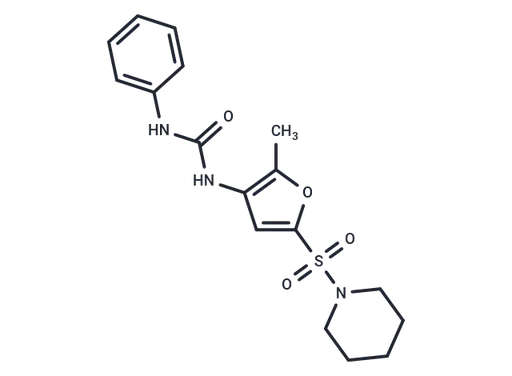
GSK 264220A
CAS:endothelial lipase and lipoprotein lipase inhibitorFormula:C17H21N3O4SPurity:98%Color and Shape:SolidMolecular weight:363.43