Lipase
Lipases are enzymes that catalyze the hydrolysis of triglycerides into free fatty acids and glycerol, playing a crucial role in lipid digestion, absorption, and metabolism. Lipase inhibitors are of interest in the treatment of obesity, pancreatitis, and lipid-related metabolic disorders. At CymitQuimica, we provide a variety of lipase inhibitors to support your research in metabolism, obesity, and gastrointestinal health.
Found 78 products for "Lipase".
Filter by
Purity percentage
0
100
|
0
|
50
|
90
|
95
|
100
- Lower prices
- Higher prices
- Lower purities
- Higher purities
- Faster estimated delivery
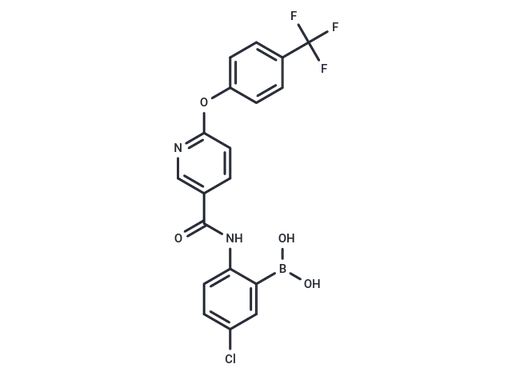
HSL-IN-1
CAS:HSL-IN-1 is an HSL inhibitor that significantly reduces the reactive metabolite load and reduces the release of free fatty acids from stored fat.Formula:C19H13BClF3N2O4Purity:>99.99%Color and Shape:SolidMolecular weight:436.577KT185
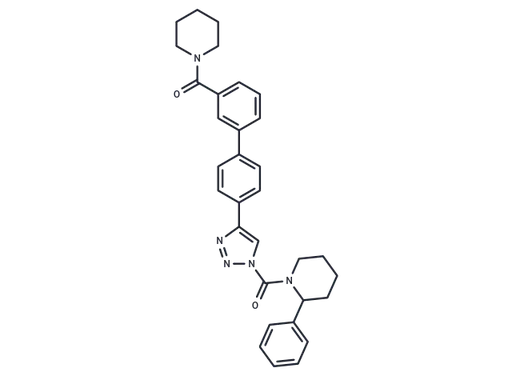
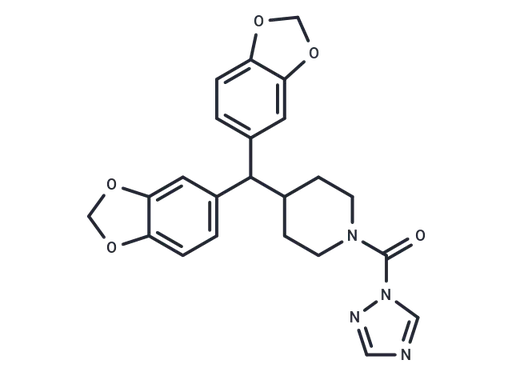
CAS:KT185 is a brain-penetrant selective ABHD6 inhibitor regulating 2-AG metabolism.Formula:C32H33N5O2Purity:99.08%Color and Shape:SolidMolecular weight:519.63671,3-Didecanoylglycerol
CAS:1,3-Didecanoylglycerol, a saturated diacylglycerol, has decanoic acids at sn-1,3; used in lipid monolayer and lipase research.Formula:C23H44O5Color and Shape:SolidMolecular weight:400.59Endothelial lipase inhibitor-1
CAS:Endothelial lipase inhibitor-1 is a potent endothelial lipase inhibitor with an IC50 of 49 nM.Formula:C22H22N4O4Purity:99.59%Color and Shape:SolidMolecular weight:406.4345GSK 264220A
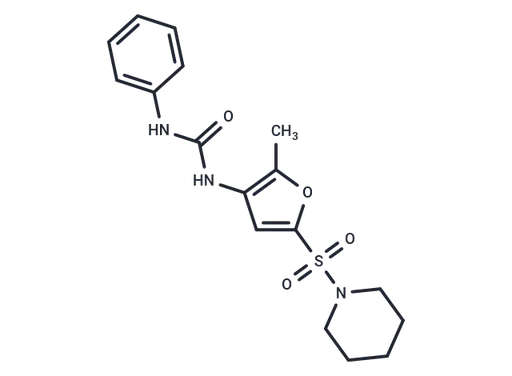
CAS:endothelial lipase and lipoprotein lipase inhibitorFormula:C17H21N3O4SPurity:98%Color and Shape:SolidMolecular weight:363.43JJKK 048
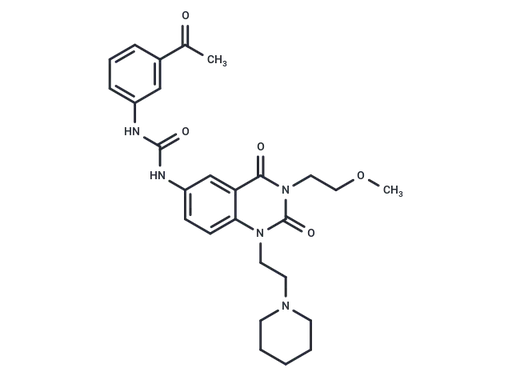
CAS:JJKK 048 is a potent and selective MAGL inhibitor.Formula:C23H22N4O5Purity:99.77%Color and Shape:SolidMolecular weight:434.44JNJ-42226314
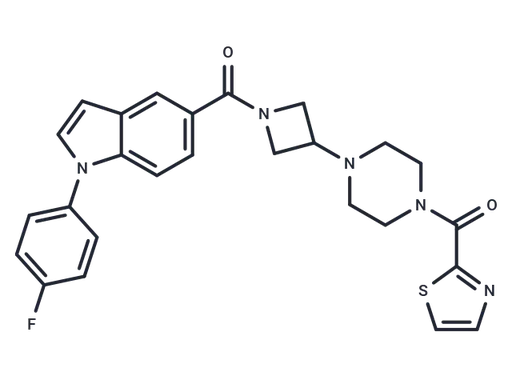
CAS:JNJ-42226314 is a MAGL inhibitor with anti-injury effects and has shown efficacy in neuropathic pain and inflammatory pain models.Formula:C26H24FN5O2SPurity:99.74%Color and Shape:White SolidMolecular weight:489.564NG-497
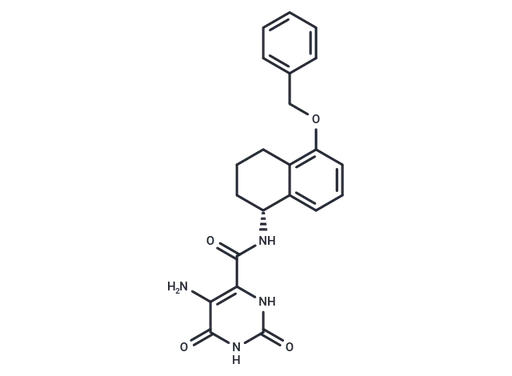
CAS:NG-497, a selective inhibitor of human ATGL, blocks lipolysis in adipocytes and aids cancer research.Formula:C18H21NO4Purity:99.57% - 99.85%Color and Shape:White SolidMolecular weight:315.3636ERX-41
CAS:ERX-41 is an orally active, stereospecific small molecule that targets lysosomal acid lipase A (LIPA).Formula:C38H48N4O9Purity:98%Color and Shape:SolidMolecular weight:704.811,3-Dioleoyl-2-Octanoyl Glycerol
CAS:1,3-Dioleoyl-2-octanoyl glycerol, a triacylglycerol, features oleic acid at the sn-1 and sn-3 positions and octanoic acid at the sn-2 position. Its utility lies in the characterization of R. oryzae lipase functionality, specifically for regiodistribution analysis of fats that comprise medium- and short-chain fatty acids.Formula:C47H86O6Color and Shape:SolidMolecular weight:747.18Salacinol
CAS:Salacinol is a naturally occurring alpha-glucosidase inhibitor isolated from an Ayurvedic traditional medicine Salacia reticulata.Formula:C9H18O9S2Color and Shape:SolidMolecular weight:334.37PNPLA3 modifier 1
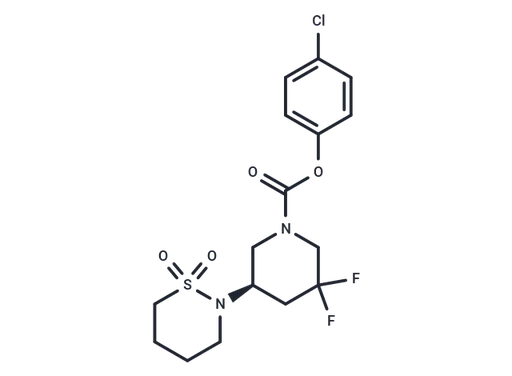
CAS:PNPLA3 Modifier 1 (Compound 10), a modifier of patatin-like phospholipase domain-containing protein 3 (pnpla3), exhibits a geometric mean EC50 of 4.9 nM.Formula:C16H19ClF2N2O4SColor and Shape:SolidMolecular weight:408.85PF-06795071
CAS:PF-06795071 is an effective and selective covalent inhibitor of MAGL (IC50: 3 nM).Formula:C18H17F4N3O3Purity:98%Color and Shape:SolidMolecular weight:399.34COP1-ATGL modulator 1
CAS:COP1-ATGL modulator 1 (compound 86) is a regulator, which can reduce lipid accumulation.Formula:C27H33N5O5Purity:99.98%Molecular weight:507.58Phospholipase D 040 food grade
CAS:Test sample of Cymit Quimica's Phospholipase D 040 Halal and Kosher Food grade bulk enzyme (EPLD840.6). With one of the most competitive activity rates on the global market and manufactured in Europe, this enzyme is perfect for use in food, diagnostic, therapeutic and nutraceutical industries worldwide. Phospholipase D is an enzyme that is expressed in almost all types of organisms and whose activity can be harnessed to synthesize critical raw materials, for example phosphatidylserine. Phosphatidylserine has shown itself to be an important functional ingredient in reducing cognitive dysfunction and dementia in the field of nutraceuticals. As a Halal and Kosher food grade enzyme, Cymit Quimica's Phospholipase D is an excellent candidate for a diverse variety of food industry applications. Furthermore our enzyme can be used in diagnostic assays, creating first-class drug delivery systems and APIs. Product is a lyopholised solidPhospholipase D 40, from Streptomyces antibioticus, recombinant - EPLD040
CAS:Phospholipases D belong to the family of esterases and act on phosphatidylcholine in the plasma membrane to release phosphatidic acid (PA) and choline. Phospholipases D can be used as versatile tools in hydrolysis and transphosphatidylation reactions for industrial, chemical and food applications.Spray dried version of EPLD840.6_R
Color and Shape:PowderLipase
CAS:Porcine pancreatic lipase is an enzyme that has been shown to have antioxidative properties. It is used as an additive in biodiesel production, where it prevents the formation of trans fatty acids and reduces the amount of free radicals. This enzyme has been shown to have lipase, protease, and amylase activities by using surface methodology. Porcine pancreatic lipase can be used for the treatment of autoimmune diseases such as multiple sclerosis and rheumatoid arthritis. This enzyme interacts with other enzymes such as lipases, proteases, and amylases to catalyze reactions on surfaces. It can be used for asymmetric synthesis by hydrogen bonding or by forming an intermediate complex with metal ions.Purity:Min. 95%Color and Shape:SolidPhospholipase D Kit, 4 unique EUCODIS® PLDs, recombinant - EPLD Kit
Phospholipases D belong to the family of esterases and act on phosphatidylcholine in the plasma membrane to release phosphatidic acid (PA) and choline. Phospholipases D can be used as versatile tools in hydrolysis and transphosphatidylation reactions for industrial, chemical and food applications. The Phospholipase D Kit contains 4 enzymes with a broad pH range for transphosphatidylation activity.