Microbiology/Virology
Microbiology and virology inhibitors are compounds that target microorganisms, including bacteria, viruses, and fungi, disrupting their growth, replication, or survival. These inhibitors are essential for studying microbial pathogenesis, understanding resistance mechanisms, and developing new antimicrobial and antiviral therapies. Inhibitors in this category are used to combat infectious diseases, explore microbial ecology, and investigate host-pathogen interactions. At CymitQuimica, we provide a broad selection of high-quality microbiology and virology inhibitors to support your research in infectious diseases, microbiology, and virology.
Subcategories of "Microbiology/Virology"
- Antibacterial(3,280 products)
- Antibiotic(935 products)
- Antifection(26 products)
- DHFR(34 products)
- DNA/RNA Synthesis(793 products)
- HBV(187 products)
- HIV Protease(506 products)
- HSV(96 products)
- Integrase(2 products)
- Ribosome(13 products)
Show 2 more subcategories
Found 6352 products of "Microbiology/Virology"
Sort by
Purity (%)
0
100
|
0
|
50
|
90
|
95
|
100
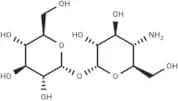
4-Trehalosamine
CAS:4-Trehalosamine, a microbial metabolite identified in Streptomyces, exhibits antibiotic properties.Formula:C12H23NO10Color and Shape:SolidMolecular weight:341.31Antibacterial agent 247
Antibacterialagent 247 (compound 30b) is a bacterium (bacterial) antagonist that significantly inhibits the formation of biofilms by Pseudomonas aeruginosa (IC50=5.8 μM) and various virulence phenotypes. It also enhances the antibacterial activity of combined treatments with tobramycin and polymyxin B.Formula:C26H33ClN4O3Molecular weight:485.02(Cys47)-HIV-1 tat Protein (47-57)
CAS:Cys47-HIV-1 tat (47-57) enables membrane translocation and improves magnetic drug uptake.Formula:C58H114N32O13SMolecular weight:1499.82Cerastecin D
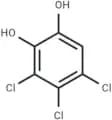
CAS:Cerastecin D (compound 1), an antibacterial agent, demonstrates effectiveness by inhibiting Acinetobacter baumannii ATCC19606 with MITC 95 values at 165 nM.Formula:C36H29F2N7O9S2Molecular weight:805.783,4,5-Trichlorocatechol
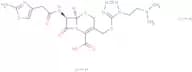
CAS:3,4,5-Trichlorocatechol is a derivative of catechol that is derived from pentachlorophenol. It is known to induce oxidative lesions in DNA.Formula:C6H3Cl3O2Color and Shape:SolidMolecular weight:213.45Cefotiam hydrochloride
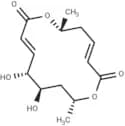
CAS:Cefotiam hydrochloride is a third-gen cephalosporin that disrupts bacterial cell wall synthesis by inhibiting PBPs.Formula:C18H23N9O4S3·2HClPurity:98.23% - 99.98%Color and Shape:SolidMolecular weight:598.60Colletodiol
CAS:Colletodiol, a fungal compound from D. grovesii, has immunosuppressant and antiviral effects with IC50s of 12 and 5 μg/ml on mouse splenocytes.Formula:C14H20O6Color and Shape:SolidMolecular weight:284.30IT-143A
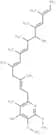
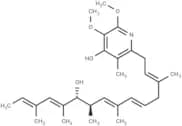
CAS:IT-143A from Streptomyces sp. IT-143.1 kills M. luteus (MIC 6.25 μg/ml), and some fungi (MIC 12.5-25 μg/ml).Formula:C29H43NO4Color and Shape:SolidMolecular weight:469.66Propamidine isethionate
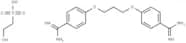
CAS:Propamidine isethionate is a biaoctive chemical.Formula:C19H26N4O6SColor and Shape:SolidMolecular weight:438.50IT-143B
CAS:IT-143B, a S. iakyrus metabolite, hinders OS-RC-2, ACHN cell growth; IC50s: 22, 98 μM.Formula:C28H41NO4Color and Shape:SolidMolecular weight:455.63Nigerose
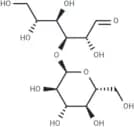
CAS:Nigerose, a disaccharide identified in Acremonium, effectively maintains stability in HL-60 cells post-cryopreservation by preventing elevations inFormula:C12H22O11Color and Shape:SolidMolecular weight:342.3016-epi Latrunculin B
CAS:16-epiLatrunculin B, a stereoisomer of the actin polymerization inhibitor latrunculin B, was initially isolated from the Red Sea sponge N. magnifica. At concentrations of 5-10 µg/ml, it disrupts microfilament activity in actin disruption assays and exhibits cytotoxic effects on mouse KA31T and NIH3T3 tumor cells, with GI50 values of 1 and 4 µg/ml, respectively. Furthermore, it shows antiviral activity against herpes simplex type 1 virus, with an ED50 of 1 µg/ml.Formula:C20H29NO5SColor and Shape:SolidMolecular weight:395.5DN59
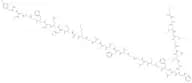
CAS:DN59 is a peptide composed of 33 amino acids that mimics the stem region of the dengue virus type 2 E protein. It is capable of inhibiting all four serotypes of the dengue virus (IC50: 2-5 μM) as well as other flaviviruses. DN59 exerts its antiviral activity by interacting directly with viral particles, leading to the release of genomic RNA.Formula:C161H240N38O44SColor and Shape:SolidMolecular weight:3443.92flg22Pst
CAS:Flg22Pst is a peptide derived from Pseudomonas syringae pv. tabaci, acting as a potent inducer of the plant immune system. It prompts callose deposition and triggers immune responses in plants, aiding in the defense against pathogen invasion.Formula:C94H165N29O33Color and Shape:SolidMolecular weight:2229.492'-Deoxy-2'-fluoroadenosine-5'-O-triphosphate sodium
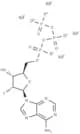
2'-Deoxy-2'-fluoroadenosine-5'-O-triphosphate is a fluorinated analog of ATP, the pivotal energy substrate for cellular metabolism, and acts as an inhibitor ofFormula:C10H11FN5O12P3·4NaColor and Shape:SolidMolecular weight:597.10Filipin II
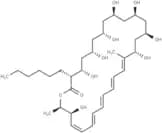
CAS:Filipin II, a polyene antibiotic with broad antifungal effects (MICs 1-10 μg/ml), inhibits ADP-respiration and causes hemolysis (IC50 0.5 μg/ml).Formula:C35H58O10Color and Shape:SolidMolecular weight:638.839meso-2,6-Diaminopimelic acid
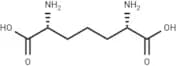
CAS:Meso-2,6-diaminopimelic acid is an essential precursor in the biosynthesis of the amino acid L-lysine and a critical component of peptidoglycan in the cell walls of various bacteria.Formula:C7H14N2O4Color and Shape:SolidMolecular weight:190.2Neospiramycin I
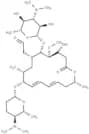
CAS:Neospiramycin I, a spiramycin I derivative, is an antibiotic effective against several bacteria, with varying MIC values, and protects mice from S. pneumoniae.Formula:C36H62N2O11Color and Shape:SolidMolecular weight:698.895Mandelonitrile benzoate
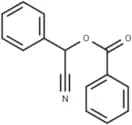
CAS:Mandelonitrile benzoate is a biochemical.Formula:C15H11NO2Color and Shape:SolidMolecular weight:237.25Sarolaner
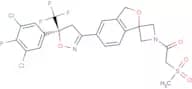
CAS:Sarolaner (PF-6450567) is an orally active and broad-spectrum ectoparasiticide (LC80: 0.3 μg/mL against C. felis and an LC100: 0.003 μg/mL against O. turicata).Formula:C23H18Cl2F4N2O5SPurity:99.54% - 99.65%Color and Shape:SolidMolecular weight:581.36