Coumarins
Coumarins are a class of polycyclic aromatic compounds consisting of a benzene ring fused to a pyrone ring. These compounds are widely used as fragrances, flavoring agents, and in the synthesis of pharmaceuticals and agrochemicals. Coumarins exhibit various biological activities, including anticoagulant, anti-inflammatory, and antimicrobial properties. At CymitQuimica, we provide a wide selection of high-quality coumarins for your research and industrial applications.
Found 1122 products of "Coumarins"
Sort by
Purity (%)
0
100
|
0
|
50
|
90
|
95
|
100
Esculin hydrate
CAS:<p>Fluorescent dye used in diagnostic culture media</p>Formula:C15H16O9·xH2OPurity:Min. 98 Area-%Color and Shape:White PowderMolecular weight:340.28 g/molBergamottin
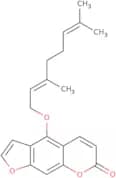
CAS:<p>Bergamottin is a furanocoumarin compound, which is primarily found in grapefruit juice and other citrus fruits. It is derived from natural sources, specifically within the fruit and peel of grapefruits. The mode of action of Bergamottin involves the inhibition of the cytochrome P450 enzymes, particularly CYP3A4, which play a significant role in the metabolism of various drugs. This inhibitory effect can alter the pharmacokinetics of certain medications by increasing their bioavailability.</p>Formula:C21H22O4Purity:Min. 98 Area-%Color and Shape:White PowderMolecular weight:338.4 g/mol(+/-)-Heraclenin
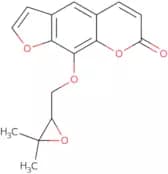
CAS:<p>(+/-)-Heraclenin is a naturally occurring coumarin, which is a class of organic compounds notable for diverse biological activities. This compound is primarily sourced from various plant species belonging to the family Apiaceae, such as Heracleum species. Coumarins like (+/-)-heraclenin are known for their ability to modify biological responses due to their chemical structure.</p>Formula:C16H14O5Purity:Min. 98 Area-%Color and Shape:PowderMolecular weight:286.28 g/molDemethylsuberosin
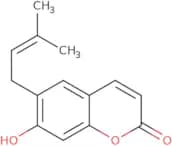
CAS:<p>Demethylsuberosin is a naturally-occurring compound, specifically a coumarin derivative, which is often extracted from plants. It originates from numerous botanical sources, including the family Rutaceae, where it serves as a secondary metabolite. Its mode of action involves the inhibition of fungal and bacterial growth, achieved by disrupting the integrity of microbial cell walls and interfering with their replication processes.</p>Formula:C14H14O3Purity:Min. 95%Color and Shape:PowderMolecular weight:230.26 g/molAcetyl columbianetin
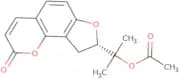
CAS:Acetyl columbianetin is a natural compound, which is a type of secondary metabolite derived primarily from plant sources. This compound is part of a broader category of phytochemicals known for their diverse bioactive properties. Acetyl columbianetin is specifically sourced from certain species within the Apiaceae family, commonly found in traditional medicine.Formula:C16H16O5Purity:Min. 95%Color and Shape:PowderMolecular weight:288.3 g/molIso-oxypeucedanin
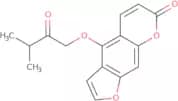
CAS:<p>Iso-oxypeucedanin is a naturally occurring furanocoumarin compound, which is isolated from various plant species, particularly those belonging to the Apiaceae family. It exhibits a range of biological activities, primarily attributable to its structural properties that allow it to interact with various molecular targets.</p>Purity:Min. 95%Oroselol
CAS:<p>Oroselol is an innovative beta-adrenergic blocker, which is a synthetic derivative with unique cardiovascular targeting properties. It is sourced from engineered chemical synthesis, utilizing advanced molecular design to enhance selectivity for beta-adrenergic receptors. The mode of action of Oroselol involves competitive antagonism of beta-1 and beta-2 adrenergic receptors, leading to a decrease in heart rate and myocardial contractility. This blockade of adrenergic stimulation results in reduced cardiac output and lower blood pressure.</p>Formula:C14H12O4Purity:Min. 95%Color and Shape:PowderMolecular weight:244.24 g/molFraxidin
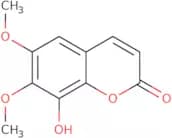
CAS:<p>Fraxidin is a naturally occurring compound, specifically an O-methylated coumarin, which is derived from certain plant sources such as the fruits of the ash tree. It is primarily obtained through the processing of various plant materials within the Rutaceae family. The mode of action of Fraxidin involves the inhibition of oxidative damage due to its capacity to scavenge free radicals, thus leading to potential antioxidant properties in biological systems.</p>Formula:C11H10O5Purity:Min. 98 Area-%Color and Shape:PowderMolecular weight:222.19 g/molPteryxin
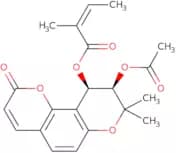
CAS:<p>Pteryxin is an alkaloid derivative, which is a natural product isolated primarily from certain plant species within the Apiaceae family. As a complex organic compound, it exhibits a range of biochemical interactions at the molecular level. The mode of action for Pteryxin primarily involves its ability to interact with specific enzymatic pathways and receptors, facilitating or inhibiting particular physiological processes. This biochemical interaction underlies its potential pharmacological effects, which are these products' primary focus of study.</p>Formula:C21H22O7Purity:Min. 95%Color and Shape:PowderMolecular weight:386.4 g/mol7-Hydroxycoumarin
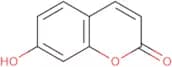
CAS:<p>7-Hydroxycoumarin is a fluorescent compound, known as a coumarin derivative, which is a naturally occurring chemical found in many plants. Derived from the umbelliferone compound family, it exhibits strong blue fluorescence under UV light due to its unique structural properties. This fluorescence is a result of its molecular conjugation and the electron-donating nature of the hydroxyl group, allowing it to absorb and emit light efficiently.</p>Formula:C9H6O3Purity:90%Color and Shape:Off-White PowderMolecular weight:162.14 g/mol7-Methoxycoumarin
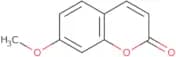
CAS:<p>7-Methoxycoumarin is a fluorescent compound, which is a derivative of coumarin. It is synthesized through chemical modification processes of natural coumarin, typically sourced from plant extracts of the Apiaceae and Rutaceae families.</p>Formula:C10H8O3Purity:Min. 95%Color and Shape:PowderMolecular weight:176.17 g/mol6-Hydroxy-4-methylcoumarin
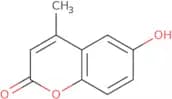
CAS:6-Hydroxy-4-methylcoumarin is a chemical compound that serves as a lactone derivative. It is commonly derived from synthetic sources through various organic reactions involving resorcinol and ethyl acetoacetate. The compound functions primarily through its ability to absorb ultraviolet light and fluoresce, making it highly valuable in spectroscopic analyses.Formula:C10H8O3Purity:Min. 95%Molecular weight:176.17 g/mol2-Oxo-2H-chromene-6-carboxylic acid
CAS:Formula:C10H6O4Purity:98%Color and Shape:SolidMolecular weight:190.154Ethyl 7-hydroxy-2-oxo-2H-chromene-3-carboxylate
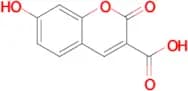
CAS:Formula:C12H10O5Purity:98%Color and Shape:SolidMolecular weight:234.2077-Hydroxy-2-oxo-2H-chromene-3-carboxylic acid
CAS:Formula:C10H6O5Purity:95%Color and Shape:Solid, Very pale yellow to pale yellow powderMolecular weight:206.153