Polycyclic Aromatic Hydrocarbons (PAHs)
Found 282 products of "Polycyclic Aromatic Hydrocarbons (PAHs)"
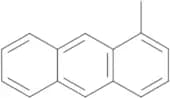
1-Methylanthracene 10 µg/mL in Cyclohexane
CAS:Formula:C15H12Color and Shape:Single SolutionMolecular weight:192.26Anthracene (purified by sublimation)
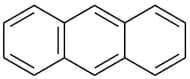
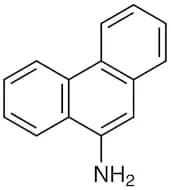
CAS:Formula:C14H10Purity:>99.5%(GC)Color and Shape:White to Almost white powder to lumpMolecular weight:178.23Phenanthren-9-amine
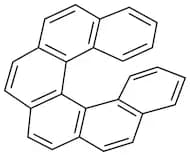
CAS:Formula:C14H11NPurity:>95.0%(GC)(T)Color and Shape:White to Brown powder to crystalMolecular weight:193.25Hexahelicene
CAS:Formula:C26H16Purity:>98.0%(HPLC)Color and Shape:White to Light yellow powder to crystalMolecular weight:328.411-Acenaphthenol
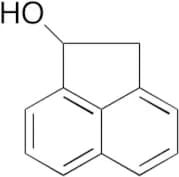
CAS:Applications 1-Acenaphthenol is a product of the microbial metabolism and photolysis of acenaphthene, of acenaphthene, a polycyclic hydrocarbon that has potential to act as polyploidizing agents in plants. 1-Acenaphthenol is also a known substrate of dihydrodiol dehydrogenases.
References Reyes, C., et al.: J. Photochem. Photobiol. A, 112, 277 (1998); Šavlík, M., et al.: Res. Vet. Sci., 83, 20 (2007); Schocken, M. & Gibson, D.: Appl. Environ. Microb., 48, 10 (1984);Formula:C12H10OColor and Shape:NeatMolecular weight:170.213,11-Dimethylchrysene
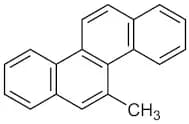
CAS:Applications 3,11-Dimethylchrysene is a derivative of Chrysene (C428000), both being part of a group of polycyclic aromatic compounds suspected to have tumour-initiating effects on humans.
References Schuetzle, D. & Daisey, J.: Genetic Toxicology of Complex Mixtures, No vol. given, 11 (1990); Shaw, G., et al.: Rev. Environ. Contam. T., No vol. given, 1 (1994)Formula:C20H16Color and Shape:NeatMolecular weight:256.343-Chloroacenaphthene
CAS:Controlled ProductApplications 3-Chloroacenaphthene is a chloro derivative of Acenaphthene (D448330); a polycyclic aromatic hydrocarbon serving as a carcinogenic agent.
References Hansen, B., et al.: Environ. Toxicol. Chem., 18, 772 (1999); Czub, G., et al.: Environ. Sci. Technol., 38, 2406 (2004)Formula:C12H9ClColor and Shape:NeatMolecular weight:188.653,5,6,8-Tetrabromo-1,2-dihydro-acenaphthylene
CAS:Controlled ProductApplications 3,5,6,8-Tetrabromo-1,2-dihydro-acenaphthylene is a byproduct during the synthesis of 3,5,6-Tribromo-1,2-dihydroacenaphthylene (T771875), a derived from Acenaphthene (1,2-Dihydro Acenaphthylene) (D448330), which is a polycyclic aromatic hydrocarbons as carcinogenic agents.
References Hansen, B., et al.: Environ. Toxicol. Chem., 18, 772 (1999); Czub, G., et al.: Environ. Sci. Technol., 38, 2406 (2004)Formula:C12H6Br4Color and Shape:NeatMolecular weight:469.797-Methylbenz[a]anthracene
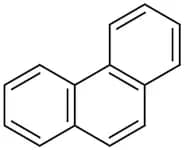
CAS:Formula:C19H14Purity:>97.0%(GC)Color and Shape:White to Light yellow powder to crystalMolecular weight:242.32Phenanthrene
CAS:Formula:C14H10Purity:>97.0%(GC)Color and Shape:White to Light yellow to Light orange powder to crystalMolecular weight:178.23Benzo[a]phenanthrene (purified by sublimation)
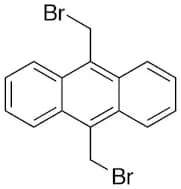
CAS:Formula:C18H12Purity:>98.0%(GC)Color and Shape:White to Light yellow to Light orange powder to crystalMolecular weight:228.299,10-Bis(bromomethyl)anthracene
CAS:Controlled ProductStability Hygroscopic
Applications 9,10-Bis(bromomethyl)anthracene shows high antitumor activity against Ehrlich ascites tumor in mice.
Not a dangerous good if item is equal to or less than 1g/ml and there is less than 100g/ml in the package
References Peck, R. M., et al.: J. Med. Chem., 15, 68 (1972)Formula:C16H12Br2Color and Shape:NeatMolecular weight:364.073-Methoxy Benzopyrene
CAS:Controlled ProductApplications Metabolite of 3,4-Benzopyrene. Carcinogenic.
References Peacock, P. R. et al.; Brit. J. Cancer 6, 407 (1952); Cook, J. W. et al.; Brit. J. Cancer 6, 400 (1952)Formula:C21H14OColor and Shape:NeatMolecular weight:282.343,5-Dichloroacenaphthene
CAS:Controlled ProductApplications 3,5-Dichloroacenaphthene is a chlorinated derivative of Acenaphthene (D448330); a polycyclic hydrocarbon that has potential to act as polyploidizing agents in plants.
References Campbell, K., et al.: J. Org. Chem., 16, 1712 (1951); Reisen, F. & Arey J.: Env. Sci. Tech., 36, 4302 (2002)Formula:C12H8Cl2Color and Shape:NeatMolecular weight:223.1Benz[l]aceanthrylene
CAS:Controlled ProductStability Light Sensitive
Applications Benz[l]aceanthrylene is a mutagenic agent.
References Bartczak, A., et al.: Mutagenesis, 2, 101 (1987); Nesnow, S., et al.: Cancer Res., 44, 4993 (1984)Formula:C20H12Color and Shape:NeatMolecular weight:252.318,9,10,11-Tetrahydrodibenz(a,h)acridine
CAS:Controlled ProductStability Store in Freezer
Applications This compound is an interesting intermediate in the synthesiis of the epoxy-diol derivtives of dibenz(a,h)acridine (Catalogue number D41690) which is the proximate or ultimate carcinogen.
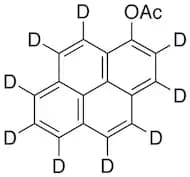
References S. Kumar: JOC, 50, 3070-3073 (1985)Formula:C21H17NColor and Shape:NeatMolecular weight:283.371-Pyrenol Acetate
CAS:Controlled ProductApplications 1-Pyrenol Acetate is an intermediate in the synthesis of 8-Nitro-1-pyrenol-d8 (N519992), which is an urinary hydroxylated metabolites used as a biomarkers of exposure of polycyclic aromatic hydrocarbons. This is the labeled analog.
References Toriba, A., et al.: J. Health. Sci., 53; 631 (2007); Chae, Y.H., et al.: Cancer Res., 59, 1473 (1999); Sangaiah, R., et al.: Poly. Aro. Comp., 11, 283 (1996);Formula:C18H12O2Color and Shape:NeatMolecular weight:260.297H-Benzo[c]fluorene 10 µg/mL in Cyclohexane
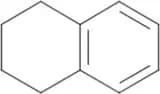
CAS:Formula:C17H12Color and Shape:Single SolutionMolecular weight:216.281,2,3,4-Tetrahydronaphthalene
CAS:Controlled ProductFormula:C10H12Color and Shape:NeatMolecular weight:132.20Isoviolanthrone
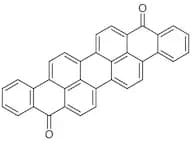
CAS:Formula:C34H16O2Color and Shape:Gray to Dark purple to Black powder to crystalMolecular weight:456.50






![Benzo[b]thiophene-D6](/_next/image/?url=https%3A%2Fstatic.cymitquimica.com%2Fproducts%2FTR%2Fthumb-webp%2FB206872.webp&w=3840&q=75)


![7-Methylbenz[a]anthracene](/_next/image/?url=https%3A%2Fstatic.cymitquimica.com%2Fproducts%2F3B%2Fthumb-webp%2FM0248.webp&w=3840&q=75)
![Benzo[a]phenanthrene (purified by sublimation)](/_next/image/?url=https%3A%2Fstatic.cymitquimica.com%2Fproducts%2F3B%2Fthumb-webp%2FC0339.webp&w=3840&q=75)


![Benz[l]aceanthrylene](/_next/image/?url=https%3A%2Fstatic.cymitquimica.com%2Fproducts%2FTR%2Fthumb-webp%2FB183405.webp&w=3840&q=75)

![7H-Benzo[c]fluorene 10 µg/mL in Cyclohexane](/_next/image/?url=https%3A%2Fstatic.cymitquimica.com%2Fproducts%2F04%2Fthumb-webp%2FL20590400CY.webp&w=3840&q=75)
![Benz[c]acridine](/_next/image/?url=https%3A%2Fstatic.cymitquimica.com%2Fproducts%2F04%2Fthumb-webp%2FC20538200.webp&w=3840&q=75)
![Benzo[b]furan](/_next/image/?url=https%3A%2Fstatic.cymitquimica.com%2Fproducts%2F04%2Fthumb-webp%2FC20591500.webp&w=3840&q=75)