Organometallic Ligands
In this category, you will be able to find a large number of organometallic molecules used as ligands in biomolecules. These organometallic ligands can be used in organic chemistry and synthesis in the laboratory. They play a critical role in forming coordination complexes and catalyzing various chemical reactions. At CymitQuimica, we offer a diverse selection of high-quality organometallic ligands to support your research and industrial needs.
Subcategories of "Organometallic Ligands"
- Buchwald Ligands(22 products)
- DPEN(4 products)
- DPHEN(4 products)
- JOSIPHOS(4 products)
- Phosphine(497 products)
- Porphirines(75 products)
Found 2887 products of "Organometallic Ligands"
Sort by
Purity (%)
0
100
|
0
|
50
|
90
|
95
|
100
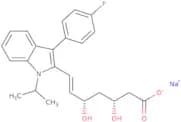
Fluvastatin sodium
CAS:<p>Fluvastatin is a statin that lowers blood cholesterol and triglycerides by inhibiting HMG-CoA reductase, an enzyme that plays a critical role in the synthesis of cholesterol. Fluvastatin has also been shown to reduce the incidence of myocardial infarction, and to reduce atherosclerotic lesions in animal models, reducing the incidence of cardiovascular disease. Fluvastatin also has been shown to inhibit the activation of toll-like receptor 4 (TLR4) by lipopolysaccharide (LPS), which may be related to its anti-inflammatory effects. Furthermore, through lowering blood cholesterol, Fluvastatin also inhibits tubulointerstitial injury and prevents renal damage caused by high concentrations of the lipid.</p>Formula:C24H25FNNaO4Purity:Min. 98%Color and Shape:Off-White PowderMolecular weight:433.45 g/molApixaban - Bio-X ™
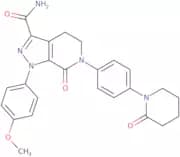
CAS:<p>Apixaban is an anticoagulant agent used for the prophylaxis of stroke and deep vein thrombosis leading to pulmonary embolism. This drug is an inhibitor of factor Xa and prothrominase. As a result, this prevents the formation of a thrombus.</p>Formula:C25H25N5O4Purity:Min. 95%Color and Shape:PowderMolecular weight:459.5 g/molRosuvastatin calcium - Bio-X ™
CAS:<p>Rosuvastatin is a drug that belongs to the group of statins. It is used for the treatment of high cholesterol and as an adjunct therapy for patients with coronary heart disease. Rosuvastatin reduces serum cholesterol by inhibiting HMG-CoA reductase, which is the rate-limiting enzyme in the production of cholesterol. Furthermore, this drug has been shown to have anti-inflammatory properties, which may be due to its ability to inhibit prostaglandin synthesis.</p>Formula:C22H27FN3O6SCaPurity:(%) Min. 95%Color and Shape:PowderMolecular weight:500.57 g/molKifunensine - Bio-X ™
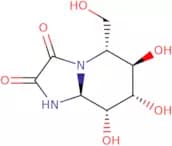
CAS:<p>Kifunensine is a small molecule inhibitor that was designed and synthesized to inhibit plant and animal α-mannosidase I. It is a potent and specific inhibitor with IC50 in nanomolar range. It inhibits the enzyme isoforms in Golgi apparatus (GMI) and endoplasmatic reticulum (ERMI). The compound prevents mannose trimming on glycoproteins and shifts the glycoform content from complex to oligomannose type. Used for the production of recombinant therapeutic glycoproteins with mannose rich N-linked glycans.</p>Formula:C8H12N2O6Purity:Min. 95%Color and Shape:White PowderMolecular weight:232.19 g/molA 485
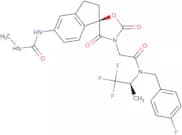
CAS:<p>Histone acetyltransferase inhibitor of p300/CBP; anti-proliferative</p>Formula:C25H24F4N4O5Purity:Min. 95%Color and Shape:PowderMolecular weight:536.48 g/molNicaraven
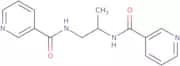
CAS:<p>Hydroxyl radical scavenger; anti-vasospastic</p>Formula:C15H16N4O2Purity:Min. 95%Molecular weight:284.31 g/molNolatrexed dihydrochloride
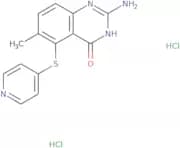
CAS:<p>Thymidylate synthase inhibitor</p>Formula:C14H14Cl2N4OSPurity:Min. 95%Color and Shape:White To Light (Or Pale) Yellow SolidMolecular weight:357.26 g/molFluticasone propionate - Bio-X ™
CAS:<p>As a synthetic trifluorinated glucocorticoid receptor agonist, Fluticasone exhibits anti-inflammatory properties. When binding to and activating glucocorticoid receptors, Fluticasone initiates the activation of lipocortin which inhibits cytosolic phospholipase A2. Consequently, the cascade of inflammatory mediator synthesis reactions are inactivated and the production of inflammatory cells namely mast cells, dendritic cells, macrophages and eosinophils and the cytokines that they produce are greatly reduced.It is this anti-inflammatory role which has enabled Fluticasone to successfully treat conditions such as asthma, emphysema, allergic rhinitis and atopic dermatitis. It has also been seen to increase anti-inflammatory effects of annexoin-1 and mitogen-activated kinase phosphatase-1; reduce mucus gland secretions and increase the number of beta-2 receptors on smooth muscles of the airways.<br>Fluticasone is part of our Bio-X ™ Range. These products are aimed at life science researchers who need high quality ready to use products for assay development, screening or other R&D work. With a solubility datasheet and convenient vials, all of our Bio-X ™ products are in stock across our global warehouses for rapid delivery and ease of use.</p>Formula:C25H31F3O5SPurity:Min. 95%Color and Shape:White/Off-White SolidMolecular weight:500.57 g/molMitomycin C - Bio-X ™
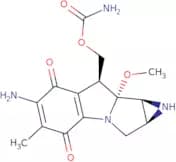
CAS:<p>Mitomycin C is a cytotoxic agent that belongs to the class of mitomycins. It has been used for the treatment of a range of cancers and for ocular surface diseases, such as the glaucoma surgery trabeculectomy. In this case it is administered to reduce post-operative scarring which could otherwise lead to failure of the procedure. Mitomycin C is an alkylating antibiotic that inhibits DNA synthesis by cross-linking the DNA double helix. Mitomycin C also stimulates the production of transforming growth factor β1 (TGF-β1) and basic fibroblast growth factor (bFGF). Clinically, mitomycin can be used both intravenously and topically, and has been studied in a range of wound healing models.</p>Formula:C15H18N4O5Purity:Min. 95%Color and Shape:PowderMolecular weight:334.33 g/mol7-Prenyloxycoumarin
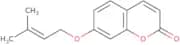
CAS:<p>7-Prenyloxycoumarin is a naturally occurring compound, often categorized as a phytochemical, which is primarily isolated from various plant sources including the Rutaceae family. This compound exhibits intriguing biochemical properties due to its unique molecular structure, primarily the presence of a prenyloxy group attached to the coumarin core. The mode of action of 7-Prenyloxycoumarin primarily involves its ability to interact with biological membranes and proteins, leading to modulation of enzymatic activity and disruption of pathogen cell walls.</p>Formula:C14H14O3Purity:Min. 98 Area-%Color and Shape:PowderMolecular weight:230.26 g/molAMTB hydrochloride
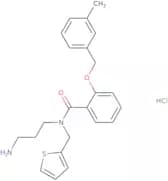
CAS:<p>Selective TRPM8 channel blocker. Inhibits icillin-induced store-operated Ca2+ entry, hence TRPM8 activation, in pulmonary vasculature. Reduces frequency of volume-induced contraction of bladder. Reduces micturition and nociceptive reflex actions in the bladder, suggesting therapeutic potential for bladder hypersensitivity disorders.</p>Formula:C23H26N2O2SHClPurity:Min. 95%Color and Shape:SolidMolecular weight:430.99 g/molSR 4835
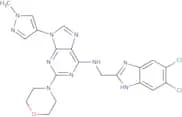
CAS:<p>SR 4835 is a synthetic compound, which is an advanced molecular entity derived from extensive medicinal chemistry efforts. This compound exhibits a novel mechanism of action, targeting specific cellular pathways implicated in disease processes. SR 4835 functions by modulating enzyme activity, thus influencing intracellular signaling cascades that play a critical role in pathophysiological conditions.</p>Formula:C21H20Cl2N10OPurity:Min. 98 Area-%Color and Shape:PowderMolecular weight:499.36 g/mol(5Z)-7-Oxozeaenol
CAS:<p>(5Z)-7-Oxozeaenol is a potent and selective small-molecule inhibitor, primarily characterized as a natural product derived from fungal sources. It specifically targets and inhibits transforming growth factor-beta (TGF-β) type I receptor kinase, also known as activin receptor-like kinase 5 (ALK5), as well as TAO kinases. The inhibition occurs through covalent modification, which results in the suppression of downstream signaling pathways that are crucial in various cellular processes.</p>Formula:C19H22O7Purity:Min. 95%Color and Shape:PowderMolecular weight:362.37 g/molAutogramin 2
<p>Autophagy inhibitor that selectively targets the StART domain of GRAMD1A</p>Formula:C21H27N3O4SPurity:Min. 95%Color and Shape:SolidMolecular weight:417.52 g/molDacomitinib
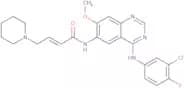
CAS:<p>Pan-EGFR inhibitor (HER1, HER2 and HER4); antineoplastic</p>Formula:C24H25ClFN5O2Purity:Min. 98 Area-%Color and Shape:PowderMolecular weight:469.95 g/molPonalrestat
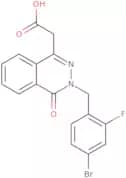
CAS:<p>Ponalrestat is an aldose reductase inhibitor, which is a synthetic compound developed for pharmacological purposes. It originates from chemical synthesis designed to target and inhibit the enzyme aldose reductase effectively. The mode of action involves the competitive inhibition of aldose reductase, an enzyme involved in the polyol pathway of glucose metabolism. By preventing the reduction of glucose to sorbitol, it reduces sorbitol accumulation associated with diabetic complications.</p>Formula:C17H12BrFN2O3Purity:Min. 98 Area-%Color and Shape:PowderMolecular weight:391.19 g/molPitolisant hydrochloride
CAS:<p>Pitolisant is an inverse agonist and antagonist of the histamine (H3) receptor. It acts as an allosteric modulator of the H3 receptor to increase the activity of histamine at the M1 receptor. Pitolisant has been used in the treatment of narcolepsy, schizophrenia and Alzheimer's disease. Its mechanism of action involves binding to the amide group on histamine, which increases its affinity for the H3 receptor and enhances its activity at this site. Pitolisant has been shown to improve cognitive ability and reduce fatigue in patients with Alzheimer's disease.</p>Formula:C17H26ClNO·HClPurity:Min. 95%Color and Shape:White Off-White PowderMolecular weight:332.31 g/molSDZ 220-581 hydrochloride
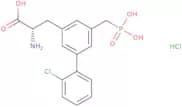
CAS:<p>NMDA receptor antagonist</p>Formula:C16H17ClNO5P·HClPurity:Min. 95%Molecular weight:406.2 g/molPARP1 (487-496)
<p>Amino acids 487-496 of Poly(ADP-ribose) polymerase 1 (PARP1). PARP1 is a nuclear DNA repair enzyme that binds to DNA when damage is detected. PARP1 coordinates double and single strand break repair by first cleaving NAD+ into nicotinamide and ADP-ribose, and then synthesising poly-(ADP-ribose) (PAR) chains from ADP-ribose on target proteins (PARylation). PARylation of histone proteins mediates relaxation of the chromatin and recruitment of DNA-break repair enzymes.PARP1 can also act as a transcriptional co-activator, modulating the expression of itself and many other genes by direct binding to or PARylation of enhancers and promoters. PARP1 is also involved in maintaining mtDNA.PARP1 belongs to the PARP family which has 7 known and 10 putative members. PARP1 accounts for >85% of the PARP activity in cellular systems.</p>Purity:Min. 95%Molecular weight:1,065.6 g/mol