Organometallic Ligands
In this category, you will be able to find a large number of organometallic molecules used as ligands in biomolecules. These organometallic ligands can be used in organic chemistry and synthesis in the laboratory. They play a critical role in forming coordination complexes and catalyzing various chemical reactions. At CymitQuimica, we offer a diverse selection of high-quality organometallic ligands to support your research and industrial needs.
Subcategories of "Organometallic Ligands"
- Buchwald Ligands(22 products)
- DPEN(4 products)
- DPHEN(4 products)
- JOSIPHOS(4 products)
- Phosphine(497 products)
- Porphirines(75 products)
Found 2887 products of "Organometallic Ligands"
Sort by
Purity (%)
0
100
|
0
|
50
|
90
|
95
|
100
Abltide
<p>Abltide represents the optimal substrate peptide of Abl (or c-Abl), a non-receptor tyrosine kinase (NRTK) and the oncogenic Bcr-Abl tyrosine kinase (TK) (formed via a fusion between the Abelson (Abl) TK gene and the break point cluster region protein Brc). Abl was discovered as the gene from which the Abelson leukaemia virus derived its Gag-v-Abl oncogene.TKs are critical enzymes involved in multiple signalling pathways. However, Tks can promote cancer progression when deregulated, for example deregulated TK, Bcr-Abl gives rise to chronic myeloid leukaemia (CML) and Philadelphia chromosome-positive acute lymphocytic leukaemia (Ph+ ALL).Abl is activated by various signals including: growth factors, cytokines, cell adhesion, DNA damage and oxidative stress and results in the stimulation of both pro- and anti-apoptotic roles, cell proliferation or differentiation, retraction, or migration. Abl phosphorylates a large number of functionally diverse substrates, in part due to its ability to shuttle between the cytosol and the nucleus and bind both DNA and actin&mdash-two biopolymers with fundamental roles in almost all biological processes.</p>Purity:Min. 95%Color and Shape:PowderMolecular weight:1,263.7 g/molRNase A (8-13)
<p>H-FERQHM-OH peptide, corresponding to RNase A 8-13 (Chain A of bovine pancreatic ribonuclease) is a non-amyloidogenic peptide, that can be used as a negative control in amyloid formation experiments together with CRB1001320.</p>Purity:Min. 95%Molecular weight:846.4 g/molAKTide-2T
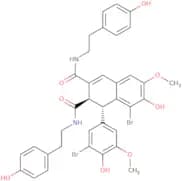
<p>AKTide-2T is a 14-mer peptide which has the ability to bind to the substrate binding domain of Akt1 with a Ki of 12mM. AKt1 is part of the Akt kinase family which are serine/threonine kinase and it is ubiquitously expressed. AKt1 performs roles such as promoting endothelial neoplasms and through phosphorylating angiogenic substrates AKt1 plays a role in angiogenesis. AKT kinases as a whole perform functional roles in cell proliferation, cell growth, survival and intermediary metabolism.During peptide library screening, AKTide-2T was found to contain the optimal motif for successful binding to AKT. When phosphoamino acid analysis of AKTide-2T was carried out it was observed that although AKTide-2T contained two potential AKT phosphorylation sites: serine or threonine, AKT only phosphorylated the serine site. Furthermore it was found that AKTide-2T exhibits properties of being a competitive inhibitor for example it competitively inhibits histone H2B from being phosphorylated by AKT.</p>Purity:Min. 95%Color and Shape:PowderMolecular weight:1,714.9 g/molrel-(1R,2S)-8-Bromo-1-(3-bromo-4-hydroxy-5-methoxyphenyl)-1,2-dihydro-7-hydroxy-N2,N3-bis[2-(4-hydroxyphenyl)ethyl]-6-methoxy-2,3-na phthalenedicarboxamide
CAS:<p>rel-(1R,2S)-8-Bromo-1-(3-bromo-4-hydroxy-5-methoxyphenyl)-1,2-dihydro-7-hydroxy-N2,N3-bis[2-(4-hydroxyphenyl)ethyl]-6-methoxy-2,3-naphthalenedicarboxamide is a synthetic chemical compound, which is derived through targeted organic synthesis and structural optimization efforts. Its source lies in advanced laboratory methodologies designed to enhance specific pharmacological properties. The mode of action is expected to involve selective interaction with particular molecular targets, potentially modulating distinct pathways related to cellular function or signaling processes.</p>Formula:C36H34Br2N2O8Purity:Min. 95%Color and Shape:PowderMolecular weight:782.47 g/molVardenafil HCl - Bio-X ™
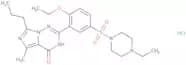
CAS:<p>Vardenafil is a phosphodiesterase type 5 inhibitor that binds to intracellular targets and competitively inhibits cyclic guanosine monophosphate (cGMP) hydrolysis thus increasing cGMP levels. Vardenafil can be used for the research of erectile dysfunction, hepatitis and diabetes.</p>Formula:C23H33ClN6O4SPurity:Min. 95%Color and Shape:PowderMolecular weight:525.07 g/molNrf2 (69-84)
<p>Nuclear Factor Erythroid 2-Related Factor 2 (Nrf2) and its negative regulator Kelch-Like ECH-Associated Protein 1 (Keap1) provide vital protection in maintaining cellular redox. In parallel, Nrf2 also aids the resolution of inflammation and also tissue repair. In homeostatic conditions, the transcription factor Nrf2 is controlled in a cytoplasmic complex with Keap1 with ubiquitination and protein degradation. Nrf2 has been linked to numerous cancers due to mutations affecting the binding region of Nrf2 to Keap1, resulting in Nrf2 dissociating from the complex. Nrf2 constitutively accumulates in the nucleus and activation of prosurvival genes that promote cancer cell proliferation.The Neh2 region of Nrf2 interacts with Keap1, as shown by nuclear magnetic resonance spectroscopy. The 16 amino acid peptide (AFFAQLQLDEETGEFL) (69-84) flanks the conserved ETGE motif and can replicate the binding to keap1.Therapeutics targeting the Nrf2 signalling pathway and activation of Nrf2 is a keen area of research, with many cancers being linked to Nrf2, particularly pancreatic cancer. Additionally, activation of Nrf2 has become a possible target as a treatment for COVID. Nrf2 (69-84) replicating full-length Nrf2 binding has been helpful in all cases.</p>Purity:Min. 95%Color and Shape:PowderMolecular weight:1,856.9 g/molImipramine HCl - Bio-X ™
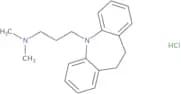
CAS:Controlled Product<p>Imipramine is a drug that belongs to the class of tricyclic antidepressant drugs. It is used in the treatment of depression and childhood enuresis. It is a potent inhibitor of serotonin and norepinephrine reuptake. Imipramine blocks D-2 receptors, H1 receptors, α-1 and α-2 adrenergic receptors and muscarinic receptors. Also, it is indicated for dysthymia, attention-deficit disorders, agoraphobia and it is effective in treating anxiety and panic disorders.</p>Formula:C19H24N2•HClPurity:Min. 95%Color and Shape:PowderMolecular weight:316.87 g/molNGI1
CAS:<p>A cell permeable inhibitor of oligosaccharyltransferase that interferes with the transfer of mature glycan precursors to recipient proteins. Causes reduced proliferation, G1 arrest and senescence in EGFR- and FGFR-dependent non-small-cell lung carcinoma (NSCLC) cells.</p>Formula:C17H22N4O3S2Purity:Min. 99 Area-%Molecular weight:394.51 g/molTocainide HCl - Bio-X ™
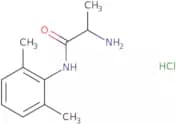
CAS:<p>Tocainide is a class 1b antiarrhythmic agent that is used in the treatment of ventricular arrhythmias. This drug acts on sodium channels to decrease the excitability of myocardial cells. This drug also prevents the depolarization of cardiac muscle cells and prolongs their refractory period.</p>Formula:C11H17ClN2OPurity:Min. 95%Color and Shape:PowderMolecular weight:228.72 g/molNL 1
CAS:<p>Inhibits the mitochondrial outer mebrane protein mitoNEET, anti-leukaemic</p>Formula:C18H25NO3SPurity:Min. 95%Color and Shape:SolidMolecular weight:335.46 g/molRS 127445 hydrochloride
CAS:<p>A selective antagonist of serotonin 5-HT2B receptors, inhibiting inositol phosphate formation and calcium release. Blocks 5-HT-induced contraction in rat stomach fundus. Reduces fecal output in vivo, upon inhibition of 5-HT2B by RS 127445, demonstrating a potential role for this receptor in colonic motility. Inhibits visceral hypersensitivity induced by restraint stress or colonic inflammation.</p>Formula:C17H16FN3·HClPurity:Min. 95%Color and Shape:White To Yellow SolidMolecular weight:317.79 g/molMRS 2500 tetraammonium
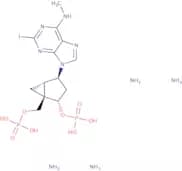
CAS:<p>Antagonist of purine receptor P2Y1</p>Formula:C13H18N5O8P2I•(NH3)4Purity:Min. 95%Molecular weight:629.29 g/molAlbuterol sulfate - Bio-X ™
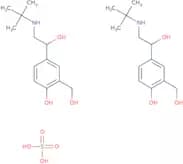
CAS:Controlled Product<p>Albuterol is a selective beta-2 adrenergic receptor agonist drug that is used to prevent and treat wheezing, shortness of breath, and other breathing difficulties caused by asthma. It relaxes the muscles in the airways, making them more open. Albuterol also has an anti-inflammatory effect.</p>Formula:C13H21NO3•(H2O4S)0Purity:Min. 95%Color and Shape:PowderMolecular weight:576.7 g/molYPSPV (EYGF-33)
<p>During extraction of lecithin from egg yolk, peptide by-products can be isolated and purified by gel filtration. Within the by-products this has led to the discovery of biologically active value-added products. The egg yolk gel filtration (EFGF) fractions were analysed for their antioxidant and angiotensin converting enzyme (ACE) inhibitory activities. EYGF-33 predominantly contained 3 peptides - KLSDW, YPSPV, and MPVHTDAD). YPSPV in EYGF-33 was found to have minimal antioxidant activity. However, YPSPV showed notably high angiotensin converting enzyme (ACE) inhibitory activity, it exceeded the positive control captopril.</p>Purity:Min. 95%Molecular weight:560.3 g/molSemagacestat
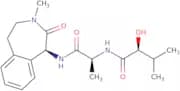
CAS:<p>γ-secretase inhibitor; inhibits notch signaling</p>Formula:C19H27O4N3Purity:Min. 95%Molecular weight:361.44 g/molLofepramine - Bio-X ™
CAS:<p>Lofepramine is a psychoactive drug that belongs to the class of tricyclic antidepressants. It is used to treat depression and anxiety disorders. This drug works by inhibiting the reuptake of neurotransmitters such as serotonin and norepinephrine and as a result these neurotransmitters remain active in the brain for a longer period, which can help improve mood and alleviate symptoms of depression.</p>Formula:C26H27ClN2OPurity:Min. 95%Color and Shape:PowderMolecular weight:418.96 g/molTacrolimus monohydrate - Bio-X ™
CAS:<p>Tacrolimus is a calcineurin inhibitor drug that is used for the prevention of rejection after an organ transplant. This drug can also be used in the treatment of severe atopic dermatitis. Tacrolimus’ mechanism of action is not well known however it is understood that this drug inhibits T-lymphocyte activation by binding to an intracellular protein called FKBP-12. This drug also has anti-inflammatory properties.</p>Formula:C44H69NO12·H2OPurity:Min. 98 Area-%Color and Shape:PowderMolecular weight:822.03 g/molPep2-8
<p>Proprotein convertase subtilisin/kexin type 9 (PCSK9) is negative regulator of hepatic low-density lipoprotein (LDL) receptors by promoting their degradation. This leads to an increase in plasma levels of cholesterol-LDL (LDL-c). PCSK9 binds to the LDL receptor at the epidermal growth factor precursor homology domain A (EGF-A) which leads the receptor to be targeted for degradation. Natural loss of function mutations in PCSK9 have been linked to improved coronary health and lower cholesterol levels with reduced risk of coronary heart disease. This has led to further study to find inhibitors of PCSK9 with the hope that they may be clinically relevant in the future.As discussed, PCSK9 binds to EGF-A on the LDL receptor. A peptide named pep 2-8 is a mimic of EGF-A and binds PCSK9 in the same manner observed with the LDL receptor. Pep 2-8 is a potent selective competitive inhibitor of PCSK9. Pep 2-8 restores LDL receptor function and LDL uptake of PCSK9-treated HepG2 cells. This is still an active area of research to optimise inhibition of PCSK9 for cholesterol regulation.Pep 2-8 has also been utilised as an anchor peptide in phage-display experiments to bind an extension peptide library to the groove site.Peptide Ac-TVFTSWEEYLDWV-NH2 is a Research Peptide with significant interest within the field academic and medical research. This peptide is available for purchase at Cymit Quimica in multiple sizes and with a specification of your choice.</p>Purity:Min. 95%Molecular weight:1,714.8 g/molPYK2 peptide substrate
<p>Substrate for proline-rich tyrosine kinase 2 (Pyk2)- can be used for substrate phosphorylation assays. Pyk2 is a member of the focal adhesion kinase (FAK) subfamily of cytoplasmic tyrosine kinases. Pyk2 is also known as: calcium-dependent tyrosine kinase (CADTK)- cellular adhesion kinase β- related adhesion focal tyrosine kinase (RAFTK)- or FAK2.Pyk2 functions as a scaffold protein, and it interacts with cytoplasmic proteins at focal adhesion sites to integrate different environmental signals. Pyk2 is activated by several stimuli, including elevated intracellular calcium levels, protein kinase C activation, and exposure to stress factors. Recently, Pyk2 has become a potentially important new therapeutic target or prognostic marker because overexpression of Pyk2 has been found in many human tumours.</p>Purity:Min. 95%Molecular weight:1,938.9 g/molFadd, His tagged human
CAS:<p>FADD, His tagged human is a recombinant protein, which is produced using a human expression system with His tag for purification. Its mode of action involves functioning as an adaptor molecule in the death receptor pathway, specifically binding to the death domain of Fas and recruiting procaspase-8 to the death-inducing signaling complex (DISC). This facilitates the activation of downstream caspases, leading to apoptosis.</p>Purity:Min. 95%