Organometallic Ligands
In this category, you will be able to find a large number of organometallic molecules used as ligands in biomolecules. These organometallic ligands can be used in organic chemistry and synthesis in the laboratory. They play a critical role in forming coordination complexes and catalyzing various chemical reactions. At CymitQuimica, we offer a diverse selection of high-quality organometallic ligands to support your research and industrial needs.
Subcategories of "Organometallic Ligands"
- Buchwald Ligands(22 products)
- DPEN(4 products)
- DPHEN(4 products)
- JOSIPHOS(4 products)
- Phosphine(497 products)
- Porphirines(75 products)
Found 2887 products of "Organometallic Ligands"
Sort by
Purity (%)
0
100
|
0
|
50
|
90
|
95
|
100
KYT 0353
CAS:<p>Please enquire for more information about KYT 0353 including the price, delivery time and more detailed product information at the technical inquiry form on this page</p>Formula:C23H21Cl4N3O4Purity:Min. 95%Molecular weight:545.2 g/molE3 Ligase ligand 10
CAS:<p>E3 Ligase Ligand 10 is a chemical probe, which is derived from the natural small molecules involved in the ubiquitin-proteasome system. It operates by binding specifically to E3 ubiquitin ligases, enzymes responsible for the transfer of ubiquitin to substrate proteins, marking them for degradation. This mechanism is pivotal for regulating protein homeostasis and cellular processes such as signal transduction, cell division, and apoptosis.</p>Formula:C47H52N4O7Purity:Min. 95%Molecular weight:784.9 g/molCCT137690
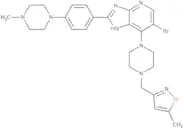
CAS:<p>CCT137690 is a chemical inhibitor, which is a synthetic compound developed through medicinal chemistry. Its primary mode of action is the selective inhibition of Cyclin-dependent kinases 8 and 19 (CDK8 and CDK19), which are part of the Mediator complex crucial for regulating transcription and gene expression. By interfering with these kinases, CCT137690 impacts the transcriptional regulation pathways that are critical for cancer cell proliferation and survival.</p>Formula:C26H31BrN8OPurity:Min. 95%Molecular weight:551.48 g/molPipendoxifene hydrochloride
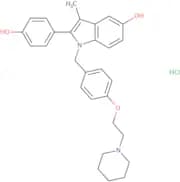
CAS:<p>Pipendoxifene hydrochloride is a selective estrogen receptor modulator (SERM), which is a synthetic compound that originates from chemical synthesis in the laboratory. Its mode of action involves binding to estrogen receptors in a tissue-specific manner, allowing it to either agonize or antagonize estrogenic effects depending on the tissue context. This dual functionality enables the modulation of estrogenic activity to achieve desired outcomes, such as the blockade of estrogen receptors in breast tissue.<br><br>Pipendoxifene hydrochloride is primarily utilized in the context of cancer research, particularly in the study of hormone-dependent cancers such as breast cancer. It is investigated for its potential to inhibit tumor growth by blocking estrogen-mediated proliferative signaling pathways in cancer cells. This compound is of significant interest in experimental oncology, where its varying effects on different tissues are explored to develop targeted therapeutic strategies.</p>Formula:C29H33ClN2O3Purity:Min. 95%Molecular weight:493 g/molAM 6545
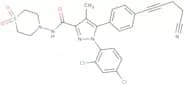
CAS:<p>AM 6545 is a selective cannabinoid receptor antagonist, which is synthetically derived to target the endocannabinoid system. With a specific affinity for cannabinoid receptor type 1 (CB1), AM 6545 acts by binding to these receptors, effectively inhibiting their activation by endogenous and exogenous cannabinoids. This interaction is non-peripherally selective, allowing for modulation of central nervous system activities without significant penetration into the brain, which minimizes psychoactive effects.</p>Formula:C26H23Cl2N5O3SPurity:Min. 95%Molecular weight:556.46 g/molFiboflapon sodium
CAS:<p>Fiboflapon sodium is a selective leukotriene B4 receptor antagonist, which is a synthetic compound designed to inhibit specific pathways involved in inflammatory processes. The source of Fiboflapon sodium derives from advanced chemical synthesis aimed at targeting the lipoxygenase pathway, crucial in the production of leukotrienes. Its mode of action involves binding to and blocking the leukotriene B4 receptor, thereby reducing the recruitment and activation of inflammatory cells, particularly neutrophils, in response to pro-inflammatory stimuli.</p>Formula:C38H42N3NaO4SPurity:Min. 95%Molecular weight:659.81 g/molSB 657510
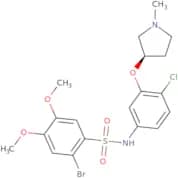
CAS:<p>SB 657510 is a pharmaceutical compound, classified as a small-molecule antiviral agent, which is derived through synthetic organic chemistry. It operates by targeting specific viral replication mechanisms, inhibiting the function of key viral enzymes necessary for the proliferation of viral particles. This mode of action disrupts the lifecycle of the virus and impairs its ability to spread within the host organism.</p>Formula:C19H22BrClN2O5SPurity:Min. 95%Molecular weight:505.81 g/molRetosiban
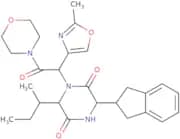
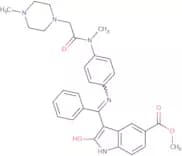
CAS:<p>Retosiban is a pharmaceutical compound that serves as an oxytocin receptor antagonist, derived through synthetic chemical synthesis. Its primary mechanism of action involves the selective inhibition of oxytocin receptors, which are critical in the uterine contractions that occur during labor. By blocking these receptors, Retosiban effectively reduces uterine muscle contractions, thus playing a crucial role in managing preterm labor.</p>Formula:C27H34N4O5Purity:Min. 95%Molecular weight:494.6 g/molMethyl (Z)-3-(((4-(N-methyl-2-(4-methylpiperazin-1-yl)acetamido)phenyl)amino)(phenyl)methylene)-2-oxoindoline-5-carboxylate
CAS:<p>Methyl (Z)-3-(((4-(N-methyl-2-(4-methylpiperazin-1-yl)acetamido)phenyl)amino)(phenyl)methylene)-2-oxoindoline-5-carboxylate is a synthetic small molecule inhibitor that has been extensively studied for its role in oncology. The compound is synthesized through a multistep chemical process involving advanced organic synthesis techniques, resulting in a highly specific chemical entity. Its mode of action primarily involves the inhibition of key enzymatic pathways that are critical in cell proliferation and survival, specifically targeting pathways associated with cancer growth and metastasis.</p>Formula:C31H33N5O4Purity:Min. 95%Molecular weight:539.6 g/molMilademetan tosylate
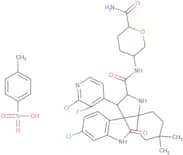
CAS:<p>Milademetan tosylate is an investigational anticancer agent, which is a small molecule inhibitor derived from synthetic chemical sources. It functions as a selective antagonist targeting the murine double minute 2 (MDM2) oncoprotein, thereby disrupting its interaction with the tumor suppressor protein p53. This mode of action prevents the degradation of p53, leading to the reactivation of its tumor suppressive functions, including cell cycle arrest and apoptosis in cancer cells harboring wild-type p53.</p>Formula:C37H42Cl2FN5O7SPurity:Min. 95%Molecular weight:790.7 g/molVH 032, propargyl
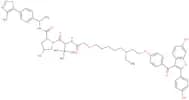
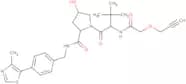
CAS:<p>VH 032 is a synthetic compound characterized as a plant growth regulator, primarily used in agricultural and horticultural applications. It is derived from a propargyl-based chemical structure, which is often utilized in the synthesis of various agrochemicals due to its ability to interfere with certain biological pathways.</p>Formula:C27H34N4O5SPurity:Min. 95%Molecular weight:526.6 g/molTC-G 1006
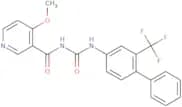
CAS:<p>TC-G 1006 is a chemical agent, specifically formulated for the fine-tuning of industrial catalytic processes. It is synthesized through a proprietary method involving high-purity precursors, ensuring precise control over its molecular composition. The mode of action of TC-G 1006 centers around its ability to enhance reaction kinetics by lowering the activation energy required for catalysis, thereby improving efficiency and selectivity in complex chemical reactions.</p>Formula:C21H16F3N3O3Purity:Min. 95%Molecular weight:415.37 g/molBioymifi
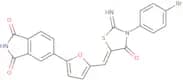
CAS:<p>Bioymifi is a synthetic compound, functioning as a biological agent, which is derived from natural precursor molecules using advanced chemical synthesis techniques. It acts as a modulator of cellular pathways, specifically influencing apoptosis by selectively activating certain proteins within the cellular environment. This mode of action is particularly useful in elucidating the mechanisms of cell death and survival, thereby contributing to a deeper understanding of cellular processes.<br><br>Bioymifi is principally employed in laboratory research focused on cell signaling and apoptosis. It is widely applied in the study of diseases where apoptotic dysregulation is a central feature, such as in cancer or neurodegenerative disorders. Additionally, it is utilized in developing therapeutic strategies, serving as a model compound to inspire the creation of new drugs targeting apoptotic pathways.</p>Formula:C22H12BrN3O4SPurity:Min. 95%Molecular weight:494.32 g/molMethyl (3-phenyl-1H-indazol-1-yl)acetate
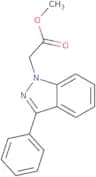
CAS:<p>Methyl (3-phenyl-1H-indazol-1-yl)acetate is a synthetic organic compound, often studied for its potential roles in pharmaceutical development. It is derived through organic synthesis involving indazole derivatives, which are commonly utilized in the design of bioactive molecules. The compound features a structural framework that includes a phenyl group and an indazole moiety, making it a candidate for the development of drugs targeting specific biological pathways. Its mode of action typically involves interaction with biological receptors or enzymes, modulating their activity.</p>Formula:C16H14N2O2Purity:Min. 95%Molecular weight:266.29 g/molNU6300
CAS:<p>The Samsung NU6300 is a 4K Ultra High Definition (UHD) television, which is a consumer electronics product, sourced from advanced digital display technologies developed by Samsung. Utilizing PurColor technology, this device is engineered to deliver vibrant, lifelike colors and sharp images by expanding the color spectrum. It also features UHD dimming, which enhances contrast and picture detail by precisely adjusting color, brightness, and sharpness across small blocks of the image.</p>Formula:C20H23N5O3SPurity:Min. 95%Molecular weight:413.49 g/molPF-04445597
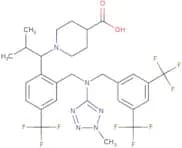
CAS:<p>PF-04445597 is an experimental pharmaceutical compound known as a selective antagonist. It originates from synthetic sources designed to interact specifically with neural receptor systems. PF-04445597 operates by targeting the nicotinic acetylcholine receptors (nAChRs), which are pivotal in transmitting signals through the central nervous system.</p>Formula:C29H31F9N6O2Purity:Min. 95%Molecular weight:666.6 g/molABT-418 Hydrochloride
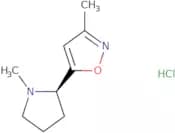
CAS:<p>ABT-418 Hydrochloride is a cholinergic agonist, which is a synthetic compound derived from the selective targeting of nicotinic acetylcholine receptors. This agent acts by primarily binding to neuronal nicotinic receptors in the brain, enhancing cholinergic neurotransmission. The increased cholinergic activity is thought to modulate various cognitive processes.</p>Formula:C9H14N2O·HClPurity:Min. 95%Molecular weight:166.22 g/mol4-[[5-Bromo-4-[(Z)-(2,4-dioxo-3-phenacyl-1,3-thiazolidin-5-ylidene)methyl]-2-ethoxyphenoxy]methyl]benzoic acid
CAS:<p>4-[[5-Bromo-4-[(Z)-(2,4-dioxo-3-phenacyl-1,3-thiazolidin-5-ylidene)methyl]-2-ethoxyphenoxy]methyl]benzoic acid is a synthetic organic compound, which is primarily utilized in the development of pharmaceutical treatments. This compound is derived through complex organic synthesis, involving thiazolidine derivatives and halogenated phenoxy structures. Its mode of action often involves the modulation of specific biochemical pathways, typically through binding or inhibiting key molecular targets, which can provide therapeutic benefits in various disease models.</p>Formula:C28H22BrNO7SPurity:Min. 95%Molecular weight:596.4 g/molERD 308
CAS:<p>ERD 308 is a highly efficient desiccant, which is synthesized from advanced synthetic materials with enhanced absorption capacities. This product is specifically engineered to facilitate the removal of moisture through an adsorption mechanism. By attracting and retaining water molecules on its surface, ERD 308 effectively reduces humidity in controlled environments.</p>Formula:C55H65N5O9S2Purity:Min. 95%Molecular weight:1,004.3 g/molNDT 9513727
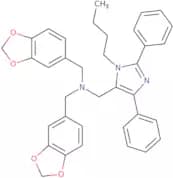
CAS:<p>Complement C5a receptor (C5aR) antagonist</p>Formula:C36H35N3O4Purity:Min. 95%Molecular weight:573.68 g/mol



![4-[[5-Bromo-4-[(Z)-(2,4-dioxo-3-phenacyl-1,3-thiazolidin-5-ylidene)methyl]-2-ethoxyphenoxy]methyl]…](/_next/image/?url=https%3A%2Fstatic.cymitquimica.com%2Fproducts%2F3D%2Fthumb-webp%2FXUA83610.webp&w=3840&q=75)