Organometallic Ligands
In this category, you will be able to find a large number of organometallic molecules used as ligands in biomolecules. These organometallic ligands can be used in organic chemistry and synthesis in the laboratory. They play a critical role in forming coordination complexes and catalyzing various chemical reactions. At CymitQuimica, we offer a diverse selection of high-quality organometallic ligands to support your research and industrial needs.
Subcategories of "Organometallic Ligands"
- Buchwald Ligands(22 products)
- DPEN(4 products)
- DPHEN(4 products)
- JOSIPHOS(4 products)
- Phosphine(497 products)
- Porphirines(75 products)
Found 2887 products of "Organometallic Ligands"
Sort by
Purity (%)
0
100
|
0
|
50
|
90
|
95
|
100
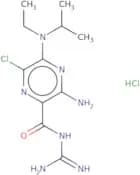
EIPA hydrochloride
CAS:<p>EIPA hydrochloride is a chemical compound that serves as a Na+/H+ exchange inhibitor, specifically affecting the NHE1 isoform. It is a synthetic compound with high specificity, often utilized in biochemical research to investigate the regulation of intracellular pH and cell volume. Through competitive inhibition, EIPA hydrochloride impedes the activity of the Na+/H+ exchanger, resulting in altered proton and sodium ion translocation across the cell membrane.</p>Formula:C11H19Cl2N7OPurity:Min. 95%Molecular weight:336.22 g/mol1-Stearoyl-2-[(E)-4-(4-((4-butylphenyl)diazenyl)phenyl)butanoyl]-sn-glycero-3-phosphocholine
CAS:<p>1-Stearoyl-2-[(E)-4-(4-((4-butylphenyl)diazenyl)phenyl)butanoyl]-sn-glycero-3-phosphocholine is a synthetic phospholipid, which is derived from glycerophosphocholine with the incorporation of a stearoyl chain and a diazenyl-functionalized butanoyl chain. This modification confers unique photoresponsive properties to the phospholipid, enabling it to undergo conformational changes in response to specific light wavelengths.</p>Formula:C46H76N3O8PPurity:Min. 95%Molecular weight:830.08 g/molTat-beclin 1
CAS:<p>Tat-beclin 1 is a peptide compound derived through synthetic modification, which is characterized by conjugating a minimal Beclin 1 domain to the HIV-1 Tat protein transduction domain. This peptide efficiently penetrates cell membranes, facilitating its intracellular activity. The primary mode of action for Tat-beclin 1 involves inducing autophagy. It achieves this by interacting with the autophagy machinery, promoting the formation of autophagosomes, thereby enhancing cellular degradation pathways.</p>Formula:C164H251N57O45Purity:Min. 95%Molecular weight:3,741.1 g/molTolcapone - Bio-X ™
CAS:Controlled Product<p>Tolcapone is a catechol-O-methyltransferase (COMT) inhibitor that is used as adjunct therapy to manage symptoms of Parkinson’s disease. Although its precise mechanism is unknown, it is thought to be an inhibitor of COMT and allows for a greater reduction in the symptoms of Parkinson’s.</p>Formula:C14H11NO5Purity:Min. 95%Color and Shape:PowderMolecular weight:273.24 g/molONO-7475
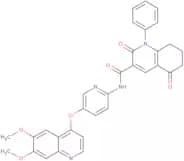
CAS:<p>ONO-7475 is a selective small-molecule inhibitor, which is derived from synthetic chemical processes, specifically designed to target and inhibit the activity of certain receptor tyrosine kinases, including AXL and FLT3. These kinases are known to play significant roles in the progression and resistance mechanisms of various cancers by promoting survival, proliferation, and metastasis of tumor cells.</p>Formula:C32H26N4O6Purity:Min. 95%Molecular weight:562.6 g/molNE-100
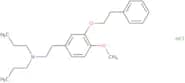
CAS:<p>NE-100 is an advanced enzyme formulation, which is derived from a genetically engineered microbial source with precise selectivity and stability. The mode of action involves the catalysis of specific biochemical reactions, facilitating substrate transformation with high efficiency and minimal by-product formation. NE-100's enzymatic activity is optimized for a range of temperatures and pH levels, making it versatile for various research and industrial applications.</p>Formula:C23H33NO2·HClPurity:Min. 95%Molecular weight:391.97 g/molSB-277011 hydrochloride
CAS:<p>SB-277011 hydrochloride is a dopaminergic compound that functions as a selective antagonist of the dopamine D3 receptor. This product is synthesized through complex chemical processes and is available as a hydrochloride salt to enhance its solubility and stability for research applications. The compound exhibits a high affinity for the D3 receptor, effectively blocking the actions of endogenous dopamine at this site.</p>Formula:C28H31ClN4OPurity:Min. 95%Molecular weight:475.02 g/molR-10015
CAS:<p>Please enquire for more information about R-10015 including the price, delivery time and more detailed product information at the technical inquiry form on this page</p>Formula:C20H19ClN6O2Purity:Min. 95%Molecular weight:410.86 g/mol1-(2-Phenylpropan-2-yl)piperidine hydrochloride
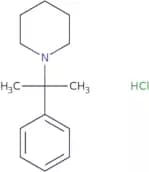
CAS:<p>1-(2-Phenylpropan-2-yl)piperidine hydrochloride is a chemical compound categorized as a piperidine derivative. Piperidines are a class of organic compounds based on a six-membered ring containing five carbon atoms and one nitrogen atom. This particular compound is synthesized through a series of chemical reactions involving its precursor piperidine, and then combined with hydrochloric acid to form its hydrochloride salt, which increases its solubility and stability.</p>Formula:C14H22ClNPurity:Min. 95%Molecular weight:239.78 g/molBY27
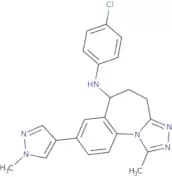
CAS:<p>BY27 is an innovative synthetic derivative, designed as a specialized compound for advanced biochemical applications. This product is derived from a unique sequence of engineered organic compounds, developed through a process of targeted molecular synthesis. Its primary mode of action is the selective modulation of specific biochemical pathways, achieved through high-affinity interaction with targeted molecular structures. This allows for precise manipulations within cellular systems, facilitating the study of complex biological processes.</p>Formula:C22H21ClN6Purity:Min. 95%Molecular weight:404.9 g/molCP 94253 Hydrochloride
CAS:<p>CP 94253 Hydrochloride is a selective 5-HT1B receptor agonist, which is a synthetic compound derived through chemical synthesis in laboratory settings. Its mode of action involves selectively binding to and activating the 5-HT1B serotonin receptors, which play a significant role in the modulation of neurotransmitter release in the central nervous system. This receptor interaction influences serotonin levels, impacting various neurological pathways.</p>Formula:C15H19N3O•HClPurity:Min. 95%Molecular weight:257.33 g/molTerbogrel
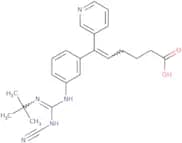
CAS:<p>Terbogrel is a pharmaceutical compound that functions as both a thromboxane synthase inhibitor and a thromboxane receptor antagonist, which is synthesized via chemical processes in a laboratory setting. Its mode of action involves the dual inhibition of thromboxane A2 synthesis and blockade of thromboxane A2 receptors, leading to a reduction in platelet aggregation and vasoconstriction. This dual mechanism effectively disrupts the pro-thrombotic and vasoconstrictive pathways mediated by thromboxane A2.</p>Formula:C23H27N5O2Purity:Min. 95%Molecular weight:405.5 g/molGR79236
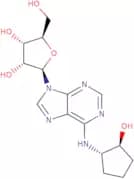
CAS:<p>GR79236 is a novel synthetic compound, which is a small-molecule pharmaceutical agent developed through advanced chemical synthesis processes. Its source involves rational drug design targeting specific biomolecular pathways. The mode of action of GR79236 pertains to its ability to selectively bind to and modulate receptor sites, resulting in altered cellular signaling. This modulation achieves specificity in targeting pathological mechanisms without affecting normal cellular processes.</p>Formula:C15H21N5O5Purity:Min. 95%Molecular weight:351.36 g/molQX77
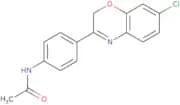
CAS:<p>QX77 is an innovative synthetic compound, which is a product of advanced organic synthesis processes. It functions through the modulation of active gene transcription pathways by selectively interacting with specific DNA sequences. This selective interaction enables the precise upregulation or downregulation of target genes within cellular environments.</p>Formula:C16H13ClN2O2Purity:Min. 95%Molecular weight:300.74 g/molLevetimide
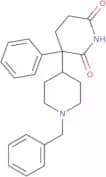
CAS:Controlled Product<p>Levetimide is a chemical compound, which is a synthetic derivative with distinct biochemical properties. It is primarily sourced from laboratory-based synthetic processes designed to investigate its potential therapeutic utilities and biological effects. The mode of action of levetimide is characterized by its ability to interact with specific molecular targets, potentially influencing neurological pathways or cellular functions. This interaction may modulate various biological systems, although precise mechanisms are still under extensive study.</p>Formula:C23H26N2O2Purity:Min. 95%Molecular weight:362.5 g/molTP2
CAS:<p>TP2 is an engineered biopolymer, which is derived from microbial fermentation processes involving specifically cultured bacteria. It acts as a potent cellular scaffold, supporting tissue engineering and regenerative medicine by promoting cellular adhesion, growth, and differentiation. The unique molecular structure of TP2 enhances cell-matrix interactions, providing a conducive environment for cellular development.</p>Formula:C18H14F5NO3SPurity:Min. 95%Molecular weight:419.4 g/molU-69593
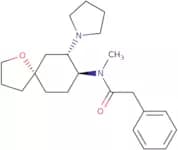
CAS:<p>U-69593 is a synthetic compound that acts as a selective kappa-opioid receptor agonist. It is derived from chemical synthesis, specifically designed to interact with opioid receptors. U-69593 functions by binding to the kappa-opioid receptors in the central nervous system, modulating neurotransmitter release and altering pain perception without the typical mu-opioid receptor activity associated with conventional opioids.</p>Formula:C22H32N2O2Purity:Min. 95%Molecular weight:356.5 g/molBay 41-4109
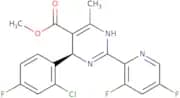
CAS:<p>Bay 41-4109 is a synthetic small molecule, which is a potent activator of soluble guanylate cyclase (sGC), derived from rational chemical design targeting specific signaling pathways. This compound primarily functions by binding to and stabilizing sGC in cells, enhancing the enzymatic conversion of GTP to cGMP, thereby modulating downstream signaling processes. Its mode of action facilitates the modulation of nitric oxide-mediated pathways, which are crucial in a variety of physiological processes.</p>Formula:C18H13ClF3N3O2Purity:Min. 95%Molecular weight:395.76 g/molPF-06663195
CAS:<p>PF-06663195 is a small molecule inhibitor, which is synthesized as part of a targeted drug development program. It is sourced through synthetic chemical processes designed to yield compounds with high specificity for selected intracellular targets. The mode of action for PF-06663195 is the selective inhibition of Janus kinase 3 (JAK3), a critical enzyme in the JAK-STAT signaling pathway. This pathway is essential for the modulation of various cytokine receptors, impacting immune cell communication and proliferation.</p>Formula:C18H18F3N3O2SPurity:Min. 95%Molecular weight:397.4 g/molPDD 00017272
CAS:<p>Please enquire for more information about PDD 00017272 including the price, delivery time and more detailed product information at the technical inquiry form on this page</p>Formula:C23H25N5O4S3Purity:Min. 95%Molecular weight:531.7 g/mol

![1-Stearoyl-2-[(E)-4-(4-((4-butylphenyl)diazenyl)phenyl)butanoyl]-sn-glycero-3-phosphocholine](/_next/image/?url=https%3A%2Fstatic.cymitquimica.com%2Fproducts%2F3D%2Fthumb-webp%2FYID67445.webp&w=3840&q=75)