Organometallic Ligands
In this category, you will be able to find a large number of organometallic molecules used as ligands in biomolecules. These organometallic ligands can be used in organic chemistry and synthesis in the laboratory. They play a critical role in forming coordination complexes and catalyzing various chemical reactions. At CymitQuimica, we offer a diverse selection of high-quality organometallic ligands to support your research and industrial needs.
Subcategories of "Organometallic Ligands"
- Buchwald Ligands(22 products)
- DPEN(4 products)
- DPHEN(4 products)
- JOSIPHOS(4 products)
- Phosphine(497 products)
- Porphirines(75 products)
Found 2887 products of "Organometallic Ligands"
Sort by
Purity (%)
0
100
|
0
|
50
|
90
|
95
|
100
Lyn peptide inhibitor
CAS:<p>Lyn peptide inhibitor is a targeted peptide-based inhibitor derived synthetically to interact specifically with the Lyn kinase signaling pathway. As a research tool, it serves to elucidate the functional dynamics of Lyn kinase, which belongs to the Src family of tyrosine kinases involved in signal transduction processes critical to cellular differentiation, proliferation, and survival.</p>Formula:C115H184N30O24Purity:Min. 95%Molecular weight:2,370.9 g/molKP372-1
CAS:<p>KP372-1 is a selective inhibitor that is synthetically derived. This compound functions by targeting and interfering with specific signaling pathways involved in cell growth and survival. Its inhibitory action primarily affects pathways such as PI3K/Akt, which are integral to the processes of cellular proliferation and apoptosis.</p>Formula:C20H8N12O2Purity:Min. 95%Molecular weight:448.4 g/molFk 102 CO(III) pf6 salt
CAS:<p>FK 102 CO(III) PF6 is a cobalt(III) complex salt, which is a coordination compound utilized extensively in organometallic chemistry and catalysis. Derived from cobalt, a transition metal known for its diverse oxidation states and coordination abilities, this compound is synthesized through the combination of cobalt with specific ligands, resulting in a hexafluorophosphate salt. The mode of action of this complex involves its ability to facilitate electron transfer processes, making it an excellent catalyst for various organic reactions.</p>Formula:C24H21CoF18N9P3Purity:Min. 95%Molecular weight:929.31 g/molZJ 43
CAS:ZJ 43 is an advanced biochemical compound that serves as a precision-targeted reagent, specifically designed for cellular and molecular biology applications. Derived from synthetic organic chemistry techniques, it features a high degree of purity and specificity, allowing it to interact with cellular proteins without significant off-target effects.Formula:C12H20N2O7Purity:Min. 95%Molecular weight:304.3 g/molFN-1501
CAS:<p>FN-1501 is a synthetic bioactive compound, which is engineered through combinatorial chemistry with a specific focus on enzymatic activity. This product has been meticulously designed to emulate protease-like activity, facilitating the cleavage of peptide bonds within protein substrates. The mode of action involves the catalytic hydrolysis of peptide bonds, thereby enabling the precise dissection of protein structures for analytical studies.</p>Formula:C22H25N9OPurity:Min. 95%Molecular weight:431.5 g/mol18:1 BDP (S,S)
CAS:<p>18:1 BDP (S,S) is a synthetic lipid compound, which is derived from the combination of a saturated phospholipid backbone and a desaturated aliphatic chain. This compound is meticulously engineered to incorporate two stereochemically specific chiral centers, which significantly influence its interaction with biological membranes. The source of this compound lies in the precise chemical synthesis techniques employed to achieve the desired stereochemistry.</p>Formula:C78H146NO12PPurity:Min. 95%Molecular weight:1,320.97 g/mol(3S)-1-Cyano-N-[5-(4-morpholinyl)-2-thiazolyl]-3-pyrrolidinecarboxamide
CAS:<p>(3S)-1-Cyano-N-[5-(4-morpholinyl)-2-thiazolyl]-3-pyrrolidinecarboxamide is a small molecule pharmaceutical compound that acts as a kinase inhibitor. Originating from advanced synthetic chemistry efforts, it is designed to modulate specific cellular pathways through its interaction with protein kinases. Its mode of action involves binding to the ATP-binding site of target kinases, thereby inhibiting their phosphorylation activity and subsequent signal transduction pathways.</p>Formula:C13H17N5O2SPurity:Min. 95%Molecular weight:307.37 g/molHKI 357
CAS:<p>Please enquire for more information about HKI 357 including the price, delivery time and more detailed product information at the technical inquiry form on this page</p>Formula:C31H29ClFN5O3Purity:Min. 95%Molecular weight:574.05 g/molPF 05105679
CAS:<p>PF 05105679 is an investigational pharmaceutical compound developed by Pfizer, classified as a selective nicotinic acetylcholine receptor (nAChR) antagonist. It is synthesized through meticulous organic chemistry techniques, representing a targeted approach to modifying neural pathways. The compound functions by selectively inhibiting specific subtypes of nAChRs, which are ligand-gated ion channels integral to synaptic transmission and neurophysiological processes.</p>Formula:C26H21FN2O3Purity:Min. 95%Molecular weight:428.45 g/molPythidc
CAS:Pythidc is a fungal inhibitor, which is derived from naturally occurring compounds with antimicrobial properties. This compound is isolated from specific plant metabolites through a series of extraction and purification processes. Its mode of action involves disrupting the cell membrane integrity of pathogenic fungi, thereby inhibiting their growth and proliferation. By targeting essential components of the fungal cell structure, Pythidc interferes with cell membrane synthesis and function, leading to cell lysis.Formula:C10H6N2O4SPurity:Min. 95%Molecular weight:250.23 g/molRG7800
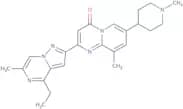
CAS:<p>RG7800 is a small molecule inhibitor, which is a product synthesized through advanced organic chemistry processes. Its mode of action involves the selective binding to specific proteins within cellular pathways, effectively inhibiting their function. This is achieved through high-affinity interactions that alter the conformational states of targeted molecules, thereby impeding their biological activity.</p>Formula:C24H28N6OPurity:Min. 95%Molecular weight:416.52 g/molGlyt1 inhibitor 1
CAS:<p>Glyt1 inhibitor 1 is a chemical compound that acts as an inhibitor of the GlyT1 transporter, which is a product of synthetic chemistry. This inhibitor binds selectively to the glycine transporter-1 (GlyT1), a key protein responsible for the reuptake of glycine, an important neurotransmitter, in the central nervous system. By inhibiting GlyT1, this compound increases glycine levels in synaptic clefts, which can enhance N-methyl-D-aspartate (NMDA) receptor activity.</p>Formula:C22H21N5O2Purity:Min. 95%Molecular weight:387.4 g/molGW 583340 Dihydrochloride
CAS:<p>GW 583340 Dihydrochloride is a selective antagonist primarily targeting the G protein-coupled receptor 55 (GPR55), which is a type of membrane receptor implicated in various physiological and pathological processes. It is synthesized through complex organic chemical processes involving specific assembly of molecular components to achieve high specificity and efficiency in receptor binding.</p>Formula:C28H25ClFN5O3S2·2HClPurity:Min. 95%Molecular weight:598.11 g/molARP 101
CAS:<p>ARP 101 is an advanced molecular compound designed for gene regulation research, which is synthesized from a highly refined organic substrate. Its mode of action involves binding to specific gene sequences, acting as a transcriptional modulator to either enhance or inhibit the expression of target genes. This is achieved through its precise interaction with transcriptional machinery and epigenetic factors, providing scientists with a powerful tool for elucidating mechanisms of gene expression and regulation.</p>Formula:C20H26N2O5SPurity:Min. 95%Molecular weight:406.5 g/molAP5
CAS:<p>AP5 is a selective NMDA receptor antagonist, which is a synthetic compound with critical applications in neuroscientific research. This compound is derived from a series of structural modifications to achieve selective binding to the NMDA receptor. AP5 functions by competitively inhibiting the glutamate binding site on the NMDA receptor, thereby blocking the receptor's ability to allow calcium influx into the neuron. This action is essential for its role in studies investigating neural signaling, plasticity, and excitotoxicity.</p>Formula:C28H28FNO4Purity:Min. 95%Color and Shape:PowderMolecular weight:461.5 g/molLinerixibat
CAS:<p>Linerixibat is an investigational pharmaceutical compound classified as an ileal bile acid transporter (IBAT) inhibitor. It is derived from chemical synthesis and acts by selectively targeting the IBAT, also known as the apical sodium-dependent bile acid transporter (ASBT), located in the distal ileum of the small intestine. By inhibiting this transporter, Linerixibat reduces the reabsorption of bile acids from the intestinal lumen, which leads to increased fecal bile acid excretion and reduced systemic levels of bile acids.</p>Formula:C28H38N2O7SPurity:Min. 95%Molecular weight:546.68 g/mol02:0 Coenzyme A
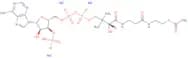
CAS:<p>02:0 Coenzyme A is a specialized biochemical reagent utilized in scientific research. It is synthesized through enzymatic reactions involving pantothenic acid, cysteamine, and adenosine triphosphate (ATP) under controlled laboratory conditions. The compound is conjugated with specific fatty acid chains, making it a key intermediate in the metabolism of these molecules.</p>Formula:C23H35N7Na3O17P3SPurity:Min. 95%Molecular weight:875.52 g/molWAY 127093B racemate
CAS:<p>WAY 127093B racemate is a small organic compound, which is a synthesized chemical product with selective inhibitory properties. It is designed to target the cyclooxygenase-2 (COX-2) enzyme, which is primarily sourced through organic synthesis in laboratory settings, rather than being naturally derived. The mechanism of action involves specific blockade of the COX-2 enzyme, which plays a crucial role in catalyzing the conversion of arachidonic acid to prostaglandins. These prostaglandins are mediators of inflammation, pain, and fever. By inhibiting COX-2, WAY 127093B racemate effectively reduces the production of pro-inflammatory prostaglandins while sparing cyclooxygenase-1 (COX-1) pathways, which are important for gastric and renal function.</p>Formula:C23H28N4O4Purity:Min. 95%Molecular weight:424.5 g/molEsomeprazole magnesium salt
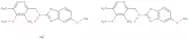
CAS:<p>Esomeprazole magnesium salt is an enantiomerically pure proton pump inhibitor, which is derived from the class of compounds known as benzimidazoles. It is a synthetic compound, sourced through chemical synthesis that provides chirally-selective therapeutic effects. Through its mode of action, this compound specifically targets and irreversibly inhibits the H+/K+ ATPase enzyme situated on the gastric parietal cells, effectively blocking the final step of acid production in the stomach.</p>Formula:C34H36MgN6O6S2Purity:Min. 95%Molecular weight:713.1 g/molUR 1102
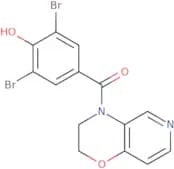
CAS:<p>UR 1102 is a chemical compound used primarily in biomedical research, sourced from synthetic chemical processes. It operates as a selective modulator with the ability to interact with targeted biological pathways or receptors, depending on its specific design and formulation. The mode of action includes binding to particular sites, thereby influencing signaling cascades or biochemical processes within the system.</p>Formula:C14H10Br2N2O3Purity:Min. 95%Molecular weight:414.05 g/mol


![(3S)-1-Cyano-N-[5-(4-morpholinyl)-2-thiazolyl]-3-pyrrolidinecarboxamide](/_next/image/?url=https%3A%2Fstatic.cymitquimica.com%2Fproducts%2F3D%2Fthumb-webp%2FVAD05066.webp&w=3840&q=75)