Organometallic Ligands
In this category, you will be able to find a large number of organometallic molecules used as ligands in biomolecules. These organometallic ligands can be used in organic chemistry and synthesis in the laboratory. They play a critical role in forming coordination complexes and catalyzing various chemical reactions. At CymitQuimica, we offer a diverse selection of high-quality organometallic ligands to support your research and industrial needs.
Subcategories of "Organometallic Ligands"
- Buchwald Ligands(22 products)
- DPEN(4 products)
- DPHEN(4 products)
- JOSIPHOS(4 products)
- Phosphine(497 products)
- Porphirines(75 products)
Found 2887 products of "Organometallic Ligands"
Sort by
Purity (%)
0
100
|
0
|
50
|
90
|
95
|
100
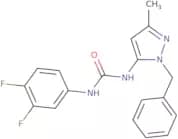
1-(2-Benzyl-5-methylpyrazol-3-yl)-3-(3,4-difluorophenyl)urea
CAS:1-(2-Benzyl-5-methylpyrazol-3-yl)-3-(3,4-difluorophenyl)urea is a synthetic chemical compound, which is typically synthesized through a series of organic reactions involving substituted pyrazoles and urea derivatives. This compound is primarily sourced from laboratory synthesis using controlled conditions to ensure purity and stability. Its mode of action involves the inhibition of specific protein kinases, which are essential in various signaling pathways within cells. By targeting these enzymes, this compound can disrupt cell proliferation and induce apoptosis, making it a valuable tool in cancer research.Formula:C18H16F2N4OPurity:Min. 95%Molecular weight:342.3 g/molPF 06465469
CAS:PF 06465469 is a monoclonal antibody, which is a form of biologic product derived from a single clone of cells, specifically engineered to interact with the immune system. This product is usually produced through recombinant DNA technology involving hybridoma techniques or phage display methods, allowing for high specificity and purity.Formula:C30H33N7O2Purity:Min. 95%Molecular weight:523.63 g/molAldose reductase-IN-1
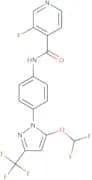
CAS:Aldose reductase-IN-1 is a potent and selective inhibitor, which is a synthetic small molecule with a specific mode of action aimed at targeting the aldose reductase enzyme. Originating from pharmacological research, this compound is designed to interfere directly with the enzyme's activity. Aldose reductase-IN-1 functions by binding to the active site of aldose reductase, thus preventing the reduction of glucose to sorbitol, a crucial step in the polyol pathway.Formula:C17H10F3N5O3SPurity:Min. 95%Molecular weight:421.35 g/molTiaprost
CAS:Tiaprost is a synthetic analogue of prostaglandin F2α that has been used in animal health and fertility. This drug stimulates follicular growth and ovulation in cows and heifers, as well as increases estradiol benzoate (EB) levels in the blood. Tiaprost is also used to treat intrauterine infections caused by bacteria, such as E. coli, or protozoa, such as Tritrichomonas foetus. Tiaprost has been shown to be clinically relevant for the treatment of human infertility due to its ability to stimulate ovulation in women with polycystic ovary syndrome (PCOS).Formula:C20H28O6SPurity:Min. 95%Molecular weight:396.5 g/molTAK-071
CAS:<p>TAK-071 is a small-molecule pharmaceutical compound designed to modulate neuronal signaling. It is derived from rigorous medicinal chemistry optimization processes aimed at discovering selective central nervous system agents. TAK-071 acts as a positive allosteric modulator of the muscarinic M1 receptor, which is a subtype of the acetylcholine receptor widely distributed in the brain. Its mode of action includes enhancing cholinergic neurotransmission through selective binding and modulation, thus amplifying the effects of endogenous acetylcholine without directly activating the receptor itself.</p>Formula:C24H24FN3O3Purity:Min. 95%Molecular weight:421.5 g/molPancoprida
CAS:Pancoprida is a bioactive peptide, which is a synthetic compound derived from rational peptide design and combinatorial chemistry techniques. It functions through the modulation of specific receptor pathways, primarily targeting neuronal and inflammatory processes. Pancoprida exhibits high affinity for serotonin receptors, influencing neurotransmitter release and uptake, and also modulates certain cytokine pathways, thereby reducing inflammation.Formula:C18H24ClN3O2Purity:Min. 95%Molecular weight:349.9 g/molSR33805
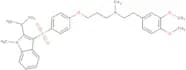
CAS:<p>SR33805 is a synthetic investigational compound, which is primarily derived from chemical synthesis with potential cardiovascular applications. This compound functions as a calcium channel antagonist, targeting specific ion channels that regulate the influx of calcium ions in cardiac and smooth muscle cells. By modulating these ion channels, SR33805 can affect muscle contractility and vascular tone.</p>Formula:C32H40N2O5SPurity:Min. 95%Molecular weight:564.7 g/molTCS 3035
CAS:<p>TCS 3035 is a photoinitiator, which is derived from a well-characterized synthetic process involving specialized chemical synthesis. This compound operates through a mode of action that involves the absorption of ultraviolet (UV) radiation, leading to the generation of free radicals. These radicals initiate the polymerization of monomeric or oligomeric species in UV-curable formulations.</p>Formula:C12H9NO5SPurity:Min. 95%Molecular weight:279.27 g/molMIND4-17
CAS:Please enquire for more information about MIND4-17 including the price, delivery time and more detailed product information at the technical inquiry form on this pageFormula:C20H15N5O3SPurity:Min. 95%Molecular weight:405.4 g/molMethyl 5-fluoro-2-(2-(1-methyl-1H-1,2,4-triazol-5-yl)acetyl)-3-nitrobenzoate
CAS:Methyl 5-fluoro-2-(2-(1-methyl-1H-1,2,4-triazol-5-yl)acetyl)-3-nitrobenzoate is a synthetic organic compound, which is derived from aromatic benzoate structures enhanced with fluorine, nitro, and triazole moieties. The source of this compound lies in advanced synthetic chemistry techniques, involving multiple steps that introduce these functional groups to a benzoate core, thereby enhancing its physicochemical properties.Formula:C13H11FN4O5Purity:Min. 95%Molecular weight:322.25 g/molMirin
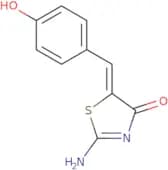
CAS:Mirin is a type of condiment, which is a sweet rice wine used predominantly in Japanese cuisine. It is derived from fermenting a mixture of steamed glutinous rice, cultured rice (koji), and distilled alcohol. This fermentation process yields a liquid with a distinct sweet flavor and moderately low alcohol content.Formula:C10H8N2O2SPurity:Min. 95%Molecular weight:220.25 g/molMHP 133
CAS:<p>MHP 133 is a complex enzyme and motor protein, intricately involved in cellular transport mechanisms. It is derived from eukaryotic cellular structures, specifically synthesized and purified from genetically modified strains of yeast. The complex functions through ATP hydrolysis to facilitate movement along microtubules, a critical aspect of intracellular transport.</p>Formula:C17H20ClN5O3Purity:Min. 95%Molecular weight:377.8 g/molEBI-2511
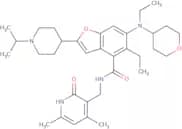
CAS:EBI-2511 is a novel fungicide, which is derived from synthetic chemical processes, specifically designed to inhibit fungal growth. The source of EBI-2511 is synthetic organic chemistry, where precise molecular engineering is employed to target specific pathways in fungal metabolism.Formula:C34H48N4O4Purity:Min. 95%Molecular weight:576.77 g/molML169
CAS:ML169 is a small-molecule inhibitor, which is chemically synthesized and acts as a selective modulator of transcription factors. Its mode of action primarily involves the disruption of specific protein-protein interactions that are crucial for the transcriptional activity of targeted transcription factors, thereby inhibiting their ability to initiate or regulate the transcription of genes. This selective interference allows for precise manipulation of gene expression, making ML169 an invaluable tool in elucidating the fundamental mechanisms of transcriptional regulation.Formula:C21H17BrFN3O4SPurity:Min. 95%Molecular weight:506.3 g/molATP-Red 1
CAS:<p>ATP-Red 1 is a fluorescent probe, which is a synthetic molecule that allows for the visualization and quantification of adenosine triphosphate (ATP) within live cells. This product is derived from benzothiazole, a heterocyclic compound, and it exploits the unique properties of this structure to detect ATP with high specificity. The mode of action of ATP-Red 1 involves a fluorescence enhancement mechanism, where its binding to ATP results in a significant increase in fluorescence intensity. This enables the direct monitoring of ATP dynamics in real-time.</p>Formula:C34H36BN3O4Purity:Min. 95%Molecular weight:561.5 g/molCH 275
CAS:<p>CH 275 is a synthetic chemical compound that functions as an insecticide, originating from advanced chemical synthesis processes. This compound exerts its effects primarily through contact action, disrupting essential biological pathways in targeted pest species. By inhibiting neurotransmitter activity at synaptic junctions, CH 275 effectively paralyzes and neutralizes insects upon application.</p>Formula:C74H98N14O14S2Purity:Min. 95%Molecular weight:1,471.8 g/molLY367385
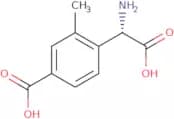
CAS:<p>LY367385 is a selective antagonist of the metabotropic glutamate receptor subtype 1 (mGluR1), originating from advanced pharmacological research. Its mode of action involves competitive inhibition at the glutamate binding site on mGluR1, effectively modulating synaptic transmission by decreasing receptor activity. This modulation interferes with glutamate-induced neuronal excitability, making LY367385 an invaluable tool in the exploration of glutamatergic signaling pathways.</p>Formula:C10H11NO4Purity:Min. 95%Molecular weight:209.2 g/molNfat transcription factor regulator-1
CAS:Nfat transcription factor regulator-1 is a biochemical reagent, which is commonly derived from synthetic or recombinant sources. It functions by modulating the activity of NFAT (nuclear factor of activated T-cells) transcription factors, which are crucial in several cellular processes. Through its regulatory action, it influences NFAT's ability to translocate to the nucleus and bind DNA, effectively controlling the transcription of genes involved in immune responses and other cellular activities.Formula:C17H10F6N4O2Purity:Min. 95%Molecular weight:416.28 g/molN-Methoxysuccinyl-Ala-Ala-Pro-Met p-nitroanilide
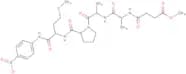
CAS:N-Methoxysuccinyl-Ala-Ala-Pro-Met p-nitroanilide is a synthetic chromogenic substrate, which is typically utilized in biochemical assays to assess protease activity, particularly that of elastase-like enzymes. The product is derived from chemical synthesis in the laboratory, featuring a specific peptide sequence conjugated to the p-nitroanilide group.Formula:C27H38N6O9SPurity:Min. 95%Molecular weight:622.7 g/mol((1R,3S)-1-Amino-3-((R)-6-hexyl-5,6,7,8-tetrahydronaphthalen-2-yl)cyclopentyl)methanol
CAS:((1R,3S)-1-Amino-3-((R)-6-hexyl-5,6,7,8-tetrahydronaphthalen-2-yl)cyclopentyl)methanol is a synthetic chemical compound, specifically a chiral aminocyclopentanol derivative. This compound is often synthesized in laboratories for research purposes. It originates from the manipulation of naphthalene derivatives, which are common in the study of bioactive molecules.Formula:C22H35NOPurity:Min. 95%Molecular weight:329.5 g/mol