Organometallic Ligands
Subcategories of "Organometallic Ligands"
- Buchwald Ligands(22 products)
- DPEN(4 products)
- DPHEN(4 products)
- JOSIPHOS(4 products)
- Phosphine(497 products)
- Porphirines(75 products)
Found 2889 products of "Organometallic Ligands"
NTRC 824
CAS:NTRC 824 is an innovative bioactive compound, meticulously developed from natural sources, with unique properties that facilitate its mode of action. The compound is derived through an advanced extraction and purification process ensuring its optimal efficacy and stability. NTRC 824 operates by modulating specific molecular pathways, which are central to its function in targeted applications.
Formula:C25H26F3N3O6SPurity:Min. 95%Molecular weight:553.6 g/molRef: 3D-YPC00261
Discontinued productBMS 819881
CAS:BMS 819881 is a synthetic chemical compound, classified as a pharmaceutical agent. This compound originates from synthetic processes in medicinal chemistry, developed as part of a structured drug discovery program. Its mode of action involves inhibiting specific molecular targets related to metabolic pathways, which are impactful in regulating physiological processes at the cellular level.
Formula:C24H21ClN2O4SPurity:Min. 95%Molecular weight:469 g/molNsc 162535 disodium
CAS:NSC 162535 disodium is a synthetic compound, classified as a chemical agent. It is derived from chemical synthesis processes intended for research and experimental purposes. The compound acts through biochemical interactions that affect specific cellular pathways, making it of interest for a variety of investigative biological studies.
Formula:C20H13N3Na2O8S2Purity:Min. 95%Molecular weight:533.4 g/molRef: 3D-XEA85518
Discontinued productSB 328437
CAS:SB 328437 is a selective 5-HT6 receptor antagonist, which is a synthetic compound developed for research purposes. It originates from a series of chemical syntheses aimed at creating ligands capable of specifically targeting serotonin receptors in the brain. The mode of action involves blocking the 5-HT6 receptor, a subtype of serotonin receptors primarily expressed in the central nervous system, thereby modulating the neurotransmission associated with this receptor.
Formula:C21H18N2O5Purity:Min. 95%Molecular weight:378.38 g/molWWL113
CAS:WWL113 is a synthetic biochemical compound, which is designed to modulate enzymatic activity. It is developed through advanced organic synthesis techniques that allow for precision targeting of specific molecular pathways. The mode of action involves selective inhibition of a particular enzyme, which plays a crucial role in various biochemical processes.
Formula:C29H26N2O4Purity:Min. 95%Molecular weight:466.53 g/molRef: 3D-XMB66986
Discontinued productAZD1208 hydrochloride
CAS:AZD1208 hydrochloride is a small-molecule inhibitor, sourced from synthetic chemical production, which targets Pim kinases. Pim kinases are serine/threonine kinases implicated in the regulation of cell survival and proliferation. AZD1208 hydrochloride functions by selectively inhibiting all three Pim kinases (Pim-1, Pim-2, and Pim-3), thus disrupting pathways essential for cancer cell growth and survival, particularly in hematologic malignancies.
Formula:C21H22ClN3O2SPurity:Min. 95%Molecular weight:415.9 g/molRef: 3D-WPC86696
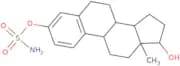
Discontinued productEstradiol 3-sulfamate
CAS:Estradiol 3-sulfamate is a synthetic estrogen analogue, which is derived from the natural estrogen hormone, estradiol. Its mode of action involves the inhibition of steroid sulfatase, an enzyme responsible for converting sulfated steroid precursors into active estrogens. This inhibition reduces estrogen levels and influences the hormonal regulation pathways within the body.
Formula:C18H25NO4SPurity:Min. 95%Molecular weight:351.5 g/molRef: 3D-XGA37752
Discontinued productPB 28 dihydrochloride
CAS:PB 28 dihydrochloride is a selective sigma-2 receptor ligand, which is a synthetic compound targeting specific receptor sites. These receptors are predominantly found in cancer cells, implicating them in cellular proliferation and apoptosis. PB 28 dihydrochloride is synthetically derived and is employed extensively in preclinical studies. Its mode of action involves high-affinity binding to the sigma-2 receptors, allowing modulation of cellular stress responses and apoptosis pathways.
Formula:C24H38N2O·2HClPurity:Min. 95%Molecular weight:443.5 g/molRef: 3D-XGA90703
Discontinued productAvex-73
CAS:Avex-73 is a chemical deterrent, which is derived from naturally occurring plant-based extracts. It operates by affecting the sensory pathways of birds, making treated areas undesirable for them through olfactory and gustatory discomfort. When applied, Avex-73 interacts with the specific chemosensory receptors present in avian species, creating an aversive, yet non-lethal reaction. This makes it an effective tool in managing bird-related challenges in various environments.
Formula:C19H23NOPurity:Min. 95%Molecular weight:281.4 g/molRef: 3D-VHA61583
Discontinued product2-Ethyl-3-[4-[(E)-3-(4-isopropylpiperazin-1-yl)propenyl]benzyl]-5,7-dimethyl-3H-imidazo[4,5-b]pyridine
CAS:2-Ethyl-3-[4-[(E)-3-(4-isopropylpiperazin-1-yl)propenyl]benzyl]-5,7-dimethyl-3H-imidazo[4,5-b]pyridine is an advanced pharmaceutical compound, which is synthesized through a multi-step organic chemistry process. This compound is designed to target specific biochemical pathways with high precision, offering potential therapeutic benefits. Its mode of action involves modulation of receptor activity, potentially influencing signal transduction pathways critical in various diseases.
Formula:C27H37N5Purity:Min. 95%Molecular weight:431.6 g/molRef: 3D-XXB87916
Discontinued productMardepodect
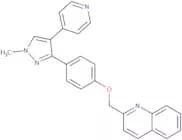
CAS:Mardepodect is an investigative pharmaceutical compound, which is derived synthetically through a series of complex chemical reactions involving multiple steps of organic synthesis. This compound operates primarily as a selective phosphodiesterase-9 (PDE9) inhibitor, modulating intracellular signaling pathways by preventing the degradation of cyclic guanosine monophosphate (cGMP). The resulting elevated levels of cGMP lead to various downstream biological effects that can be explored for therapeutic benefits.
Formula:C25H20N4OPurity:Min. 95%Molecular weight:392.45 g/molRef: 3D-YKB56294
Discontinued productRo 64-5229
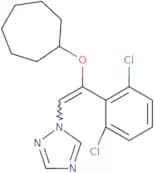
CAS:Ro 64-5229 is a selective inverse agonist for the histamine H3 receptor, which is a synthetic small molecule. Its source is laboratory-synthesized, involving complex organic chemistry techniques tailored to specifically interact with the H3 receptor subtype. The mode of action of Ro 64-5229 involves binding to the histamine H3 receptor, which leads to a decrease in the constitutive activity of this receptor, effectively opposing its natural agonists.
Formula:C17H19Cl2N3OPurity:Min. 95%Molecular weight:352.3 g/molRef: 3D-WJA85246
Discontinued productSCH-202676
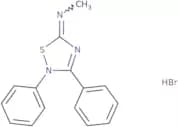
CAS:SCH-202676 is a non-peptidyl allosteric modulator, which is a synthetic compound designed to influence receptor activity. It is sourced from chemical synthesis processes that allow for the precise modulation of receptor function through non-peptidyl mechanisms. The mode of action for SCH-202676 involves binding to an allosteric site on target receptors, altering their conformation and subsequently modulating their activity without directly competing with endogenous ligands.
Formula:C15H14BrN3SPurity:Min. 95%Molecular weight:348.3 g/molRef: 3D-VCA37543
Discontinued productProtac brd9 degrader-1
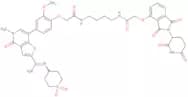
CAS:Protac BRD9 Degrader-1 is a small molecule degrader, which is a bifunctional molecule derived from proteolysis-targeting chimera (PROTAC) technology. It operates by harnessing the ubiquitin-proteasome system to selectively degrade the BRD9 protein. The molecule consists of two ligands: one binds to the target protein, BRD9, and the other recruits an E3 ubiquitin ligase. This forms a ternary complex, leading to the ubiquitination and subsequent degradation of BRD9.
Formula:C42H45N7O12S2Purity:Min. 95%Molecular weight:904 g/molRef: 3D-XID97101
Discontinued product5-Ht6 antagonist 29
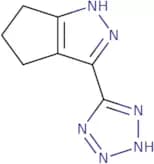
CAS:5-HT6 antagonist 29 is a pharmacological compound, which is synthesized through organic chemistry techniques, typically involving multi-step reactions to yield high specificity. This compound functions as a selective antagonist for the 5-HT6 serotonin receptor, a G-protein-coupled receptor predominantly found in the central nervous system.
Formula:C7H8N6Purity:Min. 95%Molecular weight:176.18 g/molRef: 3D-XUA96370
Discontinued productDeltamethrin-d5
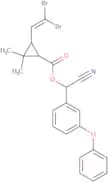
CAS:Deltamethrin-d5 is a labeled pyrethroid isomer, which is an essential tool in analytical chemistry and environmental science. This product is synthetically derived and incorporates deuterium, a stable isotope of hydrogen, thereby serving as an internal standard in mass spectrometric analysis.
Formula:C22H19Br2NO3Purity:Min. 95%Molecular weight:510.2 g/molRef: 3D-SYB63323
Discontinued productPIM-447 dihydrochloride
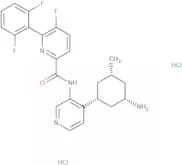
CAS:PIM-447 dihydrochloride is a potent small molecule kinase inhibitor, which is synthesized as a selective inhibitor of PIM kinases. These kinases, part of the serine/threonine kinase family, are implicated in various cellular processes, including cell cycle progression and survival, making them a target of interest in oncology research. PIM-447 acts by binding to the ATP-binding pocket of PIM kinases, thereby inhibiting their activity and disrupting downstream signaling pathways that promote tumor growth and survival.
Formula:C24H25Cl2F3N4OPurity:Min. 95%Molecular weight:513.38 g/molRef: 3D-VXC56569
Discontinued productSonepiprazole hydrochloride
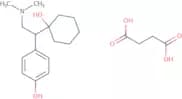
CAS:Controlled ProductSonepiprazole hydrochloride is an experimental pharmaceutical compound, which is derived from synthetic sources with a high degree of chemical precision. This compound acts as a selective dopamine D4 receptor antagonist, modulating neurochemical transmission by inhibiting D4 receptor activity. The specificity for the D4 receptor suggests its potential use in elucidating the pathophysiology of conditions such as schizophrenia and other neuropsychiatric disorders. Research into Sonepiprazole hydrochloride focuses on its efficacy in altering dopaminergic pathways, which may contribute to improved cognitive and behavioral functions in preclinical models. While its exact therapeutic potential remains under study, Sonepiprazole hydrochloride represents a promising avenue in the development of targeted treatments for psychiatric conditions where dopamine dysregulation is implicated.
Formula:C20H31NO6Purity:Min. 95%Molecular weight:381.5 g/molRef: 3D-VGA85736
Discontinued productLY 2922470
CAS:LY 2922470 is an investigational compound, which is a small molecule inhibitor, derived from synthetic chemical sources, with specific activity against certain kinase enzymes. The mode of action of LY 2922470 involves binding to the ATP pocket of the targeted kinases, thereby inhibiting their phosphorylation activity, which is crucial in signaling pathways that regulate cell proliferation and survival.
Formula:C28H29NO4SPurity:Min. 95%Molecular weight:475.6 g/molRef: 3D-YGC01812
Discontinued productGSK2850163
CAS:GSK2850163 is a small-molecule inhibitor, which is derived synthetically. It functions by selectively targeting bromodomains, which are protein interaction modules that recognize acetylated lysine residues. This action disrupts the interaction between bromodomains and acetylated histones, thereby influencing gene expression. Such selective targeting allows for modulation of transcriptional programs that can be aberrant in various diseases.
Formula:C24H29Cl2N3OPurity:Min. 95%Molecular weight:446.4 g/molRef: 3D-WJD98991
Discontinued product






![2-Ethyl-3-[4-[(E)-3-(4-isopropylpiperazin-1-yl)propenyl]benzyl]-5,7-dimethyl-3H-imidazo[4,5-b]pyri…](/_next/image/?url=https%3A%2Fstatic.cymitquimica.com%2Fproducts%2F3D%2Fthumb-webp%2FXXB87916.webp&w=3840&q=75)