Organometallic Ligands
Subcategories of "Organometallic Ligands"
- Buchwald Ligands(22 products)
- DPEN(4 products)
- DPHEN(4 products)
- JOSIPHOS(4 products)
- Phosphine(497 products)
- Porphirines(75 products)
Found 2889 products of "Organometallic Ligands"
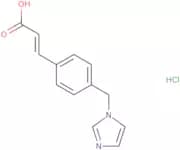
Ozagrel HCl - Bio-X ™
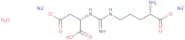
CAS:Ozagrel is an antiplatelet agent that is also a thromboxane A2 synthetase inhibitor. It is used for the treatment of bronchial asthma and cerebral ischemia. It blocks platelet aggregation and reduces hypersensitivity of bronchial muscles.Formula:C13H12N2O2·HClPurity:Min. 95%Color and Shape:PowderMolecular weight:264.71 g/molArginino-succinic acid disodium
CAS:Arginino-succinic acid disodium is a dicarboxylic acid salt, which is a derivative of argininosuccinic acid in its sodium salt form. This compound is synthesized through enzymatic reactions involving citrulline and aspartate, culminating in the production of argininosuccinate. The mode of action involves its participation as a substrate in the urea cycle, catalyzed by the enzyme argininosuccinate lyase, where it is cleaved into arginine and fumarate. Arginino-succinic acid disodium plays a pivotal role in the detoxification of ammonia in biological systems, facilitating its conversion into urea.
Formula:C10H18N4O6•Na2Purity:80%MinColor and Shape:PowderMolecular weight:336.25 g/molRef: 3D-BA182604
Discontinued productCGP 78608
CAS:CGP 78608 is a neuropeptide Y (NPY) Y5 receptor antagonist, which is a synthetic compound derived from a complex series of chemical syntheses. The source of this product lies in tailored organic chemistry processes designed to precisely inhibit specific receptor subtypes associated with neuropeptide Y.
Formula:C11H13BrN3O5PPurity:Min. 95%Molecular weight:378.12 g/molRef: 3D-BC183635
Discontinued productZoledronic acid monohydrate EP Impurity B
CAS:Zoledronic acid monohydrate EP Impurity B is a chemical impurity often encountered in the synthesis and quality control of zoledronic acid. This impurity arises from synthetic pathways involved in the production of bisphosphonates, a class of compounds used for bone-related conditions. As an impurity, it does not have direct therapeutic action but plays a significant role in the characterization and purity assessment of pharmaceutical formulations.
Formula:C7H17N2O14P4Purity:Min. 95%Molecular weight:477.11 g/molCTX-712
CAS:CTX-712 is an innovative small-molecule inhibitor, which is synthesized through state-of-the-art organic chemical processes. This compound functions by selectively targeting and inhibiting specific intracellular pathways critical for tumor cell proliferation and survival. Through its precise mechanism of disrupting key signaling cascades, CTX-712 effectively impairs the growth of cancer cells while minimizing the impact on normal, healthy tissues.
Formula:C19H17FN8O2Purity:Min. 95%Molecular weight:408.39 g/molRef: 3D-BC184173
Discontinued productN-(3-(5-((3-Acrylamido-4-(morpholine-4-carbonyl)phenyl)amino)-1-methyl-6-oxo-1,6-dihydropyridin-3-yl)-2-methylphenyl)-4-(tert-butyl) benzamide
CAS:N-(3-(5-((3-Acrylamido-4-(morpholine-4-carbonyl)phenyl)amino)-1-methyl-6-oxo-1,6-dihydropyridin-3-yl)-2-methylphenyl)-4-(tert-butyl) benzamide is a novel pharmaceutical compound, which is synthesized through an intricate organic chemistry process aimed at targeting specific pathophysiological pathways. This compound functions by modulating cellular pathways with high specificity, potentially altering disease progression at the molecular level.Formula:C38H41N5O5Purity:Min. 95%Molecular weight:647.8 g/molRef: 3D-VID28064
Discontinued productSIRT1 Activator II
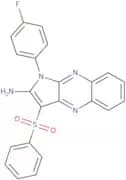
CAS:SIRT1 Activator II is a biochemical compound known as a small molecule activator. It is derived from synthetic sources, specifically engineered to interact with cellular pathways involved in aging and metabolism. The mode of action of SIRT1 Activator II involves the activation of the SIRT1 enzyme, a member of the sirtuin family of NAD+-dependent deacetylases. This activation results in the modulation of gene expression relevant to cellular stress resistance, metabolic regulation, and longevity.
Formula:C22H15FN4O2SPurity:Min. 95%Molecular weight:418.44 g/molRef: 3D-ZPA92243
Discontinued productVX 702
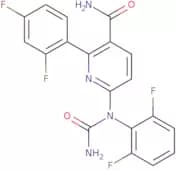
CAS:p38 MAP kinase antagonist
Formula:C19H12F4N4O2Purity:Min. 95%Color and Shape:SolidMolecular weight:404.32 g/molPerfluorophenyl 19-(2,5-dioxo-2H-pyrrol-1(5H)-yl)-17-oxo-4,7,10,13-tetraoxa-16-azanonadecan-1-oate
CAS:Perfluorophenyl 19-(2,5-dioxo-2H-pyrrol-1(5H)-yl)-17-oxo-4,7,10,13-tetraoxa-16-azanonadecan-1-oate is a synthetic compound, which is derived through a series of complex organic syntheses involving perfluorinated reagents. This compound is meticulously designed to incorporate both perfluorinated aromatic groups and a flexible, polyether-based linker. The mode of action for this compound primarily revolves around its unique chemical structure, which facilitates interactions at the molecular level that can be favorable for a variety of biochemical applications.
Formula:C24H27F5N2O9Purity:Min. 95%Molecular weight:582.5 g/molTariquidar
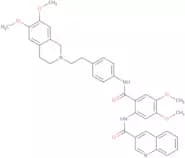
CAS:Potent P-glycoprotein (P-gp) inhibitor
Formula:C38H38N4O6Purity:Min. 97 Area-%Color and Shape:PowderMolecular weight:646.73 g/molAZD5069
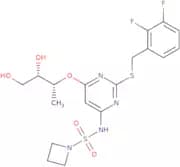
CAS:AZD5069 is a small molecule that serves as a potent and selective antagonist of the CXC chemokine receptor 2 (CXCR2). It is derived from synthetic pharmaceutical research efforts aimed at targeting key signaling pathways in inflammatory diseases. This compound functions by inhibiting the CXCR2 receptor, which plays a critical role in the recruitment and activation of neutrophils, a type of white blood cell involved in inflammation and immune responses.
Formula:C18H22F2N4O5S2Purity:Min. 95%Molecular weight:476.52 g/molRef: 3D-DKB38584
Discontinued productBIBF 1202
CAS:BIBF 1202 is a potent inhibitor of phospholipase A2, prostaglandin synthase and cyclooxygenase-2. It inhibits the production of arachidonic acid from membrane phospholipids and is used in cancer research. BIBF 1202 has been shown to have anti-tumour activity in a number of animal models, including human liver cancer cells. This molecule has also been shown to inhibit the activation of nuclear factor kappa B (NF-κB), which is involved in carcinogenesis.
Formula:C30H31N5O4Purity:Min. 95%Molecular weight:525.6 g/molMethyl-d3-magnesium iodide solution, 1.0 M in diethyl ether
CAS:Controlled ProductMethyl-d3-magnesium iodide solution, 1.0 M in diethyl ether, is a specialized organometallic reagent used extensively in synthetic chemistry. This compound is a labeled Grignard reagent, where the methyl group is fully deuterated. It is sourced through the synthesis involving the reaction of deuterated methyl iodide with magnesium in an anhydrous diethyl ether solvent.
Formula:CD3IMgPurity:Min. 95%Molecular weight:169.26 g/molBMY 7378 Dihydrochloride
CAS:BMY 7378 Dihydrochloride is a selective 5-HT1A receptor antagonist, which is synthetically derived for specialized research purposes. This compound is known for its ability to bind exclusively to the 5-HT1A receptor, inhibiting the action of serotonin. Its mechanism of action involves a high-affinity blockade of serotonin at this receptor site, making it a valuable tool for understanding serotonergic signaling pathways.
Formula:C22H33Cl2N3O3Purity:Min. 95%Molecular weight:458.42 g/molRef: 3D-WAA10295
Discontinued productSMN-C3
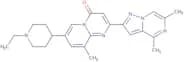
CAS:SMN-C3 is a synthetic compound designed specifically as a targeted therapeutic agent. It is derived through advanced chemical synthesis techniques, utilizing a meticulous approach to optimize efficacy and specificity. The mode of action of SMN-C3 involves precise interaction with select molecular targets, thereby modulating biological pathways with high specificity. This interaction is designed to alter the course of disease processes, offering potential therapeutic benefits.
Formula:C24H28N6OPurity:Min. 95%Molecular weight:416.5 g/molRef: 3D-ZHC59734
Discontinued productKUNB31
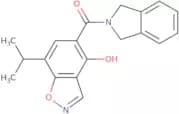
CAS:KUNB31 is a synthetic enzyme inhibitor, which is an engineered compound designed to interfere with the activity of specific enzymes in various biochemical pathways. This product is synthesized through a series of complex chemical reactions, ensuring high specificity and activity against target enzymes. Its mode of action involves binding to the active sites of enzymes, thereby preventing substrates from interacting and altering enzymatic activity.
Formula:C19H18N2O3Purity:Min. 95%Molecular weight:322.4 g/molRef: 3D-VND26380
Discontinued productAtorvastatin sodium
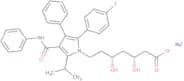
CAS:HMG-CoA reductase antagonist
Formula:C33H35FN2O5•NaPurity:Min. 95%Color and Shape:PowderMolecular weight:581.63 g/mol(S)-Luliconazole
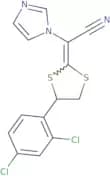
CAS:(S)-Luliconazole is an antifungal agent that is synthesized from an imidazole compound. This compound is biphenyl in structure and is often derived through chiral synthesis techniques to isolate the (S)-enantiomer, which is the active form that enhances pharmacological effects. Its mode of action involves inhibiting the enzyme lanosterol 14α-demethylase, an essential component in fungal cell membrane synthesis. This inhibition disrupts the production of ergosterol, a critical sterol in fungal membranes, ultimately leading to increased membrane permeability and cell death.
Formula:C14H9Cl2N3S2Purity:Min. 95%Molecular weight:354.3 g/molBudralazine
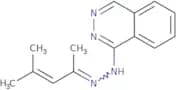
CAS:Budralazine is a synthetic vasodilator, which is derived from a series of hydrazine analogs, known for their ability to modulate vascular tone. Its mode of action involves the direct relaxation of vascular smooth muscle. This relaxation leads to a decrease in peripheral vascular resistance and, consequently, a reduction in blood pressure. Intriguingly, Budralazine is thought to selectively target arterioles over veins, making it of particular interest in the study of vascular dynamics and hypertension.
Formula:C14H16N4Purity:Min. 95%Molecular weight:240.3 g/molRef: 3D-LBA79879
Discontinued productPergolide mesylate
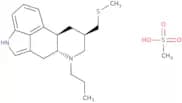
CAS:Controlled ProductD1 and D2 dopamine agonist
Formula:C20H30N2O3S2Purity:Min. 95%Color and Shape:White To Off-White SolidMolecular weight:410.6 g/mol