Cytoskeletal Signaling
Cytoskeletal signaling inhibitors are compounds that disrupt the signaling pathways regulating the cytoskeleton, which is crucial for cell shape, motility, division, and intracellular transport. These inhibitors are used to study the dynamics of cytoskeletal proteins, such as actin and tubulin, and their role in processes like cell migration, adhesion, and cancer metastasis. Cytoskeletal signaling inhibitors are valuable in research on cell biology, cancer, and neurobiology. At CymitQuimica, we offer a comprehensive range of high-quality cytoskeletal signaling inhibitors to support your research in these areas.
Found 1382 products of "Cytoskeletal Signaling"
Sort by
Purity (%)
0
100
|
0
|
50
|
90
|
95
|
100
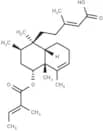
Kolavenic acid analog
CAS:<p>KAA, an anticancer compound, inhibits centrosome clustering and targets HSET+ yeast and cancer cells.</p>Formula:C25H38O4Color and Shape:SolidMolecular weight:402.57Tubulin polymerization-IN-33
<p>Tubulin-IN-33, an oxazoloisoindole, hinders microtubule assembly; effective against NCI cancer cells.</p>Formula:C27H28N2O6Color and Shape:SolidMolecular weight:476.52TPI-287
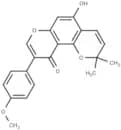
CAS:<p>TPI 287: synthetic taxane; may halt cancer by stabilizing microtubules, blocking cell division, inducing apoptosis.</p>Formula:C46H63NO15Color and Shape:SolidMolecular weight:869.99Nrf2/HO-1 activator 1
CAS:<p>Compound 24: Potent Nrf2/HO-1 activator with neuroprotective, antioxidant properties; useful in PD research.</p>Formula:C21H18O5Color and Shape:SolidMolecular weight:350.36Tubulin polymerization-IN-35
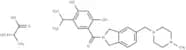
<p>Tubulin-IN-35 inhibits oxazolylisoindole microtubule formation, targeting VL51 marginal zone lymphoma.</p>Formula:C31H35N3O5Color and Shape:SolidMolecular weight:529.63Onalespib lactate
CAS:<p>Onalespib lactate is a second-generation, potent and selective HSP90 Inhibitor with antitumor activity.</p>Formula:C27H37N3O6Color and Shape:SolidMolecular weight:499.6Antitumor agent-200
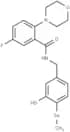
CAS:<p>Antitumor agent-200 (Compound 2g) is a microtubule synthesis inhibitor that binds to the colchicine site on tubulin, causing G2/M cell cycle arrest and inducing reactive oxygen species (ROS) production. It demonstrates significant inhibitory activity against P-glycoprotein (P-gp) overexpressing cell lines MCF7/ADR and KBV200, with resistance indices (DRI) of 0.83 and 0.58, respectively. In an MCF-7 xenograft model, Antitumor agent-200 (at 25 mg/kg, administered intraperitoneally) achieves a 57.2% tumor growth inhibition rate. This compound is applicable for research in the field of cancer therapy.</p>Formula:C19H21FN2O3SeColor and Shape:SolidMolecular weight:423.34Tubulin inhibitor 49
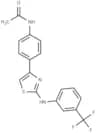
CAS:<p>Tubulin inhibitor 49 (Compound 18) is an inhibitor of tubulin polymerization with an IC50 of 48 μM. It disrupts the microtubule network of cells, causing cell cycle arrest in the G2 phase, and exhibits cytotoxicity with an IC50 of 8.8 μM in HeLa cells.</p>Formula:C18H14F3N3OSColor and Shape:SolidMolecular weight:377.383Quinagolide hydrochloride
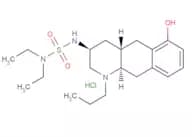
CAS:<p>Quinagolide hydrochloride is a selective agonist of dopamine D2 receptor.</p>Formula:C20H34ClN3O3SPurity:98%Color and Shape:SolidMolecular weight:432.02XD23
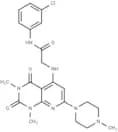
CAS:<p>XD23 is a potent osteosarcoma inhibitor that functions by downregulating DKK1 and activating the WNT/β-catenin signaling pathway.</p>Formula:C22H26ClN7O3Color and Shape:SolidMolecular weight:471.94HSP90-IN-9
<p>HSP90-IN-9: potent HSP90 inhibitor, dose-dependent fungicide, impedes biofilm/morphology with FLC, reverses FLC resistance.</p>Color and Shape:SolidAChE/GSK-3β-IN-1
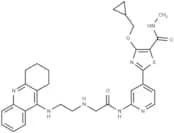
CAS:<p>AChE/GSK-3β-IN-1 is a potent dual AChE/GSK-3β inhibitor that crosses the blood-brain barrier and acts on hAChE (IC50: 1.2 nM), hBChE (IC50: 149.8 nM) and hGSK-</p>Formula:C31H35N7O3SColor and Shape:SolidMolecular weight:585.72SPA0355
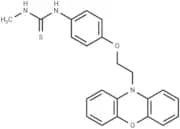
CAS:<p>SPA0355 is a thiourea derivative with antioxidant and anti-inflammatory properties. It inhibits RANKL (receptor activator of nuclear factor κB ligand)-induced osteoclastogenesis in primary bone marrow-derived macrophages and suppresses the activation of MAPKs, Akt, and NF-κB pathways. Furthermore, SPA0355 enhances osteoblast differentiation by increasing alkaline phosphatase activity and mineralized nodule formation. It protects ovariectomized mice from bone loss by stimulating osteoblast differentiation and inhibiting osteoclast resorption, making it a potential candidate for studying postmenopausal osteoporosis.</p>Formula:C22H21N3O2SColor and Shape:SolidMolecular weight:391.486SF0166
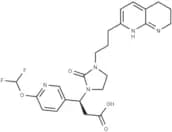
CAS:<p>SF0166: potent αvβ3 antagonist, IC50: 0.6 nM. Blocks cell adhesion, IC50: 7.6 pM-76 nM. Reduces neovascularization in mice.</p>Formula:C23H27F2N5O4Color and Shape:SolidMolecular weight:475.49HSN748
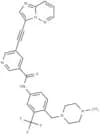
CAS:<p>HSN748 is an analog of ponatinib and acts as a multi-kinase inhibitor. It exhibits inhibitory activity against kinases such as FLT3, ABL1, RET, PDGFRα/β, MNK1, and MNK2. HSN748 can suppress the growth of chronic myeloid leukemia and acute myeloid leukemia cell lines, making it a useful compound in leukemia research.</p>Formula:C27H24F3N7OColor and Shape:SolidMolecular weight:519.521Ethaboxam
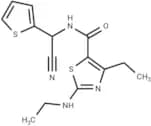
CAS:<p>Ethaboxam is a β-tubulin inhibitor and antifungal agent used against oomycete pathogens.</p>Formula:C14H16N4OS2Purity:99.37%Color and Shape:SolidMolecular weight:320.43AKT-IN-26
CAS:<p>AKT-IN-26 (Compound 453) is an AKT inhibitor that binds to the Pleckstrin Homology (PH) domain of AKT. It is useful for research related to cell proliferation and cancer involving the AKT pathway.</p>Formula:C21H17N5O4SColor and Shape:SolidMolecular weight:435.456Hsp90-IN-38
CAS:<p>Hsp90-IN-38 (compound 20m) is an inhibitor of HSP90 (heat shock protein). It demonstrates a strong binding affinity to HSP90 with a Kd of 87 nM. The compound inhibits ATPase activity with an IC50 of 0.13 μM. Hsp90-IN-38 also shows inhibitory effects on HCT116, MCF-7, SKBr3, K562, and A549 cells with IC50 values of 0.187, 0.072, 0.105, 0.403, and 0.031 μM, respectively.</p>Formula:C28H35N3O5Color and Shape:SolidMolecular weight:493.595NAP1051
CAS:<p>NAP1051, a biomimetic analog of Lipoxin A4, serves an anti-tumor role by targeting the inflammatory tumor microenvironment. It inhibits the chemotaxis of neutrophils to fMLP and stimulates macrophage efferocytosis by activating AKT. NAP1051 is utilized in research on colorectal cancer.</p>Formula:C23H34O5Color and Shape:SolidMolecular weight:390.51