


Deuterated Compounds
Found 4233 products of "Deuterated Compounds"
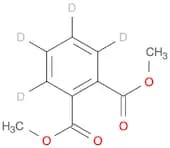
Dimethyl phthalate-3,4,5,6-d4
CAS:Formula:C10H6D4O4Purity:98%Color and Shape:LiquidMolecular weight:198.2086Ref: IN-DA003PME
Discontinued product4H-Imidazol-4-one, 2-amino-1,5-dihydro-1-(methyl-d3)-
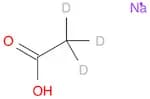
CAS:Formula:C4H4D3N3OPurity:98%Color and Shape:SolidMolecular weight:116.1364SODIUM ACETATE-D3 99+ ATOM % D
CAS:Formula:C2D3NaO2Purity:99%Color and Shape:SolidMolecular weight:85.0523Ref: IN-DA00BEHP
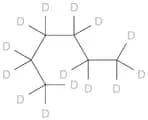
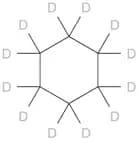
Discontinued productCyclohexane-1,1,2,2,3,3,4,4,5,5,6,6-d12
CAS:Formula:C6D12Purity:99.5%Color and Shape:LiquidMolecular weight:96.2334Ref: IN-DA0034YV
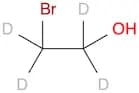
Discontinued product2-Bromoethanol-1,1,2,2-d4
CAS:Formula:C2HBrD4OPurity:%Color and Shape:LiquidMolecular weight:128.9891Ref: IN-DA00G2VM
Discontinued productO-Methyl dichlorothiophosphate
CAS:Formula:CH3Cl2OPSPurity:95%+Color and Shape:SolidMolecular weight:164.9787Ref: IN-DA00FBNO
Discontinued productAlternariol Monomethyl Ether-d3
CAS:Controlled ProductStability Hygroscopic
Applications Alternariol Monomethyl Ether-d3 is labelled methyl este analog fo Alternariol. An alternaria mycotoxin and genotoxin, found in common edible crops. It inhibits the activity of various DNA-topoisomerases, increasing the rate of DNA strand breaks.
Not a dangerous good if item is equal to or less than 1g/ml and there is less than 100g/ml in the package
References Asam, S., et al.: J. Agric. Food Chem., 57, 5152 (2009); Fehr, M., et al.: Mol. Nut. Food Res., 53, 441 (2009); Tiemann, U., et al.: Toxicol. Lett., 186, 139 (2009);Formula:C15D3H9O5Color and Shape:NeatMolecular weight:275.2713Ref: TR-A575771
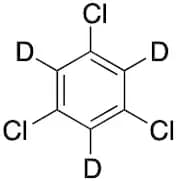
Discontinued product1,3,5-Trichlorobenzene-d3
CAS:Controlled ProductApplications 1,3,5-Trichlorobenzene-d3 (CAS# 1198-60-3) is a useful isotopically labeled research compound.
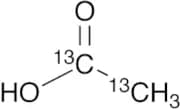
Formula:C6D3Cl3Color and Shape:NeatMolecular weight:184.47Acetic Acid-13C2
CAS:Applications Acetic Acid-13C2 is the 13C labelled version of Acetic Acid, a weak acid, used as a reagent in numerous industrial processes.
Not a dangerous good if item is equal to or less than 1g/ml and there is less than 100g/ml in the package
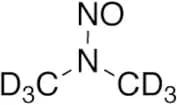
References MacGregor, B.J. et al.: Appl. Env. Micro., 72, 5246 (2006); Beylot, M. et al.: Anal. Biochem., 212, 532 (1993);Formula:C2H4O2Color and Shape:NeatMolecular weight:62.04N-Nitrosodimethylamine-d6
CAS:Controlled ProductStability Very Volatile
Applications Isotope labelled N-Nitrosodimethylamine is a highly toxic semi-volatile organic compound and a suspected human carcinogen. It induces liver tumors in rats after chronic exposure to low doses (1,2). Drinking water contaminant candidate list 3 (CCL 3) compound as per United States Environmental Protection Agency (EPA). Environmental contaminants; Food contaminants.
Dangerous Goods Info This compound is forbidden to ship by air under IATA regulations.
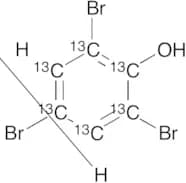
References 1. Peto, R. et al.: Cancer Res.1991 Dec 1;51(23 Pt 2):6415-51.2. Lee, ES. et al.: J. Pharm. Pharmacol., 2003 Aug;55(8):1169-74Formula:C2D6N2OColor and Shape:Colourless to Yellow OilMolecular weight:80.122,4,6-Tribromophenol-1,2,3,4,5,6-13C6
CAS:Formula:C6H3Br3OColor and Shape:NeatMolecular weight:336.765-Hydroxy-7-methoxy-2,2-dimethyl-4H-benzo[d][1,3]dioxin-4-one-d3
CAS:Controlled ProductApplications 5-Hydroxy-7-methoxy-2,2-dimethyl-4H-benzo[d][1,3]dioxin-4-one-d3 is an intermediate for the synthesis of Alternariol Monomethyl Ether-d3 (A575771), labelled methyl este analog fo Alternariol. An alternaria mycotoxin and genotoxin, found in common edible crops. It inhibits the activity of various DNA-topoisomerases, increasing the rate of DNA strand breaks.
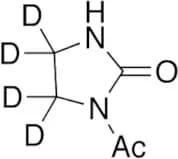
References Asam, S., et al.: J. Agric. Food Chem., 57, 5152 (2009); Fehr, M., et al.: Mol. Nut. Food Res., 53, 441 (2009); Tiemann, U., et al.: Toxicol. Lett., 186, 139 (2009)Formula:C11D3H9O5Color and Shape:NeatMolecular weight:227.228N-Acetylethylene Urea-d4
CAS:Controlled ProductApplications N-Acetylethylene Urea-d4 (cas# 1189701-94-7) is a compound useful in organic synthesis.
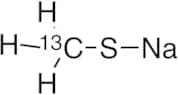
Formula:C5H4H4N2O2Color and Shape:NeatMolecular weight:132.15Sodium Methanethiolate-13C
CAS:Controlled ProductApplications Sodium Methanethiolate-13C, is the labeled analogue of Sodium Methanethiolate (S644805), used as a nucleophile in organic synthesis. Sodium methanethiolate is also being used as a reagent to synthesize thiol-based suberoylanilide hydroxamic acid (SAHA) analogues, compounds that act as potent histone deacetylase inhibitors.
References Bergman, A. & Wachtmeister, Chemosphere, 7, 949 (1978); Suzuki, T.,et al.: Bioorg. Med. Chem. Lett., 14, 3313 (2004)Formula:CH3NaSPurity:>90%Color and Shape:NeatMolecular weight:71.082p-Cresol-(methyl-13C)
CAS:Controlled ProductApplications The formation of p-Cresol-(methyl-13C) via phenol methylation at higher temperature from the deactivation of basic catalyst.
Not a dangerous good if item is equal to or less than 1g/ml and there is less than 100g/ml in the package
References Borodina, I. B., et al.: Russ. J. Phys. Chem., 80, 892-898 (2006)Formula:CC6H8OColor and Shape:NeatMolecular weight:109.13Trixylyl Phosphate-d10
CAS:Controlled ProductApplications Trixylyl Phosphate-d10 is a deuterated form of Trixylyl Phosphate (T891900), which is used commercially as hydraulic fluids, flame retardants, and plasticizers. Trixylyl Phosphate inhibits the human ether-a-go-go-related gene (hERG) channel, which is a voltage-gated potassium (K+) channel involved in the repolarization of the cardiac action potential.
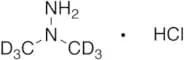
References Chigwada, G., et al.: Polym. Degrad. Stab. 89, 85 (2005); Xia, M., et al.: Toxicol Appl Pharmacol 252, 250 (2011)Formula:C20D10H9O4PColor and Shape:NeatMolecular weight:364.4N,N-(Dimethyl-d6)hydrazine Hydrochloride
CAS:Controlled ProductApplications A labelled isotope of a toxic volatile hydrazine found in rocket fuel systems.
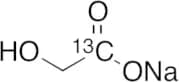
References Oanasyuk, A.G. et al.: Vis. Nat. Tekh. Univ. KhPI, 13, 59 (2010);Formula:C2H3D6ClN2Color and Shape:NeatMolecular weight:102.60Glycolic Acid-13C Sodium Salt
CAS:Controlled ProductApplications Glycolic Acid-13C Sodium Salt is the isotope labelled analog of Glycolic Acid Sodium Salt; a compound that increases the glycolate oxidase activity in the liver when fed to rats. It also increases the lactate dehydrogenase activity in the liver and kidney. This compound is suitable for lactate dehydrogenase (LDH) related research.
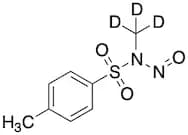
References Murthy M.S.R., et al.: Ann. Nutr. Metab., 27, 355 (1983)Formula:CCH3NaO3Color and Shape:NeatMolecular weight:99.026Diazald-d3
CAS:Applications N-Methyl-d3-N-nitroso-p-toluenesulfonamide is the labeled version of Diazald; Diazomethane precursor.
References Takizawa, et al.: J. Pharm. Soc. Jpn., 70, 490 (1950)Formula:C8D3H7N2O3SColor and Shape:Pale Yellow to Light Yellow SolidMolecular weight:217.060042-Chloroethanol-1,1,2,2-d4
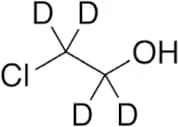
CAS:Controlled ProductApplications 2-Chloroethanol is used in the preparation of TTFTT (tetrathiafulvalene-2,3,6,7-tetrathiolate) and important building block in TTF syntheis. In addition, it is used in the synthesis of vinyltriazoles. This is the labeled analog.
Dangerous Goods Info This compound is forbidden to ship by air under IATA regulations.
References Svenstrup, N. et al.: Synthesis, 8, 809 (1994); Thibault, R. et al.: J. Am. Chem. Soc., 128, 12084 (2006);Formula:C22H4ClOHColor and Shape:Colourless OilMolecular weight:84.54Formaldehyde-d2 solution, 20 wt. % in D2O
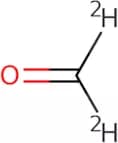
CAS:Controlled ProductFormaldehyde-d2 solution is a formaldehyde solution that contains deuterium, which has the same chemical properties as hydrogen but has an additional neutron in its nucleus. Formaldehyde-d2 solution is used to prepare samples for NMR and ESI-MS experiments. The reaction mechanism of formaldehyde is believed to be an acid-catalyzed hydrolysis of the hydrogen bond between formaldehyde and methanol. Deuterium isotopes are generally considered to be non-radioactive and have little or no effect on biological systems. Formaldehyde-d2 solution can inhibit fatty acids from binding to the surface of potatoes, which may make it useful in treating autoimmune diseases.Formula:CD2OPurity:Min. 95%Color and Shape:Clear LiquidMolecular weight:32.04 g/molHydrazine sulfate-15N2
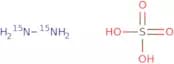
CAS:Controlled ProductHydrazine sulfate-15N2 is a trimethylsilylated hydrazine sulfate. It is used as an intermediate for the synthesis of N-trimethylsilylhydrazines and other trimethylsilylhydrazines. The compound can also be used to prepare glutamine as it reacts with dl-glutamine to form hydroxylamine, which then reacts with hydrogen sulfide to form glutathione. Hydrazine sulfate-15N2 is mainly used as a catalyst in the production of nitric acid from ammonia and oxygen gas.
Formula:H4N2·H2O4SPurity:Min. 95%Color and Shape:PowderMolecular weight:132.11 g/molDideuterosulfuric acid
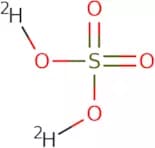
CAS:Controlled ProductDideuterosulfuric acid is a protonated molecule that is found in the tropone class of organic compounds. It has been shown to have optical properties similar to those of ferrocene, which is why it is often used as a replacement for this compound. Dideuterosulfuric acid has been studied extensively using a kinetic method with the goal of determining its mechanism and rate constants. Hydroxyl groups are found on the molecule's trifluoroacetic acid side chains, which may contribute to its reactivity with chloride ions and nitrogen atoms. Electrophotographic measurements show that hydrogen bonding occurs between molecules in dilute solutions.
Formula:D2SO4Purity:Min. 95%Molecular weight:100.09 g/molRef: 3D-FD167508
Discontinued product([D8]Val7·10)-C-Peptide (human)
CAS:Controlled ProductPlease enquire for more information about ([D8]Val7·10)-C-Peptide (human) including the price, delivery time and more detailed product information at the technical inquiry form on this pageFormula:C129H195D16N35O48Purity:Min. 95%Molecular weight:3,036.35 g/molRef: 3D-FV109221
Discontinued product






![5-Hydroxy-7-methoxy-2,2-dimethyl-4H-benzo[d][1,3]dioxin-4-one-d3](/_next/image/?url=https%3A%2Fstatic.cymitquimica.com%2Fproducts%2FTR%2Fthumb-webp%2FH446716.webp&w=3840&q=75)



![([D8]Val7·10)-C-Peptide (human)](/_next/image/?url=https%3A%2Fstatic.cymitquimica.com%2Fproducts%2F3D%2Fthumb-webp%2FFV109221.webp&w=3840&q=75)