Deuterated Compounds
Found 4238 products of "Deuterated Compounds"
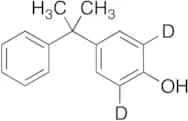
4-Cumylphenol-2,6-d2
CAS:Controlled ProductApplications 4-Cumylphenol-d2 is a deuterated isotope of 4-Cumylphenol (C834580) which is a useful building block for polymers.
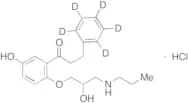
Formula:C15H14D2OColor and Shape:Off-White To BeigeMolecular weight:214.35-Hydroxy Propafenone Hydrochloride-d5
CAS:Controlled ProductApplications 5-Hydroxy Propafenone Hydrochloride-d5 is a labeled analogue of 5-Hydroxy Propafenone Hydrochloride (H952450), a metabolite of Propafenone (P757500), a sodium channel blocker. Antiarrhythmic (class IC).
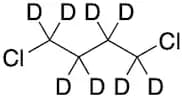
References Hege, H.G., et al.: Eur. J. Drug Metab. Pharmacokinet., 9, 41 (1984); Hollmann, M., et al.: Arzneim.-Forsch., 33, 763 (1983); Bryson, H. M., et al.:Drugs, 45, 85 (1993); Rae, A. P., et al.: Am. J. Cardiol., 82, 59N (1998)Formula:C21H23D5ClNO4Color and Shape:NeatMolecular weight:398.941,4-Dichlorobutane-d8
CAS:Controlled ProductApplications 1,4-Dichlorobutane-d8 (CAS# 83547-96-0) is a useful isotopically labeled research compound.
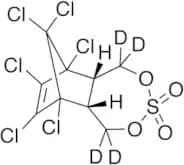
Formula:C4D8Cl2Color and Shape:NeatMolecular weight:135.06Endosulfan Sulfate-d4 (Major)
CAS:Controlled ProductApplications Labelled Endosulfan Sulfate, a pesticide used in the control and protection of plant and vegetation.
Not a dangerous good if item is equal to or less than 1g/ml and there is less than 100g/ml in the package
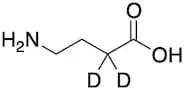
References Weston, D. et al.: Env. Sci. Tech., 38, 2752 (2004); Antonious, G. et al.: Env. Tox. Chem., 16, 644 (1997);Formula:C9H2D4Cl6O4SColor and Shape:NeatMolecular weight:426.954-Aminobutyric-2,2-d2 Acid
CAS:Controlled ProductApplications 4-Aminobutyric-2,2-d2 Acid (CAS# 67910-98-9) is a useful isotopically labeled research compound.
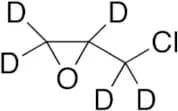
Formula:C4H7D2NO2Color and Shape:NeatMolecular weight:105.13Epichlorohydrin-d5
CAS:Controlled ProductApplications Used as a solvent for natural and synthetic resins, gums, cellulose esters and ethers, paints, varnishes, nail enamels and lacquers, cement for Celluloid. Also, it is used as stabilizer.
Not a dangerous good if item is equal to or less than 1g/ml and there is less than 100g/ml in the package
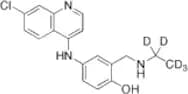
References Smyth, H.F., et al.: J. Ind. Hyg. Toxicol., 30, 63 (1948),Formula:C32H5ClOColor and Shape:NeatMolecular weight:97.56N-Desethyl Amodiaquine-d5
CAS:Controlled ProductApplications A labelled metabolite of Amodiaquine (A634200), an antimalarial.
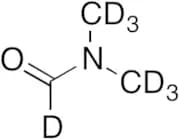
References Bayliss, M., et al.: Xenobiotica, 29, 253 (1999), Projean, D., et al.: Drug Metab. Dispos., 31, 748 (2003), Bray, P., et al.: Mol. Microbiol., 56, 323 (2005), Xiang, H., et al.: J. Pharm. Sci., 95, 2657 (2006),Formula:C18H13D5ClN3OColor and Shape:Light Yellow To BrownMolecular weight:332.84N,N-Dimethylformamide-d7
CAS:Controlled ProductApplications N,N-Dimethylformamide-d7 is the isotope labelled analog of N,N-Dimethylformamide. N,N-Dimethylformamide-d7 is used as a cofactor for enzymic oxidation of brassinin, which allows the transformation of dithiocarbamate group into an aldehyde equivalent.
Not a dangerous good if item is equal to or less than 1g/ml and there is less than 100g/ml in the package
References Pedras, M., et al.: Bioorg. Med. Chem., 19, 1390 (2011);Formula:C32H7NOColor and Shape:ColourlessMolecular weight:80.14(2-Bromoethyl)benzene-d5
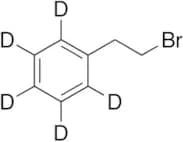
CAS:Controlled ProductApplications Isotope labelled (2-Bromoethyl)benzene is an intermediate widely used in organic synthesis.
References Suzuki, T., et al.: J. Med. Chem., 55, 9562 (2012); Mohanazadeh, F., et al.: Lett. Org. Chem., 9, 598 (2012);Formula:C8D5H4BrColor and Shape:NeatMolecular weight:190.09Adenosine-13C5
CAS:Stability Hygroscopic
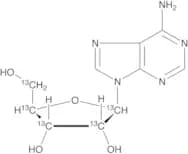
Applications Labelled nucleotide.
References Long, X., et al.: J. Pharmacol. Exper. Ther., 335, 781 (2010), Ham, M., et al.: J. Pharmacol. Exper. Ther., 335, 607 (2010),Formula:C513C5H13N5O4Color and Shape:White To Off-WhiteMolecular weight:272.2Chloroform-13C
CAS:Controlled ProductApplications Chloroform-13C is a ubiquitous trichlorinated organohalide solvent. It is used in the preparation of stable isotope-labeled precursors for the synthesis of capsaicinoids, capsinoids and capsiconinoids.
References Kobata, K., et al.: Biosci., Biotechnol., Biochem., 75, 1611 (2011)Formula:CHCl3Color and Shape:NeatMolecular weight:120.374-(3',6'-Dimethyl-3'-heptyl)phenol-13C6
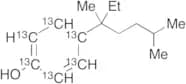
CAS:Controlled ProductApplications A labelled metabolite of 4-t-nonylphenol
Not a dangerous good if item is equal to or less than 1g/ml and there is less than 100g/ml in the package
References Ye, X., et al.: Drug Metab. Disposition, 35, 1269 (2007), Gabriel, F., et al.: Env. Sci. Technol., 42, 6399 (2008), Liedtke, A., et al.: Env. Toxicol., 23, 59 (2008),Formula:C6C9H24OColor and Shape:NeatMolecular weight:226.3124 Bisphenol S-d8
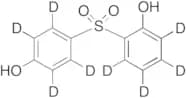
CAS:Controlled ProductApplications Isotope labelled 24 Bisphenol S (B519620) is a material used in thermal printing. 24 Bisphenol S is also used in the development of black leuco dyes.
References Shima, H. et al.: J. Imag. Sci. Technol., 54, 020502 (2010)Formula:C12H2D8O4SColor and Shape:NeatMolecular weight:258.32Oxamyl-d6
CAS:Controlled ProductApplications Isotope labelled Oxamyl is a pesticide used in the treatment and protection of crops from parasites and insects.
Not a dangerous good if item is equal to or less than 1g/ml and there is less than 100g/ml in the package
References Villatte, F. et al.: Pest. Biochem. Phys., 67, 95 (2000); Zapata, A. et al.: Pankey, J. et al.: Weed. Tech., 18, 698 (2004);Formula:C7H7D6N3O3SColor and Shape:NeatMolecular weight:225.3Iprodione-d5
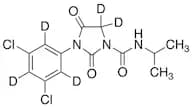
CAS:Controlled ProductApplications Labelled Iprodione. Fungicide.
References Lacroix, L., et al.: Phytiatr.-Phytopharm., 23, 165 (1974), Brenneman, T.B., et al.: Plant Dis., 71, 546 (1987),Formula:C132H5H8Cl2N3O3Color and Shape:NeatMolecular weight:335.2Nordihydrocapsaicin-d3
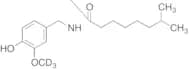
CAS:Controlled ProductApplications Nordihydrocapsaicin-d3 is labelled Nordihydrocapsaicin (N672600) which is a capsaicinoid and analog and congener of capsaicin in chili peppers.
Not a dangerous good if item is equal to or less than 1g/ml and there is less than 100g/ml in the package
References Iwai, K., et al.: Agri. Biol. Chem., 43, 2493 (1979); Kozukue, N., et al.: J. Agr. Food Chem., 53, 9172 (2005)Formula:C17H24D3NO3Color and Shape:White To Off-WhiteMolecular weight:296.42Sucrose-13C6-glu-13C6-fru
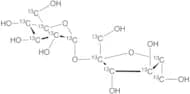
CAS:Controlled ProductApplications Labeled Sucrose (S697000). Yuanzhen sugar is a polysaccharide polymer, containing a certain amount of fructooligosaccharides.
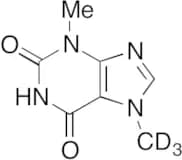
References Watanabe, T., et al.: Biosci. Biotech. Biochem., 72, 3167 (2008), You, Y., et al.: J. Agric. Food Chem., 57, 709 (2009),Formula:C12H22O11Color and Shape:NeatMolecular weight:354.2Theobromine-d3 (7-methyl-d3)
CAS:Controlled ProductApplications Theobromine-d3 (7-methyl-d3) is deuterium labelled theobromine, which is a metabolite of caffeine.
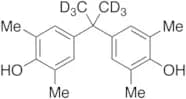
References Suto, M., et al.: Anticancer Drug Des., 6, 107 (1991); Burkart, V., et al.: Nat. Med., 5, 314 (1999); Hassa, P., et al.: J. Biol. Chem., 278, 45145 2003); Veres, B., et al.: J. Pharmacol. Exp. Ther., 310, 247 (2004)Formula:C7D3H5N4O2Color and Shape:NeatMolecular weight:183.18Tetramethyl Bisphenol A-d6
CAS:Controlled ProductFormula:C19D6H18O2Color and Shape:NeatMolecular weight:290.43Uracil-d4
CAS:Controlled ProductApplications Uracil-d4 is the labelled compound form of Uracil (U801000) which is a nitrogenous base on RNA nucleosides.
References Seth, P., et al.: J. Med. Chem., 53, 8309 (2010); Cui, H., et al.: Eur. J. Med. Chem., 45, 5140 (2010)Formula:C42H4N2O2Color and Shape:Off-WhiteMolecular weight:116.11