Deuterated Compounds
Found 4238 products of "Deuterated Compounds"
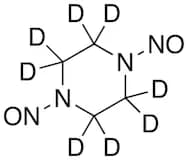
1,4-Dinitrosopiperazine-d8
CAS:Controlled ProductStability Hygroscopic
Applications Labelled 1,4-Dinitrosopiperazine. N,N'-Dinitrosopiperazine (DNP) induces nasopharyngeal carcinoma (NPC) and shows organ specificity to the nasopharyneal epithelium.
Not a dangerous good if item is equal to or less than 1g/ml and there is less than 100g/ml in the package
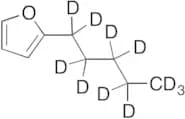
References Lanier, A., et al.: Cancer, 46, 2100 (1980), Waalkes, M., et al.: Carcinogenesis, 25, 133 (2004), Toth, E., et al.: Int. J. Cancer, 121, 1744 (2007),Formula:C4D8N4O2Color and Shape:Off-White To Light YellowMolecular weight:152.1812-Pentylfuran-d11
CAS:Controlled ProductStability Volatile
Applications 2-Pentylfuran-d11 is the labeled analogue of 2-Pentylfuran (P284953), a volatile compound that is detected in meat smoke aerosol, rice aroma and tomato paste volatiles.
Not a dangerous good if item is equal to or less than 1g/ml and there is less than 100g/ml in the package
References Rogge, W., et al.: Environ. Sci. Technol., 25, 1112 (1991); Buttery, R., et al.: J. Agric. Food Chem., 36, 1006 (1988); Buttery, R., et al.: J. Agric. Food Chem., 38, 336 (1990);Formula:C92H11H3OColor and Shape:Light YellowMolecular weight:149.27L-Allo-isoleucine-d10
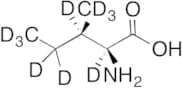
CAS:Controlled ProductApplications L-Allo-isoleucine-d10 is a derivative compound of L-allo-isoleucine (A548200), which has been suggested to induce epithelial β-defensin expression. In addition, L-allo-isoleucine is utilized in the biosynthesis pathway for coronamic acid.
References Fehlbaum, P., et al.: Proc. Natl. Acad. Sci. USA 97, 12723 (2000); Parry, R. J., et al.: J. Am. Chem. Soc. 113, 1849 (1991)Formula:C6H3D10NO2Color and Shape:White To Off-WhiteMolecular weight:141.23n-Hexatriacontane-d74
CAS:Controlled ProductApplications n-Hexatriacontane-d74 (CAS# 16416-34-5) is a useful isotopically labeled research compound.
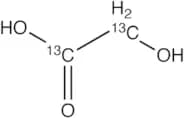
Formula:C36D74Color and Shape:NeatMolecular weight:581.43Glycolic Acid-13C2
CAS:Controlled ProductApplications Labelled Glycolic Acid (G645600). Constituent of sugar cane juice.
Not a dangerous good if item is equal to or less than 1g/ml and there is less than 100g/ml in the package
References Smyth, H.F., et al.: J. Ind. Hyg. Toxicol., 23, 259 (1941),Formula:C2H4O3Color and Shape:NeatMolecular weight:78.04Tiglic Acid-d3 (Major)
CAS:Controlled ProductApplications Labelled Tiglic acid (T440050). Tiglic acid is the stable isomer of angelic acid. Tiglic acid was found as glyceride in croton oil, as butyl ester in the oil of the Roman camomile, and as geranyl tiglate in oil of geranium. Tiglic acid is formed during the charcoaling of maple wood.
Not a dangerous good if item is equal to or less than 1g/ml and there is less than 100g/ml in the package
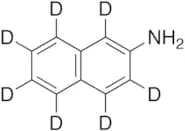
References Bueding, et al.: J. Biol. Chem., 202, 505 (1953),Formula:C52H3H5O2Color and Shape:NeatMolecular weight:103.132-Naphthylamine-d7
CAS:Controlled ProductApplications It is listed as a known human carcinogen. Used in manufacturing of dyes, as antioxidant in rubber.
Not a dangerous good if item is equal to or less than 1g/ml and there is less than 100g/ml in the package
References IARC Monographs, 4, 97 (1974),Formula:C102H7H2NColor and Shape:NeatMolecular weight:150.23N-Acetyl-S-(3-hydroxypropyl-1,1,2,2,3,3-D6)cysteine, Dicyclohexylammonium Salt
CAS:Controlled ProductApplications N-Acetyl-S-(3-hydroxypropyl-1,1,2,2,3,3-D6)cysteine Dicyclohexylammonium Salt is labelled N-Acetyl-S-(3-hydroxypropyl)cysteine Dicyclohexylammonium Salt (A179075), which is a metabolite of halopropanes.
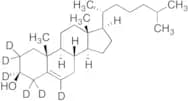
References Barnsley, E.A.: Biochem. J., 100, 362 (1966)Formula:C12H23N·C8D6H9NO4SColor and Shape:Off-WhiteMolecular weight:408.6287Cholesterol-d6
CAS:Controlled ProductStability Hygroscopic
Applications Labelled Cholesterol (C432501). Cholesterol is the principal sterol of the higher animals. Cholesterol was found in all body tissues, especial in the brain, spinal cord, and in animal fats or oils. Cholesterol is the main constituent of gallstones.
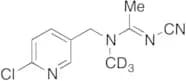
References Rosin, Z., et al.: Physiol. Chem., 124, 282 (1923), Schoenheimer, et al.: J. Biol. Chem., 105, 355 (1934), Gemant, et al.: Life Sci., 1, 233 (1962), Johnson, K., et al.: 4, 457 (1964),Formula:C272H6H40OColor and Shape:Off White SolidMolecular weight:392.69Acetamiprid-d3
CAS:Controlled ProductApplications Acetamiprid-d3 is labelled Acetamiprid (A150800), a novel neonicotinid insecticide against Holotrichia consanguinea in sugarcane. Reports show that when exposed to neonicotinid pesticides honeybees have probelms returnign home after foraging and bumblebee colonies grow poorly and produce fewer queens. Also used in Cannabis testing.
Not a dangerous good if item is equal to or less than 1g/ml and there is less than 100g/ml in the package
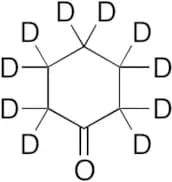
References Srivastava, A., et al.: Indian Sugar, 32, 673 (1983), Fleming, R., et al.: J. Econ. Entomol., 78, 1179 (1985), Rao, Ch.V., et al.: Pestology, 35, 47 (2011), Chem. and Eng. News 90: 10 (2012)Formula:C102H3H8ClN4Color and Shape:NeatMolecular weight:225.69Cyclohexanone-d10
CAS:Controlled ProductApplications Cyclohexanone-d10 is the isotope labelled analog of Cyclohexanone (C987980). Cyclohexanone, is an intermediate in the synthesis of CCNU, an effective antitumor agent.
Not a dangerous good if item is equal to or less than 1g/ml and there is less than 100g/ml in the package
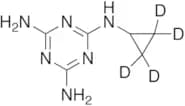
References Farmer, P.B., et al.: J. Med. Chem., 21, 514 (1978);Formula:C6D10OColor and Shape:NeatMolecular weight:108.2Cyromazine-d4
CAS:Controlled ProductStability Hygroscopic
Applications Labelled Cyromazine (C989300). Insect growth regulator. Insecticide.
References Hall, R.D., et al.: J. Econ. Entomol., 73, 564 (1980), Hart, R.J., et al.: Aust. Vet. J., 59, 104 (1982),Formula:C62H4H6N6Color and Shape:White To Light YellowMolecular weight:170.21Fenoxycarb-d3
CAS:Controlled ProductApplications A labelled form of Fenoxycarb (F248870), a carbamate insect growth regulator by preventing immature insects from reaching maturity by mimicking juvenile hormone. Used as a standard for Pesticide detection. Fenoxycarb is also used in cannabis testing kits as a component of pesticide mixes (P698235).
References El-Saeid, M.H., et al.: J. Chem., 10, (2013); Coors, A., et al.: Environ. Toxicol. Chem., 31, 1239 (2012);Formula:C17D3H16NO4Color and Shape:White SolidMolecular weight:304.365,6-Dihydro Thymine-d6
CAS:Controlled ProductApplications Isotope labelled 5,6-Dihydrothymine is a derivative of Thymine, a nucleobase in the nucleic acid of DNA. 5,6-Dihydrothymine is a radiolysis product of DNA.
References Hubbard, K. et al.: Biochemistry, 28, 4382 (1989); Cadet, J. et al.: Int. J. Rad. Biol. Rel. Stud. Phys. Chem. Med., 39, 119 (1981);Formula:C52H6H2N2O2Color and Shape:NeatMolecular weight:134.171-[(4-Chlorophenyl)phenylmethyl]piperazine-d8
CAS:Controlled ProductApplications A labelled analog of a metabolite of Cetirizine and Hydroxyzine.
Formula:C172H8H11ClN2Color and Shape:Colourless To YellowMolecular weight:294.85Guanyl Urea-15N4 Hydrochloride
CAS:Controlled ProductApplications Labelled Guanylurea. It is used for detecting and determining Ni and its separation from Co and other metals.
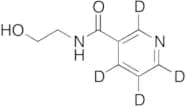
References Jacob, K.D., et al.: J. Agric. Res., 28, 37 (1924),Formula:C2H7ClN4OColor and Shape:NeatMolecular weight:142.53N-(2-Hydroxyethyl)nicotinamide-d4
CAS:Controlled ProductApplications N-(2-Hydroxyethyl)nitotinamide-d4 is labelled N-(2-Hydroxyethyl)nitotinamide (H942365), an intermediate used to prepare oxadiazole oxide derivatives as vasodilators. It is also a derivative of Nicorandil (N398500) which is an antiaginal.
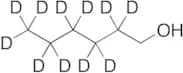
References Boschi, D., et al.: Bioorg. Med. Chem., 8, 1727 (2000); Nagai, H., et al.: Chem. Pharm. Bull., 32, 1063 (1984); Ma, C., et al.: J. Pharm. Biomed. Anal., 47, 677 (2008)Formula:C8H6D4N2O2Color and Shape:NeatMolecular weight:170.21-Hexanol-d11
CAS:Controlled ProductApplications 1-Hexanol-d11 is the labelled analogue of 1-Hexanol (H281220), a perturbing agent on actomyosin ATPase and and was found to modulate the function of actomyosin motor via intermediate-specific structural perturbation.
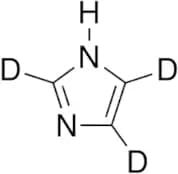
References Komatsu, H., et al.: J. Muscle. Res. Cell. Motil., 25, 77 (2004); Hua, J.F., et al.: J. Insect. Physiol., 59, 690 (2013);Formula:C6D11H3OColor and Shape:NeatMolecular weight:113.243Imidazole-d3
CAS:Controlled ProductApplications A labelled imidazole, a versatile heterocycle used in the preparation of various biologically active compounds such as the amino acid histidine and is present in many antifungal medication. It is also used extensively as a corrosion inhibitor on transition metals such as copper.
Not a dangerous good if item is equal to or less than 1g/ml and there is less than 100g/ml in the package
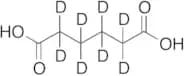
References Arispe, N. et al.: Biophys. J., 95, 4879 (2008); Troesken, E.R. et al.: Endo. Res., 30, 387 (2004); Otmacic Curkovic, H. et al.: Corr. Sci., 51, 2342 (2009);Formula:C3HD3N2Color and Shape:NeatMolecular weight:71.1Adipic Acid-D8
CAS:Controlled ProductApplications Adipic Acid-D8 is a labelled analogue of Adipic acid (A291590), a chemical used in the synthesis of nylon.
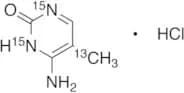
References Kim, Y. et al.: Ind. Eng. Chem. Res., 51, 15801 (2012)Formula:C6D8H2O4Color and Shape:NeatMolecular weight:154.195-Methyl Cytosine-13C,15N2 Hydrochloride
CAS:Applications A labelled derivative of Dibarbituric acid.
References Hitchings, G.H., et al.: J. Biol. Chem., 177, 357 (1949),Formula:CC4H715N2NO·ClHColor and Shape:NeatMolecular weight:164.57Molinate-d5
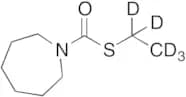
CAS:Controlled ProductApplications Isotope labelled Molinate (M486477), which is a herbicide that is used to control broad-leaved and grassy plants in rice and other crops (1,2). Drinking water contaminant candidate list 3 (CCL 3) compound as per United States Environmental Protection Agency (EPA), environmental, and food contaminants.
Not a dangerous good if item is equal to or less than 1g/ml and there is less than 100g/ml in the package
References 1. Nacher-Mestre, J. et al.: J. Agri. Food. Chem. 2014 Mar 12;62(10):2165-742. Sugrue, E. et al.: Appl. Environ. Microbiol. 2015 Apr;81(7):2612-24.Formula:C9H12D5NOSColor and Shape:Light Yellow To YellowMolecular weight:192.33Ethyl Butyrate-d3
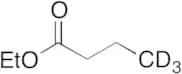
CAS:Controlled ProductApplications Isotope labelled Ethyl Butyrate is used in the preparation of novel 2-cyanopyrimidines as cathespin K inhibitors. Also used in the synthesis of pyridobenzimidazole derivatives exhibiting antifungal activity by the inhibition of β-1,6-glucan.
Not a dangerous good if item is equal to or less than 1g/ml and there is less than 100g/ml in the package
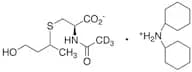
References By Rankovic, Z. et al.: Bioorg. Med. Chem. Lett.,, 20, 1524 (2010); Takeshita, H. et al.: Bioorg. Med. Chem. Lett., 20, 3893 (2010);Formula:C62H3H9O2Color and Shape:ColourlessMolecular weight:119.18N-Acetyl-d3-S-(3-hydroxypropyl-1-methyl)-L-cysteine Dicyclohexylammonium Salt
CAS:Controlled ProductApplications A deuterated metabolite of Crotonaldehyde.
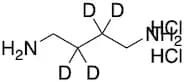
References Gray, J.M., and Barnsley, E.A.: Xenobiotica, 1, 55 (1971),Formula:C21H37D3N2O4SColor and Shape:WhiteMolecular weight:419.641,4-Butane-2,2,3,3-d4-diamine 2HCl
CAS:Controlled ProductApplications 1,4-Butane-2,2,3,3-d4-diamine 2HCl (CAS# 88972-24-1) is a useful isotopically labeled research compound.
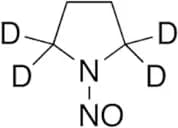
Formula:C4H10D4Cl2N2Color and Shape:White To Off-WhiteMolecular weight:165.0981-Nitrosopyrrolidine-d4
CAS:Controlled ProductApplications Isotope Labelled 1-Nitrosopyrrolidine (N545950), which is one of the N-nitroso compounds (NOCs) implicated in human colon carcinogenesis, but the toxicological mechanisms involved have not been elucidated. Drinking water contaminant candidate list 3 (CCL 3) compound as per United States Environmental Protection Agency (EPA), environmental, and food contaminants.
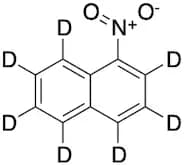
References 1. Singer, S. et al.: J. Med. Chem. 1985 Aug;28(8):1088-93.2. Tomatis, L. et al.: Carcinogenesis. 1997 Jan;18(1):97-105.3. Helguera, A. et al.: Toxicol Appl Pharmacol. 2007 Jun 1;221(2):189-202.Formula:C42H4H4N2OColor and Shape:YellowMolecular weight:104.141-Nitronaphthalene-d7
CAS:Controlled ProductApplications 1-Nitronaphthalene-d7 is a useful labeled compound in the regioselective preparation of naphtho[1,8-bc]pyridines.
References Yan, K., et al.: Advanced Synthesis & Catalysis, 361, 1570 (2019)Formula:C10D7NO2Color and Shape:NeatMolecular weight:180.21L-Methionine-13C5
CAS:Controlled ProductApplications L-Methionine-13C5 is the isotope labelled analog of L-Methionine, which is an essential aminoacid for human development. Hepatoprotectant; antidote (acetominophen poisoning); urinary acidifier.
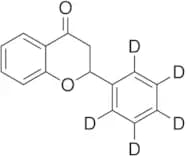
References Benevenga, N.J., et al.: J. Agric. Food Chem., 22, 2 (1974), Fleisher, L.D., et al.: Clin. Endocrinol. Metab., 3, 37 (1974), Meinnel, T., et al.: Biochimie, 75, 1061 (1993),Formula:C5H11NO2SColor and Shape:NeatMolecular weight:154.175Flavanone-d5
CAS:Controlled ProductApplications Labelled Propafenone (P757500) impurity.
References Kitagawa, S., et al.: Biol. Pharm. Bull., 29, 1 (2006), Boccard, J., et al.: Eur. J. Pharm. Sci., 36, 254 (2009)Formula:C15H7D5O2Color and Shape:NeatMolecular weight:229.29L-(+)-Lactic Acid-13C3 Sodium Salt (20% W/W in H2O)
CAS:Applications L-(+)-Lactic Acid-13C3 Sodium Salt is the isotope labelled analog of L-(+)-Lactic Acid Sodium Salt. Sodium Salt of Lactic Acid (L113500). L-Lactic Acid occurs in small quantities in the blood and muscle fluid of man and animals. The lactic acid concentration increases in muscle and blood after vigorous activity. L-(+)-Lactic acid is also present in liver, kidney, thymus gland, human amniotic fluid, and other organs and body fluids.
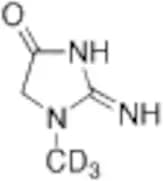
References Borsook, et al.: J. Biol. Chem., 102, 449 (1933); Brin, M., et al.: Ann. N.Y. Acad. Sci., 119, 851 (1965);Formula:C3H5O3·NaColor and Shape:ColourlessMolecular weight:115.04Creatinine-D3
CAS:Controlled ProductApplications Labelled Creatinine. The end product of creatine catabolism. Normal constituent of urine. Also found together with creatine in muscle tissues and blood. Occurs in all soils and in grain seeds and other vegetable matter. Has been found in certain fish and in crab meat extract.
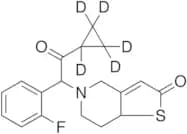
References Folin, et al.: J. Biol. Chem., 17, 463 (1914),Formula:C42H3H4N3OColor and Shape:Off-WhiteMolecular weight:116.14Prasugrel Thiolactone-d5 (Mixture of Diastereomers)
CAS:Controlled ProductApplications A labelled inactive metabolite of Prasugrel (P701150).
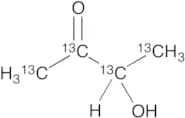
References Sugidachi, A., et al.: Br. J. Pharmacol., 129, 1439 (2000); Takahashi, S., et al.: J. Pharm. Sci., 97, 5434 (2008); Williams, E., et al.: Drug Metab. Dispos., 36, 1227 (2008); Hagihara, K., et al.: Xenobiotica, 39, 218 (2009);Formula:C18H13D5FNO2SColor and Shape:NeatMolecular weight:336.44Acetoin-13C4
CAS:Applications Acetoin-13C4 is the labeled analogue of the unlabeled (A163775), which is used in food flavoring and fragrances and is also found in some fruits and vegetables.
Not a dangerous good if item is equal to or less than 1g/ml and there is less than 100g/ml in the package
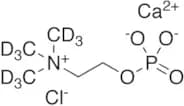
References Dutta, S.M. et al.: Ind. J. Dairy Sci., 24, 107 (1971);Formula:C4H8O2Color and Shape:NeatMolecular weight:92.08Phosphocholine-d9 Chloride Calcium Salt
CAS:Controlled ProductStability Hygroscopic
Applications Labelled Phosphocholine Chloride, a specific promoter of heparin and serum β-lipoprotein interaction. Phosphocholine Chloride protected the membranes of platelets, erythrocytes, and lysosomes against the labilizing action of various known membrane labilizers.
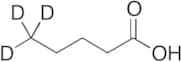
References Mookerjea, S. et al.: Biochem. Res. Biophys. Res. Comm., 53, 580 (1973); Caputi, A.P. et al.: Boll. Chim. Farmac., 117, 553 (1978):Formula:C5H4D9CaClNO4PColor and Shape:NeatMolecular weight:266.72Pentanoic-5,5,5-d3 Acid
CAS:Controlled ProductApplications Pentanoic-5,5,5-d3 Acid acts as a reagent used in the isomerization and fragmentation of pentanoic and methylbutanoic acid cation radicals in gas phase.
Not a dangerous good if item is equal to or less than 1g/ml and there is less than 100g/ml in the package
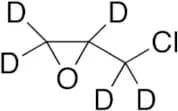
References Audier, H., et al.: Bull. Soc. Chim. Fr., 5, 833 (1985)Formula:C5D3H7O2Color and Shape:NeatMolecular weight:105.15Epichlorohydrin-d5
CAS:Controlled ProductApplications Used as a solvent for natural and synthetic resins, gums, cellulose esters and ethers, paints, varnishes, nail enamels and lacquers, cement for Celluloid. Also, it is used as stabilizer.
Not a dangerous good if item is equal to or less than 1g/ml and there is less than 100g/ml in the package
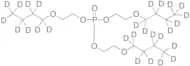
References Smyth, H.F., et al.: J. Ind. Hyg. Toxicol., 30, 63 (1948),Formula:C32H5ClOColor and Shape:NeatMolecular weight:97.56Tris(2-butyloxyethyl)phosphate-d27
CAS:Controlled ProductApplications Tris(2-butyloxyethyl)phosphate-d27 is the isotope analog of Tris(2-butyloxyethyl)phosphate. Tris(2-butyloxyethyl)phosphate,is an organophosphate, that can be used in the preparation of flame retardant, such as viscose fiber.
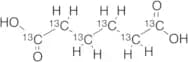
References Wang, Y., et al.: Fangzhi Xuebao, 33, 16 (2012); Xiaoshan, L. et al.: Aquatic Toxicology, 114, 173 (2012);Formula:C18H12D27O7PColor and Shape:ColourlessMolecular weight:425.64Adipic Acid-13C6
CAS:Applications Adipic Acid-13C6 is labelled Adipic Acid (A291590) which is primarily used in the synthesis of nylon. It has been used as a reagent in the solid-state polymerization of nylon analogs.
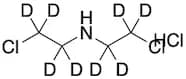
References Kim, Y. et al.: Ind. Eng. Chem. Res., 51, 15801 (2012)Formula:C6H10O4Color and Shape:NeatMolecular weight:152.1Bis(2-chloroethyl)-d8-amine HCl
CAS:Controlled ProductApplications Bis(2-chloroethyl)-d8-amine HCl (CAS# 102092-04-6) is a useful isotopically labeled research compound.
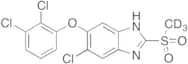
Formula:C4H2D8Cl3NColor and Shape:NeatMolecular weight:186.53Triclabendazole Sulfone-D3
CAS:Controlled ProductApplications Triclabendazole Sulfone-D3 is a stable isotopically labelled metabolite of Triclabendazole (T774175), an anthelmintic.
References Wolff, K., et al.: Vet. Parasitol., 13, 145 (1983)Formula:C14D3H6Cl3N2O3SColor and Shape:NeatMolecular weight:394.68Potassium Thiocyanate-13C,15N
CAS:Controlled ProductStability Moisture Sensitive
Applications Isotope labelled Potassium Thiocyanate has been used as a catalyst in a one-pot reaction of dialkyl acetylenedicarboxylates with indane-1,3-dione. Potassium Thiocyanate has been used as a selective bacterial inhibitor to create ESS-3 broth to allow co-enrichment of the target pathogens and suppress growth of some non-target pathogens
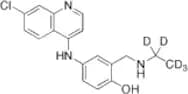
References Hassanabadi, A., Zhiani, R., et. al.: J. Chem. Res., 37, 458 (2013); Zhang, Q., et. al.: Plant. Biotech., 29, 103 (2012)Formula:C15NS·KColor and Shape:NeatMolecular weight:99.17N-Desethyl Amodiaquine-d5
CAS:Controlled ProductApplications A labelled metabolite of Amodiaquine (A634200), an antimalarial.
References Bayliss, M., et al.: Xenobiotica, 29, 253 (1999), Projean, D., et al.: Drug Metab. Dispos., 31, 748 (2003), Bray, P., et al.: Mol. Microbiol., 56, 323 (2005), Xiang, H., et al.: J. Pharm. Sci., 95, 2657 (2006),Formula:C18H13D5ClN3OColor and Shape:Light Yellow To BrownMolecular weight:332.84Chrysene-d12
CAS:Controlled ProductApplications Labelled Chrysene (C428000). Chrysene occurs in coal tar. Is formed during distillation of coal, in very small amount during distillation or pyrolysis of many fats and oils. Chrysene is one of the basic polycyclic aromatic hydrocarbon (PAH) which is toxic environmental pollutant and consistently exposed to sunlight. However, little information is available on its photogenotoxicity. The objective of the present study was to analyze the effects of Chrysene, under environmental intensity of UVB (0.6 mW/cm2) in human skin epidermal cell line (HaCaT).
Not a dangerous good if item is equal to or less than 1g/ml and there is less than 100g/ml in the package
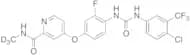
References Anderson, D., et al.: Mutat. Res., 307, 261 (1994), Diamond, S., et al.: Environ. Toxicol. Chem., 25, 3015 (2006), Fotakis, G., et al.: Toxicol. Lett., 160, 171 (2006),Formula:C182H12Color and Shape:White To Off-WhiteMolecular weight:240.36Regorafenib-d3
CAS:Controlled ProductApplications Regorafenib-d3 is the isotope labelled analog of Regorafenib (R143000); a compound that inhibits PDGFR tyrosine kinase with IC50=83nM and is useful for the treatment of inflammation. Also an anti-proliferative agent.
Not a dangerous good if item is equal to or less than 1g/ml and there is less than 100g/ml in the package
References Leuner, C., et al.: Eur. J. Pharm. Biopharm., 50, 47 (2000)Formula:C21H12D3ClF4N4O3Color and Shape:NeatMolecular weight:485.83Propanoic-13C3 Acid
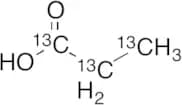
CAS:Applications Propanoic-13C3 Acid is labelled Propionic Acid (P786360) which is used in the synthesis of novel inhibitors of signal transducer and activator of transcription 3 signaling pathway in the potential treatment of human cancers. In addition it is used in the synthesis of morphans.
Not a dangerous good if item is equal to or less than 1g/ml and there is less than 100g/ml in the package
References Zhang, M. et al.: Eur. J. Med. Chem., 62, 301 (2013); Bradshaw, B. et al.: Org. Lett., 15, 2458 (2013)Formula:C3H6O2Color and Shape:Clear ColourlessMolecular weight:77.06Benzhydrol-d5
CAS:Controlled ProductApplications Intermediate in the preparation of labelled Modafinil (M482500).
References Kumar, C., et al.: Eur. J. Med. Chem., 44, 1223 (2009),Formula:C13D5H7OColor and Shape:NeatMolecular weight:189.262-Furoic Acid-d3
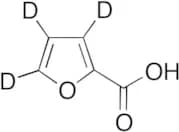
CAS:Controlled ProductApplications 2-Furoic Acid-d3 is the labeled analogue of 2-Furoic Acid (F863775), a heterocyclic carboxylic acid that is widely used in food products as a preservative and flavouring agent.
References Hall, I.H., et al.: Arch, Pharm., 326, 15 (1993)Formula:C5D3HO3Color and Shape:NeatMolecular weight:115.12,4,7,9-Tetramethyl-5-decyne-4,7-diol-d10
CAS:Controlled ProductApplications A labelled acetylene glycol derivative. It is used in water-based coatings and has both antifoaming and surfactant properties. It is highly toxic and have been found in acrylic adhesives used for food packaging multilayers manufacturing.
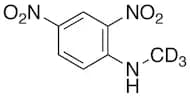
References Schwartz, J. et al.: J. Coat. Tecnhol., 67, 21 (1995); Chinoy, N.F. et al.: Polym. Paint Colour J., 175, 438 (1985);Formula:C14D10H16O2Color and Shape:NeatMolecular weight:236.417N-Methyl-2,4-dinitroaniline-d3
CAS:Controlled ProductApplications N-Methyl-2,4-dinitroaniline-d3 (cas# 91808-45-6) is a compound useful in organic synthesis.
Not a dangerous good if item is equal to or less than 1g/ml and there is less than 100g/ml in the packageFormula:C7H4D3N3O4Color and Shape:BrownMolecular weight:200.17Sodium Trifluoroacetate-13C2
CAS:Controlled ProductStability Very Hygroscopic
Applications Labelled Sodium Trifluoroacetate, a compound used as an intermediate for various pharmaceutical, agricultural and chemical applications.Formula:C2F3NaO2Color and Shape:NeatMolecular weight:137.99





![1-[(4-Chlorophenyl)phenylmethyl]piperazine-d8](/_next/image/?url=https%3A%2Fstatic.cymitquimica.com%2Fproducts%2FTR%2Fthumb-webp%2FC379577.webp&w=3840&q=75)