


Deuterated Compounds
Found 4238 products of "Deuterated Compounds"
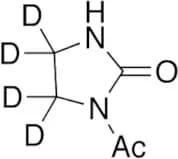
N-Acetylethylene Urea-d4
CAS:Controlled ProductApplications N-Acetylethylene Urea-d4 (cas# 1189701-94-7) is a compound useful in organic synthesis.
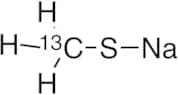
Formula:C5H4H4N2O2Color and Shape:NeatMolecular weight:132.15Sodium Methanethiolate-13C
CAS:Controlled ProductApplications Sodium Methanethiolate-13C, is the labeled analogue of Sodium Methanethiolate (S644805), used as a nucleophile in organic synthesis. Sodium methanethiolate is also being used as a reagent to synthesize thiol-based suberoylanilide hydroxamic acid (SAHA) analogues, compounds that act as potent histone deacetylase inhibitors.
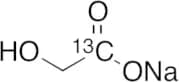
References Bergman, A. & Wachtmeister, Chemosphere, 7, 949 (1978); Suzuki, T.,et al.: Bioorg. Med. Chem. Lett., 14, 3313 (2004)Formula:CH3NaSPurity:>90%Color and Shape:NeatMolecular weight:71.082Glycolic Acid-13C Sodium Salt
CAS:Controlled ProductApplications Glycolic Acid-13C Sodium Salt is the isotope labelled analog of Glycolic Acid Sodium Salt; a compound that increases the glycolate oxidase activity in the liver when fed to rats. It also increases the lactate dehydrogenase activity in the liver and kidney. This compound is suitable for lactate dehydrogenase (LDH) related research.
References Murthy M.S.R., et al.: Ann. Nutr. Metab., 27, 355 (1983)Formula:CCH3NaO3Color and Shape:NeatMolecular weight:99.026p-Cresol-(methyl-13C)
CAS:Controlled ProductApplications The formation of p-Cresol-(methyl-13C) via phenol methylation at higher temperature from the deactivation of basic catalyst.
Not a dangerous good if item is equal to or less than 1g/ml and there is less than 100g/ml in the package
References Borodina, I. B., et al.: Russ. J. Phys. Chem., 80, 892-898 (2006)Formula:CC6H8OColor and Shape:NeatMolecular weight:109.13rac 1,2-Bis-palmitoyl-3-chloropropanediol-D5
CAS:Controlled ProductRac-1,2-Bis-palmitoyl-3-chloropropanediol (rac1,2BPC) is a dispersive compound that has been used in the experimental phase of extraction. It has been shown to be efficient in the quantification and screening of fatty acids. Rac1,2BPC has also been used as a spiking agent for food samples to identify contaminants. The recoveries have been validated and linearity has been demonstrated. Rac1,2BPC is an anion that can be quantified by liquid chromatography with wavelength detection at 202 nm.
Formula:C35H62D5ClO4Purity:Min. 95%Molecular weight:592.38 g/molRef: 3D-FB171239
Discontinued productDimethyl sulfoxide-d6
CAS:Controlled ProductDimethyl sulfoxide-d6, commonly called deuterated DMSO or DMSO-d6, differs isotopically from dimethyl sulfoxide (DMSO), in that the hydrogen atoms have been substituted by deuterium isotopes (2D). Dimethylsulfoxide-d6 is extensively used as an NMR solvent, which shows a characteristic shift observed at 2.50 ppm in 1H-NMR.
Formula:C2D6OSPurity:95%MinMolecular weight:84.17 g/molAllopurinol-d2
CAS:Allopurinol-d2 is an inhibitor of xanthine oxidase, which is an enzyme that catalyzes the conversion of hypoxanthine to xanthine and then to uric acid. Allopurinol-d2 is used for the treatment of gout and hyperuricemia. The compound was expressed in Escherichia coli and purified by electrospray ionization mass spectrometry. It has been shown to inhibit methyltransferase activity, thereby decreasing the production of urate. Allopurinol-d2 has also been shown to decrease disease activity in animal models of colitis and ulcerative colitis.
Formula:C5H2D2N4OPurity:Min. 95%Molecular weight:138.12 g/molRef: 3D-FA162226
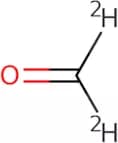
Discontinued productFormaldehyde-d2 solution, 20 wt. % in D2O
CAS:Controlled ProductFormaldehyde-d2 solution is a formaldehyde solution that contains deuterium, which has the same chemical properties as hydrogen but has an additional neutron in its nucleus. Formaldehyde-d2 solution is used to prepare samples for NMR and ESI-MS experiments. The reaction mechanism of formaldehyde is believed to be an acid-catalyzed hydrolysis of the hydrogen bond between formaldehyde and methanol. Deuterium isotopes are generally considered to be non-radioactive and have little or no effect on biological systems. Formaldehyde-d2 solution can inhibit fatty acids from binding to the surface of potatoes, which may make it useful in treating autoimmune diseases.Formula:CD2OPurity:Min. 95%Color and Shape:Clear LiquidMolecular weight:32.04 g/molDideuterosulfuric acid
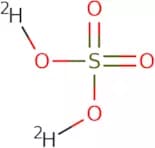
CAS:Controlled ProductDideuterosulfuric acid is a protonated molecule that is found in the tropone class of organic compounds. It has been shown to have optical properties similar to those of ferrocene, which is why it is often used as a replacement for this compound. Dideuterosulfuric acid has been studied extensively using a kinetic method with the goal of determining its mechanism and rate constants. Hydroxyl groups are found on the molecule's trifluoroacetic acid side chains, which may contribute to its reactivity with chloride ions and nitrogen atoms. Electrophotographic measurements show that hydrogen bonding occurs between molecules in dilute solutions.
Formula:D2SO4Purity:Min. 95%Molecular weight:100.09 g/molRef: 3D-FD167508
Discontinued productAlprazolam-D5 solution (100 ug/ml in methanol)
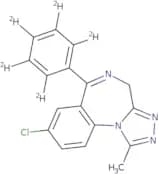
CAS:Controlled ProductAlprazolam is a benzodiazepine drug used as an anxiolytic, anticonvulsant, and sedative. It is one of the most commonly prescribed drugs in the United States. Alprazolam-d5 solution is a solution that contains alprazolam labeled with D5. It can be used for wastewater treatment to identify the presence of trifluoroacetic acid (TFA) in wastewater samples. The dispersive solid-phase extraction method was validated for use with this labeled compound by detecting alprazolam-d5 at concentrations of 0.0025 µg/mL or less in urine samples within 10 minutes. Alprazolam-d5 solution has been shown to be stable in acidic pH environments and can be used for detection times up to 2 hours.
Formula:C17H8ClD5N4Purity:Min. 95%Color and Shape:Clear LiquidMolecular weight:313.8 g/mol1a,25-Dihydroxy vitamin D2
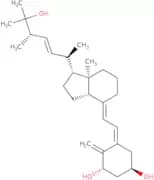
CAS:1a,25-Dihydroxy vitamin D2 is a compound that exhibits various characteristics and applications. It is known for its bioavailability and water-soluble properties, making it easily absorbed by the body. This compound has been extensively studied in the field of research chemicals. One of the notable features of 1a,25-Dihydroxy vitamin D2 is its potential therapeutic effects on ganglioside GM2-related disorders. It has been shown to interact with GM2 activator proteins and fatty acids, which are involved in the metabolism of GM2 gangliosides. This interaction may have implications for the treatment of certain neurological conditions. Additionally, 1a,25-Dihydroxy vitamin D2 has been investigated for its role in modulating immune responses and inflammatory processes. Studies have suggested that this compound can inhibit the production of pro-inflammatory substances like prostaglandins, offering potential anti-inflammatory benefits. Moreover, 1a,25-Dihydroxy vitamin D
Formula:C28H44O3Purity:Min. 95%Color and Shape:White PowderMolecular weight:428.65 g/molRef: 3D-FD22066
Discontinued productHalobetasol propionate-d3
CAS:Controlled ProductHalobetasol propionate-d3 is a biocompatible polymer that binds to the effector proteins of the inflammatory response. It is used in the treatment of inflammatory bowel disease, psoriasis, and other skin diseases. Halobetasol propionate-d3 has been shown to be effective against plaque and cutaneous lesions in patients with psoriasis. This drug also inhibits the production of proinflammatory cytokines (IL-1β, IL-6, IL-8) and chemokines (MCP-1) by monocytes. The drug has been shown to be effective against autoimmune diseases due to its ability to inhibit TNFα production from macrophages. Halobetasol propionate-d3 is compatible with blood group A, B, and AB.
Formula:C25H31ClF2O5Purity:Min. 95%Molecular weight:484.96 g/molNifursol-15N2,d2
CAS:Controlled ProductPlease enquire for more information about Nifursol-15N2,d2 including the price, delivery time and more detailed product information at the technical inquiry form on this page
Formula:C12H5D2N3N2O9Purity:Min. 95%Molecular weight:365.21 g/mol7-Hydroxy-4-cholesten-3-one-D7
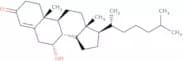
CAS:Controlled Product7-Hydroxy-4-cholesten-3-one-D7 (7OHCD7) is a metabolite of the bile acid, cholic acid. It is generated by the action of cholesterol 7α hydroxylase on cholesterol in the liver. It is excreted in bile, which is then absorbed back into the body from the gut and used for energy metabolism. 7OHCD7 has been shown to be an inhibitor of histone deacetylases, which are enzymes that regulate gene transcription. This inhibition leads to increased transcriptional regulation and reduced inflammatory responses in bowel disease models. 7OHCD7 has also been shown to increase cholesterol levels and reduce inflammation in humans with metabolic syndrome.
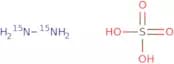
Formula:C27H44O2Purity:Min. 95%Molecular weight:400.64 g/molHydrazine sulfate-15N2
CAS:Controlled ProductHydrazine sulfate-15N2 is a trimethylsilylated hydrazine sulfate. It is used as an intermediate for the synthesis of N-trimethylsilylhydrazines and other trimethylsilylhydrazines. The compound can also be used to prepare glutamine as it reacts with dl-glutamine to form hydroxylamine, which then reacts with hydrogen sulfide to form glutathione. Hydrazine sulfate-15N2 is mainly used as a catalyst in the production of nitric acid from ammonia and oxygen gas.
Formula:H4N2·H2O4SPurity:Min. 95%Color and Shape:PowderMolecular weight:132.11 g/mol([D8]Val7·10)-C-Peptide (human)
CAS:Controlled ProductPlease enquire for more information about ([D8]Val7·10)-C-Peptide (human) including the price, delivery time and more detailed product information at the technical inquiry form on this pageFormula:C129H195D16N35O48Purity:Min. 95%Molecular weight:3,036.35 g/molRef: 3D-FV109221
Discontinued productH-[15N]Tyr-OH
CAS:H-[15N]Tyr-OH is a metabolite of tyrosine. It is the conjugate acid of propionic acid, and the conjugate base of 4-hydroxybenzyl. H-[15N]Tyr-OH is a phenylalanine and aromatic amino acid that has an aromatic ring with a phenyl substituent. This metabolite is hydroxy, which means it has one hydroxyl group on the phenyl ring. H-[15N]Tyr-OH binds to daphnia in vivo, causing death. The cause for this may be due to its ability to react with oxygen, forming reactive oxygen species (ROS).
Purity:Min. 95%([ring-D5]Phe6)-Somatostatin-14
Please enquire for more information about ([ring-D5]Phe6)-Somatostatin-14 including the price, delivery time and more detailed product information at the technical inquiry form on this pageFormula:C76H99D5N18O19S2Purity:Min. 95%Molecular weight:1,642.91 g/molRef: 3D-FR110019
Discontinued product







![([D8]Val7·10)-C-Peptide (human)](/_next/image/?url=https%3A%2Fstatic.cymitquimica.com%2Fproducts%2F3D%2Fthumb-webp%2FFV109221.webp&w=3840&q=75)
![H-[15N]Tyr-OH](/_next/image/?url=https%3A%2Fstatic.cymitquimica.com%2Fproducts%2F3D%2Fthumb-webp%2FFT107850.webp&w=3840&q=75)
![([ring-D5]Phe6)-Somatostatin-14](/_next/image/?url=https%3A%2Fstatic.cymitquimica.com%2Fproducts%2F3D%2Fthumb-webp%2FFR110019.webp&w=3840&q=75)