Organic Halides
Subcategories of "Organic Halides"
Found 20442 products of "Organic Halides"
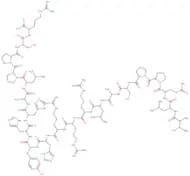
pTH (28-48) (human) trifluoroacetate salt
CAS:Please enquire for more information about pTH (28-48) (human) trifluoroacetate salt including the price, delivery time and more detailed product information at the technical inquiry form on this page
Formula:C95H150N28O29Purity:Min. 95%Molecular weight:2,148.38 g/molRef: 3D-FP109111
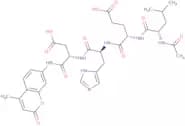
Discontinued productAc-Leu-Glu-His-Asp-AMC trifluoroacetate salt
CAS:Ac-Leu-Glu-His-Asp-AMC trifluoroacetate salt is a synthetic peptide that is derived from the amino acid sequence of caspases. Ac-Leu-Glu-His-Asp-AMC trifluoroacetate salt induces apoptosis in insect and E. coli cells by protease activity, which leads to cell death. The sequence of this peptide is found in Drosophila melanogaster and has been shown to induce apoptosis in insect cells. Caspases are enzymes that regulate apoptosis and play a key role in cell death.
Formula:C33H41N7O11Purity:Min. 95%Molecular weight:711.72 g/molRef: 3D-FA110585
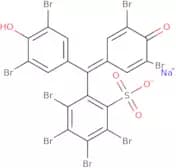
Discontinued productTetrabromophenol blue sodium salt
CAS:Tetrabromophenol blue sodium salt is a dye that is used as an additive in the production of vinyl alcohol polymer films. Tetrabromophenol blue sodium salt can be used to measure albumin concentration and postexposure by adding phenyl groups to the molecule. The color of tetrabromophenol blue sodium salt changes upon exposure to radiation, which makes it useful for diagnostic purposes. It also has a hydrocarbon group that transforms into an insoluble form when exposed to evaporation, making it useful for titration methods. Tetrabromophenol blue sodium salt is relatively stable and labile in nature, making it susceptible to techniques such as pyrolysis, oxidation, or reduction.
Formula:C19H5Br8NaO5SPurity:Min. 95%Molecular weight:1,007.53 g/molRef: 3D-FT147404
Discontinued productH-Trp-Lys-Tyr-Met-Val-D-Met-NH2 trifluoroacetate salt
CAS:Please enquire for more information about H-Trp-Lys-Tyr-Met-Val-D-Met-NH2 trifluoroacetate salt including the price, delivery time and more detailed product information at the technical inquiry form on this pageFormula:C41H61N9O7S2·C2HF3O2Purity:Min. 95%Molecular weight:970.13 g/molTLQP-21 (human) trifluoroacetate salt
CAS:Please enquire for more information about TLQP-21 (human) trifluoroacetate salt including the price, delivery time and more detailed product information at the technical inquiry form on this page
Formula:C110H176N40O27Purity:Min. 95%Molecular weight:2,490.83 g/molRef: 3D-FT110031
Discontinued productPeptide YY (3-36) (human) trifluoroacetate salt
CAS:Peptide YY (3-36) (human) trifluoroacetate salt H-Ile-Lys-Pro-Glu-Ala-Pro-Gly-Glu-Asp-Ala-Ser-Pro-Glu-Glu-Leu-Asn -Arg -Tyr -Tyr -Ala -Ser -Leu -Arg
Peptide YY (3.36) is a peptide hormone that is secreted by L cells in the small intestine and colon. It has been shown to be an effective treatment for obesity, type 2 diabetes, and other metabolic disorders. Peptide YY (3.36) has been shown to increase insulin sensitivity, reduce food intake and body weight, increase metabolic rate, and improve glucose homeostasis in animal studies. In humans, it has been found to have similar effects on postprandial plasma levels of peptide YY (3.Formula:C180H279N53O54Purity:Min. 95%Molecular weight:4,049.47 g/molRef: 3D-FP110326
Discontinued productpTH (1-84) (rat) trifluoroacetate salt
Please enquire for more information about pTH (1-84) (rat) trifluoroacetate salt including the price, delivery time and more detailed product information at the technical inquiry form on this page
Formula:C406H670N122O126S3Purity:Min. 95%Molecular weight:9,372.61 g/molRef: 3D-FP109826
Discontinued product3-Bromo-4-chloroaniline
CAS:3-Bromo-4-chloroaniline is a chloroaniline compound. It is synthesized by reacting hexamethylenetetramine with chlorine gas in the presence of formaldehyde and paraformaldehyde. 3-Bromo-4-chloroaniline has been used to produce other compounds, such as trimethylchlorosilane, which is used in the production of silicone rubber. Chloroanilines are toxic chemicals that can be found in the environment and react with formaldehyde to produce carcinogenic substances called halofuginones.
Formula:C6H5BrClNPurity:Min. 95%Molecular weight:206.47 g/molpTH (7-84) (human) trifluoroacetate salt
Please enquire for more information about pTH (7-84) (human) trifluoroacetate salt including the price, delivery time and more detailed product information at the technical inquiry form on this page
Formula:C381H629N119O115S2Purity:Min. 95%Molecular weight:8,780.94 g/molRef: 3D-FP108873
Discontinued product3-Amino-4-fluorobenzoic acid
CAS:3-Amino-4-fluorobenzoic acid is a hydrocarbon that is used as an analgesic. It has been shown to be nontoxic and has analgesic effects in the intestinal tract. 3-Amino-4-fluorobenzoic acid also has radiopaque properties, which makes it useful for diagnosis and treatment of certain types of cancer and other tumors. The analgesic effect of 3-amino-4-fluorobenzoic acid may be due to its ability to act as a competitive antagonist at the N -methyl--aspartate (NMDA) receptor, which is important in pain perception.
Formula:C7H6FNO2Purity:Min. 95%Molecular weight:155.13 g/molRef: 3D-FA64177
Discontinued product3-Fluoro-2-nitrobenzaldehyde
CAS:3-Fluoro-2-nitrobenzaldehyde is a pyridine derivative that has been used in the synthesis of a number of important heterocyclic compounds. This compound can be prepared by reacting 3,4-dichloroaniline with nitrous acid and then hydrolyzing the resulting 3-chloroquinoline with hydrochloric acid. The reaction yields anilines and quinolines in regiospecifically, as well as formylation, cyclisation, and condensation products. It is also capable of aromatisation reactions with benzene to produce benzofuran derivatives.
Formula:C7H4FNO3Purity:Min. 95%Color and Shape:Yellow PowderMolecular weight:169.11 g/molRef: 3D-FF67734
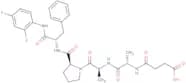
Discontinued productSuc-Ala-Ala-Pro-Phe-2,4-difluoroanilide
CAS:Please enquire for more information about Suc-Ala-Ala-Pro-Phe-2,4-difluoroanilide including the price, delivery time and more detailed product information at the technical inquiry form on this page
Formula:C30H35F2N5O7Purity:Min. 95%Molecular weight:615.63 g/molRef: 3D-FS110944
Discontinued product4-Bromoisoindoline hydrochloride
CAS:4-Bromoisoindoline hydrochloride (BII) is a chemical compound that can be used as a building block for making other chemicals. It can also be used to make research chemicals or as a reaction component in the synthesis of other compounds. It has been shown to be an effective reagent and is useful for the production of fine chemicals with high purity.
Formula:C8H9BrClNPurity:Min. 95%Color and Shape:PowderMolecular weight:234.52 g/mol9-Fluorenone hydrazone
CAS:9-Fluorenone hydrazone is a compound that belongs to the group of chemical compounds known as heterocycles. It can be synthesized by reacting 9-fluorenone with hydrazine. The synthesis proceeds via an intramolecular hydrogen transfer reaction, which forms an unsymmetrical aldehyde. This aldehyde is oxidized to form the corresponding hydrazone through protonation and subsequent attack of a nitrogen nucleophile. Hydrazones are important for their antimicrobial properties and are used in the treatment of bacterial infections such as tuberculosis and leprosy. They are also used in the production of dyes and pharmaceuticals. The mechanism for this reaction involves the formation of an intermediate carbocation, followed by deprotonation to form the final product.
Formula:C13H10N2Purity:Min. 95%Color and Shape:Yellow PowderMolecular weight:194.23 g/molNociceptin trifluoroacetate salt
CAS:Nociceptin trifluoroacetate salt is an opioid with low potency that is used in the treatment of pain. It has been shown to bind to the protein and inhibit protease, which has been proposed as a possible mechanism for its analgesic effects. Nociceptin trifluoroacetate salt may also have indirect effects on brain functions by regulating levels of nociceptin, a neuropeptide that interacts with nociceptive neurons in the brain. This drug has been shown to have nootropic effects in mice, including increased locomotor activity and improved memory retention. Nociceptin trifluoroacetate salt inhibits kappa-opioid receptors and is therefore used as a pharmacological tool for research into opioid receptor function.
Formula:C79H129N27O22Purity:Min. 95%Molecular weight:1,809.04 g/molRef: 3D-FN108853
Discontinued productPACAP-38 (31-38) (human, chicken, mouse, ovine, porcine, rat) trifluoroacetate salt
CAS:Please enquire for more information about PACAP-38 (31-38) (human, chicken, mouse, ovine, porcine, rat) trifluoroacetate salt including the price, delivery time and more detailed product information at the technical inquiry form on this pageFormula:C47H83N17O11Purity:Min. 95%Molecular weight:1,062.27 g/molRef: 3D-FP109526
Discontinued product5-Chloro-8-hydroxyquinoline
CAS:5-Chloro-8-hydroxyquinoline (5-CQ) is a quinoline derivative that has been used as an anticancer agent. It binds to DNA and inhibits the synthesis of RNA and proteins, leading to cell death. 5-CQ has been shown to be cytotoxic against skin cells in vitro by inhibiting mitochondrial oxidative phosphorylation and decreasing the mitochondrial membrane potential. This compound also has genotoxic effects on cultured choroidal neovascularization cells through the inhibition of DNA synthesis.
5-CQ binds to DNA via hydrogen bonds with nitrogen atoms in the purine ring of nucleobases. The overall geometry is that of a distorted octahedron with two faces, each containing six nitrogens in square planar coordination geometry. The binding constants are low for purines but high for pyrimidines, which is why 5-CQ preferentially targets purine rich regions of the genome.Formula:C9H6ClNOPurity:Min. 95%Color and Shape:Green To Grey SolidMolecular weight:179.6 g/molRef: 3D-FC40563
Discontinued product(Beta-Asp5)-delta-Sleep Inducing Peptide trifluoroacetate salt
CAS:(Beta-Asp5)-delta-Sleep Inducing Peptide is a synthetic molecule that has been shown to be an atypical compound. It is a fragment of the natural sleep-inducing peptide, which is also called clostridium sporogenes. The fragment was synthesized and found to have similar properties and structures as the natural form. The fragment is labile in neutral or acidic solution, but stable in basic conditions. (Beta-Asp5)-delta-Sleep Inducing Peptide can be used for the detection of methyltransferase activity, by using it as a substrate for methylation reactions and measuring the rate of spontaneous desorption from a matrix. This compound can also be used for proteomic studies by using matrix-assisted laser desorption ionization time-of-flight mass spectrometry (MALDI TOF MS) techniques.
Formula:C35H48N10O15Purity:Min. 95%Molecular weight:848.81 g/molRef: 3D-FA108705
Discontinued productNeuroendocrine Regulatory Peptide-1 (human) trifluoroacetate salt
CAS:Please enquire for more information about Neuroendocrine Regulatory Peptide-1 (human) trifluoroacetate salt including the price, delivery time and more detailed product information at the technical inquiry form on this pageFormula:C113H192N36O39Purity:Min. 95%Molecular weight:2,678.95 g/molRef: 3D-FN109905
Discontinued product1-Chlorobenzotriazole
CAS:1-Chlorobenzotriazole is a nucleophilic reagent that can be used in analytical chemistry, such as the determination of propranolol hydrochloride. It reacts with phospholipid membranes by transferring a chlorine atom to the hydroxyl group on the lipid molecule. The reaction mechanism is not well understood, but it has been shown that the deuterium isotope effect is not involved in this reaction. 1-Chlorobenzotriazole is unsymmetrical and can react with both acidic and alkaline solutions. Hydrochloric acid is often used to activate this compound, which will then react with an amine group to form an iminium ion. Kinetics data for this compound show that activation energies are required for reactions involving nucleophiles, such as ketones, alcohols, or amines.
Formula:C6H4ClN3Purity:Min. 95%Molecular weight:153.57 g/molRef: 3D-FC20195
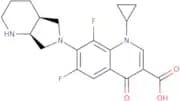
Discontinued product8-Desmethoxy-8-fluoro moxifloxacin
CAS:8-Desmethoxy-8-fluoro moxifloxacin is a photolytic drug that is used to treat bacterial infections. It has a high degree of antibacterial activity against methicillin-resistant staphylococcus aureus, including methicillin resistant strains of Staphylococcus epidermidis. 8-Desmethoxy-8-fluoro moxifloxacin hydrochloride is produced by the addition of hydrochloric acid to moxifloxacin, which is then purified by ion chromatography. The compound has been shown to have good stability in human plasma and urine. It also shows excellent recoveries in acetonitrile and quantification results in flow rates.
Formula:C20H21F2N3O3Purity:Min. 95%Molecular weight:389.4 g/molRef: 3D-FD21225
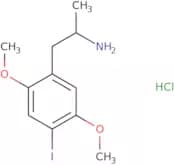
Discontinued product(±)-DOI Hydrochloride
CAS:Controlled Product(±)-DoiHydrochloride is a serotonergic drug that belongs to the group of serotonin reuptake inhibitors. It affects the serotonergic system by inhibiting serotonin reuptake, which leads to increased synaptic concentrations of serotonin. This in turn activates signal pathways and increases levels of dopamine, norepinephrine, and epinephrine. (±)-DoiHydrochloride has antioxidative properties and can be used for the treatment of chronic schizophrenia. It was shown to be effective in patients with atrial fibrillation who were not responding well to other treatments.
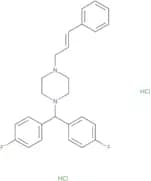
Formula:C11H16INO2•HClPurity:Min. 95%Molecular weight:357.62 g/molFlunarizine dihydrochloride
CAS:T-type calcium channel inhibitor
Formula:C26H28Cl2F2N2Purity:Min. 95%Color and Shape:PowderMolecular weight:477.42 g/molRef: 3D-FF23332
Discontinued product(3-(4-Azidophenyl)propionyl1,D-Tyr(Me)2,Arg6,Arg8,Tyr-NH29)-Vasopressin trifluoroacetate salt
CAS:Please enquire for more information about (3-(4-Azidophenyl)propionyl1,D-Tyr(Me)2,Arg6,Arg8,Tyr-NH29)-Vasopressin trifluoroacetate salt including the price, delivery time and more detailed product information at the technical inquiry form on this pageFormula:C63H84N20O13Purity:Min. 95%Molecular weight:1,329.47 g/molRef: 3D-FA109005
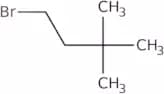
Discontinued product1-Bromo-3,3-dimethylbutane
CAS:1-Bromo-3,3-dimethylbutane is an alkali metal compound that can be used as a substitute for ethylene. It is expressed in the liquid phase and reacts with halogens to form reactive intermediates. These reactive intermediates react with other molecules to cause bond cleavage. The reaction time is dependent on the temperature of the system. 1-Bromo-3,3-dimethylbutane has three isomers that are formed during the reaction: 2-, 3-, and 4-bromohexane. The mechanism for this reaction involves a single electron transfer from one molecule to another, which causes a series of reactions that leads to the formation of 1-bromo-3,3-dimethylbutane. This process occurs spontaneously due to irradiation by ultraviolet light or electron beams.
Formula:C6H13BrPurity:Min. 95%Molecular weight:165.07 g/molAcetyl-(Asn30,Tyr32)-Calcitonin (8-32) (salmon I) trifluoroacetate salt
CAS:Please enquire for more information about Acetyl-(Asn30,Tyr32)-Calcitonin (8-32) (salmon I) trifluoroacetate salt including the price, delivery time and more detailed product information at the technical inquiry form on this pageFormula:C127H205N37O40Purity:Min. 95%Molecular weight:2,890.21 g/molRef: 3D-FA109403
Discontinued productXenopsin-Related Peptide 1 (XP-1) trifluoroacetate salt
CAS:Xenopsin-related peptide 1 (XP-1) is a synthetic peptide that has been shown to bind to the neurotensin receptor. XP-1 is expressed in gastrointestinal tissues and has been found to modulate intestinal motility, as well as glucose homeostasis. It also has immunohistochemical staining for pancreatic tissues and vasoactive intestinal polypeptide, which are both involved in glucose control. XP-1 can reduce high plasma concentrations of glucose by stimulating the pancreas and lowering the release of glucagon from the α cells of the pancreas. The function of XP-1 is not yet fully understood, but it may have potential therapeutic effects on diabetes mellitus type 2.Formula:C51H79N15O9Purity:Min. 95%Molecular weight:1,046.27 g/molRef: 3D-FX110420
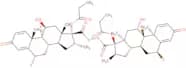
Discontinued productDesfluoromethyl fluticasone propionate disulfide
CAS:Please enquire for more information about Desfluoromethyl fluticasone propionate disulfide including the price, delivery time and more detailed product information at the technical inquiry form on this page
Formula:C48H58F4O10S2Purity:Min. 95%Color and Shape:PowderMolecular weight:935.09 g/molRef: 3D-FD91086
Discontinued productTIP-39 trifluoroacetate salt
CAS:Please enquire for more information about TIP-39 trifluoroacetate salt including the price, delivery time and more detailed product information at the technical inquiry form on this pageFormula:C202H325N61O54SPurity:Min. 95%Molecular weight:4,504.19 g/molRef: 3D-FT109386
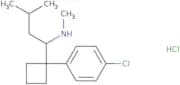
Discontinued productDesmethyl sibutramine hydrochloride salt
CAS:Desmethyl sibutramine hydrochloride salt is a pharmaceutical preparation that has been used in the treatment of depression and chronic pain. It is a synthetic drug that increases the level of dopamine in the brain by inhibiting its reuptake. In addition, it has been shown to be effective in the treatment of hyperactivity, diabetic neuropathy, and other amines. Desmethyl sibutramine hydrochloride salt also has an antidepressant effect by decreasing serotonin reuptake.
Formula:C16H25Cl2NPurity:Min. 95 Area-%Color and Shape:White PowderMolecular weight:302.28 g/molAdrenomedullin (rat) trifluoroacetate salt
CAS:Please enquire for more information about Adrenomedullin (rat) trifluoroacetate salt including the price, delivery time and more detailed product information at the technical inquiry form on this page
Formula:C242H381N77O75S5Purity:Min. 95%Molecular weight:5,729.42 g/molRef: 3D-FA108808
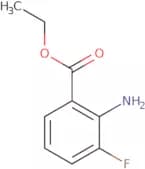
Discontinued product2-Amino-3-fluorobenzoic acid ethyl ester
CAS:Please enquire for more information about 2-Amino-3-fluorobenzoic acid ethyl ester including the price, delivery time and more detailed product information at the technical inquiry form on this pageFormula:C9H10FNO2Purity:Min. 95%Color and Shape:PowderMolecular weight:183.18 g/molN-[(RS)-1-Carboxy-3-phenyl-propyl]-Ala-Ala-Phe-4-Abz-OH trifluoroacetate salt
CAS:The N-[(RS)-1-carboxy-3-phenyl-propyl]-Ala-Ala-Phe-4-Abz-OH trifluoroacetate salt is a synthetic substrate for the study of metalloendopeptidase. This compound was used to develop a model system to study the function of human liver, and has been shown to inhibit the growth of PC12 cells. The N-[(RS)-1-Carboxy-3-phenyl-propyl]-Ala-Ala-Phe-4-Abz-OH trifluoroacetate salt is also an experimental model for congestive heart failure. This compound has been shown to increase glomerular filtration rate in experimental animals as well as basic fibroblast growth factor activity in cell culture by increasing intracellular calcium levels.Formula:C32H36N4O7Purity:Min. 95%Molecular weight:588.65 g/molRef: 3D-FR111118
Discontinued productAmmonium Undecafluorohexanoate
CAS:Undecafluorohexanoic acid is a perfluoroalkyl carboxylic acid that has been shown to disrupt steroidogenesis in vitro. It may be able to inhibit the transport of cholesterol, fats, and other lipids in cells, which causes disruption in steroidogenesis. This compound also has anti-cancer properties due to its ability to induce apoptosis and arrest cancer cell proliferation. Undecafluorohexanoic acid may also have developmental effects on animals because it can bind to estrogen receptors and disrupt the normal process of estrogen-mediated signaling pathways.
Formula:C6H4F11NO2Purity:Min. 95%Molecular weight:331.08 g/molRef: 3D-FA79593
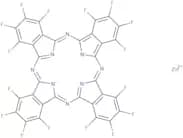
Discontinued productZinc 1,2,3,4,8,9,10,11,15,16,17,18,22,23,24,25-hexadecafluoro-29H,31H-phthalocyanine
CAS:Please enquire for more information about Zinc 1,2,3,4,8,9,10,11,15,16,17,18,22,23,24,25-hexadecafluoro-29H,31H-phthalocyanine including the price, delivery time and more detailed product information at the technical inquiry form on this pageFormula:C32F16N8ZnPurity:Min. 95%Molecular weight:865.75 g/molAngiotensin A (1-7) trifluoroacetate
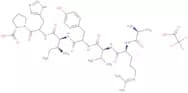
CAS:Endogenous heptapetide which causes vasodilation and has anti-hypertensive properties.
Formula:C40H62N12O9•(C2HF3O2)xPurity:Min. 95%Color and Shape:PowderMolecular weight:855 g/molTrityl chloride resin
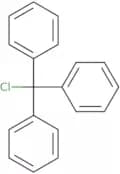
CAS:Trityl chloride resin is a chemical compound that is used as a model system for the study of trifluoroacetic acid and its reactions. Trityl chloride resin is insoluble in water and has been used as a reaction solution for transfer reactions. It has been shown to be an effective ligand for many types of receptors, with binding constants ranging from 10 M-1 to 10 M-10. Trityl chloride resin can also be chiral, which means that it may exist in two forms that are mirror images of each other. The physiological effects of this compound are not well understood, but it has been shown to have an effect on coordination geometry.
Color and Shape:PowderRef: 3D-FT29918
Discontinued product2,3,5-Trichlorobenzaldehyde
CAS:2,3,5-Trichlorobenzaldehyde is a chemical compound that has been shown to have anticancer and apoptotic effects. It inhibits the growth of bacteria by chelating iron ions and inhibiting bacterial dna synthesis. 2,3,5-Trichlorobenzaldehyde has also been shown to inhibit the growth of cancer cells in culture in an experimental study. This chemical has been used as a substrate for nmr spectroscopy to study its functional groups and radical scavenging activities. 2,3,5-Trichlorobenzaldehyde can be synthesized from phenacyl chloride and benzaldehyde in the presence of hydrogen chloride gas. The carbonyl group in 2,3,5-trichlorobenzaldehyde may cause metabolic disorders such as diabetes mellitus or hyperglycemia.
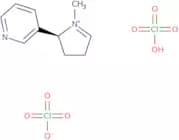
Formula:C7H3Cl3OPurity:Min. 95%Color and Shape:PowderMolecular weight:209.46 g/molS-(-)-Nicotine-delta1’-(5’)-iminium diperchlorate salt
CAS:Please enquire for more information about S-(-)-Nicotine-delta1’-(5’)-iminium diperchlorate salt including the price, delivery time and more detailed product information at the technical inquiry form on this page
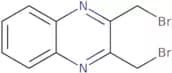
Formula:C10H14Cl2N2O8Purity:Min. 95%Molecular weight:361.13 g/mol2,3-Bis(bromomethyl)quinoxaline
CAS:2,3-Bis(bromomethyl)quinoxaline is a nitrogenous heterocyclic compound that has a coordination geometry of square planar. It has been used as an inhibitor for the protein p21 and the nucleophile in palladium complexes. 2,3-Bis(bromomethyl)quinoxaline is also a model system for studying reaction mechanisms and chemical structures. The electron density map of the compound was obtained by X-ray crystal structure analysis. The reaction mechanism of this molecule is proposed to be through a chelate ring cross-coupling process.
Formula:C10H8Br2N2Purity:Min. 95%Color and Shape:Brown PowderMolecular weight:315.99 g/molRef: 3D-FB04248
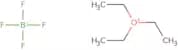
Discontinued productTriethyloxonium tetrafluoroborate
CAS:Triethyloxonium tetrafluoroborate is an antimicrobial agent that inhibits the transfer of electrons from one molecule to another. It has been shown to be effective against methicillin-resistant Staphylococcus aureus and Mycobacterium tuberculosis. Triethyloxonium tetrafluoroborate binds to the bacterial enzyme, Jak1, which is involved in the formation of cytokines and interleukins. This binding inhibits the production of these molecules, leading to cell death by apoptosis. The use of triethyloxonium tetrafluoroborate as a research tool has facilitated its discovery as a potential anti-inflammatory drug for autoimmune diseases such as type 1 diabetes mellitus and rheumatoid arthritis. Triethyloxonium tetrafluoroborate can be used to inhibit amide synthesis, which may have applications in the study of carbohydrate chemistry and nitrogen atoms in biological systems. This compound has also been used
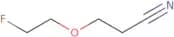
Formula:C6H15BF4OPurity:Min. 95%Color and Shape:PowderMolecular weight:189.99 g/mol3-(2-Fluoroethoxy)Propanenitrile
CAS:3-(2-Fluoroethoxy)Propanenitrile is a chemical with toxic properties. It is classified as a fluoroacetic acid and has been used in the production of other chemicals. Fluoroacetic acid is toxic to humans, showing signs of skin irritation, respiratory tract irritation, and kidney damage. 3-(2-Fluoroethoxy)Propanenitrile is not found naturally and has been sponsored by many companies.
Formula:C5H8FNOPurity:Min. 95%Molecular weight:117.12 g/molRef: 3D-FF80270
Discontinued product













![N-[(RS)-1-Carboxy-3-phenyl-propyl]-Ala-Ala-Phe-4-Abz-OH trifluoroacetate salt](/_next/image/?url=https%3A%2Fstatic.cymitquimica.com%2Fproducts%2F3D%2Fthumb-webp%2FFR111118.webp&w=3840&q=75)