Organic Halides
In this category, you can find organic molecules containing one or more halogen atoms in their structure. These organic halides include brominated, iodinated, chlorinated, and cyclic halide compounds. Organic halides are widely used in organic synthesis, pharmaceuticals, agrochemicals, and materials science due to their reactivity and ability to undergo a variety of chemical transformations. At CymitQuimica, we offer a comprehensive selection of high-quality organic halides to support your research and industrial applications, ensuring reliable and effective performance in your synthetic and analytical projects.
Subcategories of "Organic Halides"
Found 20437 products of "Organic Halides"
Sort by
Purity (%)
0
100
|
0
|
50
|
90
|
95
|
100
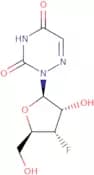
3’-Deoxy-3’-fluoro-6-azauridine
CAS:<p>Please enquire for more information about 3’-Deoxy-3’-fluoro-6-azauridine including the price, delivery time and more detailed product information at the technical inquiry form on this page</p>Purity:Min. 95%1-Chloro-2,6-dinitrobenzene
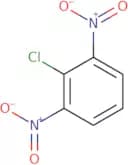
CAS:<p>1-Chloro-2,6-dinitrobenzene is a synthetic compound that has been shown to be an effective antiviral agent in vitro. It has a high affinity for nucleophilic sites and can react with the nitro group of compounds to form dinitrobenzoic acid derivatives. 1-Chloro-2,6-dinitrobenzene is highly reactive and can undergo thermolytic decomposition, which limits its use as an antiviral agent. This chemical is not active against HIV or influenza A virus strains.</p>Formula:C6H3ClN2O4Purity:Min. 98 Area-%Color and Shape:Clear LiquidMolecular weight:202.55 g/molN-[3,5-Bis(trifluoroMethyl)phenyl]-N'-[(9R)-6'-Methoxy-9-cinchonanyl]thiourea
CAS:<p>Please enquire for more information about N-[3,5-Bis(trifluoroMethyl)phenyl]-N'-[(9R)-6'-Methoxy-9-cinchonanyl]thiourea including the price, delivery time and more detailed product information at the technical inquiry form on this page</p>Formula:C29H28F6N4OSPurity:Min. 95%Color and Shape:PowderMolecular weight:594.62 g/molChloro(triphenylphosphine)gold(I)
CAS:<p>Chloro(triphenylphosphine)gold(I) is a compound that binds to proteins with high affinity and specificity. The binding constants of the two compounds are 1x10 M-1. It has been shown to bind to β-amino acid and organic molecules in human serum, as well as in other biological fluids. Chloro(triphenylphosphine)gold(I) has been shown to have apoptotic properties and can be used for the treatment of cancer cells. It has also been shown to be useful for the treatment of Alzheimer's disease, Parkinson's disease, and Huntington's disease.</p>Formula:C18H15P•AuClPurity:Min. 98 Area-%Color and Shape:White Off-White PowderMolecular weight:494.7 g/molUndecafluorohexanoic acid
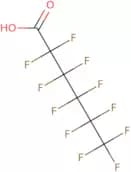
CAS:<p>Undecafluorohexanoic acid is a reactive chemical that has carcinogenic potential. It can permeate the skin and react with water to produce hexafluoropropylene oxide, which is toxic to humans. Undecafluorohexanoic acid also binds to and activates receptors in the body, which leads to many pharmacological effects. The toxicity of undecafluorohexanoic acid has been studied in vitro by measuring its effect on cell growth and mitochondrial membrane potential. It has also been tested for its ability to cause mutations in human cells. This chemical is toxic when ingested or inhaled and can lead to death if not treated quickly.</p>Formula:C6HF11O2Purity:Min. 95%Color and Shape:Clear LiquidMolecular weight:314.05 g/mol4-Bromophthalide
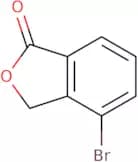
CAS:<p>4-Bromophthalide is a chemical compound that has a wide range of uses in research and industry. It reacts with organic compounds to form new substances, which can then be used as building blocks for more complex molecules. 4-Bromophthalide is an intermediate in the synthesis of pharmaceuticals such as pyrazinamide and is also useful as a starting material for the production of other chemicals such as dyes, pesticides, and pharmaceuticals.</p>Formula:C8H5BrO2Purity:Min. 95%Color and Shape:PowderMolecular weight:213.03 g/mol2-Chlorobenzanilide
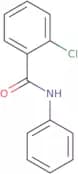
CAS:<p>2-Chlorobenzanilide is a chlorine compound that has been used to inhibit the growth of soil microorganisms. It is also an inhibitor of phenanthridone, which is an important intermediate in the synthesis of many herbicides. 2-Chlorobenzanilide can be prepared by reacting phenylhydrazine with chloroacetanilide. It can also be prepared by treating benzene with phosphorus chloride and then adding aniline to the reaction product. The rate of this reaction depends on the concentration of reactants, temperature, and pH. If more water is added to the reaction mixture, there will be a lower rate of reaction because hydroxide ions will compete with chloride ions for reactant molecules. The kinetic equation for this reaction follows:</p>Formula:C13H10ClNOPurity:Min. 95%Molecular weight:231.68 g/mol4-Amino-2-chlorobenzoic acid
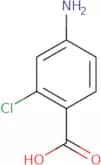
CAS:<p>4-Amino-2-chlorobenzoic acid (4ACB) is a drug that inhibits the absorption of other drugs by binding to their active sites. It is used as an analytical reagent in chromatographic methods for determining protein concentration, and has been shown to be effective in reducing pain in animal models. 4ACB has also been shown to have ochronotic properties, which may be due to its ability to inhibit the formation of reactive oxygen species. 4ACB binds with high affinity to the plasma proteins albumin and alpha1-acid glycoprotein, with a binding constant of 10-8 M. The elimination half-life of 4ACB is approximately 27 hours, and it is excreted primarily through the kidneys.</p>Formula:C7H6ClNO2Purity:Min. 95%Color and Shape:PowderMolecular weight:171.58 g/molSelegiline hydrochloride
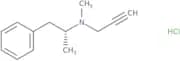
CAS:Controlled Product<p>Monoamine oxidase B inhibitor</p>Formula:C13H18ClNPurity:(Hplc) Min. 98 Area-%Color and Shape:White PowderMolecular weight:223.74 g/mol2,4-Dichloro-3-nitrophenol
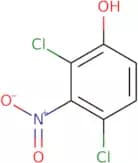
CAS:<p>2,4-Dichloro-3-nitrophenol is a synthetic chemical that is used as an intermediate in the synthesis of chloroamines. It is a derivative of phenol and has a chlorine atom on the 2 position. The alcohol group on the 4 position and the chlorine atom on the 3 position are both substituted with chlorine atoms. 2,4-Dichloro-3-nitrophenol has been shown to be effective for the synthesis of chloroamines resistant to nitro groups. This chemical has been shown to be resistant to amines and thus can be used for immobilization purposes. Furthermore, it can be used as an intermediate for chemists who work with organic chemistry due to its ability to undergo reactions with alcohols and phenols.</p>Formula:C6H3Cl2NO3Purity:Min. 95%Color and Shape:White Clear LiquidMolecular weight:208 g/mol3-(4-Bromophenyl)propionic acid
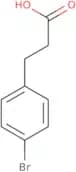
CAS:<p>3-(4-Bromophenyl)propionic acid is a potent linker that is synthesized from trifluoromethanesulfonic acid by the reaction of bromine and 4-bromobenzene. 3-(4-Bromophenyl)propionic acid inhibits the biosynthesis of fatty acids by inhibiting the enzyme fatty acid synthase. 3-(4-Bromophenyl)propionic acid has been shown to be an effective inhibitor of cellular growth in glioma cells. It also decreases blood pressure through inhibition of angiotensin II receptors.</p>Formula:C9H9BrO2Purity:Min. 95%Color and Shape:PowderMolecular weight:229.07 g/mol4-Fluoro-L-phenylalanine
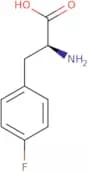
CAS:<p>4-Fluoro-L-phenylalanine is a fluorinated analog of phenylalanine. It has been shown to be an inhibitor of the enzyme that catalyzes the formation of disulfide bonds in nuclear DNA. 4-Fluoro-L-phenylalanine has also been found to have antiviral properties, which may be due to its ability to inhibit viral replication by interfering with protein synthesis and chromosome replication. This compound may also inhibit the growth of resistant mutant strains of viruses, such as influenza virus, and wild type strains. 4-Fluoro-L-phenylalanine inhibits the activity of enzymes involved in biological processes, such as protein synthesis. It is thought that this compound may have potential uses for treating infectious diseases.</p>Formula:C9H10FNO2Purity:Min. 98 Area-%Color and Shape:White Off-White PowderMolecular weight:183.18 g/mol3-Methyl-2-benzothiazolinone hydrazone hydrochloride monohydrate
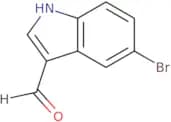
CAS:<p>3-Methyl-2-benzothiazolinone hydrazone hydrochloride monohydrate is a diazonium salt that inhibits the activity of tyrosinase. It is used in pharmaceutical preparations as an inhibitor molecule to treat skin cancer. This compound has been shown to inhibit the production of melanin, which protects cells from damage by ultraviolet (UV) radiation. 3-Methyl-2-benzothiazolinone hydrazone hydrochloride monohydrate binds to tyrosinase and prevents it from forming radicals, which are necessary for the formation of melanin. The inhibition of this enzyme results in skin that is less susceptible to UV radiation and therefore less likely to develop skin cancer.</p>Formula:C8H9N3S·HCl·H2OPurity:Min. 98 Area-%Color and Shape:PowderMolecular weight:233.72 g/mol5-Bromoindole-3-carboxaldehyde
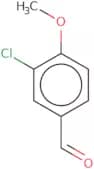
CAS:<p>5-Bromoindole-3-carboxaldehyde is a water molecule that has been crystallized in the form of an amide. It is a chemical substance with asymmetric synthesis and significant antifungal activity. 5-Bromoindole-3-carboxaldehyde is active against some strains of the fungus Candida albicans and has been shown to inhibit the growth of kidney cells. This molecule also binds to the neurokinin 1 receptor and is used as a probe for fluorescence studies. The efficient method for synthesizing 5-Bromoindole-3-carboxaldehyde includes using silico analysis to confirm the structure on a computer, then performing an asymmetric synthesis with an acid catalyst to produce this compound.</p>Formula:C9H6BrNOPurity:Min. 98 Area-%Color and Shape:PowderMolecular weight:224.05 g/mol3-Chloro-4-methoxybenzaldehyde
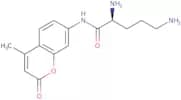
CAS:<p>3-Chloro-4-methoxybenzaldehyde is a chemical compound that belongs to the class of aromatic compounds. It is synthesized by reacting 3-chlorobenzaldehyde with methoxyacetone in a hydroxylation reaction. The asymmetric synthesis of 3-chloro-4-methoxybenzaldehyde was achieved by using a chiral auxiliary, which is an organic molecule that can be used to control the stereochemistry of other reactions. This product has high cytotoxicity and is able to cause melanogenesis (production of melanin) when applied to rat striatal membranes.</p>Formula:C8H7ClO2Purity:Min. 95%Color and Shape:PowderMolecular weight:170.59 g/molH-Orn-AMC hydrochloride salt
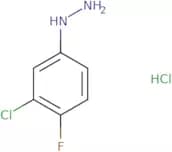
CAS:<p>H-Orn-AMC hydrochloride salt is a white solid with a melting point of about 150°C. It is used as a reactant in the manufacture of pharmaceuticals, research chemicals and other speciality chemicals. H-Orn-AMC hydrochloride salt is also an intermediate for the synthesis of complex compounds, useful as building blocks for chemical synthesis, and can be used as a reagent in analytical chemistry.</p>Formula:C15H20ClN3O3Purity:Min. 98 Area-%Color and Shape:PowderMolecular weight:325.79 g/mol3-Chloro-4-fluorophenylhydrazine hydrochloride
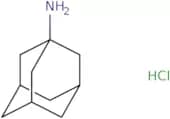
CAS:<p>3-Chloro-4-fluorophenylhydrazine hydrochloride is a fine chemical that has been used in research as a reagent and building block. It is also used as an intermediate in the synthesis of other compounds with high commercial value, such as pharmaceuticals and agrochemicals. 3-Chloro-4-fluorophenylhydrazine hydrochloride can be used to synthesize complex molecules that are difficult to make, such as pharmaceuticals, agrochemicals, and speciality chemicals. This compound can be reacted with other compounds to form new compounds or reactants that are useful in a variety of reactions.</p>Formula:C6H7Cl2FN2Purity:Min. 95%Color and Shape:PowderMolecular weight:197.04 g/molAmantadine hydrochloride
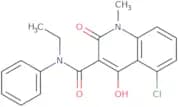
CAS:Controlled Product<p>NMDA receptor antagonist; anti-viral; anti-Parkinsonian</p>Formula:C10H17N·HClPurity:Min. 95%Color and Shape:PowderMolecular weight:187.71 g/mol5-Chloro-4-hydroxy-1-methyl-2-oxo-1,2-dihydro-quinoline-3-carboxylic acid ethyl-phenyl-amide
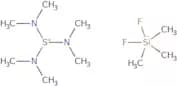
CAS:<p>Laquinimod is an immunomodulator drug that inhibits the activity of the immune system. It binds to toll-like receptor 7, which is a protein on the surface of certain cells that responds to infection and inflammation. Laquinimod has been shown to inhibit neurodegeneration in vitro, which may be due to its ability to bind with neuronal death receptors and block the inflammatory response. Laquinimod also inhibits bowel disease by reducing inflammation and controlling immunity in the intestinal tract. Laquinimod has been shown to have long-term efficacy when administered at physiological levels. This drug is chemically stable, even after exposure to light.</p>Formula:C19H17ClN2O3Purity:Min. 95%Color and Shape:White PowderMolecular weight:356.8 g/molTris(dimethylamino)sulfonium difluorotrimethylsilicate
CAS:<p>Tris(dimethylamino)sulfonium difluorotrimethylsilicate is a solute that is used in synthetic chemistry. It has been shown to stimulate bone growth in vitro and to inhibit the metastasis of cancer cells in animal studies. Tris(dimethylamino)sulfonium difluorotrimethylsilicate has also been shown to be an effective treatment for bladder cancer. This compound has been shown to bind to cortistatin, an active substance that inhibits the proliferation of human bladder cancer cells. The compound binds to benzyl groups on cortistatin and prevents it from binding with its receptors on the bladder cancer cells, leading to cell death.</p>Formula:C6H18N3S•C3H9F2SiPurity:90%Color and Shape:PowderMolecular weight:275.48 g/mol

![N-[3,5-Bis(trifluoroMethyl)phenyl]-N'-[(9R)-6'-Methoxy-9-cinchonanyl]thiourea](/_next/image/?url=https%3A%2Fstatic.cymitquimica.com%2Fproducts%2F3D%2Fthumb-webp%2FFB100790.webp&w=3840&q=75)