Organic Halides
Subcategories of "Organic Halides"
Found 20442 products of "Organic Halides"
2,7-Dibromonaphthalene
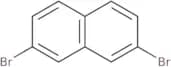
CAS:2,7-Dibromonaphthalene is a chemosensor that is used to sense the presence of halides in water. It reacts with anion radicals in the atmosphere to produce a fluorescent compound with a long wavelength emission. This reaction can be observed using ultraviolet spectroscopy and amination reactions. 2,7-Dibromonaphthalene has been shown to react with copper oxide to form a blue-green compound. This property has been used as an indicator of copper contamination in water and soil samples. 2,7-Dibromonaphthalene also reacts with metal ions to form metal cations, which can be detected using cyclen or other organic compounds.Formula:C10H6Br2Purity:Min. 95%Color and Shape:PowderMolecular weight:285.96 g/mol3-Fluoro-2-methylphenylacetone
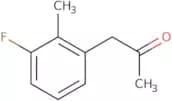
CAS:3-Fluoro-2-methylphenylacetone is a reaction component and reagent that is useful in the synthesis of complex compounds. 3-Fluoro-2-methylphenylacetone, also known as 2-fluoromethylbenzaldehyde, is a versatile building block that can be used to synthesize a wide variety of chemical compounds. It has been shown to be an excellent intermediate and building block for the synthesis of pharmaceuticals, pesticides, agrochemicals, specialty chemicals, and other organic compounds. 3-Fluoro-2-methylphenylacetone is a fine chemical that has CAS No. 1017060-34-2.
Formula:C10H11FOPurity:Min. 95%Molecular weight:166.19 g/mol2-(Bromomethyl)-5-chloropyridine hydrobromide
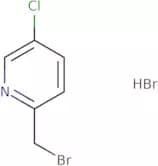
CAS:2-(Bromomethyl)-5-chloropyridine hydrobromide is a versatile building block that can be used in the synthesis of complex compounds and research chemicals. This compound has a CAS number of 1646152-49-9 and is a useful building block for reactions involving nitration, bromination, chlorination, amination, and sulfonylation. 2-(Bromomethyl)-5-chloropyridine hydrobromide can also be used as a reagent or as a speciality chemical to react with other chemicals or to be used as a reaction component or scaffold in synthesizing more complex molecules.Formula:C6H6Br2ClNPurity:Min. 95%Color and Shape:PowderMolecular weight:287.38 g/mol2-Chloro-6-methylaniline
CAS:2-Chloro-6-methylaniline is a molecule that has been used for wastewater treatment and process optimization. It is synthesized from the reaction of amines with trifluoroacetic acid. 2-Chloro-6-methylaniline was found to stimulate the growth of human population in a study conducted at the University of Texas. This molecule has been shown to inhibit the proliferation of t-cells by binding to their surface receptors. 2-Chloro-6-methylaniline has also been shown to be effective in inhibiting dasatinib, which is an anti-cancer drug. 2CMA binds to dasatinib and inhibits its activity by competing with it for binding sites on the protein target. The structure of 2CMA is characterized by proton NMR spectroscopic data and liquid chromatography methods.Formula:C7H8ClNPurity:Min. 95%Color and Shape:Colourless To Purple To Brown LiquidMolecular weight:141.6 g/mol4-Chloro-3-fluorophenylacetic acid
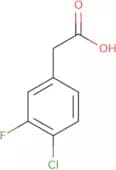
CAS:4-Chloro-3-fluorophenylacetic acid is a high quality reagent that is used as a complex compound. It has CAS No. 883500-51-4, and it is useful in the manufacture of fine chemicals, speciality chemicals, research chemicals, and versatile building blocks. The chemical can be used as a reaction component for the production of various compounds with different molecular structures.
Formula:C8H6ClFO2Purity:Min. 95%Color and Shape:PowderMolecular weight:188.58 g/mol4-Bromo-3,5-bis(trifluoromethyl)aniline
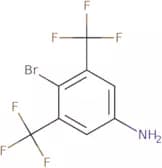
CAS:4-Bromo-3,5-bis(trifluoromethyl)aniline is a chemical compound that belongs to the group of brominated compounds. It has high adsorption capacity for potassium and can be used as an adsorbent for gasification. 4-Bromo-3,5-bis(trifluoromethyl)aniline has been activated by carbons and catalysed with potassium to form an ionic complex with the carboxylic acid site on the surface of activated carbon. This process is used for purifying water or air from pollutants.
Formula:C8H4BrF6NPurity:Min. 95%Color and Shape:PowderMolecular weight:308.02 g/mol5-Chloro-8-iodoimidazo[1,2-a]pyridine HBr
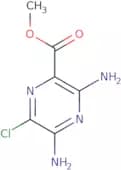
CAS:5-Chloro-8-iodoimidazo[1,2-a]pyridine HBr is a fine chemical that can be used as a versatile building block in the synthesis of complex compounds. This chemical is also useful as a reagent or speciality chemical for research purposes. This product has been shown to have high quality and is an efficient reaction component for organic synthesis. 5-Chloro-8-iodoimidazo[1,2-a]pyridine HBr has CAS No. 1031289-77-6 and is a useful scaffold for the preparation of other compounds.Formula:C7H4ClIN2·HBrPurity:Min. 95%Color and Shape:Pale yellow solid.Molecular weight:359.39 g/mol3,5-Diamino-6-chloropyrazine-2-carboxylic acid methyl ester
CAS:3,5-Diamino-6-chloropyrazine-2-carboxylic acid methyl ester is a low binding, mitochondrial labeling agent. It is photolabile and can be used in the study of respiratory complex activity. 3,5-Diamino-6-chloropyrazine-2-carboxylic acid methyl ester has been shown to inhibit the enzyme mitochondrial complex I and II. The azido group on the molecule is homologous to a phosphate group in ATP and can be used as a substrate analogue for ATP synthase. This allows 3,5-Diamino-6-chloropyrazine-2-carboxylic acid methyl ester to be used as an experimental tool for studying ATP synthesis.
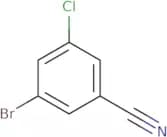
Formula:C6H7ClN4O2Purity:Min. 95%Color and Shape:PowderMolecular weight:202.6 g/mol3-Bromo-5-chlorobenzonitrile
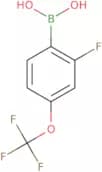
CAS:3-Bromo-5-chlorobenzonitrile is a reactive compound that is used in the preparation of sulfur. It is an electrophile and reacts with thiols to form disulfides. 3-Bromo-5-chlorobenzonitrile can also form a complex with elemental sulfur, which can be used for the preparation of sodium sulfide. Sodium sulfide can be prepared by converting 3-bromo-5-chlorobenzonitrile into a sodium salt with sodium hydroxide, followed by hydrolysis to produce hydrogen sulfide and sodium chloride. The reaction of 3-bromo-5-chlorobenzonitrile with xanthate leads to the formation of carbon disulphide.Formula:C7H3BrClNPurity:Min. 95%Color and Shape:PowderMolecular weight:216.46 g/mol2-Fluoro-4-trifluoromethoxyphenyl boronic acid
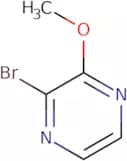
CAS:2-Fluoro-4-trifluoromethoxyphenyl boronic acid is a fine chemical that has been used as a building block in organic synthesis. It is also a versatile intermediate, which can be used for the preparation of complex compounds. The compound is soluble in methanol, ethanol, and THF. It has a CAS number of 503309-10-2 and was first synthesized in 1960.Formula:C7H5BF4O3Purity:Min. 95%Color and Shape:White PowderMolecular weight:223.92 g/mol2-Bromo-3-methoxypyrazine
CAS:2-Bromo-3-methoxypyrazine is a chemical compound that is used as a precursor in the biosynthesis of geosmin. Geosmin, also known as 2-methylisoborneol or 2-MIB, is a volatile organic compound which has a musty or earthy smell. It is produced by some species of bacteria, including Myxobacterium and Chondromyces crocatus. It can be found in soil and water samples from areas with high levels of organic matter. 2-Bromo-3-methoxypyrazine was first isolated from cultures of M. crocatus in 1950. It can be synthesized from 3,4,5-trimethoxybenzaldehyde via bromination followed by reduction with sodium hydrosulfide. This process creates an intermediate called 2-(2'-bromoethyl)pyrazine, which undergoes methylation to create 2Formula:C5H5BrN2OPurity:Min. 95%Color and Shape:White Off-White PowderMolecular weight:189.01 g/mol6-Bromoisatin
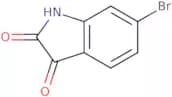
CAS:6-Bromoisatin is an antimicrobial agent that belongs to the group of ethylene diamines. It has been shown to be a potent inhibitor of cancer cell viability in vivo and can be used as a potential chemotherapy agent. 6-Bromoisatin is active against human pathogens, such as Staphylococcus aureus and Streptococcus pyogenes. This compound has also been shown to inhibit the growth of LPS-stimulated RAW264.7 macrophages, which are used in vitro for studying innate immunity. The mechanism of action involves inhibition of cyclic AMP production, which leads to cell death in cancer cells. 6-Bromoisatin also inhibits the proliferation and viability of granulosa cells and carcinoma cells, with IC50 values in the range of 0.5 - 2 µM.END>>Formula:C8H4BrNO2Purity:Min. 95%Color and Shape:Yellow PowderMolecular weight:226.03 g/mol6-Bromohexanoic acid ethyl ester
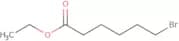
CAS:6-Bromohexanoic acid ethyl ester is a fluorescent compound that has been used to assess the presence of azobenzene in urine samples. This product is also used as a marker for capsicum annuum, which is an edible plant. 6-Bromohexanoic acid ethyl ester has been shown to be effective in the diagnosis of cancer, especially carcinoma cells. Coumarin derivatives have been found to possess fluorescence properties similar to 6-bromohexanoic acid ethyl ester and are also used as markers for cancer cells. The use of polyclonal antibodies and hydrochloric acid for this product can lead to fluorescence properties that are specific for cancer cells.Formula:C8H15BrO2Purity:Min. 95%Color and Shape:Colourless To Pale Yellow LiquidMolecular weight:223.11 g/mol1-(3-Chlorophenyl)piperazine HCl
CAS:Controlled Product1-(3-Chlorophenyl)piperazine HCl is a drug that belongs to the group of pharmacological agents. It is used as an antidepressant and antipsychotic, and has been shown to decrease serotonin levels in the brain. 1-(3-Chlorophenyl)piperazine HCl is a potent 5-HT2C receptor agonist that inhibits ovarian activity in vitro. The compound has also been shown to be effective against trazodone and 5-HT2 receptors in vitro.Formula:C10H14Cl2N2Purity:Min. 95 Area-%Color and Shape:White PowderMolecular weight:233.14 g/mol2-(2,4-Dichlorophenyl)ethanol
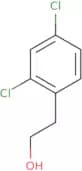
CAS:2-(2,4-Dichlorophenyl)ethanol is an organic compound that can be synthesized by reacting 2,4-dichlorobenzoic acid with trifluoroacetic acid in the presence of a base. The reaction scheme is:Formula:C8H8Cl2OPurity:Min. 95%Molecular weight:191.05 g/mol(S)-(-)-2-Chloro-3-[4(5)-imidazolyl]propionic acid
CAS:(S)-(-)-2-Chloro-3-[4(5)-imidazolyl]propionic acid is a high quality reagent that is used as an intermediate in the synthesis of complex compounds. It has been used as a building block for the synthesis of different types of compounds with speciality chemicals, such as research chemicals and reaction components. This compound is also versatile and can be used to synthesize both small and large molecules. The CAS number for this chemical is 17561-26-1.Formula:C6H7ClN2O2Purity:Min. 95%Color and Shape:White To Beige SolidMolecular weight:174.58 g/mol4-[2-(3,4-Dimethoxyphenyl)-1,2-dibromoethyl]-1,2-dimethoxybenzene
CAS:4-[2-(3,4-Dimethoxyphenyl)-1,2-dibromoethyl]-1,2-dimethoxybenzene is a high quality chemical that is an intermediate for the synthesis of other compounds. It has been used as a reagent in the synthesis of complex compounds and has been shown to be useful for the production of fine chemicals. This compound can also be used as a scaffold or building block in organic chemistry. The versatility of 4-[2-(3,4-Dimethoxyphenyl)-1,2-dibromoethyl]-1,2-dimethoxybenzene makes it an important reaction component in organic chemistry and research chemicals.Formula:C18H20Br2O4Purity:Min. 95%Molecular weight:460.16 g/mol4-Dimethylaminobenzylamine dihydrochloride
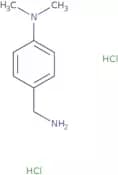
CAS:4-(Dimethylamino)benzylamine dihydrochloride (DMAA) is an inhibitor of the enzyme form of acetylcholinesterase. It has been used as a reagent in the biochemical, analytical and chromatographic detection of acetylcholine. DMAA can be used to measure acetylcholine levels in human serum, and has a kinetic time range of 0.5-2 hours. This chemical has potent inhibition against cytosolic but not plasma cholinesterase activity, which may be due to its binding to the active site of the enzyme. DMAA also inhibits lymphocytic leukemia cell growth by inducing chemiluminescence, which is a reaction that produces light from a chemical reaction in the absence of oxygen.
Formula:C9H14N2•(HCl)2Purity:Min. 95%Molecular weight:223.14 g/mol2,3,4,6-Tetrafluoronitrobenzene
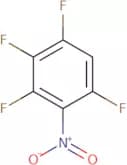
CAS:2,3,4,6-Tetrafluoronitrobenzene is a fluorinated molecule that has been shown to be an excellent substrate for the hydrolysis of acetonitrile. The reaction products are a mixture of ortho and para isomers with equal amounts of 2,3,4- and 6-fluoro derivatives. The rate of the reaction is dependent on the number of water molecules present in the system. Tetramethylguanidine (TMG) can be used as a catalyst to increase the rate of the hydrolysis reaction without changing its course. The result is an increased yield with decreased time required to complete the experiment.Formula:C6HF4NO2Purity:Min. 95%Color and Shape:Light (Or Pale) Yellow To Yellow LiquidMolecular weight:195.07 g/mol2-(Chlorophenyl)methanimine
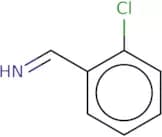
CAS:2-(Chlorophenyl)methanimine is a fine chemical with CAS No. 91589-24-1 that is used in the synthesis of other research chemicals and speciality chemicals. This compound has a high quality, complex structure, and can be used as an intermediate or scaffold for a variety of reactions. 2-(Chlorophenyl)methanimine is also versatile, as it can be used as a building block or reagent in many different reactions.Formula:C7H6ClNPurity:Min. 95%Color and Shape:PowderMolecular weight:139.58 g/mol


![5-Chloro-8-iodoimidazo[1,2-a]pyridine HBr](/_next/image/?url=https%3A%2Fstatic.cymitquimica.com%2Fproducts%2F3D%2Fthumb-webp%2FFC07295.webp&w=3840&q=75)

![(S)-(-)-2-Chloro-3-[4(5)-imidazolyl]propionic acid](/_next/image/?url=https%3A%2Fstatic.cymitquimica.com%2Fproducts%2F3D%2Fthumb-webp%2FFC20058.webp&w=3840&q=75)
![4-[2-(3,4-Dimethoxyphenyl)-1,2-dibromoethyl]-1,2-dimethoxybenzene](/_next/image/?url=https%3A%2Fstatic.cymitquimica.com%2Fproducts%2F3D%2Fthumb-webp%2FFD66282.webp&w=3840&q=75)