Organic Halides
Subcategories of "Organic Halides"
Found 20442 products of "Organic Halides"
2-Fluoro-3-nitrotoluene
CAS:2-Fluoro-3-nitrotoluene is a synthetic compound that is used as a drug substance to produce other drugs. It has been shown to inhibit cardiac contractility and can be used in the treatment of cardiogenic shock. This drug also has a low degree of toxicity and can be administered in an outpatient setting. 2-Fluoro-3-nitrotoluene is not symmetrical, which means it has two different shapes or configurations. One of these configurations is more stable than the other one. 2-Fluoro-3-nitrotoluene has two possible isomers that are mirror images of each other, called enantiomers. These two isomers have opposite effects on cardiac contractility and the effect depends on the type of heart disease being treated.Formula:C7H6FNO2Purity:Min. 95%Color and Shape:Yellow Clear LiquidMolecular weight:155.13 g/mol2,7-Dichloronaphthalene
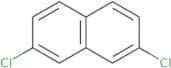
CAS:2,7-Dichloronaphthalene is a chlorinated organic chemical that has been used as an insecticide and acaricide. It is metabolized by cytochrome P-450 to form 2,7-dichloronaphthalene oxide, which is then converted to 2,7-dichloronaphthoic acid. This chemical can accumulate in adipose tissue and the liver of animals exposed to it. It also bioconcentrates in aquatic organisms and biomagnifies in food chains. 2,7-Dichloronaphthalene is not acutely toxic because it does not readily penetrate the skin or respiratory tract. Chronic exposure by ingestion or inhalation can cause adverse effects on the central nervous system, cardiac system, and blood cells. The most toxic effect of 2,7-dichloronaphthalene is its carcinogenic potential for humans and animals.Formula:C10H6Cl2Purity:Min. 95%Color and Shape:White PowderMolecular weight:197.06 g/mol3-Chloro-5-(trifluoromethyl)pyridine-2-carboxylic acid
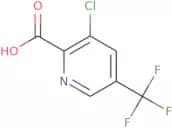
CAS:The compound 3-Chloro-5-(trifluoromethyl)pyridine-2-carboxylic acid is a synthetic intermediate that has been used in the synthesis of amides with high analytical quality. It is also an important reagent for the synthesis of many pharmaceuticals and agrochemicals. In addition, 3-chloro-5-(trifluoromethyl)pyridine-2-carboxylic acid has been shown to have dose dependent phytotoxic effects and causes plant growth inhibition.Formula:C7H3ClF3NO2Purity:Min. 95%Color and Shape:White PowderMolecular weight:225.55 g/molTrt-cysteamine hydrochloride
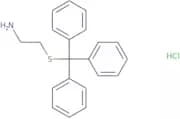
CAS:Trt-cysteamine hydrochloride is a prodrug that is metabolized to cysteamine in vivo. Cysteamine inhibits the production of tumor necrosis factor (TNF) by binding to its receptor and blocking NF-κB signaling pathways. In vitro models have shown that trt-cysteamine hydrochloride has minimal effects on cells, but when used in vivo, it can inhibit oxidative stress and induce cell death. Trt-cysteamine hydrochloride also binds to molecular targets with disulfide bonds, which may be potential therapeutic targets for cancer treatment.Formula:C21H21NS·HClPurity:Min. 95%Color and Shape:White Off-White PowderMolecular weight:355.92 g/molPotassium Trifluoromethanesulfonate
CAS:Potassium trifluoromethanesulfonate is a chemical compound that belongs to the family of organofluorine compounds. It has been shown to be an excellent hydrogen bond acceptor, which is the most important factor for its application in water vapor detection. Potassium trifluoromethanesulfonate has been used as an enhancement agent in analytical chemistry. It has also been used as a fluorescence detector and in x-ray crystal structure determination studies. The reaction mechanism of potassium trifluoromethanesulfonate is not yet known with certainty, but it is likely that the protonated amide form of potassium trifluoromethanesulfonate reacts with light emission from an organic dye, producing a fluorescent product.Formula:CF3KO3SPurity:Min. 95%Color and Shape:PowderMolecular weight:188.17 g/molHoechst 33342
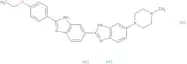
CAS:2'-(4-Ethoxyphenyl)-5-(4-methyl-1-piperazinyl)-2,5'-bi-1H-benzimidazole trihydrochloride (EPMB) is a DNA binding agent that is used in tumor detection and research into apoptosis. It has been shown to inhibit the activity of p-glycoprotein, which is an efflux pump protein, and Bcl-2 protein. EPMB has also been shown to cause apoptosis in human squamous cell carcinoma cells in a concentration dependent manner. This compound has shown potential as a treatment for cancer because it inhibits the ability of cancer cells to proliferate by binding to the NMDA receptor.
Formula:C27H28N6O·3HCl·xH2OPurity:Min. 95%Color and Shape:Yellow PowderMolecular weight:561.93 g/molNesfatin-1 (mouse) trifluoroacetate salt
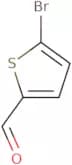
CAS:Please enquire for more information about Nesfatin-1 (mouse) trifluoroacetate salt including the price, delivery time and more detailed product information at the technical inquiry form on this pageFormula:C424H683N117O137Purity:Min. 95%Molecular weight:9,611.67 g/mol5-Bromo thiophene-2-aldehyde
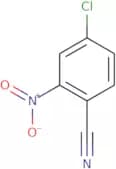
CAS:5-Bromo thiophene-2-aldehyde is a trifluoroacetic acid derivative used as an activatable probe for the study of biomolecular interactions. This compound has been shown to be biocompatible and has a low cytotoxicity. 5-Bromo thiophene-2-aldehyde binds to malonic acid in the presence of x-ray radiation and forms a complex that can be detected by electrochemical impedance spectroscopy. The structure of this complex was determined by x-ray crystal structures. This probe is also able to bind to nitrogen atoms in proteins, which can be used to diagnose cancer resistance through protease activity. 5-Bromo thiophene-2-aldehyde is isolated as its hydrochloride salt, which can be purified with a suzuki coupling reaction.Formula:C5H3BrOSPurity:Min. 95%Color and Shape:Yellow PowderMolecular weight:191.05 g/mol4-Chloro-2-nitrobenzonitrile
CAS:4-Chloro-2-nitrobenzonitrile is a nitroarene that can be used to synthesize gold nanoparticles. It has been shown to inhibit the growth of Candida parapsilosis, an opportunistic fungal pathogen, with a halide anion and a catalytic inorganic base. 4-Chloro-2-nitrobenzonitrile also inhibits the activity of butyrylcholinesterase, which is an enzyme that breaks down acetylcholine in the brain and nervous system. This compound may be useful in the synthesis of pharmaceuticals as well as other synthetic applications.
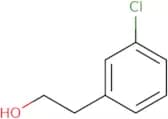
Formula:C7H3ClN2O2Molecular weight:182.56 g/mol2-(3-Chlorophenyl)ethanol
CAS:2-(3-Chlorophenyl)ethanol (CLPE) is an agonist of the beta-adrenergic receptor. It is used in the treatment of asthma and other pulmonary diseases. CLPE binds to the beta-adrenergic receptor, which increases airway opening by relaxing bronchial smooth muscle. The drug also has a backup effect on the alpha-adrenergic receptors in the lungs, which helps to overcome any adverse effects caused by beta-blockers. CLPE has been shown to be effective in treating asthma attacks that are resistant to inhaled corticosteroids and long-acting β2-agonists. It may be used as an alternative treatment for patients who cannot tolerate or have not responded well to first line treatments such as long acting β2 agonists or inhaled corticosteroids.
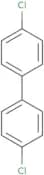
Formula:C8H9ClOPurity:Min. 95%Color and Shape:Clear LiquidMolecular weight:156.61 g/mol4,4'-Dichlorobiphenyl
CAS:Controlled Product4,4'-Dichlorobiphenyl is a biphenyl derivative that is used in the production of polyurethane and elastomers. It has been shown to be toxic to animals such as rats, with a low elimination rate. 4,4'-Dichlorobiphenyl has the potential to cause adverse effects on the environment through its photolytic transformation into biphenyl-4-ol and through its toxicity to plants. This compound is classified as a carcinogen and is mutagenic in bacteria. 4,4'-Dichlorobiphenyl does not biodegrade in water or soil because it does not undergo direct photolysis or microbial degradation.Formula:C12H8Cl2Purity:Min. 95%Color and Shape:PowderMolecular weight:223.1 g/mol4-Fluoro-3-nitrophenylacetic acid
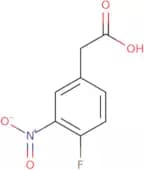
CAS:4-Fluoro-3-nitrophenylacetic acid is a chiral monomer that can be used to synthesize diphenyl ethers. The reaction requires a carbamic acid as the acid catalyst and a nucleophilic reagent, such as an amine. 4-Fluoro-3-nitrophenylacetic acid has been shown to have anti-cancer properties in vitro and in vivo. 4-Fluoro-3-nitrophenylacetic acid may also inhibit the synthesis of dihydroisoquinolines, which are important for the function of DNA polymerase. There are two strategies for synthesizing this compound: one is based on the condensation of two molecules of phenylacetaldehyde in the presence of an acid catalyst; the other employs a Lewis acid catalyst with a pyridine nucleophile.Formula:C8H6FNO4Purity:Min. 95%Color and Shape:SolidMolecular weight:199.14 g/mol4-Trifluoromethylbenzene-1-carbothioamide
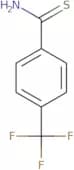
CAS:4-Trifluoromethylbenzene-1-carbothioamide (4FBA) is a non-toxic, organosulfur compound that is found in the fructus of Aurantii or Garcinia mangostana. 4FBA inhibits oxidant enzymes by reacting with their sulfhydryl groups and, as a result, prevents oxidation of other molecules. It has been shown to have antioxidant properties and inhibitory activity against two important enzymes that are involved in the progression of oxidative stress and inflammation. 4FBA has also been shown to be an effective inhibitor of chloride channels which may provide therapeutic potential for diseases such as sclerosis.Formula:C8H6F3NSPurity:Min. 95%Color and Shape:PowderMolecular weight:205.2 g/mol3-Bromo-4-methylbenzoic acid
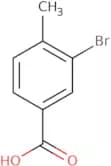
CAS:3-Bromo-4-methylbenzoic acid is a labile chemical compound that is used in the synthesis of retinoic acid, an analog of vitamin A. 3-Bromo-4-methylbenzoic acid can be synthesized by a two step process involving the boronic ester and biphenyl. The biphenyl is first treated with phosphorus pentachloride to produce a phenoxyacetate which reacts with 3-bromo-4-methylbenzoyl chloride in the presence of base to produce 3-bromo-4-methylbenzoic acid. This conversion can also be done via a solid phase synthesis where the biphenyl is anchored on silica gel and reacted with 3-bromo-4 methylbenzoyl chloride. The boronic esters are then cleaved from the solid support by treatment with sodium hydroxide under reflux conditions. 3 - Bromo -Formula:C8H7BrO2Purity:Min. 95%Color and Shape:PowderMolecular weight:215.04 g/mol(R)-(+)-1-(4-Bromophenyl)ethylamine
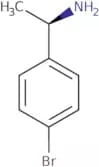
CAS:(R)-(+)-1-(4-Bromophenyl)ethylamine is a chiral anion that can be used as a ligand for supramolecular chemistry. It reacts with primary amines to form a diazenyl (an anion with two nitrogen atoms and one carbon atom). The diazenyl molecule has been shown to have chemotactic activity and to stimulate the immune system. The (R)-(+)-1-(4-bromophenyl)ethylamine is generally stable when it is in contact with water, but is unstable when heated due to decomposition by light or oxygen.
Formula:C8H10BrNPurity:Min. 95%Color and Shape:Clear LiquidMolecular weight:200.08 g/mol4-Bromo-L-tryptophan
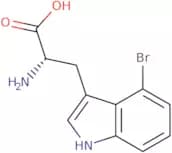
CAS:4-Bromo-L-tryptophan is an amino acid that is used in the synthesis of biomimetic molecules. It is synthesized by allylation with bromine and then chromatographically purified. 4-Bromo-L-tryptophan can also be used to study the biosynthesis of tryptophan. 4-Bromo-L-tryptophan has a molecular weight of 204.2 daltons and a pKa of 5.72, which makes it acidic at physiological pH values. The compound spontaneously forms anhydride with hydroxytryptophan, which stabilizes it and prevents hydrolysis reactions. The optimum temperature for enzymatic activity is 160 degrees Celsius, and kinetic constants have been determined at this temperature as well as at 100 degrees Celsius. Catalytic asymmetric synthesis has also been accomplished using 4-bromo L tryptophan as a substrate.Formula:C11H11BrN2O2Purity:Min. 95%Color and Shape:Slightly Yellow PowderMolecular weight:283.12 g/molTetraoctyl ammoniumchloride
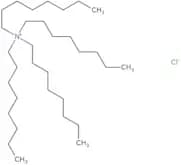
CAS:Tetraoctyl ammoniumchloride is an inexpensive chemical that has a high affinity for membranes. It is a cationic surfactant with a structure of four octyl chains, each containing an amine group. Tetraoctyl ammoniumchloride has been used to study the kinetics of ion transport in membranes and has been shown to be able to inhibit nitrate uptake by plant roots. This chemical also has light resistance properties and can be used to protect gold nanoparticles from degradation by light.
Formula:C32H68ClNPurity:Min. 95%Color and Shape:PowderMolecular weight:502.34 g/mol4-(Trifluoromethylthio)benzoic acid
CAS:4-(Trifluoromethylthio)benzoic acid is a versatile building block, useful intermediate, and reagent for research and development. 4-(Trifluoromethylthio)benzoic acid has been shown to be a high quality chemical with high purity. The CAS number for 4-(Trifluoromethylthio)benzoic acid is 330-17-6.
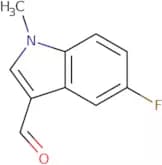
Formula:C8H5F3O2SPurity:Min. 98 Area-%Color and Shape:PowderMolecular weight:222.19 g/mol5-Fluoro-1-Methyl-1H-Indole-3-Carbaldehyde
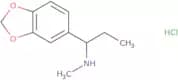
CAS:5-Fluoro-1-Methyl-1H-Indole-3-Carbaldehyde is a high quality chemical that is used as a reagent, an intermediate for the synthesis of pharmaceuticals, and in the production of fine chemicals. 5FMICA is also a useful scaffold for developing valuable building blocks. This chemical has been shown to be a versatile building block for the synthesis of complex compounds. 5FMICA can be used as a reaction component for the preparation of speciality chemicals and research chemicals.Formula:C10H8FNOPurity:Min. 95%Color and Shape:PowderMolecular weight:177.18 g/molN-Methyl-3,4-methylenedioxyphenylpropane hydrochloride
CAS:Controlled ProductN-Methyl-3,4-methylenedioxyphenylpropane hydrochloride is a high quality reagent that is a useful intermediate in the synthesis of complex compounds. It is used as a fine chemical and research chemicals in the manufacture of speciality chemicals. N-Methyl-3,4-methylenedioxyphenylpropane hydrochloride has been shown to be an excellent scaffold for the synthesis of many different compounds with high versatility. It can also be used as a building block or reaction component.Formula:C11H15NO2·HClColor and Shape:PowderMolecular weight:229.7 g/mol