Organic Halides
Subcategories of "Organic Halides"
Found 20442 products of "Organic Halides"
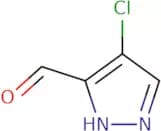
4-Chloro-1H-pyrazole-3-carboxaldehyde
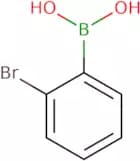
CAS:4-Chloro-1H-pyrazole-3-carboxaldehyde is a fine chemical that is used as a building block in research and development. The CAS number is 623570-54-7. This compound has been found to be useful in the synthesis of complex compounds and versatile scaffolds.Formula:C4H3ClN2OPurity:Min. 95%Color and Shape:SolidMolecular weight:130.53 g/mol2-Bromophenylboronic acid
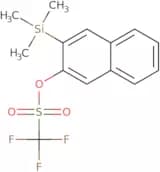
CAS:2-Bromophenylboronic acid is a glucose monitoring agent that has a ruthenium complex with an acidic environment. The nitro group and the amines are in close proximity to the boron center, and this proximity leads to a high nucleophilic character of the molecule. This reactivity allows 2-bromophenylboronic acid to be used as a fluorescence probe for acidic environments. 2-Bromophenylboronic acid also inhibits secretase enzymes, which are involved in Alzheimer’s disease and other neurodegenerative disorders. It is an inhibitor of γ-secretase, which is responsible for cleaving the amyloid precursor protein (APP), and it has shown efficacy against biphenyl, an anticancer drug that binds to benzodiazepine receptors. 2-Bromophenylboronic acid is also an enantiopure compound because all four substituents are different from each other.Formula:C6H6BBrO2Purity:Min. 95%Color and Shape:White PowderMolecular weight:200.83 g/mol3-(Trimethylsilyl)-2-naphthyl trifluoromethanesulfonate
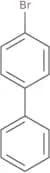
CAS:3-(Trimethylsilyl)-2-naphthyl trifluoromethanesulfonate is a synthetic molecule that is used to synthesize benzofurans. 3-(Trimethylsilyl)-2-naphthyl trifluoromethanesulfonate is activated by reaction with N-bromosuccinimide, which creates an electrophilic carbon center. This electrophilic center reacts with nucleophiles such as alcohols, amines, and thiols to form a new bond. The product of this reaction is benzoylated, which can then undergo further reactions to form other compounds. X-ray crystallography has been used to characterize the structure of 3-(trimethylsilyl)-2-naphthyl trifluoromethanesulfonate.Formula:C14H15F3O3SSiPurity:Min. 95%Color and Shape:Colorless Clear LiquidMolecular weight:348.41 g/mol4-Bromobiphenyl
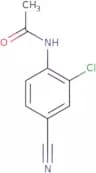
CAS:4-Bromobiphenyl is an organic compound that belongs to the group of ethers. It has a nitrogen atom in its structure, which can be substituted with hydrochloric acid or debrominated in the presence of hydrogen chloride. 4-Bromobiphenyl has been shown to have potent antitumor activity in a model system. This agent also binds to the amp-activated protein and can be used for wastewater treatment because it has been shown to be more efficient than other agents at removing biphenyl from wastewaters.Formula:C12H9BrPurity:Min. 95%Color and Shape:PowderMolecular weight:233.1 g/molN-(4-Cyano-2-chlorophenyl)acetamide
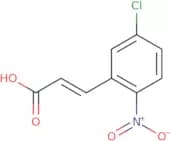
CAS:N-(4-Cyano-2-chlorophenyl)acetamide is a versatile building block that is used in the synthesis of complex compounds. N-(4-Cyano-2-chlorophenyl)acetamide has been shown to be a useful intermediate in the synthesis of important compounds such as 4-aminoantipyrine, 4,5-dichloroanthranilic acid and 2,6-dichloropurine. This chemical has also been found to be an effective reagent for the preparation of other chemicals.Formula:C9H7ClN2OPurity:Min. 95%Molecular weight:194.62 g/mol5-Chloro-2-nitrocinnamic acid
CAS:5-Chloro-2-nitrocinnamic acid is a fine chemical with a CAS number of 20357-28-2. It is a versatile building block that can be used as a reaction component or intermediate in the synthesis of more complex compounds. The high purity and quality of 5-Chloro-2-nitrocinnamic acid makes it an ideal reagent for research purposes, and it can be used as a building block for the synthesis of useful scaffolds.
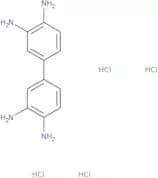
Formula:C9H6ClNO4Purity:Min. 95%Molecular weight:227.6 g/mol3,3'-Diaminobenzidine tetrahydrochloride
CAS:3,3'-Diaminobenzidine tetrahydrochloride or DAB hydrochloride is the hydrochloride salt of biphenyl tetra-aniline. DAB hydrochloride is a water-soluble formulation of DAB and is used in immunohistochemical staining of nucleic acids and proteins. DAB hydrochloride is used in Alzheimer's disease research, Aβ protein amyloid plaques are targeted by a primary antibody, and subsequently by a secondary antibody, which is conjugated with a peroxidase enzyme. This will bind DAB as a substrate and oxidize causing a colour change. 3,3’-Diaminobenzidine tetrahydrochloride is also available as the tetrahydrochloride hydrate and as the free base.
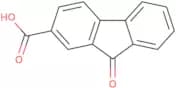
Formula:C12H14N4•4HClPurity:Min. 95%Color and Shape:Off-White PowderMolecular weight:360.12 g/mol9-Fluorenone-2-carboxylic acid
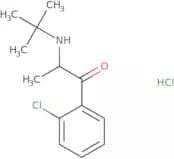
CAS:9-Fluorenone-2-carboxylic acid is a reducer that can be used in medicines and as a stabilizer. It has been shown to work synergistically with 2-benzoylbenzoic acid, polycarboxylic acid, and other conditioning agents. 9-Fluorenone-2-carboxylic acid has been shown to maximize the fluorescence of molecules and proteins, which may be due to its ability to stabilize them. This chemical also serves as a liquid phase for x-ray crystallography studies of proteins. The vibrational frequencies of 9-fluorenones are known to be between 250 and 350 cm−1.Formula:C14H8O3Purity:Min. 95%Color and Shape:Yellow PowderMolecular weight:224.21 g/mol2-(tert-Butylamino)-2'-chloropropiophenone hydrochloride
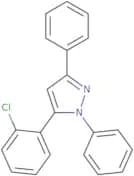
CAS:Controlled Product2-(tert-Butylamino)-2'-chloropropiophenone hydrochloride (BAPCH) is a fine chemical that is used as a building block in the synthesis of other compounds. It can be used as a reagent or speciality chemical in research, and is also an intermediate for the synthesis of other chemicals. BAPCH has a CAS number of 1049718-57-1, and is a versatile building block with many reactions. BAPCH has been shown to be useful in complex syntheses that require reactive groups and scaffolds.Formula:C13H19Cl2NOPurity:Min. 95%Color and Shape:White To Off-White SolidMolecular weight:276.2 g/mol1,3-Diphenyl-5-(2-chlorophenyl)pyrazole
CAS:The title compound was obtained by reacting phenylhydrazine with 2-chloro-1,3-diphenylpyrazole. The reaction mixture was filtered, the solid was washed with water and dried to give 1,3-diphenyl-5-(2-chlorophenyl)pyrazole as a white powder.Formula:C21H15ClN2Purity:Min. 95%Molecular weight:330.81 g/mol2-Chloro-4-(trifluoromethoxy)aniline
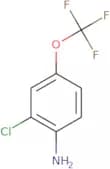
CAS:2-Chloro-4-(trifluoromethoxy)aniline is a chemical reagent that is used in organic synthesis. It has a variety of uses including as a building block for complex compounds, an intermediate for the synthesis of other chemicals, and a reagent for the production of pharmaceuticals. 2-Chloro-4-(trifluoromethoxy)aniline is also useful in research to study the mechanism of certain reactions. The high quality and versatility of this compound make it a speciality chemical with many applications.
Formula:C7H5ClF3NOMolecular weight:211.57 g/molTrichloroacetic acid
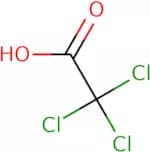
CAS:Trichloroacetic acid is a chemical compound that is commonly used as an analytical reagent. It is a white solid that can be dissolved in water and has a faint odor of chlorine. Trichloroacetic acid is used to measure the concentration of sodium trifluoroacetate in biological samples or as an analytical reagent in various chemical reactions. Trichloroacetic acid has been shown to cause oxidative injury to cells, which may be due to its ability to inhibit growth factor-β1 synthesis and glycol ether metabolism. Trichloroacetic acid also causes cancer cells to die by inducing apoptosis, which may be due to its ability to inhibit basic protein synthesis.
Formula:C2HCl3O2Purity:Min. 95%Color and Shape:White/Off-White SolidMolecular weight:163.39 g/mol6-Fluorosalicylaldehyde
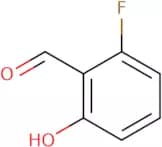
CAS:6-Fluorosalicylaldehyde is a sulfate that has been used in the synthesis of 6-fluorosalicylic acid, which is an intermediate for the production of aspirin. It also can be used to synthesize phenols and formylation products. The reaction with hydroxylamine leads to salicylaldehydes, while the reaction with methoxide leads to salicylaldehyde.
6-Fluorosalicylaldehyde reacts with magnesium salts in acidic conditions to produce paraformaldehyde. Deprotonation of 6-fluorosalicylaldehyde yields methoxide.Formula:C7H5FO2Purity:Min. 95%Color and Shape:PowderMolecular weight:140.11 g/molMethyl 3-chlorosulfonylthiophene-2-carboxylate
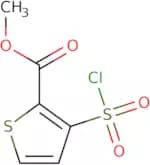
CAS:Methyl 3-chlorosulfonylthiophene-2-carboxylate is a chemical compound that belongs to the family of thiophene carboxylic acid esters. It has been used for the synthesis of bioactive molecules, such as tenoxicam, and heteroarylations. Methyl 3-chlorosulfonylthiophene-2-carboxylate can be used in cross-coupling reactions with chloride as a reagent and is regiospecific. This chemical has also been shown to be reactive towards proteins, nucleic acids, and other biomolecules.
Formula:C6H5ClO4S2Purity:Min. 95%Color and Shape:PowderMolecular weight:240.69 g/molN-Methyl-N-(1-naphthyl)-2-iodobenzamide
CAS:N-Methyl-N-(1-naphthyl)-2-iodobenzamide is a chemical building block that is used in the synthesis of new compounds. It reacts with other chemicals to form new compounds, and can be used as a reaction component or reagent. N-Methyl-N-(1-naphthyl)-2-iodobenzamide has been shown to have high quality and is useful as a research chemical. This compound can be used as a versatile building block in the synthesis of complex compounds and fine chemicals.Formula:C18H14INOPurity:Min. 95%Molecular weight:387.21 g/mol6-Bromoquinazolin-4-amine
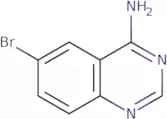
CAS:6-Bromoquinazolin-4-amine is an alkylamine that is used as a chemical intermediate. It reacts with formamide to produce formamidine, which is a result of the amination of formamide. 6-Bromoquinazolin-4-amine has been shown to react with aromatic amines to produce substituted quinazolines.Formula:C8H6BrN3Purity:Min. 95%Color and Shape:White PowderMolecular weight:224.06 g/molTrans-diamminedichloropalladium(II)
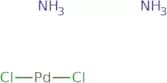
CAS:Trans-Diamminedichloropalladium is a particle with an average size of 0.5 microns. It is a metal carbonyl complex that belongs to the group of analytical methods. Trans-Diamminedichloropalladium can be used for the treatment of wastewater and oxidation catalysts. The electrochemical impedance spectroscopy (EIS) of the particles has been shown to be sensitive to changes in morphology, which may be due to the hydroxyl group on the surface or due to a change in oxidation state. Trans-Diamminedichloropalladium can also act as an oxidizing agent that converts hydrochloric acid into chlorine gas, which has been shown by solid catalyst experiments.
Formula:Pd(NH3)2Cl2Purity:Min. 95%Color and Shape:Yellow Clear LiquidMolecular weight:211.39 g/molNε-Methyl-L-lysine hydrochloride
CAS:Ne-Methyl-L-lysine hydrochloride is an acetylated form of the amino acid L-lysine. It has shown to be effective in treating pernicious anemia, a condition in which the body lacks sufficient vitamin B12. Ne-Methyl-L-lysine hydrochloride inhibits the production of human vascular endothelial growth factor (VEGF) and can also be used as a diagnostic tool for pernicious anemia. This drug is expressed by genetically engineered cells and has been shown to inhibit acetylation reactions, leading to monoclonal antibodies with increased stability. Ne-Methyl-L-lysine hydrochloride also binds to vitamin B12 and prevents its catabolism, thereby increasing the levels of this essential nutrient.Formula:C7H16N2O2•HClPurity:Min. 95%Color and Shape:White PowderMolecular weight:196.67 g/molIndium(III) trifluoromethanesulfonate
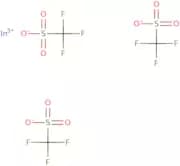
CAS:Indium trifluoromethanesulfonate is a reactive, c1-c4 haloalkyl. It has been used as a reagent for the synthesis of serine protease inhibitors. Indium trifluoromethanesulfonate reacts with unsaturated ketones to form x-ray absorption products, which can be analyzed by x-ray diffraction and x-ray fluorescence techniques. The reaction products are quinoline derivatives, which are useful in the synthesis of carbohydrates and other organic compounds. Control experiments were performed to ensure that the reactivity of indium trifluoromethanesulfonate was not due to contaminants or impurities. A more efficient method for synthesizing indium trifluoromethanesulfonate was developed in order to avoid the use of toxic solvents like diphenyl ether. This process involves amines as nucleophiles, which are activated by transfer reactions with carbon tetrFormula:C3F9InO9S3Purity:Min. 95%Color and Shape:SolidMolecular weight:562.03 g/mol2-Bromoethyl trifluoromethanesulfonate
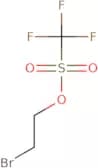
CAS:2-Bromoethyl trifluoromethanesulfonate is a synthetic, diagnostic, and therapeutic agent that is used as a radiotracer for imaging the uptake of tyrosinase in cancer cells. It binds to the benzodiazepine receptor and has a high affinity for this site. This compound also inhibits glutamate release from nerve endings and thus can be used to treat epilepsy. 2-Bromoethyl trifluoromethanesulfonate can inhibit protein synthesis by binding to the enzyme ribosomal protein S6 kinase (S6K) at an allosteric site. The binding of 2-bromoethyl trifluoromethanesulfonate causes a conformational change in the S6K molecule that results in inhibition of its catalytic activity.Formula:C3H4BrF3O3SPurity:Min. 95%Molecular weight:257.03 g/mol