Organic Halides
Subcategories of "Organic Halides"
Found 20440 products of "Organic Halides"
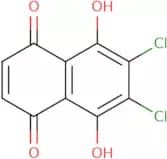
2,3-Dichloro-5,8-dihydroxy-1,4-naphthalenedione
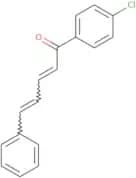
CAS:2,3-Dichloro-5,8-dihydroxy-1,4-naphthalenedione (DDD) is a chemical inhibitor of the proton response pathway. It is an analog of 2,3,7,8-tetrachlorodibenzo-p-dioxin (TCDD). DDD has been shown to enhance the induction of apoptosis in human macrophages and leishmania parasites. This agent also inhibits the growth of some tumor cell lines and enhances the cytotoxicity of other chemotherapeutic drugs. DDD has low bioavailability due to its high lipophilicity and rapid metabolism by esterases and glucuronidases.Formula:C10H4Cl2O4Purity:Min. 95%Color and Shape:Red PowderMolecular weight:259.04 g/mol(2E,4E)-1-(4-Chlorophenyl)-5-phenylpenta-2,4-dien-1-one
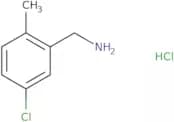
CAS:2,4-Dien-1-one is a cyclic dienone that is used in the preparation of various pharmaceutical drugs. It has been reported to be an excellent building block for the synthesis of complex compounds. This compound has shown antimicrobial activity against methicillin resistant Staphylococcus aureus (MRSA) and Mycobacterium tuberculosis. 2,4-Dien-1-one is a versatile intermediate that can be used as a speciality chemical or research chemicals. It is also a useful scaffold for the synthesis of various pharmaceutical drugs and can be used as a reaction component for various reactions.Formula:C17H13ClOPurity:Min. 95%Color and Shape:PowderMolecular weight:268.74 g/mol5-Chloro-2-methylbenzylamine hydrochloride
CAS:5-Chloro-2-methylbenzylamine hydrochloride is a chemical reagent used in the production of pharmaceuticals and other chemicals. It is also known as 5-Chloro-2-methylbenzaldehyde, or 5-Methoxyindole. 5-Chloro-2-methylbenzylamine hydrochloride is an important building block for the synthesis of many complex compounds with high purity and quality. This compound is also versatile and can be used as a reaction component or as a reagent. CAS No: 28096-37-9.
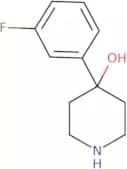
Formula:C8H10ClN·HClPurity:Min. 95%Molecular weight:192.09 g/mol4-(3-Fluorophenyl)-4-piperidinol
CAS:4-(3-Fluorophenyl)-4-piperidinol is a useful chemical intermediate that can be used as a versatile building block in organic synthesis. It can be used as a reaction component and can serve as a speciality chemical, complex compound, or reagent. 4-(3-Fluorophenyl)-4-piperidinol has been identified by the Chemical Abstracts Service (CAS) number 80119-54-6. This product is of high quality and is not harmful to humans.Formula:C11H14FNOPurity:Min. 95%Color and Shape:Orange PowderMolecular weight:195.23 g/mol2-Chloro-5-(4-chloro-5-difluoromethoxy-1-methylpyrazol-3-yl)-4-fluorophenoxyacetic acid monohydrate
CAS:2-Chloro-5-(4-chloro-5-difluoromethoxy-1-methylpyrazol-3-yl)-4-fluorophenoxyacetic acid monohydrate (2,4,5P) is a phenoxy herbicide that has been shown to be an effective broadleaf and grass weed control agent. 2,4,5P is a granule formulation that can be applied by helicopter or ground equipment. It has synergistic effects with glyphosate when applied together to soybean plants and can be used in combination with other herbicides for more effective weed control.
Formula:C13H9Cl2F3N2O·H2OPurity:Min. 95%Color and Shape:White PowderMolecular weight:355.14 g/molPyrithioxin dihydrochloride
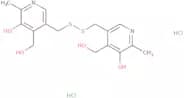
CAS:Pyrithioxin dihydrochloride is a pharmaceutical dosage form used to treat degenerative diseases. It has been shown to have an inhibitory effect on the activity of cholinergic neurons, and can be used to treat symptoms such as muscle weakness, muscle atrophy, and difficulty with movement. Pyrithioxin dihydrochloride may also be used in long-term treatment for Alzheimer's disease or Parkinson's disease. Pyrithioxin dihydrochloride inhibits the synthesis of acetylcholine by binding to the enzyme choline acetyltransferase and blocking the transfer of acetyl-coenzyme A from the coenzyme A pool. This drug also inhibits brain infarction in animal models by preventing accumulation of fatty acids in the blood vessels.
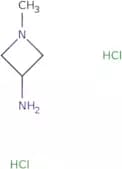
Formula:C16H20N2O4S2·2HClPurity:Min. 95%Color and Shape:White To Off-White To Light (Or Pale) Yellow SolidMolecular weight:441.39 g/mol1-Methylazetidin-3-amine dihydrochloride
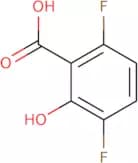
CAS:1-Methylazetidin-3-amine dihydrochloride is a synthetic chemical compound that is used as a reagent, high quality, complex intermediate, and fine chemical. It has been shown to be useful in the synthesis of various compounds and has been reported as a useful scaffold for organic synthesis. This compound also exhibits versatile building block properties due to its ability to react with various functional groups. 1-Methylazetidin-3-amine dihydrochloride has been found to be a useful reaction component in the production of pharmaceuticals, pesticides, and other products.Formula:C4H12Cl2N2Purity:Min. 95%Color and Shape:White PowderMolecular weight:159.06 g/mol3,6-Difluoro-2-hydroxybenzoic acid methyl ester
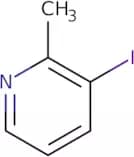
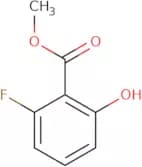
CAS:3,6-Difluoro-2-hydroxybenzoic acid methyl ester is a combination of two substances that are used as deodorants and antiperspirants. They work by blocking the pores in the skin, which prevents perspiration and reduces body odor. 3,6-Difluoro-2-hydroxybenzoic acid methyl ester is not an anti-inflammatory drug.Formula:C7H4F2O3Purity:Min. 95%Molecular weight:174.1 g/mol3-Iodo-2-methylpyridine
CAS:3-Iodo-2-methylpyridine is a fluorescent probe that is used to measure mitochondrial membrane potential in muscle cells. It has been shown to be effective in the treatment of autoimmune diseases and HIV infection. 3-Iodo-2-methylpyridine is soluble in water, alcohols, ethers, and chloroform. This compound has a liquid crystal composition and can form crystals with different morphologies upon cooling. 3-Iodo-2-methylpyridine has been used as an optical probe for the detection of silicon in biological samples. The hydroxy group on this molecule makes it active against nitro groups.Formula:C6H6INPurity:Min. 95%Color and Shape:Yellow PowderMolecular weight:219.02 g/molMethyl 2-fluoro-6-hydroxybenzoate
CAS:Methyl 2-fluoro-6-hydroxybenzoate is a colorless liquid that is soluble in water. It has a sulfur atom and two hydroxyl groups at the 2 and 6 positions on the benzene ring. This compound is an isotopologue of methyl 2,6-dihydroxybenzoate, which can be distinguished by deuterium labeling. At equilibrium, the tautomers are found in equal proportions. The hydrogen bond between the hydroxyl group at position 6 and the methyl group at position 2 plays a large role in determining the relative abundance of these tautomers. The equilibrium constant for this reaction is 1.01 x 10^9. Methyl 2-fluoro-6-hydroxybenzoate has been shown to have an isotope effect on its intermolecular interactions with other molecules, such as acceptors and donors, in solution.END>>
Formula:C8H7FO3Purity:Min. 95%Molecular weight:170.14 g/mol5-Bromo-6-azauracil
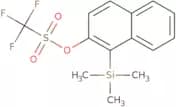
CAS:5-Bromo-6-azauracil is a nucleophilic compound that can be used to treat wastewater. It is also able to lyse cells and has been used as an immobilizing agent. The reactive nature of 5-Bromo-6-azauracil enables it to undergo nucleophilic substitutions with amines, which are present in the cell wall and other biomolecules. This process results in the formation of amide bonds, which leads to the inhibition of protein synthesis. 5-Bromo-6-azauracil has shown inhibitory effects on glucans, which may be due to its ability to form covalent bonds with glucose molecules.Formula:C3H2BrN3O2Purity:Min. 95%Color and Shape:White To Off-White SolidMolecular weight:191.97 g/mol1-(Trimethylsilyl)-2-naphthyl Trifluoromethanesulfonate
CAS:1-(Trimethylsilyl)-2-naphthyl Trifluoromethanesulfonate is a solvent that has been used for the synthesis of oxygen heterocycles. It is also used as a reagent to cleave bonds in organic molecules, such as alkene, solvents, aldehydes and activated esters. This compound is an unsymmetrical nucleophile that reacts with electron-poor alkenes to generate an unsaturated bond between two carbons. Mechanistic studies have shown that the reaction proceeds through a concerted mechanism involving the formation of a covalent phosphine intermediate.
Formula:C14H15F3O3SSiPurity:Min. 95%Color and Shape:PowderMolecular weight:348.41 g/molPotassium Trifluoromethanesulfonate
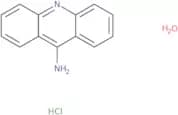
CAS:Potassium trifluoromethanesulfonate is a chemical compound that belongs to the family of organofluorine compounds. It has been shown to be an excellent hydrogen bond acceptor, which is the most important factor for its application in water vapor detection. Potassium trifluoromethanesulfonate has been used as an enhancement agent in analytical chemistry. It has also been used as a fluorescence detector and in x-ray crystal structure determination studies. The reaction mechanism of potassium trifluoromethanesulfonate is not yet known with certainty, but it is likely that the protonated amide form of potassium trifluoromethanesulfonate reacts with light emission from an organic dye, producing a fluorescent product.Formula:CF3KO3SPurity:Min. 95%Color and Shape:PowderMolecular weight:188.17 g/mol9-Acridinamine hydrochloride hydrate
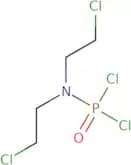
CAS:9-Acridinamine hydrochloride hydrate is a redox agent that has been shown to have genotoxic effects in vitro. It can be used for the treatment of infectious diseases such as tuberculosis and leprosy, but it is not active against gram-positive bacteria. 9-Acridinamine hydrochloride hydrate has been shown to inhibit the growth of bacteria by binding to DNA and preventing transcription, replication, and repair. This compound also inhibits bacterial protein synthesis by forming covalent bonds with amino groups on proteins. 9-Acridinamine hydrochloride hydrate has been shown to be safe when administered orally in animal studies, but it may cause hepatotoxicity.Formula:C13H10N2·HCl·H2OPurity:Min. 95%Color and Shape:Yellow PowderMolecular weight:248.71 g/molBis(2-chloroethyl)aminophosphoric dichloride
CAS:Bis(2-chloroethyl)aminophosphoric dichloride is a fatty acid ester that is used as an antibiotic. It binds to the fatty acid of the bacterial cell membrane, thereby inhibiting the production of vital cell components. Bis(2-chloroethyl)aminophosphoric dichloride has been shown to be active against chondrosarcoma cells in rats and tumor tissue in mice. This drug also inhibits bacterial growth by binding to the fatty acids on the surface of Gram-positive bacteria, such as subtilis and staphylococci. Bis(2-chloroethyl)aminophosphoric dichloride has been shown to have antibacterial activity against Gram-negative bacteria, including Escherichia coli and Salmonella enterica serotype Typhimurium. The binding constants for this drug are high for both Gram-positive and Gram-negative bacteria; however, it does not bind to sugar alcohols or l12
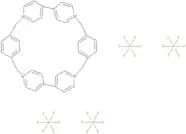
Formula:C4H8Cl4NOPPurity:Min. 95%Color and Shape:White PowderMolecular weight:258.9 g/molCyclobis(paraquat-1,4-phenylene) tetrakis(hexafluorophosphate)
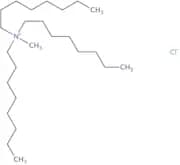
CAS:Cyclobis(paraquat-1,4-phenylene) tetrakis(hexafluorophosphate) (CPQTF) is a polyether that has been shown to have antiviral and anti-inflammatory properties. CPQTF is a chiral molecule which has the ability to form filaments at high temperatures. The temperature at which this polymer changes from a liquid to a filament is dependent on the concentration of polymer in solution. CPQTF has also been shown to have coagulation properties and can be used in cosmetics.Formula:C36H32F24N4P4Purity:Min. 95%Color and Shape:White PowderMolecular weight:1,100.52 g/molTri(octyl-decyl)methylammonium chloride - R=C8-C10
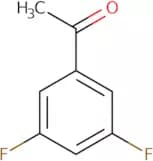
CAS:Tri(octyl-decyl)methylammonium chloride (TODMA) is a quaternary ammonium salt that has been used as a wastewater treatment agent. TODMA has shown to adsorb particles of chitosan, which are positively charged and hydrophilic. Chitosan is an acidic polymer that can be used in the development of nanoparticulate compositions for therapeutic use. TODMA has been shown to have physiological effects in the body, such as lowering blood pressure and heart rate and producing a sense of calmness. It also has been shown to affect chloride levels in the body and inhibit water vapor from leaving the lungs. This compound can be synthesized by reacting hydrogen fluoride with chloroethane. The thermodynamic data for this compound is available on line at http://www.webelements.com/trioctyldecylammoniumchloride/.Formula:C25H54ClNPurity:Min. 95%Color and Shape:Colorless Clear LiquidMolecular weight:404.16 g/mol3',5'-Difluoroacetophenone
CAS:3',5'-Difluoroacetophenone is a synthetic compound that belongs to the tetradentate class of ligands. It is used as a fluorescent probe for metal ions and has been shown to have thermodynamic, systematic, and biomolecular enhancement properties. 3',5'-Difluoroacetophenone has also been used as a fluorescent probe in fluorescence resonance energy transfer (FRET) experiments. 3',5'-Difluoroacetophenone binds to metal cations, such as copper(II) ions. When this compound is protonated, it emits a strong fluorescence signal that can be detected by fluorophore-acceptor probes. This chemical can be orally taken and excreted in urine after metabolism by the liver and kidneys.
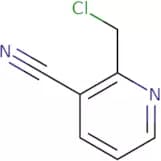
Formula:C8H6F2OPurity:Min. 95%Color and Shape:PowderMolecular weight:156.13 g/mol2-(Chloromethyl)nicotinonitrile
CAS:2-(Chloromethyl)nicotinonitrile is a chlorinated organic compound that is used as a reagent, building block, and intermediate in organic synthesis. It is also a useful scaffold for drug design. 2-(Chloromethyl)nicotinonitrile has been shown to be an effective intermediate for the synthesis of complex compounds, such as antibiotics and pharmaceuticals. This chemical is used in the production of fine chemicals, such as pesticides and cosmetics. CAS No. 848774-96-9
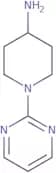
Formula:C7H5ClN2Purity:Min. 95%Color and Shape:Yellow PowderMolecular weight:152.58 g/mol1-Pyrimidin-2-ylpiperidin-4-amine dihydrochloride
CAS:1-Pyrimidin-2-ylpiperidin-4-amine dihydrochloride is a high quality, crystalline compound with a CAS number of 1179369-48-2. It is an intermediate in the synthesis of various fine chemicals, including pharmaceuticals and pesticides. 1-Pyrimidin-2-ylpiperidin-4-amine dihydrochloride also has applications as a versatile building block for the synthesis of other compounds and is used as a reaction component in organic chemistry. This reagent can be used to synthesize many different compounds for use in research or medical purposes.Formula:C9H14N4·2HClPurity:Min. 95%Color and Shape:PowderMolecular weight:251.16 g/mol