Organic Halides
In this category, you can find organic molecules containing one or more halogen atoms in their structure. These organic halides include brominated, iodinated, chlorinated, and cyclic halide compounds. Organic halides are widely used in organic synthesis, pharmaceuticals, agrochemicals, and materials science due to their reactivity and ability to undergo a variety of chemical transformations. At CymitQuimica, we offer a comprehensive selection of high-quality organic halides to support your research and industrial applications, ensuring reliable and effective performance in your synthetic and analytical projects.
Subcategories of "Organic Halides"
Found 20440 products of "Organic Halides"
Sort by
Purity (%)
0
100
|
0
|
50
|
90
|
95
|
100
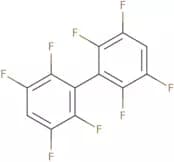
2,2',3,3',5,5',6,6'-Octafluorobiphenyl
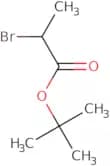
CAS:<p>2,2',3,3',5,5',6,6'-Octafluorobiphenyl is a monomer that can be used for cross-coupling reactions. It can be synthesized by reacting a terminal alkyne with an organolithium compound such as cocl2. This monomer has been shown to undergo elimination reactions at lower temperatures than most other monomers and is commercially available in large quantities. 2,2',3,3',5,5',6,6'-Octafluorobiphenyl is also used as a dopant in semiconductors. The use of this compound in solar cells has been demonstrated with the addition of metal halides such as copper chloride or silver chloride. This compound has been shown to be able to efficiently absorb the light and convert it into electricity.</p>Formula:C12H2F8Purity:Min. 95%Color and Shape:PowderMolecular weight:298.13 g/mol2-Bromopropionic acid tert-butyl ester
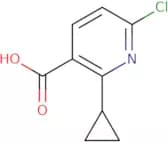
CAS:2-Bromopropionic acid tert-butyl ester is a chemical compound that belongs to the group of alkylation agents. It is used in organic synthesis as a reagent for the preparation of enolates and acrylates by transfer reactions. This compound can be used to prepare styrene copolymers with acrylic acid, methacrylic acid, and crotonic acid. 2-Bromopropionic acid tert-butyl ester has been shown to react with chloride ions in an electrophilic substitution reaction to form a radical species that reacts with oxygen in the presence of light or heat to form a dipole. This process has been shown using techniques such as gel permeation chromatography and mass spectroscopy.Formula:C7H13BrO2Purity:Min. 95%Color and Shape:Colorless Clear LiquidMolecular weight:209.08 g/mol6-Chloro-2-cyclopropylnicotinic acid
CAS:6-Chloro-2-cyclopropylnicotinic acid is a clear, colorless liquid that is soluble in organic solvents. It has a molecular weight of 174.9 and an empirical formula of C8H7ClN2O2. This compound is used as a reagent, intermediate, or building block in organic synthesis and can be used in the production of pharmaceuticals. It is also useful as a building block for drug discovery and can be used to produce various other compounds with biological activity, such as 4-chloro-1-(4-nitrophenyl)piperidine. 6-Chloro-2-cyclopropylnicotinic acid is described by CAS number 862695-75-8 and has the chemical name 6-(chloromethyl) 2-(cyclopropyl) nicotinic acid.Formula:C9H8ClNO2Purity:Min. 95%Color and Shape:PowderMolecular weight:197.62 g/mol2-Chloro-6-methylaniline
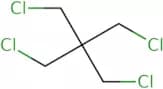
CAS:2-Chloro-6-methylaniline is a molecule that has been used for wastewater treatment and process optimization. It is synthesized from the reaction of amines with trifluoroacetic acid. 2-Chloro-6-methylaniline was found to stimulate the growth of human population in a study conducted at the University of Texas. This molecule has been shown to inhibit the proliferation of t-cells by binding to their surface receptors. 2-Chloro-6-methylaniline has also been shown to be effective in inhibiting dasatinib, which is an anti-cancer drug. 2CMA binds to dasatinib and inhibits its activity by competing with it for binding sites on the protein target. The structure of 2CMA is characterized by proton NMR spectroscopic data and liquid chromatography methods.Formula:C7H8ClNPurity:Min. 95%Color and Shape:Colourless To Purple To Brown LiquidMolecular weight:141.6 g/molPentaerythrityl tetrachloride
CAS:Pentaerythrityl tetrachloride is a chemical compound that has been shown to inhibit the activity of a number of enzymes. It is used as an industrial chemical for wastewater treatment, for the production of carbon tetrachloride, glycol ethers and phosphates, as well as in the manufacture of polymers and adhesives. Pentaerythrityl tetrachloride has also been shown to have anti-inflammatory properties by inhibiting growth factor-β1. This compound is also used in research to study nuclear DNA and silicon-zirconium oxide nanocomposite materials.Formula:C5H8Cl4Purity:Min. 95%Color and Shape:PowderMolecular weight:209.93 g/mol3,5-Difluorophenylhydrazine HCl
CAS:3,5-Difluorophenylhydrazine HCl is a versatile building block. It is a fine chemical that is used in research chemicals and speciality chemicals. 3,5-Difluorophenylhydrazine HCl has been used as a reagent and as a reaction component for the synthesis of complex compounds. This chemical may be useful as a scaffold for the construction of novel molecules with desired properties.Formula:C6H6F2N2·HClPurity:Min. 95%Molecular weight:180.58 g/molMeclofenoxate hydrochloride
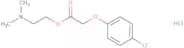
CAS:Controlled ProductMeclofenoxate hydrochloride is a cholinergic drug that has been used to treat bowel diseases. It inhibits the enzyme acetylcholinesterase, which breaks down acetylcholine in the body and thus increases the amount of acetylcholine available to stimulate muscle contractions. Meclofenoxate hydrochloride also affects the production of other enzymes, such as those involved in energy metabolism. The drug has been shown to increase water vapor loss through sweating and reduce body weight in experimental models. The drug may also have a beneficial effect on brain function by increasing oxygen consumption and blood flow to the brain. Meclofenoxate hydrochloride is not well absorbed from the gastrointestinal tract and does not cross the blood-brain barrier, so it can be administered orally or intravenously without causing side effects such as convulsions that are common with other cholinergic drugs. Meclofenoxate hydrochloride is an anhydrousFormula:C12H17Cl2NO3Purity:Min. 95%Color and Shape:White PowderMolecular weight:294.17 g/mol3,4-Difluoro-2-hydroxybenzonitrile
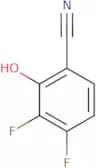
CAS:<p>3,4-Difluoro-2-hydroxybenzonitrile is a fine chemical with a versatile building block. It is a useful intermediate for research chemicals and a reaction component for the synthesis of complex compounds. 3,4-Difluoro-2-hydroxybenzonitrile has been used as a reagent in the synthesis of high quality products such as antihistamines, antibiotics and cosmetics.</p>Formula:C7H3F2NOPurity:Min. 95%Color and Shape:PowderMolecular weight:155.1 g/mol3',5'-Dichloroacetophenone
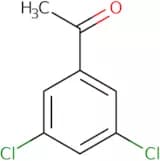
CAS:3',5'-Dichloroacetophenone is a synthetic pyrazoline that is a colorless liquid with an aromatic odor. It is soluble in ethyl acetate, chloroform, benzene, and other organic solvents. 3',5'-Dichloroacetophenone has significant effects on the protonation of amines, which are compounds containing nitrogen and hydrogen. This chemical has been shown to be able to react with anions like chloride or sulfide to form hypophosphorous acid. The symmetric structure of 3',5'-dichloroacetophenone is also susceptible to halide attack and can be synthesized from phenylhydrazine and piperidine.Formula:C8H6Cl2OPurity:Min. 95%Color and Shape:LiquidMolecular weight:189.04 g/mol2,2'-Diiodobiphenyl
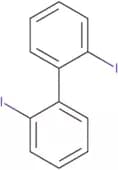
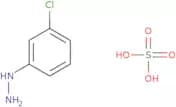
CAS:<p>2,2'-Diiodobiphenyl is a preparative reagent that can be used to prepare diazonium salts. It is prepared by reacting an alkynyl group with an activatable probe. The product of this reaction has the same reactivity as the parent compound, but with a different spatial orientation and chemical properties. The 2,2'-diiodophenyl can be used for the preparation of carbazoles and transfer reactions. The following are some examples of 2,2'-diiodophenyl compounds:<br>-Ethane-1,1'-dibromo-2,2'-diiodobiphenyl<br>-Carbazole-4-carboxaldehyde<br>-Naphthalene-1,5-dicarboxaldehyde</p>Formula:C12H8I2Purity:Min. 95%Color and Shape:PowderMolecular weight:406 g/mol3-Chlorophenylhydrazine sulphate
CAS:<p>3-Chlorophenylhydrazine sulphate is a chemical compound that is made by the reaction of 3-chlorophenol and hydrazine. It has been shown to be stable when mixed with other compounds, such as acetone. 3-Chlorophenylhydrazine sulphate has a reaction time of one hour when it is reacted with sodium hydrogen sulfate and zinc powder in a liquid chromatography column. The final product is detected using chromatography detection, which can detect the presence of sulfates. This chemical compound can be used to make other chemicals, such as thiosulfate or hydrochloric acid.</p>Formula:C12H14Cl2N4•H2O4SPurity:Min. 95%Color and Shape:PowderMolecular weight:383.25 g/mol7-Bromo-2-chlorothieno[3,2-d]pyrimidine
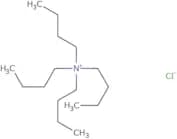
CAS:<p>7-Bromo-2-chlorothieno[3,2-d]pyrimidine is a high quality, reagent grade compound that is used as an intermediate in the synthesis of other complex compounds. It is also a useful scaffold for the synthesis of speciality chemicals and research chemicals. This compound can be used as a versatile building block for the synthesis of many different compounds.</p>Formula:C6H2BrClN2SPurity:Min. 95%Color and Shape:Off-White To Yellow SolidMolecular weight:249.52 g/molTetra-n-butylammonium chloride anhydrous
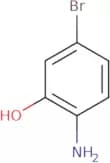
CAS:Tetra-n-butylammonium chloride anhydrous (TBACl) is an inorganic acid that is a colorless solid. It is soluble in water and soluble in organic solvents. TBACl reacts with hydrogen fluoride to form a colorless solution of tetrabutylammonium hydrogen fluoride (TBHF). The reaction proceeds by the following equation:Formula:C16H36NClPurity:Min. 95%Color and Shape:White PowderMolecular weight:277.92 g/mol2-Amino-5-bromophenol
CAS:2-Amino-5-bromophenol is a chemical that is used as a substrate in the study of intracellular Ca2+ levels. 2-Amino-5-bromophenol can also be used to study the activity of microperoxidases, enzymes that are involved in the metabolism of hydrogen peroxide and organic hydroperoxides. 2-Amino-5-bromophenol has been shown to have anticancer activity against MCF7 cells, an estrogen receptor positive cell line. The anticancer activity may be due to the inhibition of protein synthesis by 2-amino-5-bromophenol binding to DNA. This binding prevents transcription and translation of genes that code for proteins involved in cancer cell proliferation and survival.Formula:C6H6BrNOPurity:Min. 95%Color and Shape:Off-White To Brown SolidMolecular weight:188.02 g/mol(5R)-5-(Chloromethyl)-3-[3-fluoro-4-(4-morpholinyl)phenyl]-2-oxazolidinone
CAS:(5R)-5-(Chloromethyl)-3-[3-fluoro-4-(4-morpholinyl)phenyl]-2-oxazolidinone is an enantiopure compound that is used in the synthesis of pharmaceuticals. It has been shown to be a very potent antibacterial agent that can be used to prevent bacterial infections. The (5R)-isomer has been found to have a higher potency than the (5S) isomer, but both are effective. This compound has a cyclopropane ring and a five-membered ring with an oxazolidinone functional group, which makes it structurally related to linezolid and carbonylation.Formula:C14H16ClFN2O3Purity:Min. 95%Color and Shape:White Off-White PowderMolecular weight:314.74 g/molNicotinoyl chloride hydrochloride
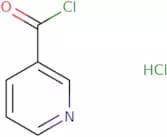
CAS:<p>Nicotinoyl chloride hydrochloride is a coordination complex with a hydroxyl group. It is an antimicrobial agent that inhibits the growth of bacteria by binding to the adenosine A3 receptor and inhibiting adenylate cyclase activity. Nicotinoyl chloride hydrochloride has been shown to inhibit the proliferation of muscle cells in vitro and may be used as an anti-inflammatory agent in pharmaceutical preparations. This compound also has proton transport properties, which are related to its amide group. The nicotinic acid moiety of nicotinoyl chloride hydrochloride is metabolized by fatty acid synthase, which produces fatty acids that can be used as a source of energy by muscle cells. Nicotinoyl chloride hydrochloride also has growth factor activity and can modulate brain functions such as memory and learning.</p>Formula:C6H5Cl2NOPurity:Min. 95%Color and Shape:PowderMolecular weight:178.02 g/mol4-(3-Fluorophenyl)-4-piperidinol
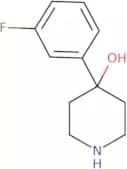
CAS:<p>4-(3-Fluorophenyl)-4-piperidinol is a useful chemical intermediate that can be used as a versatile building block in organic synthesis. It can be used as a reaction component and can serve as a speciality chemical, complex compound, or reagent. 4-(3-Fluorophenyl)-4-piperidinol has been identified by the Chemical Abstracts Service (CAS) number 80119-54-6. This product is of high quality and is not harmful to humans.</p>Formula:C11H14FNOPurity:Min. 95%Color and Shape:Orange PowderMolecular weight:195.23 g/mol1-(Trifluoroacetyl)imidazole
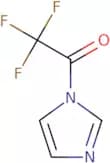
CAS:1-(Trifluoroacetyl)imidazole is a fatty acid that can be found in the chemical ionization of a sample. It is used as an analytical reagent to prepare chromatographic samples for analysis. 1-(Trifluoroacetyl)imidazole has been shown to have biological properties, such as binding to α2-adrenergic receptors and inhibiting the synthesis of retronecine. The concentration and time course of 1-(Trifluoroacetyl)imidazole in plasma and urine has been studied using an analytical method.Formula:C5H3F3N2OPurity:Min. 95%Color and Shape:PowderMolecular weight:164.09 g/mol4-Chloro-3-pyridinesulfonamide
CAS:<p>4-Chloro-3-pyridinesulfonamide is an antibacterial sulfonamide that inhibits the enzyme carbonic anhydrase. It has been shown to inhibit the growth of cancer cells in vitro and in vivo. The anticancer effect may be due to its ability to block the growth of cancer cells by interfering with DNA synthesis and inducing apoptosis, which causes cell death. 4-Chloro-3-pyridinesulfonamide also inhibits tuberculosis and tuberculostatic activity may be due to its inhibition of mycobacterium tuberculosis ribosomes. 4-Chloro-3-pyridinesulfonamide binds to the active site of bacterial anhydrase as well as human carbonic anhydrase II, blocking the conversion of CO2 into bicarbonate ions, which leads to a decrease in pH. This drug also binds to DNA and RNA, inhibiting DNA synthesis and RNA synthesis respectively, leading to cell</p>Formula:C5H5ClN2O2SPurity:Min. 95%Color and Shape:SolidMolecular weight:192.62 g/mol2,6-Dimethyl-1,4-diphenylpyridinium tetrafluoroborate
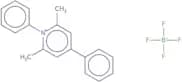
CAS:2,6-Dimethyl-1,4-diphenylpyridinium tetrafluoroborate is a high quality reagent that can be used as a useful intermediate in the synthesis of fine chemicals. It is used as an important building block in the synthesis of many organic compounds and is also an important reaction component. This compound has a wide range of uses and can be used as a versatile building block in organic synthesis or as a speciality chemical for research purposes.Formula:C19H18N·BF4Purity:Min. 95%Molecular weight:347.16 g/mol



![7-Bromo-2-chlorothieno[3,2-d]pyrimidine](/_next/image/?url=https%3A%2Fstatic.cymitquimica.com%2Fproducts%2F3D%2Fthumb-webp%2FFB156457.webp&w=3840&q=75)
![(5R)-5-(Chloromethyl)-3-[3-fluoro-4-(4-morpholinyl)phenyl]-2-oxazolidinone](/_next/image/?url=https%3A%2Fstatic.cymitquimica.com%2Fproducts%2F3D%2Fthumb-webp%2FFC57969.webp&w=3840&q=75)