Organic Halides
Subcategories of "Organic Halides"
Found 20442 products of "Organic Halides"
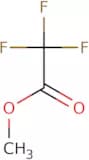
Methyl 2,2,2-trifluoroacetate
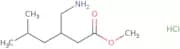
CAS:Methyl 2,2,2-trifluoroacetate is a reactive compound with the chemical formula CHF. It can be used as a glycol ether and reacts with acid to form an alkanoic acid. Methyl 2,2,2-trifluoroacetate also reacts with a hydroxyl group to produce a molecule with two carboxylic acid groups. The kinetic data of this reaction has been determined using gas chromatography. This compound can also be used as a solid catalyst in reactions that require kinetic energy. Methyl 2,2,2-trifluoroacetate is not toxic to humans and has been found to be safe for use in analytical techniques.Formula:C3H3F3O2Purity:Min. 95%Molecular weight:128.05 g/molMethyl 3-(aminomethyl)-5-methylhexanoate hydrochloride
CAS:Controlled ProductPlease enquire for more information about Methyl 3-(aminomethyl)-5-methylhexanoate hydrochloride including the price, delivery time and more detailed product information at the technical inquiry form on this page
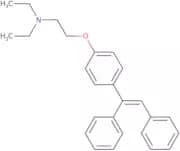
Purity:Min. 95%Deschloro clomiphene
CAS:Controlled ProductPlease enquire for more information about Deschloro clomiphene including the price, delivery time and more detailed product information at the technical inquiry form on this pageFormula:C26H29NOPurity:Min. 95%Molecular weight:371.51 g/mol3,4-Dimethoxybenzyl chloride
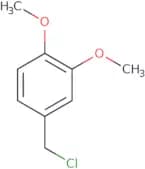
CAS:3,4-Dimethoxybenzyl chloride is an acetate extract that has been shown to have anticancer properties. It is also a corrosion inhibitor with the ability to inhibit fatty acid demethylation and antimicrobial agents. It has been used in pharmaceutical preparations for treating high blood pressure, as well as in the production of eugenol, papaverine and other drugs.
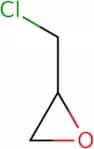
Formula:C9H11ClO2Purity:Min. 95%Molecular weight:186.64 g/molEpichlorohydrine
CAS:Epichlorohydrine is a chemical compound that binds to calcium and sodium ions. It is used in wastewater treatment, where it reacts with fatty acids to form epoxides. Epichlorohydrine has been shown to have carcinogenic effects in animals and humans, which are due to its genotoxic properties. The carcinogenic properties of epichlorohydrine can be attributed to the formation of reactive oxygen species, such as hydroxyl radicals and hydrogen peroxide, which cause DNA damage. Epichlorohydrine also has photosynthetic activity when exposed to sunlight or ultraviolet light.Formula:C3H5ClOPurity:Min. 95%Color and Shape:Clear LiquidMolecular weight:92.52 g/mol6a-Bromo beclomethasone dipropionate
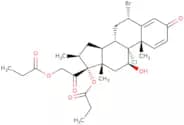
CAS:Controlled ProductPlease enquire for more information about 6a-Bromo beclomethasone dipropionate including the price, delivery time and more detailed product information at the technical inquiry form on this page
Formula:C28H36BrClO7Purity:Min. 95%Molecular weight:599.94 g/molS-[2-(Dimethylamino)ethyl]isothiourea Dihydrochloride
CAS:Controlled ProductS-[2-(Dimethylamino)ethyl]isothiourea Dihydrochloride is an inhibitor of tyrosinase, an enzyme that catalyzes the oxidation of tyrosine to dopa and dopaquinone. It binds to the active site of the enzyme and blocks its activity. S-[2-(Dimethylamino)ethyl]isothiourea Dihydrochloride has been shown to inhibit tyrosinase in animal experiments and in vitro studies, with a concentration-response curve that can be described by a Michaelis-Menten kinetic model. The inhibition of tyrosinase activity may be due to steric hindrance by the thiourea group or a covalent binding to amino acid residues on the protein surface. S-[2-(Dimethylamino)ethyl]isothiourea Dihydrochloride is also known as monomethyl auristatin E (MMAEFormula:C5H13N3S·2HClPurity:Min. 95%Molecular weight:220.16 g/molBromoform - Stabilized with ethanol
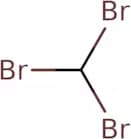
CAS:Bromoform is a colorless, sweet-smelling liquid that was formerly used as an industrial solvent and disinfectant. Bromoform is a potent liver toxin and has been implicated in the development of liver cancer. In animal studies, bromoform causes significant genotoxic effects, including DNA single-strand breaks and chromosomal aberrations. Bromoform also inhibits the activity of enzymes involved in lipid metabolism, which may be due to its ability to bind to proteins in the cell membrane and alter their function. Bromoform is absorbed through the lungs or gastrointestinal tract after inhalation or ingestion. It undergoes rapid metabolism by oxidation followed by conjugation with glutathione, which renders it non-toxic and allows for its elimination from the body.Formula:CHBr3Purity:Min. 95%Color and Shape:Clear LiquidMolecular weight:252.73 g/molDechlorane A
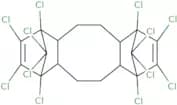
CAS:Dechlorane A is a polymeric matrix that binds to calcium ions and alters the energy metabolism of cells. It has been shown to have physiological effects in rats, such as axonal growth and transcriptomic analysis. Dechlorane A is not absorbed by the human body and has shown low bioavailability. It is used in wastewater treatment plants to remove diphenyl ethers from water, which are toxic to aquatic life.Formula:C18H12Cl12Purity:Min. 95%Color and Shape:PowderMolecular weight:653.72 g/mol4-(4-Chlorobenzoyl)piperidine
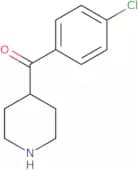
CAS:Please enquire for more information about 4-(4-Chlorobenzoyl)piperidine including the price, delivery time and more detailed product information at the technical inquiry form on this pagePurity:Min. 95%(2S,6S)-2-Amino-2-(2-chlorophenyl)-6-hydroxycyclohexan-1-one HCl
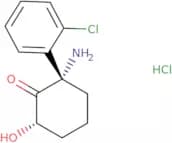
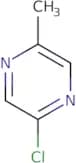
CAS:Controlled ProductPlease enquire for more information about (2S,6S)-2-Amino-2-(2-chlorophenyl)-6-hydroxycyclohexan-1-one HCl including the price, delivery time and more detailed product information at the technical inquiry form on this pageFormula:C12H15CI2NO2Purity:Min. 95%Color and Shape:PowderMolecular weight:471.07 g/mol2-Chloro-5-methylpyrazine
CAS:Please enquire for more information about 2-Chloro-5-methylpyrazine including the price, delivery time and more detailed product information at the technical inquiry form on this pageFormula:C5H5ClN2Purity:Min. 95%Molecular weight:128.56 g/molMyristoyl chloride
CAS:Myristoyl chloride is an antimicrobial agent that belongs to the group of cationic surfactants. It has been shown to be active against bacteria and fungi, but not against viruses. Myristyl chloride has been used in a number of industries, including food production and processing, for its ability to inhibit microbial growth in acidic environments. This chemical also has anti-inflammatory properties and can be used as a topical treatment for inflammatory diseases such as psoriasis or atopic dermatitis.
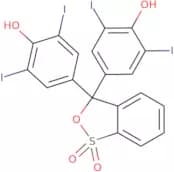
Formula:C14H27ClOPurity:Min. 95%Color and Shape:Colourless To Pale Yellow LiquidMolecular weight:246.82 g/molIodophenol blue
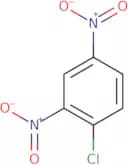
CAS:Iodophenol blue is a dye that has been used in biological research. It is used to stain DNA samples, as it binds to phosphoenolpyruvate (PEP) and sodium carbonate. Iodophenol blue can be used to differentiate tumor cells from the surrounding tissue in biopsy samples. The dye also interacts with amines, resulting in the release of bromophenols and cleavage products. Iodophenol blue can be used as a visual indicator for chemical reactions.Formula:C19H10I4O5SPurity:Min. 80 Area-%Color and Shape:PowderMolecular weight:857.96 g/mol2,4-Dinitrochlorobenzene
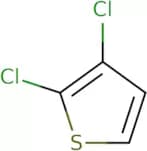
CAS:2,4-Dinitrochlorobenzene is a chemical that has been shown to have an anti-allergic effect. It is used as a reagent in analytical methods for the determination of disease activity. 2,4-Dinitrochlorobenzene inhibits the production of nitric oxide (NO) and prostaglandin E2 (PGE2) by binding to reactive oxygen species (ROS). The inhibition of NO and PGE2 synthesis causes a decrease in the activation of nuclear factor kappa B (NF-κB), which leads to decreased expression of various genes that are regulated by NF-κB. 2,4-Dinitrochlorobenzene has also been shown to increase glutathione levels, which may be due to its ability to inhibit protein thiols and squamous cell carcinoma cells.Formula:C6H3ClN2O4Purity:Min. 95%Color and Shape:PowderMolecular weight:202.55 g/mol2,3-Dichlorothiophene
CAS:2,3-Dichlorothiophene is a heterocyclic compound that can be used as an intermediate in organic synthesis. The compound has two isomers, 2,2-dichlorothiophene and 2,3-dichlorothiophene. The first isomer reacts with water to form a protonated species and the second isomer reacts with chlorine to form a protonated species. The thermodynamic parameters for the reaction of 2,3-dichlorothiophene with chlorine are more favorable than those for the reaction of 2,2-dichlorothiophene with chlorine. This means that the equilibrium lies to the right when 2,3-chlorothiophene is reacted with chlorine (to form 2,3-dichloroethane), but not when 2,2-chlorothiophene is reacted with chlorine (to form chloroform).
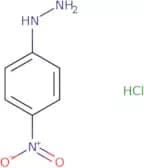
Formula:C4H2Cl2SPurity:Min. 95%Color and Shape:Clear LiquidMolecular weight:153.03 g/mol4-Nitrophenylhydrazine hydrochloride
CAS:4-Nitrophenylhydrazine hydrochloride is an organic compound that belongs to the class of hydrazines. It is a colorless solid that has a melting point of 202-204 °C. 4-Nitrophenylhydrazine hydrochloride is used in the synthesis of other compounds, such as trifluoroacetic acid and nucleophilic compounds. The chemical structure can be analyzed using nuclear magnetic resonance (NMR) spectroscopy, which shows that this compound contains amines and nitro groups. 4-Nitrophenylhydrazine hydrochloride is also soluble in water due to its acidic nature. This compound reacts with bases and alcohols to form salts, such as monosodium salt.
Formula:C6H7N3O2·HClPurity:Min. 95%Color and Shape:PowderMolecular weight:189.6 g/mol3,5-Dichloroaniline
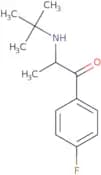
CAS:3,5-Dichloroaniline is an organic compound that exists in two forms. The form that is of most interest to chemists is the para form, which is also called 3,5-dichloro-4-nitroaniline. It has been shown to be an inhibitor of the P450 enzyme system and can be used as a probe for this enzyme activity. 3,5-Dichloroaniline inhibits the activity of bacterial enzymes such as urease, nitroreductase, and cytochrome C reductase. This compound also inhibits the reaction between hydrochloric acid and ammonia to produce ammonium chloride and water. Solubility data for this compound have been obtained by a variety of methods including in vitro studies and experiments on Sprague-Dawley rats.Formula:C6H5Cl2NPurity:Min. 95%Molecular weight:162.02 g/mol4-Fluoro bupropion
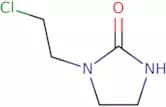
CAS:Controlled ProductPlease enquire for more information about 4-Fluoro bupropion including the price, delivery time and more detailed product information at the technical inquiry form on this pageFormula:C13H18FNOPurity:Min. 95%Molecular weight:223.29 g/mol1-(2-Chloroethyl)-2-imidazolidinone
CAS:1-(2-Chloroethyl)-2-imidazolidinone is a dopamine receptor agonist that is used as a reagent in the synthesis of other drugs. This compound has been shown to have affinity for 5-HT1A and 5-HT2C receptors, and has been used in vivo studies to assess its effect on serotonin levels. It also binds with high affinity to adrenergic receptors, including the D3 receptor. 1-(2-Chloroethyl)-2-imidazolidinone may be useful as a ligand for studying dopamine D3 receptors.
Formula:C5H9ClN2OPurity:Min. 95%Molecular weight:148.59 g/mol

![S-[2-(Dimethylamino)ethyl]isothiourea Dihydrochloride](/_next/image/?url=https%3A%2Fstatic.cymitquimica.com%2Fproducts%2F3D%2Fthumb-webp%2FFD61318.webp&w=3840&q=75)