Organic Halides
In this category, you can find organic molecules containing one or more halogen atoms in their structure. These organic halides include brominated, iodinated, chlorinated, and cyclic halide compounds. Organic halides are widely used in organic synthesis, pharmaceuticals, agrochemicals, and materials science due to their reactivity and ability to undergo a variety of chemical transformations. At CymitQuimica, we offer a comprehensive selection of high-quality organic halides to support your research and industrial applications, ensuring reliable and effective performance in your synthetic and analytical projects.
Subcategories of "Organic Halides"
Found 20442 products of "Organic Halides"
Sort by
Purity (%)
0
100
|
0
|
50
|
90
|
95
|
100
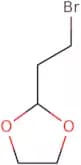
2-(2-Bromoethyl)-1,3-dioxolane
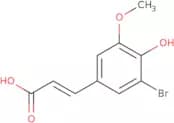
CAS:2-(2-Bromoethyl)-1,3-dioxolane is a synthetic chemical compound that is used for the asymmetric synthesis of fatty acids. It can be prepared by the cross-coupling reaction of ethyl formate with bromoethane and copper(II) acetate in trifluoroacetic acid. The reaction produces an unsymmetrical product with two aldehyde groups and two halides on each side of the molecule. It can also be prepared by the reaction of 2-bromoethanol with sodium formaldehyde sulfoxylate and sodium methoxide in methanol. This process produces a symmetrical molecule with one aldehyde group on each side of the molecule. 2-(2-Bromoethyl)-1,3-dioxolane has been shown to have anti-cancer properties in carcinoma cell lines.Formula:C5H9BrO2Purity:Min. 95%Color and Shape:Brown Colorless Yellow Clear LiquidMolecular weight:181.03 g/mol3-(3-Bromo-4-hydroxy-5-methoxyphenyl)acrylic acid
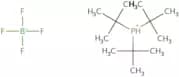
CAS:3-(3-Bromo-4-hydroxy-5-methoxyphenyl)acrylic acid is a polyphenol that can be found in plants and food. It has been shown to have antimicrobial properties against certain bacteria and fungi, such as Staphylococcus aureus, Clostridium perfringens, and Candida albicans. 3-(3-Bromo-4-hydroxy-5-methoxyphenyl)acrylic acid is synthesized by means of the condensation of p-coumaric acid with acrylic acid in the presence of a base catalyst. This compound undergoes biotransformations such as hydroxylation and oxidation to form 3-(3,4′-dihydroxyphenyl)acrylic acid (DHPAA). The compound is also able to react with other phenolic compounds such as cinnamic acid under certain conditions.Formula:C10H9BrO4Purity:Min. 95%Color and Shape:PowderMolecular weight:273.08 g/molTri-tert-butylphosphine tetrafluoroborate
CAS:Tri-tert-butylphosphine tetrafluoroborate (TBPB) is a compound that inhibits tumor growth by inhibiting the activation of allyl carbonates. TBPB has been shown to inhibit tumor growth in vivo and to have an inhibitory effect on the growth of cancer cells in vitro. This drug has been shown to be effective against multiple types of cancer, including breast, prostate, leukemia, and lymphomas. TBPB also inhibits the activity of protein kinase C (PKC), which may play a role in tumorigenesis. It is believed that this drug works by binding to PKC and preventing its activation.Formula:C12H28BF4PPurity:Min. 95%Color and Shape:White PowderMolecular weight:290.13 g/mol3-Fluoro-2-nitrobenzoic acid
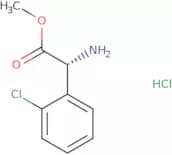
CAS:3-Fluoro-2-nitrobenzoic acid is an anhydrous nitrating agent that reacts with 5-fluoro-2-nitrobenzoic acid to produce 3,5-difluoronitrobenzene. This reaction mixture is introduced into a reaction vessel and heated in the presence of sulfuric acid. 3-Fluoro-2-nitrobenzoic acid is used in the production of dyes and pharmaceuticals.Formula:C7H4FNO4Purity:Min. 95%Color and Shape:PowderMolecular weight:185.11 g/molD-(-)-2-Chlorophenylglycine methyl ester hydrochloride
CAS:Please enquire for more information about D-(-)-2-Chlorophenylglycine methyl ester hydrochloride including the price, delivery time and more detailed product information at the technical inquiry form on this pageFormula:C9H10ClNO2•HClPurity:Min. 95%Molecular weight:236.1 g/molpTH-Related Protein (1-34) amide (human, mouse, rat) trifluoroacetate salt
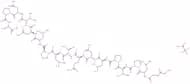
CAS:Parathyroid hormone-related protein (PTHrP) is a peptide hormone produced by the parathyroid gland that functions as a phosphatase, inhibiting alkaline phosphatase. It also has an inhibitory effect on osteoclastic bone resorption and stimulates osteoblastic bone formation. PTHrP has been shown to be useful in treating osteoporosis and Paget's disease. It also has been used in conjunction with dexamethasone to treat patients with malignancies of the head and neck. PTHrP is an inhibitor of protein kinase A and phosphodiesterases, which are enzymes that regulate cellular processes such as proliferation and differentiation.Formula:C180H288N58O47Purity:Min. 95%Molecular weight:4,016.58 g/molH-Tyr(tBu)-2-chlorotrityl resin (200-400 mesh) (Low Substitution)
Please enquire for more information about H-Tyr(tBu)-2-chlorotrityl resin (200-400 mesh) (Low Substitution) including the price, delivery time and more detailed product information at the technical inquiry form on this pagePurity:Min. 95%4-Methylvaleryl chloride
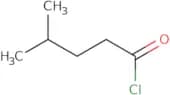
CAS:4-Methylvaleryl chloride (4MVC) is a thionyl chloride that reacts with 2-pentenoic acid to produce 4-methylvaleric acid. It has been used as a pharmaceutical intermediate and as a potent inhibitor of side-chain cleavage reactions. The reaction time required for the formation of 4MVC depends on the reaction temperature. At room temperature, it takes approximately one hour to form; at 60 degrees Celsius, it takes approximately five minutes to form.Formula:C6H11ClOPurity:Min. 95%Color and Shape:Colorless Clear LiquidMolecular weight:134.6 g/mol2-Chloro-3,4-dihydroxybenzoic acid
CAS:Cefepime is a broad-spectrum antibiotic that is used to treat bacterial infections. It inhibits cell wall synthesis by binding to the penicillin-binding proteins and interfering with the cross-linking of peptidoglycan. Cefepime has been shown to be active against gram-negative pathogens such as Aeruginosa, Stenotrophomonas maltophilia, and P. aeruginosa. Cefepime also inhibits the growth of gram-positive bacteria such as Staphylococcus aureus, Enterococcus faecalis, and Streptococcus pneumoniae. The chemical structure of cefepime is similar to that of other beta-lactam antibiotics like methicillin, oxacillin, cloxacillin, ampicillin, and amoxicillin. Cefepime has been shown to be effective in treating resistant gram-negative organisms such as Pseudomonas aeruginosa (P.Formula:C7H5ClO4Purity:Min. 95%Color and Shape:White To Yellow To Light Brown SolidMolecular weight:188.56 g/molH-Asp-Pro-Gln-Phe-Tyr-OH hydrochloride salt
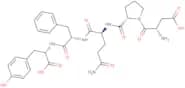
CAS:Please enquire for more information about H-Asp-Pro-Gln-Phe-Tyr-OH hydrochloride salt including the price, delivery time and more detailed product information at the technical inquiry form on this pageFormula:C32H40N6O10Purity:Min. 95%Molecular weight:668.69 g/molACTH (3-24) (human, bovine, rat) trifluoroacetate salt
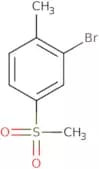
CAS:Please enquire for more information about ACTH (3-24) (human, bovine, rat) trifluoroacetate salt including the price, delivery time and more detailed product information at the technical inquiry form on this pageFormula:C124H196N38O27SPurity:Min. 95%Molecular weight:2,683.19 g/mol2-Bromo-1-methyl-4-(methylsulfonyl)benzene
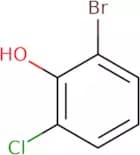
CAS:Please enquire for more information about 2-Bromo-1-methyl-4-(methylsulfonyl)benzene including the price, delivery time and more detailed product information at the technical inquiry form on this pageFormula:C8H9BrO2SPurity:Min. 95%Molecular weight:249.13 g/mol2-Bromo-6-chlorophenol
CAS:2-Bromo-6-chlorophenol is a reactive, thiourea-containing compound that undergoes catalytic reactions. 2-Bromo-6-chlorophenol reacts with sulfate in water to form chlorine radicals, which react with other organic compounds to produce chlorinated organic compounds. This reaction can be used for the oxidation of phenols and alcohols to yield chlorinated products. The yields of this process depend on the concentration of acetonitrile used in the reaction. Acetonitrile is also required for the conversion of dichlorinated benzenes to brominated products.Formula:C6H4BrClOPurity:Min. 95%Molecular weight:207.45 g/mol2-Chloro-N-[2-(diethylamino)ethyl]-4-quinolinecarboxamide
CAS:2-Chloro-N-[2-(diethylamino)ethyl]-4-quinolinecarboxamide is a carboxamide analog of dibucaine. It is synthesized from chloroacetyl chloride and isatin in the presence of sodium hydroxide. The synthesis has been scaled to an industrial level. 2-Chloro-N-[2-(diethylamino)ethyl]-4-quinolinecarboxamide has been shown to have analgesic properties, similar to those of dibucaine. Radiolysis of this compound gives a carboxylic acid and a heterocyclic ring product.Formula:C16H20ClN3OPurity:95%MinColor and Shape:PowderMolecular weight:305.8 g/molH-Gln(Trt)-2-chlorotrityl resin (200-400 mesh)
Please enquire for more information about H-Gln(Trt)-2-chlorotrityl resin (200-400 mesh) including the price, delivery time and more detailed product information at the technical inquiry form on this pagePurity:Min. 95%Anthranilyl-HIV Protease Substrate trifluoroacetate salt
CAS:Please enquire for more information about Anthranilyl-HIV Protease Substrate trifluoroacetate salt including the price, delivery time and more detailed product information at the technical inquiry form on this pageFormula:C43H65N13O11Purity:Min. 95%Molecular weight:940.06 g/molSPLUNC1 (22-39) trifluoroacetate salt
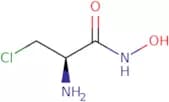
CAS:Please enquire for more information about SPLUNC1 (22-39) trifluoroacetate salt including the price, delivery time and more detailed product information at the technical inquiry form on this pageFormula:C82H135N21O25Purity:Min. 95%Molecular weight:1,815.08 g/molH-beta-Chloro-Ala-NHOH hydrochloride salt
CAS:Please enquire for more information about H-beta-Chloro-Ala-NHOH hydrochloride salt including the price, delivery time and more detailed product information at the technical inquiry form on this page
Formula:C3H7ClN2O2Purity:Min. 95%Molecular weight:138.55 g/mol6-Hydroxy chlorzoxazone
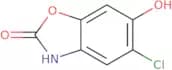
CAS:6-Hydroxy chlorzoxazone is a drug that interacts with 5-hydroxy omeprazole, cytochrome P450 (CYP2E1), and chlorzoxazone. This drug is not metabolized by CYP2E1, but is metabolized by liver microsomes. The plasma concentration of 6-hydroxy chlorzoxazone increases as the patient's body mass index increases. It has been shown to affect the activity of hepatic enzymes such as CYP2E1 and p450 in rat liver microsomes. 6-Hydroxy chlorzoxazone may be used for the treatment of bronchial asthma and chronic obstructive pulmonary disease. The kinetic data for 6-hydroxy chlorzoxazone are based on studies done on humans and rats.Formula:C7H4ClNO3Purity:(%) Min. 95%Color and Shape:Beige PowderMolecular weight:185.56 g/molRANTES (3-68) (human) trifluoroacetate salt
Please enquire for more information about RANTES (3-68) (human) trifluoroacetate salt including the price, delivery time and more detailed product information at the technical inquiry form on this pageFormula:C342H522N94O97S5Purity:Min. 95%Molecular weight:7,662.71 g/mol




![2-Chloro-N-[2-(diethylamino)ethyl]-4-quinolinecarboxamide](/_next/image/?url=https%3A%2Fstatic.cymitquimica.com%2Fproducts%2F3D%2Fthumb-webp%2FFC20289.webp&w=3840&q=75)