Organic Halides
Subcategories of "Organic Halides"
Found 20442 products of "Organic Halides"
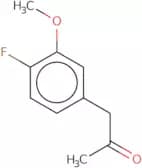
4-Fluoro-3-methoxyphenylacetone
CAS:4-Fluoro-3-methoxyphenylacetone is a high quality reagent that can be used as an intermediate in the synthesis of complex compounds. This compound is also useful for creating fine chemicals and speciality chemicals, for research purposes. 4-Fluoro-3-methoxyphenylacetone has been shown to be a versatile building block in organic synthesis, with many possible applications. It can react with other compounds to create new compounds or react with itself to form new molecules. CAS No. 320338-98-5Formula:C10H11FO2Purity:Min. 95%Molecular weight:182.19 g/molAmyloid b-Protein (1-40) amide trifluoroacetate salt
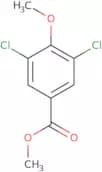
CAS:Please enquire for more information about Amyloid b-Protein (1-40) amide trifluoroacetate salt including the price, delivery time and more detailed product information at the technical inquiry form on this pageFormula:C194H296N54O57SPurity:Min. 95%Molecular weight:4,328.82 g/molMethyl 3,5-dichloro-4-methoxybenzoate
CAS:Methyl 3,5-dichloro-4-methoxybenzoate is a fine chemical and useful building block for research chemicals. It belongs to the class of speciality chemicals and can be used as a reagent in organic synthesis. Methyl 3,5-dichloro-4-methoxybenzoate is a versatile building block that has been reported in the synthesis of many complex compounds. This compound can also be used as an intermediate or scaffold for medicinal chemistry applications.Formula:C9H8Cl2O3Purity:Min. 95%Molecular weight:235.06 g/molTribromomethyl phenyl sulfone
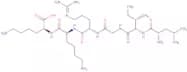
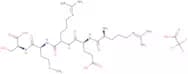
CAS:Tribromomethyl phenyl sulfone is an alkylthio compound that has a cyclohexane ring and a hydroxy group. Tribromomethyl phenyl sulfone has high resistance to thermal expansion, hydrolysis, and radiation. It reacts with silver ions to form bromophenyl silver ion. This molecule can be formed through the reaction of diphenyl ether with hydrogen sulfide in the presence of light, or by the reaction of benzene with sodium hydroxide in the presence of light. Tribromomethyl phenyl sulfone is used as a stabilizer for plastics and other organic materials, as well as an antioxidant for rubber products.Formula:C7H5Br3O2SPurity:Min. 95%Molecular weight:392.89 g/molFibronectin Fragment (1954-1959) trifluoroacetate salt
CAS:Please enquire for more information about Fibronectin Fragment (1954-1959) trifluoroacetate salt including the price, delivery time and more detailed product information at the technical inquiry form on this pageFormula:C32H63N11O7Purity:Min. 95%Molecular weight:713.91 g/molNeuropeptide Y (2-36) (human, rat) trifluoroacetate salt
CAS:Please enquire for more information about Neuropeptide Y (2-36) (human, rat) trifluoroacetate salt including the price, delivery time and more detailed product information at the technical inquiry form on this pageFormula:C180H276N54O55SPurity:Min. 95%Molecular weight:4,108.51 g/mol2-Cyclohexylethanamine hydrochloride
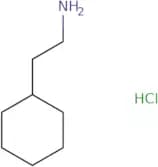
CAS:Please enquire for more information about 2-Cyclohexylethanamine hydrochloride including the price, delivery time and more detailed product information at the technical inquiry form on this page
Formula:C8H18ClNPurity:Min. 95%Color and Shape:PowderMolecular weight:163.69 g/mol3-(2,6-Dichlorophenyl)-5-methylisoxazole-4-carbonyl chloride
CAS:3-(2,6-Dichlorophenyl)-5-methylisoxazole-4-carbonyl chloride is a chlorinated, thermosetting emulsifier that is used in the production of pressure sensitive adhesives. This compound has a high viscosity and is used as a retardant and an emulsifier. It is also used as a trichloride to produce vinyl chloride monomer. 3-(2,6-Dichlorophenyl)-5-methylisoxazole-4-carbonyl chloride inhibits the growth of bacteria by acting as an antimicrobial agent. The mechanism of action for this compound is not fully understood but it has been shown to inhibit protein synthesis in bacteria.Formula:C11H6Cl3NO2Purity:Min. 95%Molecular weight:290.53 g/molMeOSuc-Ala-Ala-Pro-Ala-chloromethylketone
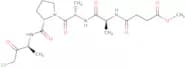
CAS:MeOSuc-Ala-Ala-Pro-Ala-chloromethylketone is a peptidyl substrate for the enzyme carboxypeptidase A. This substrate has a high specificity for carboxypeptidase A and does not bind to other enzymes such as carboxypeptidase B, D, or L. The hydrophobic nature of this substrate has been shown in both hamsters and macaques. MeOSuc-Ala-Ala-Pro-Ala-chloromethylketone also shows cardiovascular effects in both animal models. It is possible that this effect is due to the proteolytic activity of the enzyme. More research needs to be done to identify the sequence of this peptide and how it may affect humans.Formula:C20H31ClN4O7Purity:Min. 95%Molecular weight:474.94 g/mol3,5-Dichloropyrazine-2-carboxylicacid
CAS:Please enquire for more information about 3,5-Dichloropyrazine-2-carboxylicacid including the price, delivery time and more detailed product information at the technical inquiry form on this page
Formula:C5H2Cl2N2O2Purity:Min. 95%Molecular weight:192.99 g/molTris(1-chloro-2-propyl) phosphate - mixture of isomers
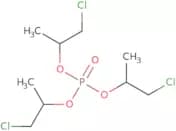
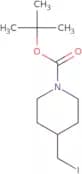
CAS:Tris(1-chloro-2-propyl) phosphate is a synthetic compound that belongs to the class of diphenyl ethers. It is used as an intermediate in the production of other chemicals, such as plastics and pesticides. Tris(1-chloro-2-propyl) phosphate has been shown to be toxic to cells by inhibiting mitochondrial membrane potential and interfering with cellular metabolism. This chemical can cause severe health effects, such as liver damage and death, at high doses. Tris(1-chloro-2-propyl) phosphate can also be detected in human serum and urine samples with high sensitivity.Formula:C9H18Cl3O4PPurity:Min. 95%Molecular weight:327.57 g/mol1-Boc-4-Iodomethyl-Piperidine
CAS:Please enquire for more information about 1-Boc-4-Iodomethyl-Piperidine including the price, delivery time and more detailed product information at the technical inquiry form on this page
Formula:C11H20INO2Color and Shape:PowderMolecular weight:325.19 g/molpTH-Related Protein (1-37) (human, mouse, rat) trifluoroacetate salt
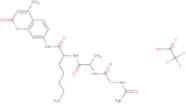
CAS:Please enquire for more information about pTH-Related Protein (1-37) (human, mouse, rat) trifluoroacetate salt including the price, delivery time and more detailed product information at the technical inquiry form on this pageFormula:C197H317N63O53Purity:Min. 95%Molecular weight:4,416.02 g/molAc-Gly-Ala-Lys-AMC trifluoroacetate salt
Please enquire for more information about Ac-Gly-Ala-Lys-AMC trifluoroacetate salt including the price, delivery time and more detailed product information at the technical inquiry form on this pageFormula:C23H31N5O6Purity:Min. 95%Molecular weight:473.52 g/molMca-Pro-b-cyclohexyl-Ala-Gly-Nva-His-Ala-Dap (Dnp)-NH2 trifluoroacetate salt
CAS:Please enquire for more information about Mca-Pro-b-cyclohexyl-Ala-Gly-Nva-His-Ala-Dap (Dnp)-NH2 trifluoroacetate salt including the price, delivery time and more detailed product information at the technical inquiry form on this page
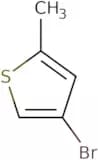
Formula:C51H65N13O15Purity:Min. 95%Molecular weight:1,100.14 g/mol4-Bromo-2-methylthiophene
CAS:4-Bromo-2-methylthiophene is a linker that is used in the synthesis of metal carbonyls. It has been shown to be an efficient cross-linking agent for the preparation of polymers. 4-Bromo-2-methylthiophene can be isomerized to 2,5-dimethylthiophene by heating it with hydroxylamine. 4-Bromo-2-methylthiophene can also catalyze the alkylation of nucleophiles such as ammonia and dimethyl sulfate, as well as nucleophilic attack on carboxylic acid derivatives. This compound is acidic, due to its chloride substituent, which can react with basic groups such as hydroxyl groups or amines.Formula:C5H5BrSPurity:Min. 95%Color and Shape:Clear LiquidMolecular weight:177.06 g/molAmyloid beta/A4 Protein Precursor770 (403-407) trifluoroacetate salt
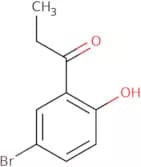
CAS:Please enquire for more information about Amyloid beta/A4 Protein Precursor770 (403-407) trifluoroacetate salt including the price, delivery time and more detailed product information at the technical inquiry form on this pageFormula:C25H47N11O9SPurity:Min. 95%Molecular weight:677.78 g/mol5'-Bromo-2'-hydroxypropiophenone
CAS:5'-Bromo-2'-hydroxypropiophenone is a synthetic compound that inhibits the dimerization of survivin, which is a protein involved in cancer pathways. This compound has been shown to inhibit the growth of cells in culture and can be used as an inhibitor for assays. 5'-Bromo-2'-hydroxypropiophenone has also been shown to integrate into DNA, which may lead to chromosomal rearrangements and mutations. It also binds with high affinity to the family of modifications borealin, which are implicated in cellular processes such as cell differentiation and proliferation.
Formula:C9H9BrO2Purity:Min. 95%Color and Shape:SolidMolecular weight:229.07 g/mol2-[(3,5,6-Trichloro-2-pyridinyl)oxy]acetic acid
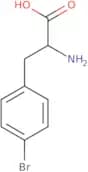
CAS:Carbaryl is a broad-spectrum insecticide that has been used to control pests in homes, gardens, and agricultural fields. It can be found in many products for use around the home, including flea collars and ant traps. Carbaryl is absorbed by plants through their leaves and roots and can affect photosynthetic activity. Carbaryl also affects plant metabolism by inhibiting proximal tubule function, which leads to an increase in urea nitrogen and urine production. Carbaryl can be toxic to humans when ingested or inhaled. The toxicity of carbaryl depends on its route of exposure (oral, inhalation, or skin). Carbaryl is metabolized through a number of metabolic reactions that include oxidation by cytochrome P450 enzymes, reduction by glutathione reductase, or conjugation with glucuronic acid.Formula:C7H4Cl3NO3Purity:Min. 95%Color and Shape:PowderMolecular weight:256.47 g/mol4-Bromophenylalanine
CAS:4-Bromophenylalanine is a chemical compound that can be used as a spectroscopic probe to study the dynamics of protein synthesis. It is derived from 4-bromobenzaldehyde, which is oxidized by hydrogen peroxide in the presence of cytochrome P450 reductase and NADPH, yielding 4-bromophenylalanine. This compound has been shown to inhibit protein synthesis by binding reversibly to the synthetase during its synthetic cycle. The binding of 4-bromophenylalanine inhibits the synthesis of peptides with a C-terminal amide group. This inhibition leads to a decrease in the amount of functional groups present in proteins and an increase in the amount of buffers. These effects have been demonstrated through modelling studies using both model organisms and buffer solutions.Formula:C9H10BrNO2Purity:Min. 95%Color and Shape:White PowderMolecular weight:244.09 g/mol







![2-[(3,5,6-Trichloro-2-pyridinyl)oxy]acetic acid](/_next/image/?url=https%3A%2Fstatic.cymitquimica.com%2Fproducts%2F3D%2Fthumb-webp%2FFT28420.webp&w=3840&q=75)