Organic Halides
In this category, you can find organic molecules containing one or more halogen atoms in their structure. These organic halides include brominated, iodinated, chlorinated, and cyclic halide compounds. Organic halides are widely used in organic synthesis, pharmaceuticals, agrochemicals, and materials science due to their reactivity and ability to undergo a variety of chemical transformations. At CymitQuimica, we offer a comprehensive selection of high-quality organic halides to support your research and industrial applications, ensuring reliable and effective performance in your synthetic and analytical projects.
Subcategories of "Organic Halides"
Found 20437 products of "Organic Halides"
Sort by
Purity (%)
0
100
|
0
|
50
|
90
|
95
|
100
α-Helical CRF (9-41) trifluoroacetate salt
CAS:<p>Please enquire for more information about Alpha-Helical CRF (9-41) trifluoroacetate salt including the price, delivery time and more detailed product information at the technical inquiry form on this page</p>Formula:C166H274N46O53S2Purity:Min. 95%Molecular weight:3,826.36 g/mol2,3-Dichloroanisole
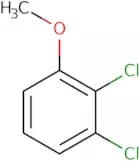
CAS:<p>2,3-Dichloroanisole is a volatile organic compound that has been shown to be an attractant for termites. It is used as a pesticide and agrochemical. 2,3-Dichloroanisole is used as an insecticide against termites and other pests in agriculture. This chemical has been shown to inhibit the sodium channel of the nerve cell membrane, which leads to paralysis of insects. The mechanism of action for this compound is not well understood but it has been suggested that it may act by blocking the reorientation of the sodium ion channels. 2,3-Dichloroanisole can also be used as a metal salt in some thermodynamic reactions.</p>Formula:C7H6Cl2OPurity:Min. 97%Color and Shape:PowderMolecular weight:177.03 g/mol(D-Arg2, Sar 4)-Dermorphin (1-4) trifluoroacetate salt
CAS:<p>Please enquire for more information about (D-Arg2, Sar 4)-Dermorphin (1-4) trifluoroacetate salt including the price, delivery time and more detailed product information at the technical inquiry form on this page</p>Purity:Min. 95%Molecular weight:555.631-(2,4-Dichlorophenyl)-1H-pyrrole-2,5-dione
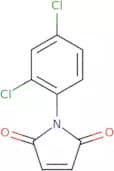
CAS:<p>Maleimide is a chemical compound with the molecular formula CH2=C(O)NHC(=O)CH2-CO2H. It is a reactive monomer that polymerizes in the presence of an initiator to form polymers. Maleimides are also used as cross-linking agents, and have been shown to be thermostable and stable at high temperatures. This particular maleimide is a colorless solid that has been shown to copolymerize with methyl methacrylate and other monomers to form thermally stable, hydrophobic polymers.</p>Formula:C10H5Cl2NO2Purity:Min. 95%Molecular weight:242.06 g/molEndotrophin (mouse) trifluoroacetate salt
CAS:<p>A carboxyl-terminal cleavage product of collagen 6 alpha-3 chain which is produced and released by adipocytes and massively upregulated in malignant tumors of breast, liver colon and pancreas. Endotrophin provides a link between obesity and aggressive tumor growth and may serve as sensitive diagnostic marker and valid therapeutic target for designing better strategies to treat cancer and ameliorate obesity-induced insulin resistance.</p>Formula:C345H520N92O106S7Purity:Min. 95%Molecular weight:7,876.84 g/mol3-(Chloromethyl)-5-methylpyridine hydrochloride
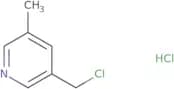
CAS:<p>3-(Chloromethyl)-5-methylpyridine hydrochloride (3CMPH) is a chemical compound that is synthesized from chlorine and methylpyridine. 3CMPH can be produced by the reaction of chlorination with toluene or hydrogen chloride. The synthesis of 3CMPH is done in two steps: first, reacting toluene with chlorine gas at high temperature and pressure in the presence of sulfuric acid, followed by the addition of sulfuric acid to the resulting product. In the second step, hydrogen chloride reacts with methylpyridine in an alkaline solution, yielding 3-(chloromethyl)-5-methylpyridine hydrochloride as a white solid. 3CMPH has been shown to have antihistamine effects and can be used for treating allergies. It can also be used as a skin protectant against uv light and rupatadine.</p>Formula:C7H8ClN·HClPurity:Min. 95%Molecular weight:178.06 g/molZ-Asp(OMe)-Glu(OMe)-Val-DL-Asp(OMe)-fluoromethylketone
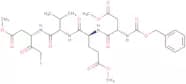
CAS:<p>Z-Asp(OMe)-Glu(OMe)-Val-DL-Asp(OMe)-fluoromethylketone is a small molecule that has been shown to induce apoptosis in cultured cells. It is a caspase-3 inhibitor, which prevents the activation of the caspase cascade and protects cells from oxidative injury. Low doses of Z-Asp(OMe)-Glu(OMe)-Val-DL-Asp(OMe)-fluoromethylketone have been shown to induce apoptosis in cultured cells, with no significant cytotoxicity at high doses. The mechanism of action for this agent is not yet known, but it may promote mitochondrial membrane potential loss and neuronal death by binding to DNA, or induce cell death through a caspase-independent pathway.</p>Formula:C30H41FN4O12Purity:Min. 95%Molecular weight:668.66 g/mol3-Fluorobenzoyl chloride
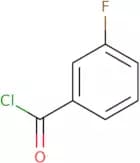
CAS:<p>3-Fluorobenzoyl chloride is an inhibitor of AMPK. It binds to the ATP-binding site of the enzyme and inhibits phosphorylation, leading to decreased activity. 3-Fluorobenzoyl chloride has been shown to reduce the growth of cancer cells in vitro and in vivo by increasing the levels of a protein called p27KIP1. This protein regulates cell cycle progression and prevents cancer cells from entering into mitosis. 3-Fluorobenzoyl chloride also binds to factor receptors and inhibits kinase selectivity, which causes increased glucose uptake in adipocytes. The fluorine atom on this molecule increases its lipophilicity, which makes it more potent than other inhibitors that do not contain fluorine atoms.</p>Formula:C7H4ClFOPurity:Min. 95%Molecular weight:158.56 g/molAmyloid β-Protein (40-1) trifluoroacetate salt
CAS:<p>Trifluoroacetate salt</p>Formula:C194H295N53O58SPurity:Min. 95%Molecular weight:4,329.81 g/mol(Chlorodifluoromethyl)trimethylsilane
CAS:<p>(Chlorodifluoromethyl)trimethylsilane is a chlorinating agent that is used for the transfer of chlorine to organic compounds. The activated chlorides are converted to aldehydes, which are then reacted with terminal alkynes in the presence of sodium carbonate to produce (chlorodifluoromethyl)trimethylsilanes. This reaction produces an organosilicon compound that has been shown to inhibit certain enzymes, such as lipases and proteases. Chlorodifluoromethyl)trimethylsilane also has bioisosteres, or structural analogs, with other halogens. It can be prepared by irradiation of chlorodichloromethane at room temperature in the presence of a catalyst.</p>Formula:C4H9ClF2SiPurity:Min. 95%Color and Shape:Colorless PowderMolecular weight:158.65 g/molLQEQ-19 (human) trifluoroacetate salt
<p>Please enquire for more information about LQEQ-19 (human) trifluoroacetate salt including the price, delivery time and more detailed product information at the technical inquiry form on this page</p>Formula:C106H170N30O34Purity:Min. 95%Molecular weight:2,408.67 g/molAngiotensin (1-12) (human) trifluoroacetate salt
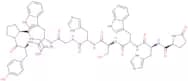
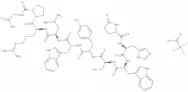
CAS:<p>Please enquire for more information about Angiotensin (1-12) (human) trifluoroacetate salt including the price, delivery time and more detailed product information at the technical inquiry form on this page</p>Formula:C73H109N19O16Purity:Min. 95%Molecular weight:1,508.77 g/mol(D-Trp6,D-Leu7)-LHRH trifluoroacetate salt
CAS:<p>Please enquire for more information about (D-Trp6,D-Leu7)-LHRH trifluoroacetate salt including the price, delivery time and more detailed product information at the technical inquiry form on this page</p>Formula:C64H82N18O13Purity:Min. 95%Molecular weight:1,311.45 g/molpTH-Related Protein Splice Isoform 3 (140-173) (human) trifluoroacetate salt
CAS:<p>Please enquire for more information about pTH-Related Protein Splice Isoform 3 (140-173) (human) trifluoroacetate salt including the price, delivery time and more detailed product information at the technical inquiry form on this page</p>Formula:C186H313N53O44S2Purity:Min. 95%Molecular weight:4,059.94 g/mol6-FAM-(Glu13·17·20)-Osteocalcin (1-46) (mouse) trifluoroacetate salt
CAS:<p>Please enquire for more information about 6-FAM-(Glu13·17·20)-Osteocalcin (1-46) (mouse) trifluoroacetate salt including the price, delivery time and more detailed product information at the technical inquiry form on this page</p>Formula:C247H361N57O80S2Purity:Min. 95%Molecular weight:5,472.98 g/mol4-(3-(Trifluoromethyl)-3H-diazirin-3-yl)benzoic acid
CAS:<p>4-(3-(Trifluoromethyl)-3H-diazirin-3-yl)benzoic acid is a diazirine that is used to form copper complexes. These complexes are then used as diagnostic agents for the detection of nucleic acids in biological samples, such as wheat germ and human tissue. 4-(3-(Trifluoromethyl)-3H-diazirin-3-yl)benzoic acid may also be used in the production of polymer films. It has been shown to have a dihedral angle (C), which is an important factor in the properties of surfactants. The properties of 4-(3-(Trifluoromethyl)-3H-diazirin-3-yl)benzoic acid depend on its functional groups, fatty acids, and dimethylformamide content.</p>Formula:C9H5F3N2O2Purity:Min. 95%Color and Shape:White/Off-White SolidMolecular weight:230.14 g/mol3-Amino-4-hydroxybenzoic acid hydrochloride
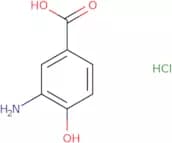
CAS:<p>3-Amino-4-hydroxybenzoic acid hydrochloride (3ABA) is a crystalline compound with a molecular formula of C6H5NO2. It is an acidic compound that is soluble in water and alcohol, but not in ether. 3ABA has been used as the starting material for the synthesis of many other organic compounds. It can be obtained by reacting phenol with chlorobenzoyl chloride to form the chlorobenzoate salt, which on hydrolysis yields 3ABA. This compound has also been used as a reagent for synthesizing carbon nanotubes. The crystal structure of 3ABA was determined using X-ray diffraction data from crystallographic studies, and it was found to have three independent molecules per unit cell. Diffraction indicated that each molecule is composed of two benzene rings joined by a single bond between carbon atoms 1 and 2 and another bond between carbon atoms 2 and 3.</p>Formula:C7H8ClNO3Purity:Min. 95%Molecular weight:189.6 g/mol2-Boc-2,9-Diazaspiro[5.5]undecane hydrochloride
CAS:<p>Please enquire for more information about 2-Boc-2,9-Diazaspiro[5.5]undecane hydrochloride including the price, delivery time and more detailed product information at the technical inquiry form on this page</p>Formula:C14H27ClN2O2Purity:Min. 95%Molecular weight:290.83 g/molLIP1 (human) trifluoroacetate salt
<p>Please enquire for more information about LIP1 (human) trifluoroacetate salt including the price, delivery time and more detailed product information at the technical inquiry form on this page</p>Formula:C133H229N45O37Purity:Min. 95%Molecular weight:3,050.52 g/molLHRH II trifluoroacetate salt
CAS:<p>LHRH II trifluoroacetate salt is a peptide hormone that is used to treat prostate cancer, breast cancer, and endometriosis. It binds to the ryanodine receptor in the cell membrane and induces the release of calcium from intracellular stores. LHRH II trifluoroacetate salt also promotes polymerase chain reactions which are important for DNA replication. This drug has been shown to increase epidermal growth factor (EGF) levels in carcinoma cell lines and has transcriptional regulatory activity in a model system. LHRH II trifluoroacetate salt can be used as an experimental model for clinical relevance because it can be used to study how hormones affect cellular processes such as transcriptional regulation.</p>Formula:C60H69N17O13Purity:Min. 95%Molecular weight:1,236.3 g/mol







![2-Boc-2,9-Diazaspiro[5.5]undecane hydrochloride](/_next/image/?url=https%3A%2Fstatic.cymitquimica.com%2Fproducts%2F3D%2Fthumb-webp%2FFB154133.webp&w=3840&q=75)