Organic Halides
Subcategories of "Organic Halides"
Found 20442 products of "Organic Halides"
PHM-27 (human) trifluoroacetate salt
CAS:PHM-27 is a human protein that contains a c-terminal histidine and n-terminal lysine. It contains an amino acid composition of histidine, valine, alanine, aspartic acid, glycine, serine, threonine, arginine, and methionine. PHM-27 is present in the cardiovascular system, nervous system, gastrointestinal system, and respiratory system. It has been shown to be involved in the synthesis of peptides important for blood clotting.
Formula:C135H214N34O40SPurity:Min. 95%Molecular weight:2,985.41 g/molRef: 3D-FP109808
Discontinued productPhenylacetyl-(D-Arg2·28,p-chloro-Phe6, Homoarg 9·29,Tyr(Me)10, Abu 15, Nle 27)-GRF (1-29) amide (human)
CAS:Please enquire for more information about Phenylacetyl-(D-Arg2·28,p-chloro-Phe6, Homoarg 9·29,Tyr(Me)10, Abu 15, Nle 27)-GRF (1-29) amide (human) including the price, delivery time and more detailed product information at the technical inquiry form on this pageFormula:C172H284ClN53O41Purity:Min. 95%Molecular weight:3,785.88 g/molRef: 3D-FP109391
Discontinued productNeuropeptide VF (56-92) (human) trifluoroacetate salt
Please enquire for more information about Neuropeptide VF (56-92) (human) trifluoroacetate salt including the price, delivery time and more detailed product information at the technical inquiry form on this page
Formula:C195H304N52O51S2Purity:Min. 95%Molecular weight:4,256.95 g/molRef: 3D-FN109557
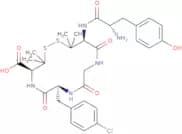
Discontinued product(D-Pen 2,p-chloro-Phe4,D-Pen 5)-Enkephalin
CAS:D-Pen 2,p-chloro-Phe4,D-Pen 5)-Enkephalin H-Tyr-D-Pen-Gly-p-chloro-Phe-D-Pen (Disulfide bond) is a peptide that belongs to the family of opioid drugs. It has low potency and is used in pharmacological studies as a nonselective antagonist of δ-, μ-, and κ-(kappa) receptors. This drug blocks pain by binding to the same receptor sites that are activated by endogenous opioids and has been shown to be effective against both inflammatory and neuropathic pain. DPDPE has also been shown to have a high safety profile with minimal side effects.
Formula:C30H38ClN5O7S2Purity:Min. 95%Molecular weight:680.24 g/molRef: 3D-FP110360
Discontinued productAtrial Natriuretic Factor (1-28) (human) hydrochloride salt
CAS:Controlled ProductPlease enquire for more information about Atrial Natriuretic Factor (1-28) (human) hydrochloride salt including the price, delivery time and more detailed product information at the technical inquiry form on this pageFormula:C127H203N45O39S3Purity:Min. 95%Molecular weight:3,080.45 g/molRef: 3D-FA110233
Discontinued product(Beta-Asp5)-delta-Sleep Inducing Peptide trifluoroacetate salt
CAS:(Beta-Asp5)-delta-Sleep Inducing Peptide is a synthetic molecule that has been shown to be an atypical compound. It is a fragment of the natural sleep-inducing peptide, which is also called clostridium sporogenes. The fragment was synthesized and found to have similar properties and structures as the natural form. The fragment is labile in neutral or acidic solution, but stable in basic conditions. (Beta-Asp5)-delta-Sleep Inducing Peptide can be used for the detection of methyltransferase activity, by using it as a substrate for methylation reactions and measuring the rate of spontaneous desorption from a matrix. This compound can also be used for proteomic studies by using matrix-assisted laser desorption ionization time-of-flight mass spectrometry (MALDI TOF MS) techniques.
Formula:C35H48N10O15Purity:Min. 95%Molecular weight:848.81 g/molRef: 3D-FA108705
Discontinued productBiotinyl-Pancreatic Polypeptide (human) trifluoroacetate salt
CAS:Please enquire for more information about Biotinyl-Pancreatic Polypeptide (human) trifluoroacetate salt including the price, delivery time and more detailed product information at the technical inquiry form on this page
Formula:C195H301N55O56S3Purity:Min. 95%Molecular weight:4,408.01 g/molRef: 3D-FB110183
Discontinued product3-Bromo-4-chloroaniline
CAS:3-Bromo-4-chloroaniline is a chloroaniline compound. It is synthesized by reacting hexamethylenetetramine with chlorine gas in the presence of formaldehyde and paraformaldehyde. 3-Bromo-4-chloroaniline has been used to produce other compounds, such as trimethylchlorosilane, which is used in the production of silicone rubber. Chloroanilines are toxic chemicals that can be found in the environment and react with formaldehyde to produce carcinogenic substances called halofuginones.
Formula:C6H5BrClNPurity:Min. 95%Molecular weight:206.47 g/molBoc-Leu-Lys-Arg-AMC hydrochloride salt
CAS:Boc-Leu-Lys-Arg-AMC is a synthetic substrate that has been used in a number of clinical studies to identify the serine proteases that are involved in autoimmune diseases. It is a synthetic peptide composed of the amino acid sequence found in soybean trypsin. The peptide was shown to have high salt tolerance and was able to be hydrolyzed by polyclonal antibodies with specificity for amyloid protein, suggesting it may be useful as a biochemical marker for Alzheimer's disease. Boc-Leu-Lys-Arg-AMC has also been shown to be an efficient substrate for collagenase, which is an enzyme that breaks down collagen and causes tissue damage. This property makes this compound useful as a proteolytic agent for the removal of unwanted scar tissue or other lesions from diseased organs. Boc-Leu-Lys-Arg-AMC also has an optimum pH level of 7.5 and is active against influenzaFormula:C33H52N8O7Purity:Min. 95%Molecular weight:672.82 g/molRef: 3D-FB110554
Discontinued productN-[(RS)-1-Carboxy-3-phenyl-propyl]-Ala-Ala-Phe-4-Abz-OH trifluoroacetate salt
CAS:The N-[(RS)-1-carboxy-3-phenyl-propyl]-Ala-Ala-Phe-4-Abz-OH trifluoroacetate salt is a synthetic substrate for the study of metalloendopeptidase. This compound was used to develop a model system to study the function of human liver, and has been shown to inhibit the growth of PC12 cells. The N-[(RS)-1-Carboxy-3-phenyl-propyl]-Ala-Ala-Phe-4-Abz-OH trifluoroacetate salt is also an experimental model for congestive heart failure. This compound has been shown to increase glomerular filtration rate in experimental animals as well as basic fibroblast growth factor activity in cell culture by increasing intracellular calcium levels.Formula:C32H36N4O7Purity:Min. 95%Molecular weight:588.65 g/molRef: 3D-FR111118
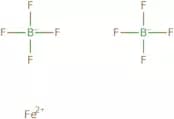
Discontinued productIron(II) tetrafluoroborate - 40-45% aqueous solution
CAS:Iron(II) tetrafluoroborate is a green-yellow crystalline solid that is soluble in water. It has been shown to have structural and optical properties that are similar to those of ferric chloride, but with the advantage of being less toxic. Iron(II) tetrafluoroborate is used as a homogeneous catalyst for organic reactions such as the hydrogenation of nitroarenes and the reduction of ketones. The catalytic activity of Iron(II) tetrafluoroborate arises from its ability to form hydrogen bonding interactions with other molecules and ions in solution.
Iron(II) tetrafluoroborate undergoes a number of reactions with other compounds, including cleavage products such as hydrogen sulfate and nitrogen atoms, which may be due to its chelate ligand. In coordination chemistry, Iron(II) tetrafluoroborate can form coordination complexes by reacting with potassium dichromate or calcium carbonate. These complexes areFormula:B2F8FePurity:About 45%Color and Shape:Slightly Green Clear LiquidMolecular weight:229.45 g/molRef: 3D-FI105721
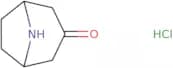
Discontinued productNortropinone hydrochloride
CAS:Nortropinone hydrochloride is a molecule with a pyridinium moiety. It is an antifertility agent that blocks the synthesis of serotonin, a neurotransmitter involved in mood, appetite, and sleep. Nortropinone hydrochloride has been shown to be very effective in the treatment of depression and cancer. Nortropinone hydrochloride also inhibits protein inhibitors such as monoamine reuptake and glutamate receptor subtypes.
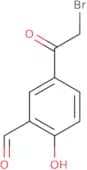
Formula:C7H12ClNOPurity:Min. 95%Molecular weight:161.63 g/mol5-(2-Bromo-acetyl)-2-hydroxy-benzaldehyde
CAS:5-Bromo-2-hydroxybenzaldehyde is an organic compound with a chemical formula of CHBrO. It is a white solid that is soluble in water, ethanol, and acetone. The synthesis of 5-bromo-2-hydroxybenzaldehyde has been achieved by the acylation reaction of benzaldehyde with bromide ion. The selectivity for this reaction can be increased by using sodium borohydride as a reducing agent instead of lithium aluminum hydride. This method can be applied to the synthesis of salmeterol, which is used as a medicine in the treatment of asthma.
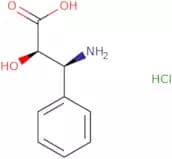
Formula:C9H7BrO3Purity:Min. 95%Molecular weight:243.05 g/mol(2R,3S)-3-Amino-2-hydroxy-3-phenylpropanoic acid hydrochloride
CAS:(2R,3S)-3-Amino-2-hydroxy-3-phenylpropanoic acid hydrochloride is an organic compound that is used in the manufacture of taxol, an anticancer drug. It is synthesized by reacting chloroacetic acid with a metal hydroxide, such as sodium hydroxide or potassium hydroxide. The reaction proceeds spontaneously to form the enantiomerically pure (2R,3S) form and unreacted (2S,3R) form. The (2R,3S) enantiomer has been found to be more reactive than the (2S,3R) form. Quaternary ammonium salts are formed when the (2R,3S) enantiomer reacts with quaternary ammonium compounds such as benzyltrimethylammonium chloride. This compound can also be used in catalytic reactions to produce drugs such as carbapenems and pen
Formula:C9H12ClNO3Purity:Min. 95%Molecular weight:217.65 g/molRef: 3D-FA140332
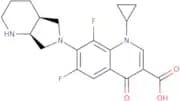
Discontinued product8-Desmethoxy-8-fluoro moxifloxacin
CAS:8-Desmethoxy-8-fluoro moxifloxacin is a photolytic drug that is used to treat bacterial infections. It has a high degree of antibacterial activity against methicillin-resistant staphylococcus aureus, including methicillin resistant strains of Staphylococcus epidermidis. 8-Desmethoxy-8-fluoro moxifloxacin hydrochloride is produced by the addition of hydrochloric acid to moxifloxacin, which is then purified by ion chromatography. The compound has been shown to have good stability in human plasma and urine. It also shows excellent recoveries in acetonitrile and quantification results in flow rates.
Formula:C20H21F2N3O3Purity:Min. 95%Molecular weight:389.4 g/molRef: 3D-FD21225
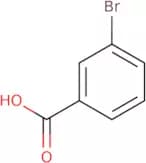
Discontinued product3-Bromobenzoic acid
CAS:3-Bromobenzoic acid is a molecule that is classified as a Group P2. It has an electronegativity of 1.3 and an acidity of 0.8, which are both in the middle range of values for this group. 3-Bromobenzoic acid is soluble in water and is soluble in ethanol, acetone, and ether. The chemical structure of 3-bromobenzoic acid can be determined by its monoclonal antibody binding sites, electrochemical impedance spectroscopy data, and Langmuir adsorption isotherm data. 3-Bromobenzoic acid reacts with hydrochloric acid to form benzoate and HCl gas. Chronic exposure to 3-bromobenzoic acid has been shown to cause glutamate dehydrogenase inhibition, leading to an accumulation of p-hydroxybenzoic acid in the body. This compound also reacts with thiourea or
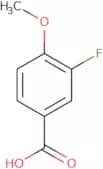
Formula:C7H5BrO2Purity:Min. 95%Color and Shape:PowderMolecular weight:201.02 g/mol3-Fluoro-4-methoxybenzoic acid
CAS:3-Fluoro-4-methoxybenzoic acid is a dipolar molecule with a fluorine atom. It has been synthesized experimentally and the yields are determined by the experimental conditions. 3-Fluoro-4-methoxybenzoic acid has two isomers, which can be differentiated by their resonances. The molecule also has an asymmetric C3(CF)2Cl group in the middle of its structure that can rotate freely.
Formula:C8H7FO3Purity:Min. 95%Color and Shape:PowderMolecular weight:170.14 g/molRef: 3D-FF55157
Discontinued product(Pro18,Asp21)-Amyloid b-Protein (17-21) trifluoroacetate salt
CAS:Please enquire for more information about (Pro18,Asp21)-Amyloid b-Protein (17-21) trifluoroacetate salt including the price, delivery time and more detailed product information at the technical inquiry form on this pageFormula:C33H43N5O8Purity:Min. 95%Molecular weight:637.72 g/molRef: 3D-FP109385
Discontinued productPz-Pro-Leu-Gly-Pro-D-Arg-OH trifluoroacetate salt
CAS:Pz-Pro-Leu-Gly-Pro-D-Arg-OH trifluoroacetate salt is a synthetic substrate that can be used for the synthesis of cyclic peptides. It has been shown to act as a competitive inhibitor of the serine protease, chymotrypsin, and cytochalasin B. Pz-Pro-Leu-Gly-Pro-D-Arg is a soluble substrate that can be used in tissue culture experiments with caco2 cells. This compound also has high solubility and is stable at pH values between 5 and 12. The optimum pH for this compound is 8.
Formula:C38H52N10O8Purity:Min. 95%Molecular weight:776.88 g/molRef: 3D-FP110878
Discontinued productTIP-39 trifluoroacetate salt
CAS:Please enquire for more information about TIP-39 trifluoroacetate salt including the price, delivery time and more detailed product information at the technical inquiry form on this pageFormula:C202H325N61O54SPurity:Min. 95%Molecular weight:4,504.19 g/molRef: 3D-FT109386
Discontinued productFluorescein-6-carbonyl-Ala-Glu(OMe)-Val-DL-Asp(OMe)-fluoromethylketone
CAS:Please enquire for more information about Fluorescein-6-carbonyl-Ala-Glu(OMe)-Val-DL-Asp(OMe)-fluoromethylketone including the price, delivery time and more detailed product information at the technical inquiry form on this page
Formula:C41H43FN4O14Purity:Min. 95%Molecular weight:834.8 g/molRef: 3D-FF111115
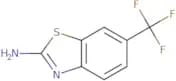
Discontinued product2-Amino-6-(trifluoromethyl)benzothiazole
CAS:2-Amino-6-(trifluoromethyl)benzothiazole is a new, optimised insecticide with alkylthio, halogen and alkoxy groups. It is highly toxic to insects and has been shown to be active against various species of Lepidoptera, Coleoptera and Diptera. 2-Amino-6-(trifluoromethyl)benzothiazole is also a broad spectrum contact insecticide that exhibits systemic properties. This insecticide can be used on plants, crops, livestock and pets.Formula:C8H5F3N2SPurity:Min. 95%Molecular weight:218.2 g/molRef: 3D-FA53923
Discontinued productBNP-45 (mouse) trifluoroacetate salt
CAS:Please enquire for more information about BNP-45 (mouse) trifluoroacetate salt including the price, delivery time and more detailed product information at the technical inquiry form on this page
Formula:C209H354N70O63S2Purity:Min. 95%Molecular weight:4,919.61 g/molRef: 3D-FB110157
Discontinued productAmylin (human) trifluoroacetate salt
CAS:Amylin is a hormone that regulates the release of insulin from the pancreas. Amylin is a protein that consists of 39 amino acids, and in its natural form it is not soluble in water. The amyloid fibrils are insoluble aggregates of proteins that can be found in the brain tissue of patients with Alzheimer's disease. Amylin has been shown to have an entrapment efficiency greater than 96% by using polymeric particles with a diameter less than 50 microns. These particles are able to increase water solubility and nutrient metabolism, as well as improve evaporation rates. They also provide an increased surface area for absorption and pharmacological properties. Amylin has been shown to lower postprandial glycemia when used with insulin in type II diabetes mellitus patients, and may also be an anorectic agent.
Formula:C165H261N51O55S2Purity:Min. 95%Molecular weight:3,903.28 g/mol4-[(4-chlorophenyl)-2-pyridinylmethoxy]-1-piperidinecarboxylic acid ethylester
CAS:Please enquire for more information about 4-[(4-chlorophenyl)-2-pyridinylmethoxy]-1-piperidinecarboxylic acid ethylester including the price, delivery time and more detailed product information at the technical inquiry form on this pageFormula:C20H23ClN2O3Purity:Min. 95%Molecular weight:374.86 g/molH-Ser(tBu)-2-chlorotrityl resin (200-400 mesh)
Please enquire for more information about H-Ser(tBu)-2-chlorotrityl resin (200-400 mesh) including the price, delivery time and more detailed product information at the technical inquiry form on this page
Purity:Min. 95%Ref: 3D-FS111766
Discontinued product(Arg13)-Amyloid b-Protein (1-40) trifluoroacetate salt
CAS:Please enquire for more information about (Arg13)-Amyloid b-Protein (1-40) trifluoroacetate salt including the price, delivery time and more detailed product information at the technical inquiry form on this pageFormula:C194H300N54O58SPurity:Min. 95%Molecular weight:4,348.85 g/molRef: 3D-FA110203
Discontinued productH-Asp(OtBu)-2-chlorotrityl resin (200-400 mesh)
Please enquire for more information about H-Asp(OtBu)-2-chlorotrityl resin (200-400 mesh) including the price, delivery time and more detailed product information at the technical inquiry form on this page
Purity:Min. 95%Ref: 3D-FA111747
Discontinued product(3R)-3-[(tert-Butoxycarbonyl)amino]-4-(2,4-difluorophenyl)butanoic acid
CAS:Please enquire for more information about (3R)-3-[(tert-Butoxycarbonyl)amino]-4-(2,4-difluorophenyl)butanoic acid including the price, delivery time and more detailed product information at the technical inquiry form on this page
Formula:C15H19F2NO4Purity:Min. 95%Molecular weight:315.31 g/molRef: 3D-FB99243
Discontinued productOctreotide trifluoroacetate salt (Dimer, Parallel) (
Please enquire for more information about Octreotide trifluoroacetate salt (Dimer, Parallel) ( including the price, delivery time and more detailed product information at the technical inquiry form on this page
Formula:C98H132N20O20S4Purity:Min. 95%Molecular weight:2,038.48 g/molRef: 3D-FO110074
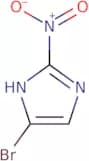
Discontinued product4-Bromo-2-nitro-1H-imidazole
CAS:4-Bromo-2-nitro-1H-imidazole (4BNI) is a synthetic drug that is used in the treatment of cancer. 4BNI inhibits the synthesis of DNA, which leads to cell death by preventing the production of proteins vital for cell division. When 4BNI is taken up by cells it becomes activated and binds to DNA, inhibiting the synthesis of RNA and protein. This process eventually leads to apoptosis (cell death). 4BNI has been shown to be effective against tumors in mice, but has not yet been tested on humans. The uptake of 4BNI in tumor tissue can be visualized using hypoxia imaging techniques such as positron emission tomography or magnetic resonance imaging.
Formula:C3H2BrN3O2Purity:Min. 95%Color and Shape:PowderMolecular weight:191.97 g/mol(Nle 13,Glu14)-Motilin (human, porcine) trifluoroacetate salt
CAS:Please enquire for more information about (Nle 13,Glu14)-Motilin (human, porcine) trifluoroacetate salt including the price, delivery time and more detailed product information at the technical inquiry form on this pageFormula:C121H189N33O36Purity:Min. 95%Molecular weight:2,682 g/molRef: 3D-FN109255
Discontinued productGAP 26 trifluoroacetate salt
CAS:13-mer connexin mimetic peptide, composed of residue numbers 63-75 of the first extracellular loop of connexin 43 (gap junction blocker), containing the SHVR amino acid motif.Formula:C70H107N19O19SPurity:Min. 95%Molecular weight:1,550.78 g/molRef: 3D-FG110169
Discontinued productAmmonium Undecafluorohexanoate
CAS:Undecafluorohexanoic acid is a perfluoroalkyl carboxylic acid that has been shown to disrupt steroidogenesis in vitro. It may be able to inhibit the transport of cholesterol, fats, and other lipids in cells, which causes disruption in steroidogenesis. This compound also has anti-cancer properties due to its ability to induce apoptosis and arrest cancer cell proliferation. Undecafluorohexanoic acid may also have developmental effects on animals because it can bind to estrogen receptors and disrupt the normal process of estrogen-mediated signaling pathways.
Formula:C6H4F11NO2Purity:Min. 95%Molecular weight:331.08 g/molRef: 3D-FA79593
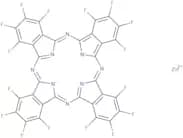
Discontinued productZinc 1,2,3,4,8,9,10,11,15,16,17,18,22,23,24,25-hexadecafluoro-29H,31H-phthalocyanine
CAS:Please enquire for more information about Zinc 1,2,3,4,8,9,10,11,15,16,17,18,22,23,24,25-hexadecafluoro-29H,31H-phthalocyanine including the price, delivery time and more detailed product information at the technical inquiry form on this pageFormula:C32F16N8ZnPurity:Min. 95%Molecular weight:865.75 g/mol2,3,5-Trichlorobenzaldehyde
CAS:2,3,5-Trichlorobenzaldehyde is a chemical compound that has been shown to have anticancer and apoptotic effects. It inhibits the growth of bacteria by chelating iron ions and inhibiting bacterial dna synthesis. 2,3,5-Trichlorobenzaldehyde has also been shown to inhibit the growth of cancer cells in culture in an experimental study. This chemical has been used as a substrate for nmr spectroscopy to study its functional groups and radical scavenging activities. 2,3,5-Trichlorobenzaldehyde can be synthesized from phenacyl chloride and benzaldehyde in the presence of hydrogen chloride gas. The carbonyl group in 2,3,5-trichlorobenzaldehyde may cause metabolic disorders such as diabetes mellitus or hyperglycemia.
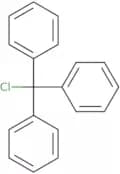
Formula:C7H3Cl3OPurity:Min. 95%Color and Shape:PowderMolecular weight:209.46 g/molTrityl chloride resin
CAS:Trityl chloride resin is a chemical compound that is used as a model system for the study of trifluoroacetic acid and its reactions. Trityl chloride resin is insoluble in water and has been used as a reaction solution for transfer reactions. It has been shown to be an effective ligand for many types of receptors, with binding constants ranging from 10 M-1 to 10 M-10. Trityl chloride resin can also be chiral, which means that it may exist in two forms that are mirror images of each other. The physiological effects of this compound are not well understood, but it has been shown to have an effect on coordination geometry.
Color and Shape:PowderRef: 3D-FT29918
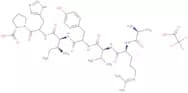
Discontinued productAngiotensin A (1-7) trifluoroacetate
CAS:Endogenous heptapetide which causes vasodilation and has anti-hypertensive properties.
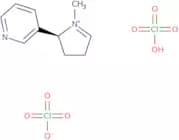
Formula:C40H62N12O9•(C2HF3O2)xPurity:Min. 95%Color and Shape:PowderMolecular weight:855 g/molS-(-)-Nicotine-delta1’-(5’)-iminium diperchlorate salt
CAS:Please enquire for more information about S-(-)-Nicotine-delta1’-(5’)-iminium diperchlorate salt including the price, delivery time and more detailed product information at the technical inquiry form on this page
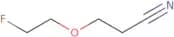
Formula:C10H14Cl2N2O8Purity:Min. 95%Molecular weight:361.13 g/mol3-(2-Fluoroethoxy)Propanenitrile
CAS:3-(2-Fluoroethoxy)Propanenitrile is a chemical with toxic properties. It is classified as a fluoroacetic acid and has been used in the production of other chemicals. Fluoroacetic acid is toxic to humans, showing signs of skin irritation, respiratory tract irritation, and kidney damage. 3-(2-Fluoroethoxy)Propanenitrile is not found naturally and has been sponsored by many companies.
Formula:C5H8FNOPurity:Min. 95%Molecular weight:117.12 g/molRef: 3D-FF80270
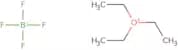
Discontinued productTriethyloxonium tetrafluoroborate
CAS:Triethyloxonium tetrafluoroborate is an antimicrobial agent that inhibits the transfer of electrons from one molecule to another. It has been shown to be effective against methicillin-resistant Staphylococcus aureus and Mycobacterium tuberculosis. Triethyloxonium tetrafluoroborate binds to the bacterial enzyme, Jak1, which is involved in the formation of cytokines and interleukins. This binding inhibits the production of these molecules, leading to cell death by apoptosis. The use of triethyloxonium tetrafluoroborate as a research tool has facilitated its discovery as a potential anti-inflammatory drug for autoimmune diseases such as type 1 diabetes mellitus and rheumatoid arthritis. Triethyloxonium tetrafluoroborate can be used to inhibit amide synthesis, which may have applications in the study of carbohydrate chemistry and nitrogen atoms in biological systems. This compound has also been used
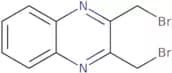
Formula:C6H15BF4OPurity:Min. 95%Color and Shape:PowderMolecular weight:189.99 g/mol2,3-Bis(bromomethyl)quinoxaline
CAS:2,3-Bis(bromomethyl)quinoxaline is a nitrogenous heterocyclic compound that has a coordination geometry of square planar. It has been used as an inhibitor for the protein p21 and the nucleophile in palladium complexes. 2,3-Bis(bromomethyl)quinoxaline is also a model system for studying reaction mechanisms and chemical structures. The electron density map of the compound was obtained by X-ray crystal structure analysis. The reaction mechanism of this molecule is proposed to be through a chelate ring cross-coupling process.
Formula:C10H8Br2N2Purity:Min. 95%Color and Shape:Brown PowderMolecular weight:315.99 g/molRef: 3D-FB04248
Discontinued product




![N-[(RS)-1-Carboxy-3-phenyl-propyl]-Ala-Ala-Phe-4-Abz-OH trifluoroacetate salt](/_next/image/?url=https%3A%2Fstatic.cymitquimica.com%2Fproducts%2F3D%2Fthumb-webp%2FFR111118.webp&w=3840&q=75)





![4-[(4-chlorophenyl)-2-pyridinylmethoxy]-1-piperidinecarboxylic acid ethylester](/_next/image/?url=https%3A%2Fstatic.cymitquimica.com%2Fproducts%2F3D%2Fthumb-webp%2FFP152183.webp&w=3840&q=75)

![(3R)-3-[(tert-Butoxycarbonyl)amino]-4-(2,4-difluorophenyl)butanoic acid](/_next/image/?url=https%3A%2Fstatic.cymitquimica.com%2Fproducts%2F3D%2Fthumb-webp%2FFB99243.webp&w=3840&q=75)