Organic Halides
Subcategories of "Organic Halides"
Found 20442 products of "Organic Halides"
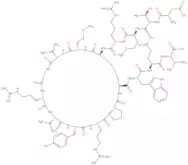
Thr-Ala-Pro-Arg-Atrial Natriuretic Factor (1-28) (human, bovine, porcine) trifluoroacetate salt
CAS:Thr-Ala-Pro-Arg-Atrial Natriuretic Factor (1-28) (human, bovine, porcine) trifluoroacetate salt is a peptide hormone that regulates blood pressure by causing the kidneys to excrete sodium and water. It is used as a model system for studying the physiological effects of urodilatin and has been shown to inhibit the cyclase enzyme. Thr-Ala-Pro-Arg-Atrial Natriuretic Factor (1-28) (human, bovine, porcine) trifluoroacetate salt may also have an antihypertensive effect through its ability to reduce levels of natriuretic peptides in plasma. This drug is also being investigated as a possible treatment for congestive heart failure. The small molecular weight makes it suitable for use as a natriuretic or antihypertensive drug with minimal side effects.
Formula:C145H234N52O44S3Purity:Min. 95%Molecular weight:3,505.93 g/molRef: 3D-FT108857
Discontinued productMCH (salmon) trifluoroacetate salt
CAS:Trifluoroacetate salt
Formula:C89H139N27O24S4Purity:Min. 95%Molecular weight:2,099.49 g/molRef: 3D-FM110322
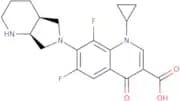
Discontinued product8-Desmethoxy-8-fluoro moxifloxacin
CAS:8-Desmethoxy-8-fluoro moxifloxacin is a photolytic drug that is used to treat bacterial infections. It has a high degree of antibacterial activity against methicillin-resistant staphylococcus aureus, including methicillin resistant strains of Staphylococcus epidermidis. 8-Desmethoxy-8-fluoro moxifloxacin hydrochloride is produced by the addition of hydrochloric acid to moxifloxacin, which is then purified by ion chromatography. The compound has been shown to have good stability in human plasma and urine. It also shows excellent recoveries in acetonitrile and quantification results in flow rates.
Formula:C20H21F2N3O3Purity:Min. 95%Molecular weight:389.4 g/molRef: 3D-FD21225
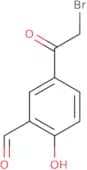
Discontinued product5-(2-Bromo-acetyl)-2-hydroxy-benzaldehyde
CAS:5-Bromo-2-hydroxybenzaldehyde is an organic compound with a chemical formula of CHBrO. It is a white solid that is soluble in water, ethanol, and acetone. The synthesis of 5-bromo-2-hydroxybenzaldehyde has been achieved by the acylation reaction of benzaldehyde with bromide ion. The selectivity for this reaction can be increased by using sodium borohydride as a reducing agent instead of lithium aluminum hydride. This method can be applied to the synthesis of salmeterol, which is used as a medicine in the treatment of asthma.
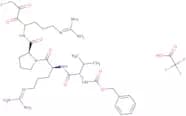
Formula:C9H7BrO3Purity:Min. 95%Molecular weight:243.05 g/molZ-Val-Arg-Pro-DL-Arg-fluoromethylketone trifluoroacetate salt
CAS:Please enquire for more information about Z-Val-Arg-Pro-DL-Arg-fluoromethylketone trifluoroacetate salt including the price, delivery time and more detailed product information at the technical inquiry form on this pageFormula:C31H49FN10O6Purity:Min. 95%Molecular weight:676.78 g/molRef: 3D-FV111123
Discontinued product6-Bromoindazole
CAS:6-Bromoindazole is a hydrogen bond inhibitor that has potential neuroprotective effects. It inhibits the enzyme DNA Gyrase, which is necessary for bacterial replication, and has antibacterial properties. 6-Bromoindazole interacts with the receptor tyrosine kinase axitinib and inhibits its activity. This interaction may be responsible for its neuroprotective effects.
Formula:C7H5BrN2Purity:Min. 95%Molecular weight:197.03 g/molRef: 3D-FB51087
Discontinued producta-(Trichloromethyl)benzyl acetate
CAS:a-(Trichloromethyl)benzyl acetate is an organic compound with the formula CHClCOCH. It is a colorless liquid which is soluble in organic solvents. This compound exhibits oxidative carbonylation activity, and has been shown to be used for the coating of particles, detergent compositions, and analytical methods. The microcapsules are prepared by encapsulating a fatty acid in a glycol ether. The health effects of this compound are not well understood but it is believed that it may have some carcinogenic properties.
Formula:C10H9Cl3O2Purity:Min. 95%Molecular weight:267.54 g/molRef: 3D-FR30859
Discontinued productAF-16 trifluoroacetate salt
CAS:AF-16 trifluoroacetate salt is a synthetic peptide, which is derived from chemical synthesis with tailored modifications to enhance its stability and efficacy. This compound acts by specifically binding to target receptors or proteins, facilitating the study of biochemical pathways and mechanisms at the molecular level. It is particularly used in biological and biochemical research settings to probe cellular processes, offering insights into protein interactions and signaling pathways.Formula:C71H119N25O25SPurity:Min. 95%Molecular weight:1,754.92 g/molAcetyl-ACTH (4-24) (human, bovine, rat) trifluoroacetate salt
CAS:Please enquire for more information about Acetyl-ACTH (4-24) (human, bovine, rat) trifluoroacetate salt including the price, delivery time and more detailed product information at the technical inquiry form on this pageFormula:C123H193N37O26SPurity:Min. 95%Molecular weight:2,638.15 g/molRef: 3D-FA109962
Discontinued productPAR-2 (1-6) (mouse, rat) trifluoroacetate salt
CAS:Please enquire for more information about PAR-2 (1-6) (mouse, rat) trifluoroacetate salt including the price, delivery time and more detailed product information at the technical inquiry form on this page
Formula:C29H55N9O8Purity:Min. 95%Molecular weight:657.8 g/molRef: 3D-FP109045
Discontinued product4,5-Dibromo-1,2,6,7-tertahydro-8H-indeno[5,4-b]furan-8-one
CAS:4,5-Dibromo-1,2,6,7-tertahydro-8H-indeno[5,4-b]furan-8-one is a chemical reagent that is used for the debromination of ethyl cyanoacetate. The nucleophilic nature of the hydroxyl group in the target compound makes it an efficient substrate for this reaction. This reagent can be used to synthesize ramelteon which is a drug approved by the U.S. Food and Drug Administration (FDA) for insomnia treatment. This high yield synthesis highlights 4,5-dibromo-1,2,6,7-tertahydro-8H-indeno[5,4b]furan-8one's usefulness as a debrominating agent.
Formula:C11H8Br2O2Purity:Min. 95%Molecular weight:331.99 g/molRef: 3D-FD21568
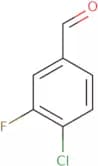
Discontinued product4-Chloro-3-fluorobenzaldehyde
CAS:4-Chloro-3-fluorobenzaldehyde is an atypical molecule that has a deuterium atom. It is classified as a group p2 functional theory reuptake inhibitor, which blocks the reuptake of noradrenaline at the synapse. The vibrational and spectroscopic properties of this molecule are similar to those of other molecules in its class. 4-Chloro-3-fluorobenzaldehyde was shown to inhibit the production of noradrenaline in rat brain tissue and is used as a model for studying genetic polymorphism. Techniques such as nuclear magnetic resonance spectroscopy, infrared spectroscopy, and X-ray crystallography have been used to investigate the structure and reactivity of 4-chloro-3-fluorobenzaldehyde.
Formula:C7H4ClFOPurity:Min. 95%Molecular weight:158.56 g/molOxyntomodulin (bovine, dog, porcine) trifluoroacetate salt
CAS:Please enquire for more information about Oxyntomodulin (bovine, dog, porcine) trifluoroacetate salt including the price, delivery time and more detailed product information at the technical inquiry form on this pageFormula:C192H295N59O60SPurity:Min. 95%Molecular weight:4,421.82 g/molTrichloroethanol
CAS:Trichloroethanol is an alkanoic acid that is used as a solvent and a laboratory reagent. It is also a potential bioactive compound. Trichloroethanol has been shown to have neurotoxic effects in rats, causing histological changes in the trigeminal nerve, which may be due to its inhibition of mitochondrial energy metabolism. Trichloroethanol has been shown to inhibit the activity of matrix metalloproteinase-9 (MMP-9) in human serum and the α1 subunit of Toll-like receptor (TLR) 4 in human monocytes. This compound has also been shown to be toxic to rat liver microsomes at high concentrations.
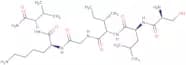
Formula:C2H3Cl3OPurity:Min. 98.5%Color and Shape:Clear LiquidMolecular weight:149.4 g/molPAR-2 (1-6) amide (human) trifluoroacetate salt
CAS:PAR-2 (1-6) amide (human) trifluoroacetate salt H-Ser-Leu-Ile-Gly-Lys-Val-NH2 trifluoroacetate salt is a protease inhibitor that inhibits the activity of PAR2, a protein receptor. PAR2 is implicated in cancer and inflammation. It has been shown to inhibit growth factor signaling, as well as activate toll-like receptor 4 and other inflammatory pathways. PAR2 inhibition has also been studied in vivo and found to be effective in treating wild type mice with melanoma cells. In vitro studies have shown that PAR2 inhibition by PAR 2 (1-6) amide (human) trifluoroacetate salt H-Ser-Leu-Ile-Gly-Lys-Val NH2 trifluoroacetate salt blocks the production of tumour necrosis factor alpha and interleukin 6.Formula:C28H54N8O7Purity:Min. 95%Molecular weight:614.78 g/molRef: 3D-FP109317
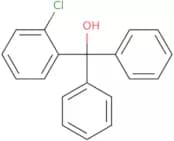
Discontinued product(2-Chlorophenyl)diphenylmethanol
CAS:2-Chlorophenyl)diphenylmethanol is an antifungal drug that blocks the function of a calcium ionophore in fungal cells. It has been shown to be effective against a variety of filamentous fungi, including Aspergillus fumigatus, Candida albicans, and Trichosporon cutaneum. This drug is used as a topical antifungal agent for treatment of skin infections caused by these fungi. 2-Chlorophenyl)diphenylmethanol has been shown to have anti-inflammatory properties in animal models of kidney fibrosis and cell binding. Clinical data suggests that it can be used for the prevention or treatment of stem cell transplantation complications such as graft versus host disease and leukemia.
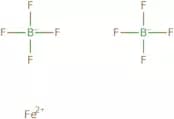
Formula:C19H15ClOPurity:Min. 95%Color and Shape:PowderMolecular weight:294.77 g/molIron(II) tetrafluoroborate - 40-45% aqueous solution
CAS:Iron(II) tetrafluoroborate is a green-yellow crystalline solid that is soluble in water. It has been shown to have structural and optical properties that are similar to those of ferric chloride, but with the advantage of being less toxic. Iron(II) tetrafluoroborate is used as a homogeneous catalyst for organic reactions such as the hydrogenation of nitroarenes and the reduction of ketones. The catalytic activity of Iron(II) tetrafluoroborate arises from its ability to form hydrogen bonding interactions with other molecules and ions in solution.
Iron(II) tetrafluoroborate undergoes a number of reactions with other compounds, including cleavage products such as hydrogen sulfate and nitrogen atoms, which may be due to its chelate ligand. In coordination chemistry, Iron(II) tetrafluoroborate can form coordination complexes by reacting with potassium dichromate or calcium carbonate. These complexes areFormula:B2F8FePurity:About 45%Color and Shape:Slightly Green Clear LiquidMolecular weight:229.45 g/molRef: 3D-FI105721
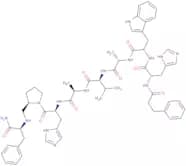
Discontinued product(Deamino-Phe19,D-Ala24,D-Pro26-psi(CH2NH)Phe27)-GRP (19-27) (human, porcine, canine) trifluoroacetate salt
CAS:Please enquire for more information about (Deamino-Phe19,D-Ala24,D-Pro26-psi(CH2NH)Phe27)-GRP (19-27) (human, porcine, canine) trifluoroacetate salt including the price, delivery time and more detailed product information at the technical inquiry form on this page
Formula:C57H72N14O8Purity:Min. 95%Molecular weight:1,081.27 g/molRef: 3D-FD108769
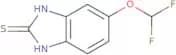
Discontinued product5-(Difluoromethoxy)-2-mercaptobenzimidazole
CAS:5-(Difluoromethoxy)-2-mercaptobenzimidazole is an organic solvent that is used in the crystallization process of pantoprazole, a benzimidazole derivative. It is also used as a corrosion inhibitor and pump inhibitor in analytical chemistry. The purity of 5-(difluoromethoxy)-2-mercaptobenzimidazole can be determined by chromatographic methods or by the use of analytical chemistry. Impurities may be genotoxic and include reactive impurities such as thiourea and 2-thiouracil. These impurities are removed during the synthetic process to produce 5-(difluoromethoxy)-2-mercaptobenzimidazole. This drug substance has been found to inhibit DNA polymerase activity in vitro, but its effects on human cells have not been studied.
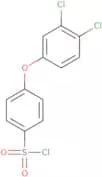
Formula:C8H6F2N2OSPurity:Min. 95%Color and Shape:Off-White PowderMolecular weight:216.21 g/mol4-(3,4-Dichlorophenoxy)benzenesulfonyl chloride
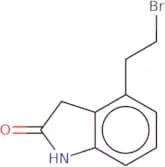
CAS:4-(3,4-Dichlorophenoxy)benzenesulfonyl chloride is a sulfonate that is used in the synthesis of organic compounds. It has been shown to have torsion, oriented, and nucleophilic properties. The phenol group of 4-(3,4-dichlorophenoxy)benzenesulfonyl chloride has been shown to be nucleophilic in nature. The phenyl group is electron donating and the chloride atom is electron withdrawing. The crystal structure of 4-(3,4-dichlorophenoxy)benzenesulfonyl chloride is as follows:Formula:C12H7Cl3O3SPurity:Min. 95%Color and Shape:PowderMolecular weight:337.61 g/mol4-(2-Bromoethyl)-1,3-dihydro-2H-indolin-2-one
CAS:Please enquire for more information about 4-(2-Bromoethyl)-1,3-dihydro-2H-indolin-2-one including the price, delivery time and more detailed product information at the technical inquiry form on this page
Formula:C10H10BrNOPurity:Min. 95%Color and Shape:PowderMolecular weight:240.1 g/molRef: 3D-FB19228
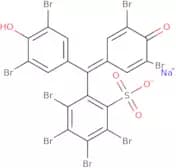
Discontinued productTetrabromophenol blue sodium salt
CAS:Tetrabromophenol blue sodium salt is a dye that is used as an additive in the production of vinyl alcohol polymer films. Tetrabromophenol blue sodium salt can be used to measure albumin concentration and postexposure by adding phenyl groups to the molecule. The color of tetrabromophenol blue sodium salt changes upon exposure to radiation, which makes it useful for diagnostic purposes. It also has a hydrocarbon group that transforms into an insoluble form when exposed to evaporation, making it useful for titration methods. Tetrabromophenol blue sodium salt is relatively stable and labile in nature, making it susceptible to techniques such as pyrolysis, oxidation, or reduction.
Formula:C19H5Br8NaO5SPurity:Min. 95%Molecular weight:1,007.53 g/molRef: 3D-FT147404
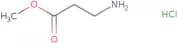
Discontinued productb-Alanine methyl ester hydrochloride
CAS:b-Alanine methyl ester hydrochloride is a fatty acid that is found in animal and plant tissues. It is a bifunctional molecule that can act as an inhibitor of serine proteases and also as an activator of fatty acid uptake by cells. This molecule has the potential to be used for the treatment of heart disease and other conditions caused by activation of serine proteases.
Formula:C4H9NO2·HClPurity:Min. 95%Color and Shape:White PowderMolecular weight:139.58 g/molRef: 3D-FA38110
Discontinued product(Arg13)-Amyloid b-Protein (1-40) trifluoroacetate salt
CAS:Please enquire for more information about (Arg13)-Amyloid b-Protein (1-40) trifluoroacetate salt including the price, delivery time and more detailed product information at the technical inquiry form on this pageFormula:C194H300N54O58SPurity:Min. 95%Molecular weight:4,348.85 g/molRef: 3D-FA110203
Discontinued productAdrenomedullin (rat) trifluoroacetate salt
CAS:Please enquire for more information about Adrenomedullin (rat) trifluoroacetate salt including the price, delivery time and more detailed product information at the technical inquiry form on this page
Formula:C242H381N77O75S5Purity:Min. 95%Molecular weight:5,729.42 g/molRef: 3D-FA108808
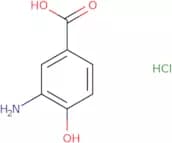
Discontinued product3-Amino-4-hydroxybenzoic acid hydrochloride
CAS:3-Amino-4-hydroxybenzoic acid hydrochloride (3ABA) is a crystalline compound with a molecular formula of C6H5NO2. It is an acidic compound that is soluble in water and alcohol, but not in ether. 3ABA has been used as the starting material for the synthesis of many other organic compounds. It can be obtained by reacting phenol with chlorobenzoyl chloride to form the chlorobenzoate salt, which on hydrolysis yields 3ABA. This compound has also been used as a reagent for synthesizing carbon nanotubes. The crystal structure of 3ABA was determined using X-ray diffraction data from crystallographic studies, and it was found to have three independent molecules per unit cell. Diffraction indicated that each molecule is composed of two benzene rings joined by a single bond between carbon atoms 1 and 2 and another bond between carbon atoms 2 and 3.
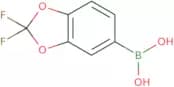
Formula:C7H8ClNO3Purity:Min. 95%Molecular weight:189.6 g/mol2,2-Difluoro-1,3-Benzodioxol-5-Ylboronic Acid
CAS:Please enquire for more information about 2,2-Difluoro-1,3-Benzodioxol-5-Ylboronic Acid including the price, delivery time and more detailed product information at the technical inquiry form on this pageFormula:C7H5BF2O4Purity:Min. 95%Molecular weight:201.92 g/molRef: 3D-FD89242
Discontinued product(D-Tyr1,N-Me-Phe3)-Neuropeptide FF trifluoroacetate salt
CAS:Please enquire for more information about (D-Tyr1,N-Me-Phe3)-Neuropeptide FF trifluoroacetate salt including the price, delivery time and more detailed product information at the technical inquiry form on this pageFormula:C55H78N14O11Purity:Min. 95%Molecular weight:1,111.3 g/molRef: 3D-FT109351
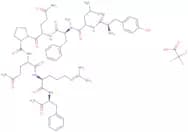
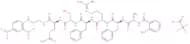
Discontinued productAbz-Ala-Phe-Arg-Phe-Ser-Gln-EDDnp trifluoroacetate salt
CAS:Please enquire for more information about Abz-Ala-Phe-Arg-Phe-Ser-Gln-EDDnp trifluoroacetate salt including the price, delivery time and more detailed product information at the technical inquiry form on this pageFormula:C50H63N15O13Purity:Min. 95%Molecular weight:1,082.13 g/molRef: 3D-FA110993
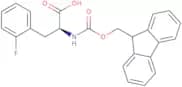
Discontinued productFmoc-2-fluoro-L-phenylalanine
CAS:Please enquire for more information about Fmoc-2-fluoro-L-phenylalanine including the price, delivery time and more detailed product information at the technical inquiry form on this page
Formula:C24H20FNO4Purity:Min. 95%Color and Shape:PowderMolecular weight:405.42 g/molDnp-(Leu421)-Collagen Type VIII a1 Chain (419-426) amide (human, mouse) trifluoroacetate salt
Please enquire for more information about Dnp-(Leu421)-Collagen Type VIII a1 Chain (419-426) amide (human, mouse) trifluoroacetate salt including the price, delivery time and more detailed product information at the technical inquiry form on this page
Formula:C40H64N14O12SPurity:Min. 95%Molecular weight:965.09 g/molRef: 3D-FD110972
Discontinued productAmyloid beta-Protein (1-11) trifluoroacetate salt
CAS:Please enquire for more information about Amyloid beta-Protein (1-11) trifluoroacetate salt including the price, delivery time and more detailed product information at the technical inquiry form on this page
Formula:C56H76N16O22Purity:Min. 95%Molecular weight:1,325.3 g/molRef: 3D-FA108822
Discontinued productH-Val-Tyr-Ser-betaNA hydrochloride salt
CAS:Please enquire for more information about H-Val-Tyr-Ser-betaNA hydrochloride salt including the price, delivery time and more detailed product information at the technical inquiry form on this pageFormula:C27H32N4O5Purity:Min. 95%Molecular weight:492.57 g/molRef: 3D-FV110685
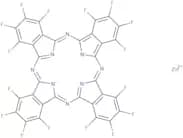
Discontinued productZinc 1,2,3,4,8,9,10,11,15,16,17,18,22,23,24,25-hexadecafluoro-29H,31H-phthalocyanine
CAS:Please enquire for more information about Zinc 1,2,3,4,8,9,10,11,15,16,17,18,22,23,24,25-hexadecafluoro-29H,31H-phthalocyanine including the price, delivery time and more detailed product information at the technical inquiry form on this pageFormula:C32F16N8ZnPurity:Min. 95%Molecular weight:865.75 g/molS-(-)-Nicotine-delta1’-(5’)-iminium diperchlorate salt
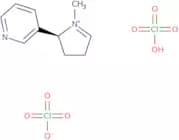
CAS:Please enquire for more information about S-(-)-Nicotine-delta1’-(5’)-iminium diperchlorate salt including the price, delivery time and more detailed product information at the technical inquiry form on this page
Formula:C10H14Cl2N2O8Purity:Min. 95%Molecular weight:361.13 g/molAmmonium Undecafluorohexanoate
CAS:Undecafluorohexanoic acid is a perfluoroalkyl carboxylic acid that has been shown to disrupt steroidogenesis in vitro. It may be able to inhibit the transport of cholesterol, fats, and other lipids in cells, which causes disruption in steroidogenesis. This compound also has anti-cancer properties due to its ability to induce apoptosis and arrest cancer cell proliferation. Undecafluorohexanoic acid may also have developmental effects on animals because it can bind to estrogen receptors and disrupt the normal process of estrogen-mediated signaling pathways.
Formula:C6H4F11NO2Purity:Min. 95%Molecular weight:331.08 g/molRef: 3D-FA79593
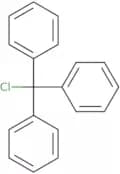
Discontinued productTrityl chloride resin
CAS:Trityl chloride resin is a chemical compound that is used as a model system for the study of trifluoroacetic acid and its reactions. Trityl chloride resin is insoluble in water and has been used as a reaction solution for transfer reactions. It has been shown to be an effective ligand for many types of receptors, with binding constants ranging from 10 M-1 to 10 M-10. Trityl chloride resin can also be chiral, which means that it may exist in two forms that are mirror images of each other. The physiological effects of this compound are not well understood, but it has been shown to have an effect on coordination geometry.
Color and Shape:PowderRef: 3D-FT29918
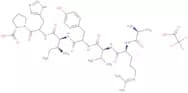
Discontinued productAngiotensin A (1-7) trifluoroacetate
CAS:Endogenous heptapetide which causes vasodilation and has anti-hypertensive properties.
Formula:C40H62N12O9•(C2HF3O2)xPurity:Min. 95%Color and Shape:PowderMolecular weight:855 g/mol2,3,5-Trichlorobenzaldehyde
CAS:2,3,5-Trichlorobenzaldehyde is a chemical compound that has been shown to have anticancer and apoptotic effects. It inhibits the growth of bacteria by chelating iron ions and inhibiting bacterial dna synthesis. 2,3,5-Trichlorobenzaldehyde has also been shown to inhibit the growth of cancer cells in culture in an experimental study. This chemical has been used as a substrate for nmr spectroscopy to study its functional groups and radical scavenging activities. 2,3,5-Trichlorobenzaldehyde can be synthesized from phenacyl chloride and benzaldehyde in the presence of hydrogen chloride gas. The carbonyl group in 2,3,5-trichlorobenzaldehyde may cause metabolic disorders such as diabetes mellitus or hyperglycemia.
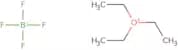
Formula:C7H3Cl3OPurity:Min. 95%Color and Shape:PowderMolecular weight:209.46 g/molTriethyloxonium tetrafluoroborate
CAS:Triethyloxonium tetrafluoroborate is an antimicrobial agent that inhibits the transfer of electrons from one molecule to another. It has been shown to be effective against methicillin-resistant Staphylococcus aureus and Mycobacterium tuberculosis. Triethyloxonium tetrafluoroborate binds to the bacterial enzyme, Jak1, which is involved in the formation of cytokines and interleukins. This binding inhibits the production of these molecules, leading to cell death by apoptosis. The use of triethyloxonium tetrafluoroborate as a research tool has facilitated its discovery as a potential anti-inflammatory drug for autoimmune diseases such as type 1 diabetes mellitus and rheumatoid arthritis. Triethyloxonium tetrafluoroborate can be used to inhibit amide synthesis, which may have applications in the study of carbohydrate chemistry and nitrogen atoms in biological systems. This compound has also been used
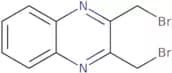
Formula:C6H15BF4OPurity:Min. 95%Color and Shape:PowderMolecular weight:189.99 g/mol2,3-Bis(bromomethyl)quinoxaline
CAS:2,3-Bis(bromomethyl)quinoxaline is a nitrogenous heterocyclic compound that has a coordination geometry of square planar. It has been used as an inhibitor for the protein p21 and the nucleophile in palladium complexes. 2,3-Bis(bromomethyl)quinoxaline is also a model system for studying reaction mechanisms and chemical structures. The electron density map of the compound was obtained by X-ray crystal structure analysis. The reaction mechanism of this molecule is proposed to be through a chelate ring cross-coupling process.
Formula:C10H8Br2N2Purity:Min. 95%Color and Shape:Brown PowderMolecular weight:315.99 g/molRef: 3D-FB04248
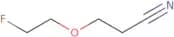
Discontinued product3-(2-Fluoroethoxy)Propanenitrile
CAS:3-(2-Fluoroethoxy)Propanenitrile is a chemical with toxic properties. It is classified as a fluoroacetic acid and has been used in the production of other chemicals. Fluoroacetic acid is toxic to humans, showing signs of skin irritation, respiratory tract irritation, and kidney damage. 3-(2-Fluoroethoxy)Propanenitrile is not found naturally and has been sponsored by many companies.
Formula:C5H8FNOPurity:Min. 95%Molecular weight:117.12 g/molRef: 3D-FF80270
Discontinued product




![4,5-Dibromo-1,2,6,7-tertahydro-8H-indeno[5,4-b]furan-8-one](/_next/image/?url=https%3A%2Fstatic.cymitquimica.com%2Fproducts%2F3D%2Fthumb-webp%2FFD21568.webp&w=3840&q=75)