Organic Halides
In this category, you can find organic molecules containing one or more halogen atoms in their structure. These organic halides include brominated, iodinated, chlorinated, and cyclic halide compounds. Organic halides are widely used in organic synthesis, pharmaceuticals, agrochemicals, and materials science due to their reactivity and ability to undergo a variety of chemical transformations. At CymitQuimica, we offer a comprehensive selection of high-quality organic halides to support your research and industrial applications, ensuring reliable and effective performance in your synthetic and analytical projects.
Subcategories of "Organic Halides"
Found 20440 products of "Organic Halides"
Sort by
Purity (%)
0
100
|
0
|
50
|
90
|
95
|
100
Mca-(Asn670,Leu671)-Amyloid beta/A4 Protein Precursor770 (667-676)-Lys(Dnp)-Arg-Arg amide trifluoroacetate salt
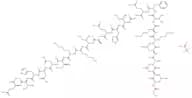
CAS:<p>Please enquire for more information about Mca-(Asn670,Leu671)-Amyloid beta/A4 Protein Precursor770 (667-676)-Lys(Dnp)-Arg-Arg amide trifluoroacetate salt including the price, delivery time and more detailed product information at the technical inquiry form on this page</p>Formula:C86H125N27O29Purity:Min. 95%Molecular weight:2,001.08 g/mol(2E)-1-[5,6-Dihydro-3-(trifluoromethyl)-1,2,4-triazolo[4,3-a]pyrazin-7(8H)-yl]-4-(2,4,5-trifluorophenyl)-2-buten-1-one
CAS:<p>Please enquire for more information about (2E)-1-[5,6-Dihydro-3-(trifluoromethyl)-1,2,4-triazolo[4,3-a]pyrazin-7(8H)-yl]-4-(2,4,5-trifluorophenyl)-2-buten-1-one including the price, delivery time and more detailed product information at the technical inquiry form on this page</p>Formula:C16H12F6N4OPurity:95%NmrMolecular weight:390.28 g/molGRP (14-27) (human, porcine, canine) trifluoroacetate salt
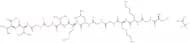
CAS:<p>GRP (14-27) is a synthetic peptide that has an inhibitory effect on the growth of pancreatic cancer cells. It also inhibits the development of primary tumors in hamsters and inhibits tumor metastasis. GRP (14-27) binds to the cell surface receptor on T cells, which is responsible for mediating immune responses against tumors. GRP (14-27) has been shown to suppress tumor growth through immunoreactivity and has been found to be effective against a variety of cancers when used as an adjuvant therapy.</p>Formula:C75H110N24O16S2Purity:Min. 95%Molecular weight:1,667.96 g/molH-Glu(Glu(Glu-OH)-OH)-OH trifluoroacetate salt
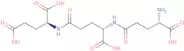
CAS:<p>H-Glu(Glu(Glu-OH)-OH)-OH trifluoroacetate salt is a casein that is used as a model system for pancreatic β-cells. It has been shown to induce cell apoptosis in malignant cells and sequences that are associated with the development of pancreatic cancer. H-Glu(Glu(Glu-OH)-OH)-OH trifluoroacetate salt also induces endothelial cell proliferation and decreases cell function, which may be due to its ability to promote uptake of this compound.</p>Formula:C15H23N3O10Purity:Min. 95%Molecular weight:405.36 g/mol(Lys18)-Pseudin-2 trifluoroacetate salt
CAS:<p>Please enquire for more information about (Lys18)-Pseudin-2 trifluoroacetate salt including the price, delivery time and more detailed product information at the technical inquiry form on this page</p>Formula:C122H203N37O32Purity:Min. 95%Molecular weight:2,700.15 g/molCys-Gly-Lys-Lys-Gly-Amyloid b-Protein (33-40) trifluoroacetate salt
CAS:Please enquire for more information about Cys-Gly-Lys-Lys-Gly-Amyloid b-Protein (33-40) trifluoroacetate salt including the price, delivery time and more detailed product information at the technical inquiry form on this pageFormula:C51H93N15O14S2Purity:Min. 95%Molecular weight:1,204.51 g/molH-Ser-Ile-Gly-Ser-Leu-Ala-Lys-OH trifluoroacetate salt
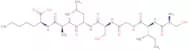
CAS:<p>H-Ser-Ile-Gly-Ser-Leu-Ala-Lys-OH trifluoroacetate salt is a recombinant, fluorescent, hydrazide, labile protein that has been synthesized with a murine amino acid sequence. This protein has been shown to be reactive with the cytokine IL2 and can be used for labeling of cells or proteins in cytometric analysis. The N-terminal end of this protein is acidic, allowing for it to react with periodate or hydroxylamine for tagging purposes.</p>Formula:C29H54N8O10Purity:Min. 95%Molecular weight:674.79 g/mol(Cys26)-Amyloid b-Protein (1-40) trifluoroacetate salt
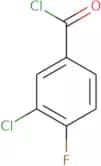
CAS:<p>Please enquire for more information about (Cys26)-Amyloid b-Protein (1-40) trifluoroacetate salt including the price, delivery time and more detailed product information at the technical inquiry form on this page</p>Formula:C194H295N53O57S2Purity:Min. 95%Molecular weight:4,345.87 g/mol3-Chloro-4-fluorobenzoyl chloride
CAS:<p>3-Chloro-4-fluorobenzoyl chloride is a chlorinating agent that is used as a fungicide, phytotoxin, and an insecticide. It is an effective pesticide against many fungal diseases that affect plants. 3-Chloro-4-fluorobenzoyl chloride has been shown to be effective in the treatment of cervical cancer and other cancers. It also has photochromic properties, which make it useful for detecting skin cancer. 3-Chloro-4-fluorobenzoyl chloride is synthesized by reacting chlorine with 4-fluorobenzoyl chloride in the presence of a base such as sodium hydroxide or potassium hydroxide. This reaction can be carried out in either liquid or gaseous phases. The product can be purified by vacuum distillation or crystallization. 3-Chloro-4-fluorobenzoyl chloride is primarily used as a fungicide</p>Formula:C7H3Cl2FOPurity:Min. 95%Molecular weight:193 g/mol(Pro34)-Peptide YY (human) trifluoroacetate salt
CAS:<p>Please enquire for more information about (Pro34)-Peptide YY (human) trifluoroacetate salt including the price, delivery time and more detailed product information at the technical inquiry form on this page</p>Formula:C194H294N54O56Purity:Min. 95%Molecular weight:4,278.74 g/mol(R)-(+)-3-Chloro-1-phenyl-1-propanol
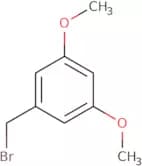
CAS:<p>(R)-(+)-3-Chloro-1-phenyl-1-propanol is a substrate for the lactamase of bacteria. The immobilized lipase catalyzes the hydrolysis reaction in which the lactam ring is broken, yielding a propiophenone intermediate. This intermediate can be converted to (S)-(+)-3-chloro-1-phenylpropanol by treatment with an alcohol oxidase or by hydrolysis with hydrogen peroxide. The product has been shown to have antidepressant activity and may modulate the dry weight of bacteria. In vivo studies show that this compound has a high concentration in rats and mice, but it is not active in humans.</p>Formula:C9H11ClOPurity:Min. 95%Color and Shape:White To Yellow SolidMolecular weight:170.64 g/mol3,5-Dimethoxybenzyl bromide
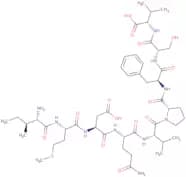
CAS:<p>3,5-Dimethoxybenzyl bromide is a difluoro compound that has been synthesized as a potential CB2 receptor agonist. It has been shown to bind to both CB1 and CB2 receptors in cell culture. 3,5-Dimethoxybenzyl bromide has also been shown to inhibit the growth of mouse melanoma cells by inducing apoptosis and cell cycle arrest, which may be due to its ability to demethylate pterostilbene derivatives. 3,5-Dimethoxybenzyl bromide is an example of a nucleophilic agent because it can donate a proton from the hydroxyl group on the benzene ring. The chloride ion forms an ionic bond with the negatively charged oxygen atom on the benzoic acid group. This type of bond is called an ester linkage or ester bond.</p>Formula:C9H11O2BrPurity:Min. 94%Color and Shape:PowderMolecular weight:231.09 g/mol(Met186)-Melanocyte Protein PMEL 17 (185-193) (human, bovine, mouse) trifluoroacetate salt
CAS:<p>Please enquire for more information about (Met186)-Melanocyte Protein PMEL 17 (185-193) (human, bovine, mouse) trifluoroacetate salt including the price, delivery time and more detailed product information at the technical inquiry form on this page</p>Formula:C47H74N10O14SPurity:Min. 95%Molecular weight:1,035.22 g/molEthyl 2-bromomesitylene
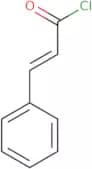
CAS:<p>Ethyl 2-bromomesitylene is a structural formula that is an organic compound with the chemical formula CH3CH2Br. It can be used in coordination chemistry and as an antigen. It has been shown to react with hydrochloric acid, which results in a nucleophilic attack on the bromine atom of the ethyl group. The reaction mechanism is believed to involve radical chain reactions and hydroxide solution. Ethyl 2-bromomesitylene is crystalline and has been shown to have antiviral activity against herpes simplex virus type 1 (HSV-1) and HSV-2. This compound also has some antibacterial properties, although it is not very potent. The activity test showed that this substance was active against Streptococcus pyogenes but inactive against Staphylococcus aureus and Pseudomonas aeruginosa.</p>Formula:C6H11BrO2Purity:Min. 95%Molecular weight:195.05 g/molCinnamoyl chloride
CAS:<p>Cinnamoyl chloride is an organic compound that can be synthesized in an asymmetric fashion. It is a metabolite of cinnamoyl-CoA and has been shown to have photochemical properties. Cinnamoyl chloride has also been shown to inhibit the growth of cervical cancer cells. This compound also has hydroxyl groups, which may act as an amide or receptor activator. Cinnamoyl chloride may be used for the treatment of infectious diseases such as chlamydia and mycoplasma.</p>Formula:C9H7ClOPurity:Min. 95%Color and Shape:Slightly Yellow PowderMolecular weight:166.6 g/mol2-Bromo-6-chloroaniline
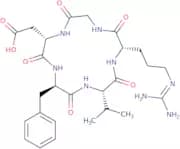
CAS:2-Bromo-6-chloroaniline is a brominated derivative of aniline that is used as a detector. It has been shown to be useful in the determination of electron concentration, as well as being sensitive to changes in environment temperature. 2-Bromo-6-chloroaniline is nonpolar and has been used for the separation of isomers in gas chromatography.Formula:C6H5BrClNPurity:Min. 95%Molecular weight:206.47 g/molCyclo(-Arg-Gly-Asp-D-Phe-Val) trifluoroacetate salt
CAS:<p>Cyclo(-Arg-Gly-Asp-D-Phe-Val) trifluoroacetate salt is a basic fibroblast growth factor that has been shown to have proliferative effects on diabetic retinopathy and ocular neovascularization. It binds to integrin receptors on the surface of cells, which are involved in cell adhesion. Cyclo(-Arg-Gly-Asp-D-Phe-Val) trifluoroacetate salt also has antiangiogenic effects and blocks the angiogenesis process by inhibiting the production of epidermal growth factor (EGF). This drug may be useful for treating certain types of cancer such as malignant brain tumors or neuroblastomas, because it can cause neuronal death. Cyclo(-Arg-Gly-Asp-D-Phe-Val) trifluoroacetate salt is a cyclic peptide with a reactive amino acid side chain.</p>Formula:C26H38N8O7Purity:Min. 95%Molecular weight:574.63 g/mol5-Chlorosaligenin
CAS:<p>5-Chlorosaligenin is a microdose form of 5-chlorosalicylate, which has been solubilized in formamide and then diluted with water. It has been shown to be effective in reducing inflammatory pain. 5-Chlorosaligenin has also been shown to have antiviral activity against human cytomegalovirus (HCMV) and influenza virus. The mechanism of action is not clear but may be due to inhibition of viral replication by interfering with the synthesis of viral nucleic acids, such as RNA and DNA.</p>Formula:C7H7ClO2Purity:Min. 95%Color and Shape:SolidMolecular weight:158.58 g/molBNP-26 (porcine) trifluoroacetate salt
CAS:<p>Please enquire for more information about BNP-26 (porcine) trifluoroacetate salt including the price, delivery time and more detailed product information at the technical inquiry form on this page</p>Formula:C120H198N42O36S2Purity:Min. 95%Molecular weight:2,869.25 g/molAmyloid beta-Protein (16-20) trifluoroacetate salt
CAS:<p>Amyloid beta-protein (Aβ) is a peptide that is associated with the development of Alzheimer's disease. The Aβ(16-20) trifluoroacetate salt (ATF) has been used in the diagnosis of Alzheimer's disease by fluorescence microscopy. This compound binds to hyaluronic acid and has been used as a coating for optical fibers and other materials, such as coatings for mitochondria for use in live cell imaging. The ATF also interacts with mitochondria and alters mitochondrial membrane potential, which may be due to its ability to displace cardiolipin from the inner mitochondrial membrane. ATF binds to unsymmetrical dimethylarginine (DMA), an endogenous nitric oxide synthase inhibitor, and selectively inhibits only cancer cells that have elevated levels of DMA. ATFP also induces spontaneous apoptosis in human carcinoma cells when bound to these cells via a photoconjugation reaction with bioconjugate chemistry.</p>Formula:C35H52N6O6Purity:Min. 95%Molecular weight:652.82 g/mol

![(2E)-1-[5,6-Dihydro-3-(trifluoromethyl)-1,2,4-triazolo[4,3-a]pyrazin-7(8H)-yl]-4-(2,4,5-trifluorop…](/_next/image/?url=https%3A%2Fstatic.cymitquimica.com%2Fproducts%2F3D%2Fthumb-webp%2FFD103313.webp&w=3840&q=75)