Organic Halides
In this category, you can find organic molecules containing one or more halogen atoms in their structure. These organic halides include brominated, iodinated, chlorinated, and cyclic halide compounds. Organic halides are widely used in organic synthesis, pharmaceuticals, agrochemicals, and materials science due to their reactivity and ability to undergo a variety of chemical transformations. At CymitQuimica, we offer a comprehensive selection of high-quality organic halides to support your research and industrial applications, ensuring reliable and effective performance in your synthetic and analytical projects.
Subcategories of "Organic Halides"
Found 20439 products of "Organic Halides"
Sort by
Purity (%)
0
100
|
0
|
50
|
90
|
95
|
100
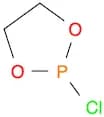
2-Chloro-1,3,2-dioxaphospholane
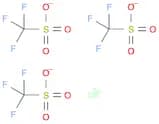
CAS:Formula:C2H4ClO2PPurity:97%Color and Shape:LiquidMolecular weight:126.4787NEODYMIUM(III) TRIFLUOROMETHANESULFONATE
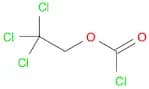
CAS:Formula:C3F9NdO9S3Purity:98%Color and Shape:SolidMolecular weight:591.4473Carbonochloridic acid, 2,2,2-trichloroethyl ester
CAS:Formula:C3H2Cl4O2Purity:97%Color and Shape:LiquidMolecular weight:211.8588Ref: IN-DA001YD6
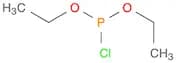
Discontinued productDIETHYL CHLOROPHOSPHITE
CAS:Formula:C4H10ClO2PPurity:95%Color and Shape:LiquidMolecular weight:156.5478Ref: IN-DA007GP3
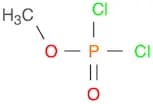
Discontinued productMethyl Phosphorodichloridate
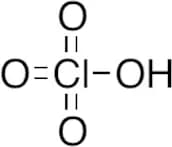
CAS:Formula:CH3Cl2O2PPurity:95%Color and Shape:LiquidMolecular weight:148.9131Perchloric Acid (60%)
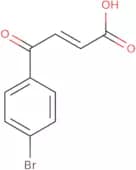
CAS:<p>Applications Perchloric Acid is a useful chemical reagent in the preparation of perchlorate salts. It is also known to be a strong oxidizer.<br> E0<br></p>Formula:ClHO4Purity:60%Color and Shape:NeatMolecular weight:100.45853-(4-Bromobenzoyl)-acrylic acid
CAS:<p>3-(4-Bromobenzoyl)-acrylic acid is a chiral secondary amine that was synthesised in the laboratory. It is an inhibitor of xanthine oxidase, which is an enzyme involved in purine metabolism. The compound inhibits the enzyme by binding to it and preventing it from breaking down xanthine into uric acid. This has been shown to inhibit xanthine oxidase activity in vitro, but not in vivo. 3-(4-Bromobenzoyl)-acrylic acid has been shown to be more potent than some other inhibitors, such as thiourea and erythromycin. However, it has only been studied at low concentrations so far and its effects on human cells are unknown.</p>Formula:C10H7BrO3Purity:Min. 95%Color and Shape:PowderMolecular weight:255.06 g/mol1,1,2,2,9,9,10,10-Octafluoro[2.2]paracyclophane
CAS:<p>1,1,2,2,9,9,10,10-Octafluoro[2.2]paracyclophane is a synthetic chemical compound that can be used in cross-coupling reactions. It is an isomer of the more common 1-fluorocyclopropane and has been shown to have a shorter reaction time than 1-fluorocyclopropane. The compound's spectroscopic properties are similar to those of 1-fluorocyclopropane. The compound was synthesized by reacting nitrobenzene with cyclopentadiene in the presence of boronic acids and aluminum chloride. The mass spectrum of this compound shows peaks corresponding to the molecular ion at m/e=256 and its fragmentation pattern corresponds to a monosubstituted aromatic hydrocarbon.</p>Formula:C16H8F8Purity:Min. 98.5%Color and Shape:White Clear LiquidMolecular weight:352.22 g/molDecafluorobis(Trifluoromethyl)Cyclohexane
CAS:Controlled Product<p>Decafluorobis(trifluoromethyl)cyclohexane is a film-forming polymer that can be used as a nutrient solution. It is synthesized by the thermal decomposition of hydrogen fluoride and caproic acid. Decafluorobis(trifluoromethyl)cyclohexane can be analyzed by combining it with fatty acids in an enzyme hydrolysis reaction. The product will then form a film on the surface of the container, which can be analyzed using ionization techniques such as mass spectrometry or nuclear magnetic resonance.</p>Formula:C8F16Purity:Min. 95%Molecular weight:400.06 g/molTetrafluorohydrazine
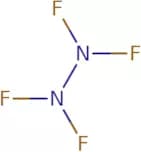
CAS:Controlled Product<p>Tetrafluorohydrazine is a reactive chemical compound that is used as a precursor to other nitrogen-containing compounds. It can be made by reacting hydrochloric acid with hydrogen fluoride and ammonia at high temperatures. The tetrafluorohydrazine molecule is thermodynamically unstable, so it decomposes into the trifluoride anion, dinitrogen gas, and hydrogen fluoride gas. Tetrafluorohydrazine reacts with the difluoride ion to form the difluoramine molecule. This reaction requires a catalyst, such as zinc. Tetrafluorohydrazine has been shown to react with alkenes in the presence of catalysts to produce alcohols or ketones.</p>Formula:F4N2Purity:Min. 95%Molecular weight:104.01 g/molN-Ethyl-N-(2-hydroxyethyl)perfluorooctylsulphonamide
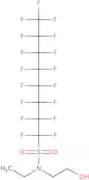
CAS:Controlled Product<p>N-Ethyl-N-(2-hydroxyethyl)perfluorooctylsulphonamide is a novel glycol ester with cytotoxic effects. It has been shown to inhibit the growth of cancer cells in rat liver microsomes and in vivo. N-Ethyl-N-(2-hydroxyethyl)perfluorooctylsulphonamide inhibits the synthesis of fatty acids by inhibiting the enzyme lipoxygenase. This drug also has a reactive carbon nanotube that may be used as an anticancer agent, which can bind to cell membranes and disrupt their function.</p>Formula:C12H10F17NO3SPurity:Min. 95%Color and Shape:PowderMolecular weight:571.25 g/molRef: 3D-FE104045
Discontinued product1-(3-Chloropropyl)-4-methylpiperazine
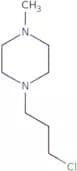
CAS:<p>1-(3-Chloropropyl)-4-methylpiperazine is an analog of chlorpromazine. It has been shown to be a transactivator, which causes the activation of genes in response to a variety of stimuli and plays a role in the pathogenesis of infections. 1-(3-Chloropropyl)-4-methylpiperazine also interacts with chloride ions, causing an increase in intracellular chloride concentrations. This increased concentration leads to an increase in transcription and replication rates. The structures of viral RNA were determined using 1-(3-chloropropyl)-4-methylpiperazine as a fluorescent probe.</p>Formula:C8H17ClN2Purity:Min. 95%Color and Shape:Clear LiquidMolecular weight:176.69 g/mol2-Chlorophenothiazine
CAS:<p>2-Chlorophenothiazine is a chemical substance that can be used as a pharmacological agent. It is classified as an amp-activated protein, which means it binds to the active site of the enzyme phospholipase A2 (PLA2) and thus inhibits its function. 2-Chlorophenothiazine has been shown to inhibit fatty acid biosynthesis by binding to the catalytic site of the enzyme acetyl coenzyme A carboxylase (ACC). This compound also has been shown to have mutagenic properties in bacterial systems, as well as being able to cause damage to red blood cells by inhibiting electron transport in mitochondria. 2-Chlorophenothiazine is also used for treating cancerous cells, such as squamous carcinoma. The activation energy required for 2-chlorophenothiazine's reaction with squamous carcinoma cells is lower than that required for other carcinomas such as leukemia or colon cancer cells.<br>2-</p>Formula:C12H8ClNSPurity:Min. 95%Color and Shape:Off-White PowderMolecular weight:233.72 g/molRef: 3D-FC20303
Discontinued product1,1,1-Trichloropentafluoropropane
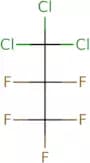
CAS:Controlled Product<p>1,1,1-Trichloropentafluoropropane is a hydrofluorocarbon that is used as a propellant in aerosol products. It is also used to produce other fluorocarbons and as a reactive solvent in chemical reactions. 1,1,1-Trichloropentafluoropropane (CFC-114) has three chlorine atoms and one fluorine atom. The reaction solution contains the reactants chloroform and hydrogen fluoride with an acid catalyst. The reaction can be carried out in two ways: the liquid phase process or the gas phase process. The liquid phase process occurs when there is no catalyst present in the reaction solution. This method produces two isomers of 1,1,1-trichloropentafluoropropane; CFC-114a and CFC-114b. The gas phase process occurs when an acid catalyst is present in the reaction solution and produces only one is</p>Formula:C3Cl3F5Purity:Min. 95%Molecular weight:237.38 g/mol2-(Ethyl-Fluorophosphoryl)Oxypropane
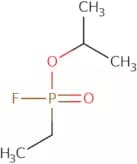
CAS:Controlled Product<p>2-(Ethyl-Fluorophosphoryl)Oxypropane (EFOP) is a chemical substance that is used as an analytical reagent in the detection of volatile and semi-volatile organic compounds in urine samples. EFOP has a high detection sensitivity, which allows it to be used for the analysis of low levels of chemicals in complex matrices. The matrix effect can be reduced by using human serum as the sample preparation medium. EFOP has been shown to be useful for determining sarin exposure in humans and mass analyzer data has shown that EFOP can detect high values of this chemical substance.</p>Formula:C5H12FO2PPurity:Min. 95%Molecular weight:154.12 g/molSodium fluorosilicate
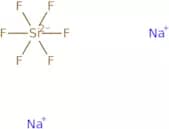
CAS:Controlled Product<p>Sodium fluorosilicate is an inorganic acid that can be prepared by dissolving sodium carbonate and hydrogen fluoride in water. It is used as a sample preparation agent for electrochemical impedance spectroscopy, as well as a reagent for the determination of acidic properties. Sodium fluorosilicate has been shown to inhibit the growth of epidermal cells, which may be due to its ability to cause an increase in the mitochondrial membrane potential. This compound also inhibits the synthesis of proteins from RNA, which may result from its coordination geometry or hydrogen-bonding interactions. Sodium fluorosilicate has been used in analytical methods involving x-ray diffraction data and plasma mass spectrometry.</p>Formula:Na2SiF6Purity:Min. 95%Molecular weight:188.06 g/mol3-(Methylamino)propiophenone hydrochloride
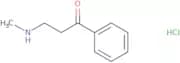
CAS:<p>3-(Methylamino)propiophenone hydrochloride is a synthetic compound that can be used as an alternative to fluoxetine in microwave irradiation. It has similar effects to the drug, including advances in neurodegenerative diseases. 3-(Methylamino)propiophenone hydrochloride has been shown to improve the effects of radiation therapy on cancer cells, by inhibiting the production of reactive oxygen species and improving cell survival.</p>Formula:C10H13NO•HClPurity:Min. 95%Color and Shape:PowderMolecular weight:199.68 g/molRef: 3D-FM66795
Discontinued product




![1,1,2,2,9,9,10,10-Octafluoro[2.2]paracyclophane](/_next/image/?url=https%3A%2Fstatic.cymitquimica.com%2Fproducts%2F3D%2Fthumb-webp%2FFO103527.webp&w=3840&q=75)