Organic Halides
In this category, you can find organic molecules containing one or more halogen atoms in their structure. These organic halides include brominated, iodinated, chlorinated, and cyclic halide compounds. Organic halides are widely used in organic synthesis, pharmaceuticals, agrochemicals, and materials science due to their reactivity and ability to undergo a variety of chemical transformations. At CymitQuimica, we offer a comprehensive selection of high-quality organic halides to support your research and industrial applications, ensuring reliable and effective performance in your synthetic and analytical projects.
Subcategories of "Organic Halides"
Found 20440 products of "Organic Halides"
Sort by
Purity (%)
0
100
|
0
|
50
|
90
|
95
|
100
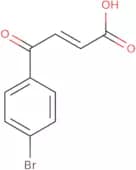
3-(4-Bromobenzoyl)-acrylic acid
CAS:<p>3-(4-Bromobenzoyl)-acrylic acid is a chiral secondary amine that was synthesised in the laboratory. It is an inhibitor of xanthine oxidase, which is an enzyme involved in purine metabolism. The compound inhibits the enzyme by binding to it and preventing it from breaking down xanthine into uric acid. This has been shown to inhibit xanthine oxidase activity in vitro, but not in vivo. 3-(4-Bromobenzoyl)-acrylic acid has been shown to be more potent than some other inhibitors, such as thiourea and erythromycin. However, it has only been studied at low concentrations so far and its effects on human cells are unknown.</p>Formula:C10H7BrO3Purity:Min. 95%Color and Shape:PowderMolecular weight:255.06 g/mol(Fluoro-Methylphosphoryl)Oxycyclohexane
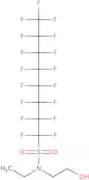
CAS:Controlled Product<p>(Fluoro-Methylphosphoryl)Oxycyclohexane is an organophosphorus compound that acts as a nerve agent. It inhibits the enzyme acetylcholinesterase, which is responsible for breaking down acetylcholine, leading to excess cholinergic stimulation. This can cause excessive contraction of muscles or even death. The exposure to (Fluoro-Methylphosphoryl)Oxycyclohexane can be detected by analytical methods such as gas chromatography/mass spectrometry. Oximes are used in the reactivation of acetylcholinesterase and are effective in preventing neuronal death. They bind to the phosphonyl group in (Fluoro-Methylphosphoryl)Oxycyclohexane and prevent it from inhibiting the enzyme acetylcholinesterase.</p>Formula:C7H14FO2PPurity:Min. 95%Molecular weight:180.16 g/molN-Ethyl-N-(2-hydroxyethyl)perfluorooctylsulphonamide
CAS:Controlled Product<p>N-Ethyl-N-(2-hydroxyethyl)perfluorooctylsulphonamide is a novel glycol ester with cytotoxic effects. It has been shown to inhibit the growth of cancer cells in rat liver microsomes and in vivo. N-Ethyl-N-(2-hydroxyethyl)perfluorooctylsulphonamide inhibits the synthesis of fatty acids by inhibiting the enzyme lipoxygenase. This drug also has a reactive carbon nanotube that may be used as an anticancer agent, which can bind to cell membranes and disrupt their function.</p>Formula:C12H10F17NO3SPurity:Min. 95%Color and Shape:PowderMolecular weight:571.25 g/molRef: 3D-FE104045
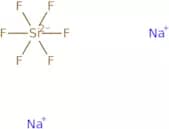
Discontinued productSodium fluorosilicate
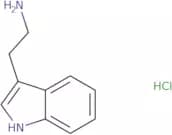
CAS:Controlled Product<p>Sodium fluorosilicate is an inorganic acid that can be prepared by dissolving sodium carbonate and hydrogen fluoride in water. It is used as a sample preparation agent for electrochemical impedance spectroscopy, as well as a reagent for the determination of acidic properties. Sodium fluorosilicate has been shown to inhibit the growth of epidermal cells, which may be due to its ability to cause an increase in the mitochondrial membrane potential. This compound also inhibits the synthesis of proteins from RNA, which may result from its coordination geometry or hydrogen-bonding interactions. Sodium fluorosilicate has been used in analytical methods involving x-ray diffraction data and plasma mass spectrometry.</p>Formula:Na2SiF6Purity:Min. 95%Molecular weight:188.06 g/molTryptamine hydrochloride
CAS:Controlled Product<p>Tryptamine hydrochloride is a tryptamine that is used in the synthesis of various drugs with antiinflammatory properties. It has been shown to be a potent and selective antagonist of 5-HT2 receptors, with a pKi value of 7.4. Tryptamine hydrochloride has also been found to have an inhibitory effect on mitochondrial membrane potential and to decrease human serum 5-HT levels at physiological doses. This drug is structurally related to serotonin, which is believed to be a cause for its antiinflammatory activity.</p>Formula:C10H12N2HClPurity:Min. 95%Color and Shape:Brown White Yellow Orange PowderMolecular weight:196.68 g/molRef: 3D-FT37087
Discontinued product7-[5-(Fluoro-methyl-phosphoryl)oxypentyl]-4-nitro-2,1,3-benzoxadiazole
CAS:Controlled Product<p>7-[5-(Fluoro-methyl-phosphoryl)oxypentyl]-4-nitro-2,1,3-benzoxadiazole is a reactivator of the central nervous system. It is a noncompetitive antagonist at muscarinic receptors and blocks postsynaptic acetylcholine release from cholinergic neurons. It has been shown to have no effect on blood pressure but does cause an increase in locomotor activity in animals. This drug binds to the hippocampal formation and the ventral hippocampus, which are areas of the brain that are involved in memory and spatial navigation. The distribution of this drug postulated to be due to its ability to penetrate micron sized openings in cell membranes.</p>Formula:C12H15FN3O5PPurity:Min. 95%Molecular weight:331.24 g/mol1-[3-(Fluoro-Methylphosphoryl)Oxypropyl]Pyrene
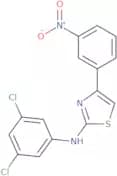
CAS:Controlled Product<p>1-[3-(Fluoro-Methylphosphoryl)Oxypropyl]Pyrene is a fluorescent derivative of pyrene. It has been used to label DNA and proteins for experiments involving fluorescence. The fluorophores in 1-[3-(Fluoro-Methylphosphoryl)Oxypropyl]Pyrene are activated by laser light, which causes emission of light at a wavelength of 590 nm. The emission spectrum of 1-[3-(Fluoro-Methylphosphoryl)Oxypropyl]Pyrene is sensitive to the environment and changes with chemical modification.</p>Formula:C20H18FO2PPurity:Min. 95%Molecular weight:340.33 g/mol(3,5-dichlorophenyl)(4-(3-nitrophenyl)(2,5-thiazolyl))amine
CAS:<p>Please enquire for more information about (3,5-dichlorophenyl)(4-(3-nitrophenyl)(2,5-thiazolyl))amine including the price, delivery time and more detailed product information at the technical inquiry form on this page</p>Purity:Min. 95%Ref: 3D-FD169124
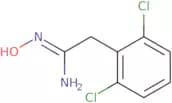
Discontinued product2-(2,6-Dichlorophenyl)-1-(hydroxyimino)ethylamine
CAS:<p>Please enquire for more information about 2-(2,6-Dichlorophenyl)-1-(hydroxyimino)ethylamine including the price, delivery time and more detailed product information at the technical inquiry form on this page</p>Purity:Min. 95%Ref: 3D-FD169504
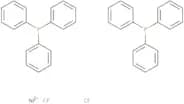
Discontinued productBis(triphenylphosphine)nickel(II) dichloride
CAS:<p>Bis(triphenylphosphine)nickel(II) dichloride is a coordination compound that belongs to the group P2. It has an octahedral geometry with two adjacent nickel atoms and two chloride ligands. The metal-metal bond length is 2.14 Å, which is shorter than the average bond length of 2.54 Å for octahedral complexes. Bis(triphenylphosphine)nickel(II) dichloride reacts with quinoline derivatives to form amines and undergoes transfer reactions with amines, chlorides, and olefins. It also undergoes irreversible oxidation when in contact with water. The compound is stereoselective for substitution by halides at the para position on the phenyl ring.</p>Formula:C36H30Cl2NiP2Purity:Min. 95%Color and Shape:PowderMolecular weight:654.17 g/molMonofluoroamine
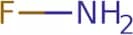
CAS:Controlled Product<p>Monofluoroamine is a chemical substance with the chemical formula NH2F. It is a colorless liquid that is stable to both acidic and basic environments, but reacts with fluorine gas to form hydrofluoric acid. Monofluoroamine is used in the synthesis of pharmaceuticals, pesticides, and other organic compounds. This compound can be prepared by reacting ammonia with hydrogen fluoride at low temperature or by reacting ammonia with hydrogen fluoride at high pressure. The Friedel-Crafts reaction of monofluoroamine with an amide produces the corresponding amine. Monofluoroamine has been used as a conditioning agent in NMR spectroscopy experiments to remove the water signal from complex NMR spectra. In addition, this compound has been shown to have antiviral effects against HIV infection through its ability to inhibit protein synthesis.</p>Formula:FH2NPurity:Min. 95%Molecular weight:35.02 g/mol1,1,2,2,9,9,10,10-Octafluoro[2.2]paracyclophane
CAS:<p>1,1,2,2,9,9,10,10-Octafluoro[2.2]paracyclophane is a synthetic chemical compound that can be used in cross-coupling reactions. It is an isomer of the more common 1-fluorocyclopropane and has been shown to have a shorter reaction time than 1-fluorocyclopropane. The compound's spectroscopic properties are similar to those of 1-fluorocyclopropane. The compound was synthesized by reacting nitrobenzene with cyclopentadiene in the presence of boronic acids and aluminum chloride. The mass spectrum of this compound shows peaks corresponding to the molecular ion at m/e=256 and its fragmentation pattern corresponds to a monosubstituted aromatic hydrocarbon.</p>Formula:C16H8F8Purity:Min. 98.5%Color and Shape:White Clear LiquidMolecular weight:352.22 g/mol2-Chlorophenothiazine
CAS:<p>2-Chlorophenothiazine is a chemical substance that can be used as a pharmacological agent. It is classified as an amp-activated protein, which means it binds to the active site of the enzyme phospholipase A2 (PLA2) and thus inhibits its function. 2-Chlorophenothiazine has been shown to inhibit fatty acid biosynthesis by binding to the catalytic site of the enzyme acetyl coenzyme A carboxylase (ACC). This compound also has been shown to have mutagenic properties in bacterial systems, as well as being able to cause damage to red blood cells by inhibiting electron transport in mitochondria. 2-Chlorophenothiazine is also used for treating cancerous cells, such as squamous carcinoma. The activation energy required for 2-chlorophenothiazine's reaction with squamous carcinoma cells is lower than that required for other carcinomas such as leukemia or colon cancer cells.<br>2-</p>Formula:C12H8ClNSPurity:Min. 95%Color and Shape:Off-White PowderMolecular weight:233.72 g/molRef: 3D-FC20303
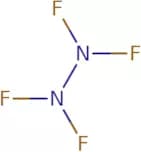
Discontinued productTetrafluorohydrazine
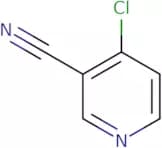
CAS:Controlled Product<p>Tetrafluorohydrazine is a reactive chemical compound that is used as a precursor to other nitrogen-containing compounds. It can be made by reacting hydrochloric acid with hydrogen fluoride and ammonia at high temperatures. The tetrafluorohydrazine molecule is thermodynamically unstable, so it decomposes into the trifluoride anion, dinitrogen gas, and hydrogen fluoride gas. Tetrafluorohydrazine reacts with the difluoride ion to form the difluoramine molecule. This reaction requires a catalyst, such as zinc. Tetrafluorohydrazine has been shown to react with alkenes in the presence of catalysts to produce alcohols or ketones.</p>Formula:F4N2Purity:Min. 95%Molecular weight:104.01 g/mol4-Chloronicotinonitrile
CAS:<p>4-Chloronicotinonitrile is a 4-cyanopyridine compound that is used in the palladium-catalyzed cross-coupling reaction to produce aryl chlorides. The reaction mechanism involves the formation of an organopalladium species through a palladium-catalyzed cross-coupling reaction and subsequent nucleophilic attack by an electrophile, resulting in the formation of an intermediate organopalladium species. The chlorine atom on 4-chloronicotinonitrile can be substituted with other reactive groups such as bromine, iodine, or sulfur. This substitution can lead to isomerization of the product and may affect yields. 4-Chloronicotinonitrile has been shown to cause severe skin burns when exposed to radiation.</p>Formula:C6H3ClN2Purity:Min. 95%Color and Shape:PowderMolecular weight:138.55 g/molDecafluorobis(Trifluoromethyl)Cyclohexane
CAS:Controlled Product<p>Decafluorobis(trifluoromethyl)cyclohexane is a film-forming polymer that can be used as a nutrient solution. It is synthesized by the thermal decomposition of hydrogen fluoride and caproic acid. Decafluorobis(trifluoromethyl)cyclohexane can be analyzed by combining it with fatty acids in an enzyme hydrolysis reaction. The product will then form a film on the surface of the container, which can be analyzed using ionization techniques such as mass spectrometry or nuclear magnetic resonance.</p>Formula:C8F16Purity:Min. 95%Molecular weight:400.06 g/mol(E)-N-(2-Chloro-6-methylphenyl)-3-ethoxyacrylamide
CAS:<p>(E)-N-(2-Chloro-6-methylphenyl)-3-ethoxyacrylamide is a reagent and research chemical that can be used as a building block in the synthesis of other compounds. It is also a versatile building block in organic chemistry. (E)-N-(2-Chloro-6-methylphenyl)-3-ethoxyacrylamide has been shown to be an effective intermediate for the synthesis of various complex compounds, such as pharmaceuticals and pesticides. This compound is also a useful scaffold for the synthesis of other fine chemicals.</p>Formula:C12H14ClNO2Purity:(¹H-Nmr) Min. 95 Area-%Color and Shape:PowderMolecular weight:239.7 g/molRef: 3D-FC149928
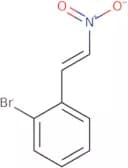
Discontinued product1-(2-Bromophenyl)-2-nitroethene
CAS:<p>1-(2-Bromophenyl)-2-nitroethene is a chiral, enantioselective nitroalkene that is used in the synthesis of many biologically active compounds. The compound was found to be an effective chiral ligand for asymmetric reactions involving aldehydes, indoles, and bipyridine. It has been shown to be more reactive than other bromoalkyltin reagents and can be used in a variety of reactions. 1-(2-Bromophenyl)-2-nitroethene also has conformationally rigid skeletons, which may allow for higher yields when compared with other alkylation agents.</p>Formula:C8H6BrNO2Purity:Min. 95%Molecular weight:228.04 g/molAmmonium hexafluorotitanate(iv)
CAS:<p>Ammonium hexafluorotitanate(IV) is a fine chemical that can be used as a reagent, building block, or intermediate in the synthesis of other chemicals. It is a versatile building block and reacts with other compounds to form complex compounds. Ammonium hexafluorotitanate(IV) is also an intermediate for the production of ammonium hexafluorophosphate (III), which is used in the manufacture of fertilizers. Ammonium hexafluorotitanate(IV) can be used as a reactant to produce titanium metal, which has many industrial applications.</p>Formula:F6H8N2TiPurity:Min. 95%Color and Shape:White SolidMolecular weight:197.93 g/molRef: 3D-FA105292
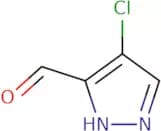
Discontinued product4-Chloro-1H-pyrazole-3-carboxaldehyde
CAS:<p>4-Chloro-1H-pyrazole-3-carboxaldehyde is a fine chemical that is used as a building block in research and development. The CAS number is 623570-54-7. This compound has been found to be useful in the synthesis of complex compounds and versatile scaffolds.</p>Formula:C4H3ClN2OPurity:Min. 95%Color and Shape:SolidMolecular weight:130.53 g/molRef: 3D-FC19981
Discontinued product


![7-[5-(Fluoro-methyl-phosphoryl)oxypentyl]-4-nitro-2,1,3-benzoxadiazole](/_next/image/?url=https%3A%2Fstatic.cymitquimica.com%2Fproducts%2F3D%2Fthumb-webp%2FFF98971.webp&w=3840&q=75)
![1-[3-(Fluoro-Methylphosphoryl)Oxypropyl]Pyrene](/_next/image/?url=https%3A%2Fstatic.cymitquimica.com%2Fproducts%2F3D%2Fthumb-webp%2FFF89825.webp&w=3840&q=75)
![1,1,2,2,9,9,10,10-Octafluoro[2.2]paracyclophane](/_next/image/?url=https%3A%2Fstatic.cymitquimica.com%2Fproducts%2F3D%2Fthumb-webp%2FFO103527.webp&w=3840&q=75)