Organic Halides
In this category, you can find organic molecules containing one or more halogen atoms in their structure. These organic halides include brominated, iodinated, chlorinated, and cyclic halide compounds. Organic halides are widely used in organic synthesis, pharmaceuticals, agrochemicals, and materials science due to their reactivity and ability to undergo a variety of chemical transformations. At CymitQuimica, we offer a comprehensive selection of high-quality organic halides to support your research and industrial applications, ensuring reliable and effective performance in your synthetic and analytical projects.
Subcategories of "Organic Halides"
Found 20437 products of "Organic Halides"
Sort by
Purity (%)
0
100
|
0
|
50
|
90
|
95
|
100
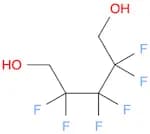
2,2,3,3,4,4-HEXAFLUORO-1,5-PENTANEDIOL
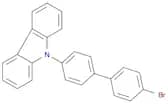
CAS:Formula:C5H6F6O2Purity:98%Color and Shape:SolidMolecular weight:212.09049-(4'-BroMo-4-biphenylyl)-9H-carbazole
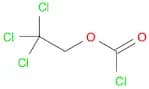
CAS:Formula:C24H16BrNPurity:98%Color and Shape:SolidMolecular weight:398.2945Carbonochloridic acid, 2,2,2-trichloroethyl ester
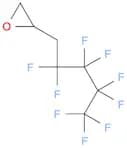
CAS:Formula:C3H2Cl4O2Purity:97%Color and Shape:LiquidMolecular weight:211.8588Oxirane, 2-(2,2,3,3,4,4,5,5,5-nonafluoropentyl)-
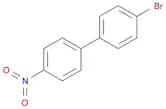
CAS:Formula:C7H5F9OPurity:98%Color and Shape:LiquidMolecular weight:276.09964-BROMO-4'-NITROBIPHENYL
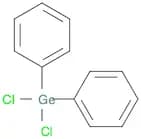
CAS:Formula:C12H8BrNO2Purity:95%Color and Shape:SolidMolecular weight:278.1014Germane, dichlorodiphenyl-
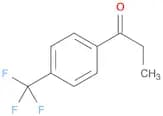
CAS:Formula:C12H10Cl2GePurity:95%Color and Shape:LiquidMolecular weight:297.75381-(4-(Trifluoromethyl)phenyl)propan-1-one
CAS:Formula:C10H9F3OPurity:98%Color and Shape:SolidMolecular weight:202.1731Ref: IN-DA006BIV
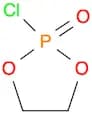
Discontinued product2-Chloro-1,3,2-dioxaphospholane-2-oxide
CAS:Formula:C2H4ClO3PPurity:95%Color and Shape:LiquidMolecular weight:142.47812,2,2-TRIFLUOROETHYL TRIFLUOROACETATE
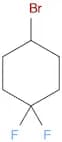
CAS:Formula:C4H2F6O2Purity:97%Color and Shape:LiquidMolecular weight:196.0479Cyclohexane, 4-bromo-1,1-difluoro-
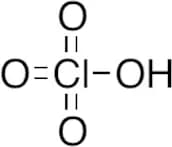
CAS:Formula:C6H9BrF2Purity:97%Color and Shape:LiquidMolecular weight:199.0365Perchloric Acid (60%)
CAS:<p>Applications Perchloric Acid is a useful chemical reagent in the preparation of perchlorate salts. It is also known to be a strong oxidizer.<br> E0<br></p>Formula:ClHO4Purity:60%Color and Shape:NeatMolecular weight:100.4585Sodium fluorosilicate
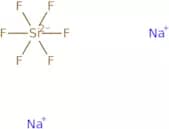
CAS:Controlled Product<p>Sodium fluorosilicate is an inorganic acid that can be prepared by dissolving sodium carbonate and hydrogen fluoride in water. It is used as a sample preparation agent for electrochemical impedance spectroscopy, as well as a reagent for the determination of acidic properties. Sodium fluorosilicate has been shown to inhibit the growth of epidermal cells, which may be due to its ability to cause an increase in the mitochondrial membrane potential. This compound also inhibits the synthesis of proteins from RNA, which may result from its coordination geometry or hydrogen-bonding interactions. Sodium fluorosilicate has been used in analytical methods involving x-ray diffraction data and plasma mass spectrometry.</p>Formula:Na2SiF6Purity:Min. 95%Molecular weight:188.06 g/mol1,1,1-Trichloropentafluoropropane
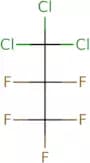
CAS:Controlled Product<p>1,1,1-Trichloropentafluoropropane is a hydrofluorocarbon that is used as a propellant in aerosol products. It is also used to produce other fluorocarbons and as a reactive solvent in chemical reactions. 1,1,1-Trichloropentafluoropropane (CFC-114) has three chlorine atoms and one fluorine atom. The reaction solution contains the reactants chloroform and hydrogen fluoride with an acid catalyst. The reaction can be carried out in two ways: the liquid phase process or the gas phase process. The liquid phase process occurs when there is no catalyst present in the reaction solution. This method produces two isomers of 1,1,1-trichloropentafluoropropane; CFC-114a and CFC-114b. The gas phase process occurs when an acid catalyst is present in the reaction solution and produces only one is</p>Formula:C3Cl3F5Purity:Min. 95%Molecular weight:237.38 g/molBis(2,2,2-trichloroethyl)azodicarboxylate
CAS:<p>Bis(2,2,2-trichloroethyl)azodicarboxylate is a nucleophile that can be used as an alkylating agent in the industrial process. It is also used to prepare chiral amines by adding an amine to the enantiomerically pure bis(2,2,2-trichloroethyl)azodicarboxylate. The anticancer activity of Bis(2,2,2-trichloroethyl)azodicarboxylate is due to its ability to inhibit tumor cell proliferation. Bis(2,2,2-trichloroethyl)azodicarboxylate is not effective against cancerous cells that do not have functional groups such as amino acids.</p>Formula:C6H4Cl6N2O4Purity:Min. 95%Color and Shape:Yellow SolidMolecular weight:380.82 g/molRef: 3D-FB01254
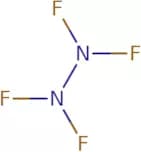
Discontinued productTetrafluorohydrazine
CAS:Controlled Product<p>Tetrafluorohydrazine is a reactive chemical compound that is used as a precursor to other nitrogen-containing compounds. It can be made by reacting hydrochloric acid with hydrogen fluoride and ammonia at high temperatures. The tetrafluorohydrazine molecule is thermodynamically unstable, so it decomposes into the trifluoride anion, dinitrogen gas, and hydrogen fluoride gas. Tetrafluorohydrazine reacts with the difluoride ion to form the difluoramine molecule. This reaction requires a catalyst, such as zinc. Tetrafluorohydrazine has been shown to react with alkenes in the presence of catalysts to produce alcohols or ketones.</p>Formula:F4N2Purity:Min. 95%Molecular weight:104.01 g/mol